GPT-5.5 Reduces Error Rate by 46% in Databricks Document Parsing: Real-World Data and Architecture Breakdown

GPT-5.5 cuts enterprise document processing errors by 46% with a qualitative leap in numerical parsing.
Databricks released real-world GPT-5.5 performance data from its Codex platform: under the Agent Harness framework, GPT-5.5 achieved a 46% error rate reduction versus GPT-5.4 and is the only model to surpass 50% accuracy. The core breakthrough lies in a step-function leap in numerical parsing precision, solving issues like misplaced decimals and misread separators. Databricks will use AgentBricks and AgentSupervisor API to position GPT-5.5 as the supervisor in multi-agent architectures, driving enterprise document processing automation.
GPT-5.5 Real-World Performance: What a 46% Error Rate Reduction Really Means
Databricks recently released real-world performance data for GPT-5.5 on its Codex platform. Under the Agent Harness setup, GPT-5.5 achieved a 46% error rate reduction compared to GPT-5.4, and is the only model to break through the 50% accuracy threshold on this benchmark.
This isn't a theoretical number from a lab—it comes from real enterprise document processing scenarios, marking a critical capability milestone for large language models on these types of tasks.
It's worth noting that Agent Harness is a testing framework designed to evaluate and run AI agents, simulating real-world multi-step task execution environments. Unlike traditional single-turn Q&A evaluations, Agent Harness requires models to maintain consistency across continuous decision chains—where every error propagates and amplifies downstream. This is exactly why a 46% error rate reduction is so significant in this setting: in multi-step tasks, the compounding effect of errors means that the final accuracy improvement far exceeds a linear proportion.
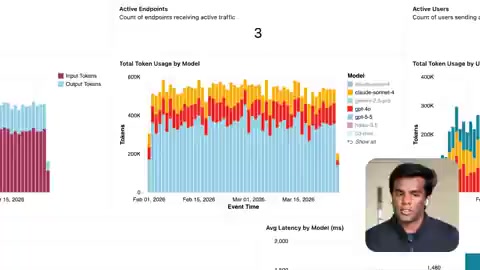
The Core Challenges of Enterprise Document Parsing
The documents Databricks' customers deal with daily are far more complex than most people imagine: irregular tables, mixed-format numbers, nested hierarchical structures, blurry characters in scanned documents… These are nightmares for traditional parsing solutions.

To measure model performance in these real-world scenarios, Databricks uses Office QA as a proxy benchmark. Office QA is a benchmark suite specifically designed for office document understanding, covering information extraction, table reasoning, and cross-document Q&A tasks across Word, Excel, PDF, and other formats. Compared to general NLP benchmarks like MMLU and HellaSwag, Office QA is much closer to actual enterprise workloads because it requires models to simultaneously handle structured data (tables) and unstructured text while establishing semantic connections between the two. This benchmark maps directly to customers' real workflows—extracting key data from complex PDFs, parsing non-standardized tables, processing multilingual mixed-layout documents, and more. Databricks' choice of this benchmark as a proxy metric reflects an industry-wide shift in enterprise AI evaluation from "academic performance" to "business usability." Within Agent Harness, Databricks combines custom parsing capabilities with multi-agent architecture to execute these tasks.
Numerical Parsing Precision: A Qualitative Leap from 5.4 to 5.5
The most critical difference between GPT-5.4 and GPT-5.5 lies in numerical parsing quality.
Earlier models (including 5.4 and prior versions) frequently made errors when extracting numbers from documents—misplaced decimal points, misread thousands separators, missing negative signs, and similar issues were commonplace. For financial statements, audit documents, and medical data tables, a single numerical error can cause an entire analysis pipeline to collapse.
GPT-5.5 demonstrates a "step-function" capability leap in this area: not a gradual incremental improvement, but a qualitative breakthrough in precise numerical extraction. This phenomenon closely aligns with the "Emergent Abilities" documented in LLM research—the Google Brain team systematically discovered in their 2022 research that certain capabilities don't scale linearly with model size, but instead appear suddenly after crossing specific parameter count or training volume thresholds. This nonlinear progress pattern carries important implications for enterprise procurement decisions: the actual capability gap between adjacent model versions may far exceed expectations, representing a qualitative rather than quantitative difference on specific task dimensions.

Codex powered by GPT-5.5 currently achieves state-of-the-art performance across all agent and model combinations—a substantive expansion of the capability frontier.
Production Deployment: AgentBricks and AgentSupervisor API
Databricks expects a large number of customers to build custom agent workflows through AgentBricks and AgentSupervisor API. In these workflows, GPT-5.5 serves as the "Supervisor" role, responsible for orchestrating the collaboration of multiple sub-agents.
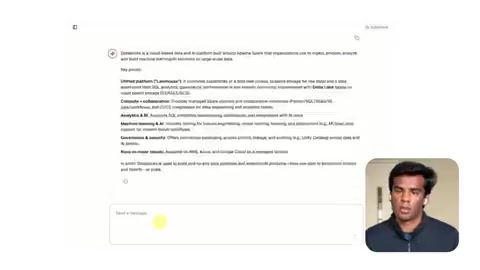
The "Supervisor-Executor" pattern in Multi-Agent Architecture draws from microservices design principles in software engineering. The supervisor handles task planning, resource scheduling, and result verification, while specialized sub-agents each focus on specific sub-task types—such as OCR-dedicated agents, table parsing agents, numerical validation agents, and so on. This division of labor makes the overall system far more robust than a single large model directly handling all tasks. The supervisor model's capability ceiling directly determines the ceiling of the entire system: it needs sufficiently strong contextual understanding to accurately assess the quality of sub-task completion and make correct error-correction decisions.
This architectural design gives GPT-5.5 higher-level responsibilities:
- Task comprehension and decomposition: Grasping the global objectives of document processing and breaking complex tasks into executable sub-tasks
- Sub-agent orchestration: Assigning tasks to the most suitable specialized agents based on task type
- Result verification and error correction: Quality-checking sub-agent outputs, detecting and correcting errors
GPT-5.5's improvement in numerical precision directly strengthens its core capability as a supervisor for result verification. In knowledge-intensive tasks, improved supervisory capability directly unlocks a new tier of overall system performance.
What This Breakthrough Means for Enterprises
From the Databricks case, several noteworthy trends emerge:
Model capabilities advance in step-function patterns. The jump from 5.4 to 5.5 isn't linear—it represents a qualitative shift along specific dimensions. This aligns with the typical characteristics of LLM scaling, where capabilities accumulate to a certain point and then suddenly emerge.
Multi-agent architecture is becoming the standard paradigm for enterprise AI. Single-model calls can no longer handle complex business scenarios. The combination of "powerful supervisor model + multiple specialized sub-agents" is being adopted by an increasing number of enterprises.
Evaluation methods are converging toward business outcomes. Databricks benchmarks against real customer workflows using Office QA—this business-outcome-oriented evaluation reflects a model's actual value far better than general-purpose benchmarks.
For industries with extremely high numerical precision requirements—such as finance, legal, and healthcare—GPT-5.5's breakthrough means that document processing workflows previously requiring extensive manual verification can be further automated. Not to replace humans, but to free them from repetitive verification work so they can focus on higher-value judgment tasks.
Key Takeaways
- GPT-5.5 achieves a 46% error rate reduction compared to GPT-5.4 under the Agent Harness setup, and is the only model to break through 50% accuracy
- GPT-5.5 delivers a step-function leap in numerical parsing quality, solving the problem of earlier models failing to correctly parse all numbers
- Codex powered by GPT-5.5 achieves current state-of-the-art across all agents and models
- Databricks will enable customers to build custom agent workflows with GPT-5.5 as the supervisor through AgentBricks and AgentSupervisor API
- Multi-agent architecture combined with a powerful supervisor model is becoming the dominant paradigm for enterprise-grade complex document processing
Related articles
Meta Muse Hits 900K Downloads in Six D…
Meta Muse Hits 900K Downloads in Six Days: The AI Agent Era Has Officially Arrived
Meta's AI agent Muse hit 902K downloads in 6 days, topping US App Store and Google Play charts above ChatGPT and Claude. A deep dive into Muse's capabilities and the AI Agent race.
 Industry Insights
IRS Fully Embraces Claude AI, Accelerating Federal Government's AI Adoption
The IRS is recruiting staff with 24/7 Claude AI access, marking Anthropic's breakthrough into the federal government. Explore the strategic implications and tax use cases.
 Industry Insights
The IRS Mobile App Debate: A Trust Crisis in Government Digital Transformation
The IRS's proposed mobile app has sparked heated debate. This article analyzes the core arguments, exploring data security, privacy, and the trust crisis in government digital transformation.