GPT-5.6 Context Rolled Back to 272K · SenseNova Vision Open-Sourced · China AI Export Control Developments

GPT-5.6 context rollback, SenseNova Vision open-sourced, and China weighs AI export controls.
OpenAI rolled back GPT-5.6's context window to 272K while celebrating Codex hitting 6 million active users. SenseTime open-sourced SenseNova Vision, a natively unified visual foundation model. Beijing is reportedly considering export controls on top Chinese AI models. Anthropic extended the Claude trial period for the second time.
OpenAI's Latest Moves: GPT-5.6 Context Rollback and Codex User Surge
OpenAI has been busy on multiple fronts. According to AI Daily, OpenAI identified and fixed a batch of technical issues, rolling back GPT-5.6's context length to 272K while working to restore it to the previous 372K within a few days.
The context window refers to the maximum number of tokens a large language model can process in a single inference. From the 4K tokens of early GPT-3 to today's hundreds of thousands — even millions — of tokens, this metric has become a core battleground in model capability competition. However, extending context length is far from a linear engineering problem. The self-attention mechanism in the standard Transformer architecture has computational complexity that scales quadratically with sequence length. This means extending context from 272K to 372K not only demands significantly more GPU memory and compute, but also places stringent requirements on KV Cache management and the long-range extrapolation capabilities of positional encodings (such as RoPE and ALiBi). This adjustment highlights the persistent engineering tradeoff between stability and performance as models push toward ever-longer context windows.
Developments around Codex are equally noteworthy. Originally released by OpenAI in 2021 as a dedicated code generation model and the core engine behind GitHub Copilot, Codex has evolved considerably. Today it's no longer just a code completion tool — it's a full-fledged AI coding agent capable of multi-step task planning, cross-file code comprehension, and automated test generation. To celebrate Codex reaching 6 million active users, OpenAI temporarily lifted the 5-hour usage cap for paid users and reset quota for existing users. OpenAI researcher Typo further revealed that when active users hit 7 million, all users will receive another storable quota reset. According to multiple developer surveys, over 70% of professional programmers have already integrated AI coding assistants into their daily workflows, with adoption growing at roughly 15 percentage points per quarter — confirming that AI coding has crossed from "novelty" to "necessity." The rapid progression from 6 million to 7 million users underscores that AI coding assistants are currently one of the most momentum-driven application categories.
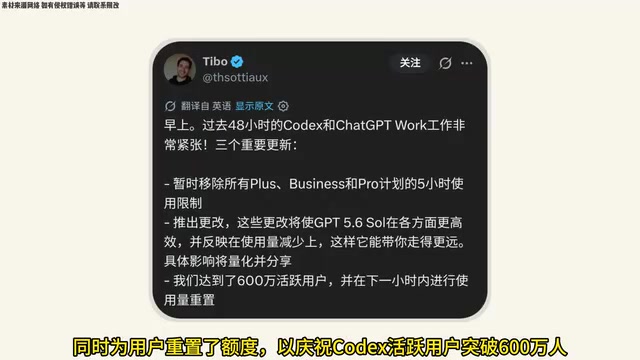
Additionally, Typo made a clear commitment: GPT-5.6 will be permanently retained across all paid subscription plans, at least until the next superior model launches. This promise gives developers and enterprise users relying on the model for production deployments a more stable planning horizon.
China May Impose Export Controls on Top AI Models
According to Reuters, Beijing is considering restricting overseas access to China's top AI models, with potential export controls under discussion. The reported scope covers both closed-source and open-source models, and would affect AI products from leading domestic players including Alibaba, ByteDance, Zhipu AI, and DeepSeek.

From a technical enforcement standpoint, applying export controls to AI models poses fundamentally different challenges compared to traditional chip or software controls. Restricting closed-source models is relatively straightforward: it can be achieved through IP geofencing at the API gateway level, KYC (Know Your Customer) identity verification, and region-based access key restrictions. Open-source models are far more complex — once model weights are uploaded to distributed platforms like Hugging Face or GitHub, it becomes technically impossible to fully prevent cross-border dissemination. Controls would need to target weight downloads and deployment. Weight files for models like DeepSeek-R1 can reach hundreds of gigabytes, making propagation tracing a systemic challenge in itself. This explains why policymakers would need to focus on controlling the "source of release" rather than individual "distribution nodes." If such policies are enacted, the active open-source community could be among the hardest hit — given that open-source model distribution is decentralized and downstream deployments are difficult to trace, striking a balance between effective oversight and maintaining an open ecosystem will be the central policy challenge.
For now, this remains at the "consideration" stage. Specific policy details and implementation timelines are unclear, and the actual impact remains to be seen.
SenseNova Vision: SenseTime Open-Sources a Natively Unified Visual Foundation Model
The most technically significant development this week comes from SenseTime. The company has released and open-sourced SenseNova Vision, a unified visual foundation model built on the core philosophy of making vision a truly native capability of general-purpose foundation models — not just a bolt-on feature.
From "Expert Assembly" to "Native Unification"
The evolution of vision-language models has broadly followed three stages. Early "cascade" architectures (e.g., CLIP + GPT) relied on independent visual encoders to map images into text-space embeddings before passing them to a language model, with a significant semantic gap between the two. Second-generation "adapter" architectures (e.g., LLaVA, InstructBLIP) introduced lightweight vision-language alignment modules that reduced training costs, but visual and language features still flowed through relatively independent subspaces. What was previously called a "unified" visual model was, in essence, just multiple expert models bundled together — the underlying architecture remained fragmented, with insufficient deep coordination between modules and limited cross-task synergy.
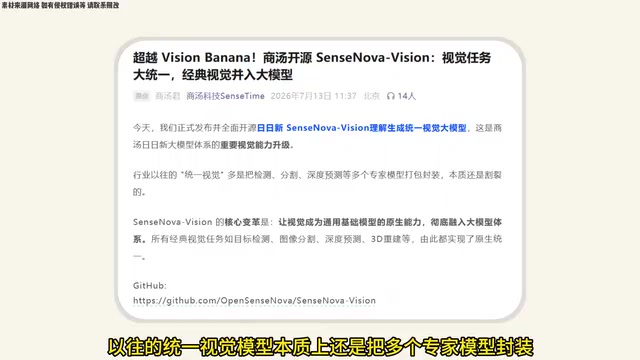
Third-generation "natively unified" architectures attempt to jointly model visual tokens and text tokens within the same sequence space from the pretraining stage onward — exemplified by Google's Gemini series and Meta's Chameleon. This is precisely where SenseNova Vision makes its breakthrough: visual capabilities are deeply integrated into the foundation model as a native component, enabling the model to share underlying representations across different visual tasks for stronger generalization — rather than simply stacking functionalities. According to the official announcement, the model achieves leading performance across multiple mainstream visual task benchmarks.
Open-Sourced to Lower the Barrier to Entry
SenseNova Vision has been officially open-sourced on mainstream platforms including ModelScope and Hugging Face. This move continues the trend of Chinese AI companies actively embracing open source, enabling more developers to build on top of the unified visual model for downstream applications. Against a backdrop of growing demand for visual understanding, a natively unified open-source visual foundation model carries significant ecosystem value.
Anthropic Extends Claude Model Trial Period Again
Anthropic has announced another extension of the free trial period for Claude models, now running through July 19 local time — marking the second such extension for this model.

Industry observers suggest Anthropic may be using repeated extensions to effectively embed the model into subscription plans on a long-term basis, or to normalize "return promotion" events as a recurring marketing tactic to maintain user engagement and brand visibility.
From a competitive perspective, both OpenAI's commitment to permanently retaining GPT-5.6 and Anthropic's repeated trial extensions reflect how leading players are competing for user mindshare through subscription strategies and quota incentives. The underlying economics are clear: stable model availability commitments reduce enterprise users' motivation to migrate, while quota perks improve consumer-side retention — the core strategy being to deliberately build a lock-in effect. Once API call habits form around a particular model, the accumulated prompt engineering investment and workflow integration costs raise the switching price substantially. As model capabilities increasingly converge and open-source model performance continues to close the gap with closed-source flagships, this kind of competition around user experience and commercial operations may prove to be a decisive variable shaping the market landscape.
Summary
This week's news spans four dimensions: technical model adjustments, regulatory policy developments, open-source breakthroughs, and commercial strategy competition. The GPT-5.6 context rollback is a reminder that large model engineering is still an active battleground — the quadratic complexity of the Transformer attention mechanism means that extending ultra-long context windows will always involve a tradeoff between stability and performance. SenseNova Vision's natively unified architecture points the way for visual foundation models from "assembly" to "symbiosis." China's potential AI export controls introduce meaningful policy uncertainty for the industry, while the inherent mobility of open-source model weights makes technical enforcement a challenge in its own right. Together, these signals paint a vivid picture of an AI industry in rapid flux — full of both opportunity and uncertainty.
Key Takeaways
Related articles
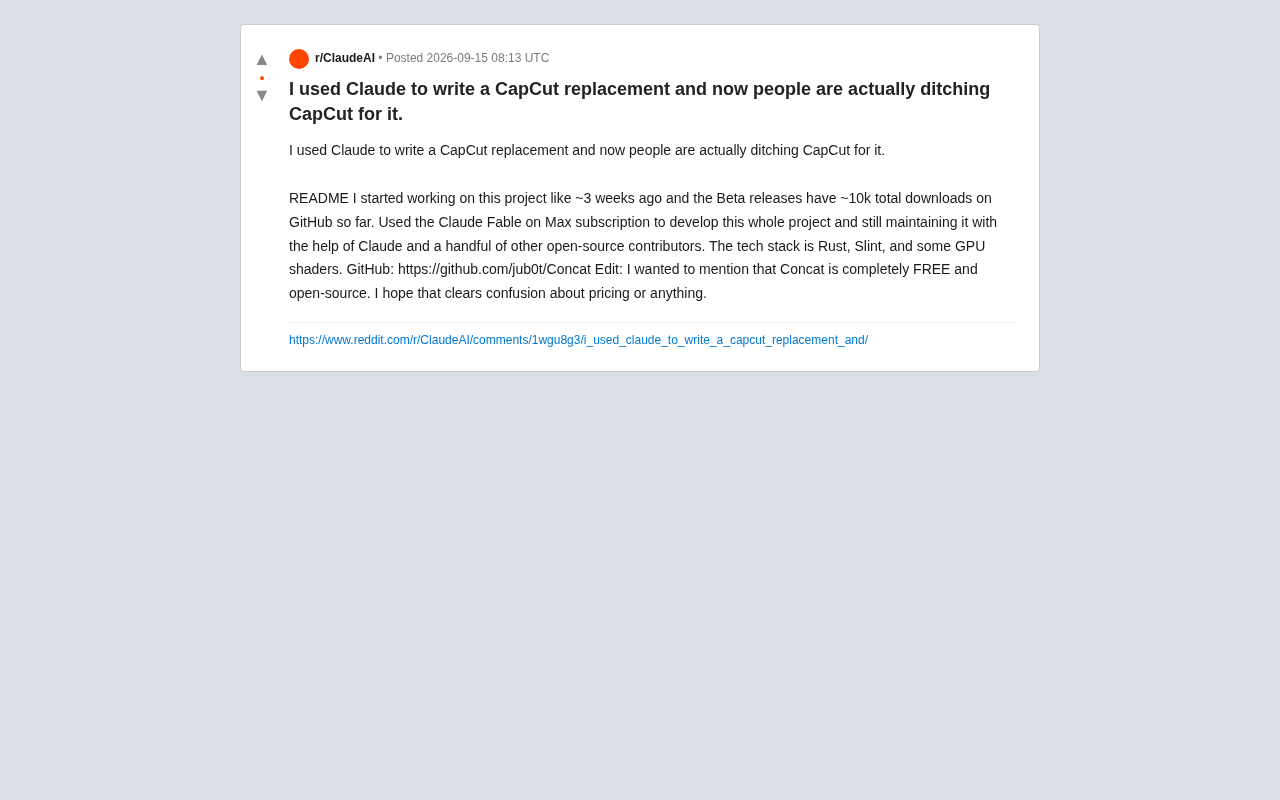
Building Open-Source Video Editor Concat with Claude: A Free Alternative to CapCut
A developer used Claude to build Concat, an open-source CapCut alternative, in just three weeks. With nearly 10K downloads, it's a striking example of AI-assisted solo development.
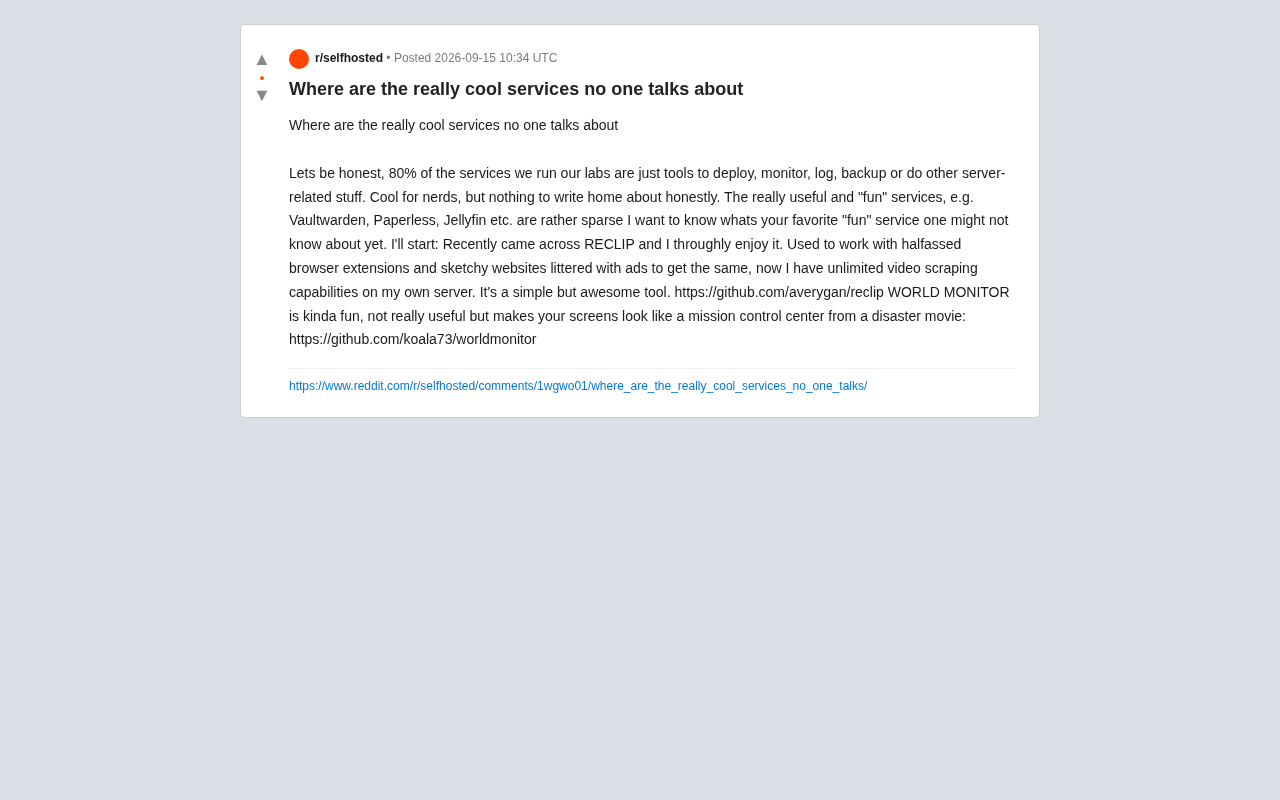
The Overlooked Gems of Self-Hosting: Fun and Useful Services Nobody Talks About
From a Reddit thread, we explore overlooked self-hosted services — including video scraper RECLIP and data viz project WORLD MONITOR — and why fun services are so rare.
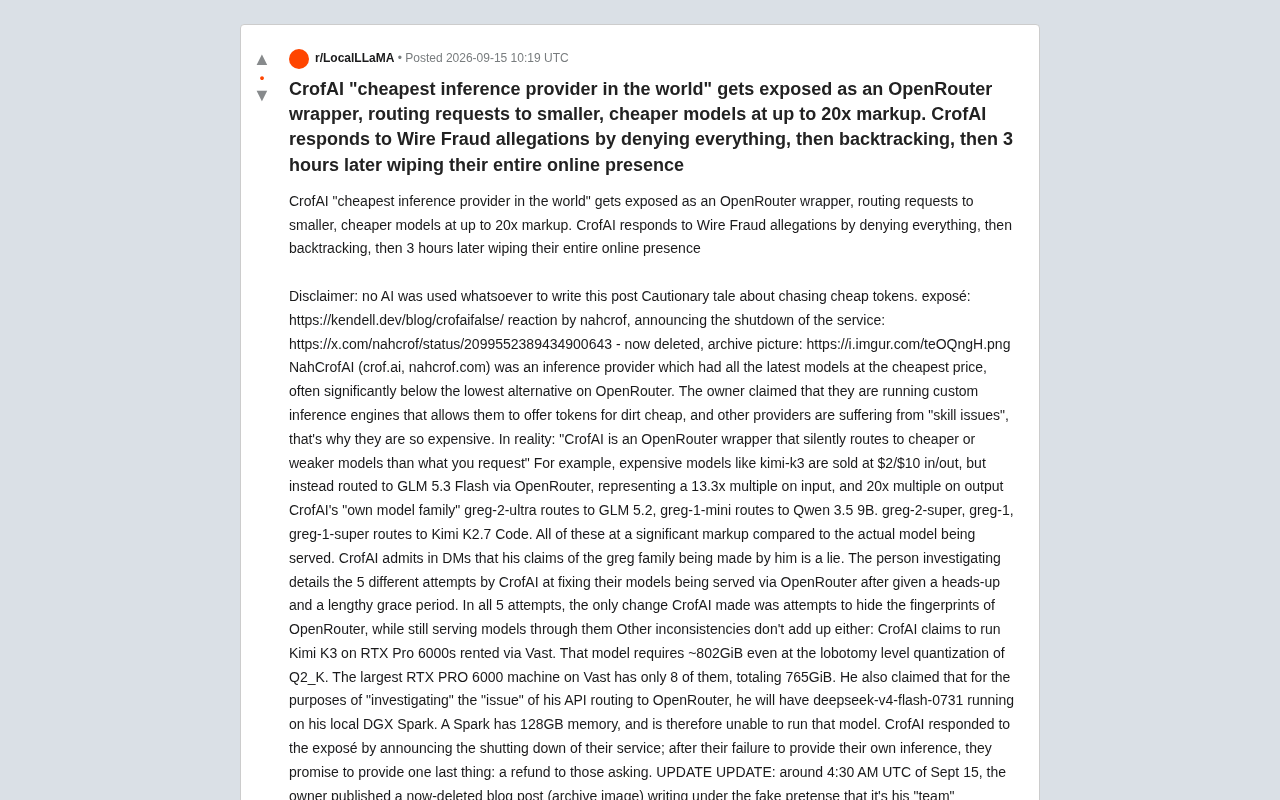
CrofAI Fraud Exposed: 'World's Cheapest AI Inference' Turns Out to Be an OpenRouter Wrapper Scam
CrofAI claimed to offer the world's cheapest AI inference, but was exposed as an OpenRouter wrapper silently rerouting requests to cheap models at up to 20x markups.