GPT-5.6 Hands-On Comparison: 20x Cheaper, But Falls Short on Creativity vs. Flagship Models

GPT-5.6 (Sol) is 20x cheaper and wins single-shot tasks, but its creative quality still trails flagship models.
A full day of hands-on testing pits GPT-5.6 (Sol) against Anthropic's flagship across game generation, interactive web creativity, and single-shot API calls. Sol costs 20x less and dominates single-shot tasks with far higher token efficiency, but falls clearly short on creative quality. Model selection is shifting from benchmarks toward unit economics.
The release of GPT-5.6 (internal codename Sol) has once again set the AI community buzzing. Official benchmark data shows it "decisively beats" competitors across multiple dimensions, and at a far lower price. But benchmarks only ever tell half the story. This article is based on a full day of side-by-side, real-world testing by a veteran evaluator, pitting GPT-5.6 against Anthropic's flagship models across multiple rounds of genuine head-to-head trials, aiming to answer one core question: Is a model that's nearly 20x cheaper actually good enough in output quality?
Impressive Benchmarks, but the Real Test Is in Practice
GPT-5.6 Sol's official benchmark scores are indeed eye-catching—it claims a "clean sweep" over competitors in benchmark comparisons, while being priced far below its rivals. The product landing page is cleverly designed too—the sub-models Saw, Tera, and Luna float in an arrangement like planets, offering an excellent visual experience.
It's worth noting that benchmarks in the AI space have systematic limitations. Common evaluation sets like MMLU (Massive Multitask Language Understanding), HumanEval (code generation), and GSM8K (math reasoning) all face issues such as training data contamination (the model may have seen the test questions during pretraining), over-optimization for specific metrics (i.e., the Goodhart's Law effect), and an inability to capture the complexity of real-world work scenarios. The industry calls this phenomenon "benchmark gaming"—a model's stellar leaderboard performance may not translate to actual production environments.
As the tester repeatedly emphasized: looking at benchmarks is one thing; getting hands-on with real work tasks is another entirely. The key lies in your actual use case, your prompting approach, and how well you control the model's parameters. So this evaluation didn't stop at the numbers—it recreated the most authentic user experience through three rounds of game/webpage generation tasks, one multi-simulator task, and a large batch of single-shot API calls.
Three Rounds of Creative Generation: Flagship Model Wins Decisively
Round One: A Browser-Based Open-World Mini-Game
The tester gave both models the exact same prompt—build an open-world mini-game that runs in a browser—and granted full creative freedom. The result was quite dramatic: the flagship model produced a version closer to a GTA-style 3D open world, with a larger map, a stronger sense of exploration, and more natural physics; Sol's version, while fully functional, had somewhat awkward top-down view controls. The flagship model won decisively.
But the cost comparison is the crux: the flagship model took about 21 minutes, cost about $14.22, and output about 90,000 tokens; Sol took 23 minutes, cost only $4.5, and output about 31,000 tokens. Here a key concept emerges—token utilization. A token is the basic unit of text processing for large language models, roughly corresponding to about 3/4 of an English word or one Chinese character, and models are typically priced separately for input/output tokens. Sol completed the same task using only about a third of the token count, indicating higher information compression efficiency—but at the cost of output quality noticeably weaker than the flagship. Sol completed the task at less than a third of the cost, but with clearly weaker output quality.
Round Two: The Most Stunning Interactive Webpage
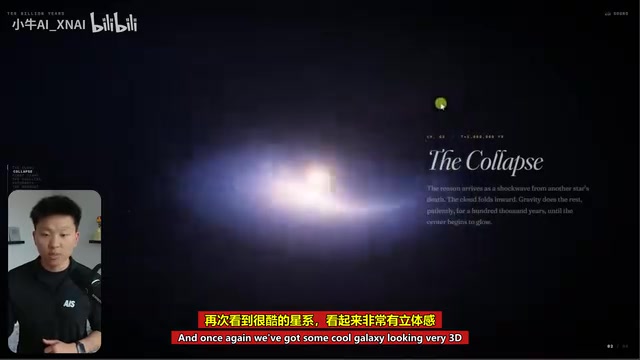
The second task was to "build the most eye-catching interactive webpage." Both versions produced a 3D galaxy journey animation with sound effects and mouse interactivity, telling the story of cosmic evolution, complete with visual effects like nebula collapse, cosmic expansion, and supernova explosions. The tester felt the flagship model's version was more immersive and a cut above overall.
The cost gap widened further: the flagship model took about 23 minutes, $19.24, and 80,000 tokens; while Sol took less than 7 minutes, a little over $1, and 20,000 tokens. The flagship model was nearly 20x more expensive, yet the tester still chose its output based on quality.

Multi-Simulator Task: Sol Claws Back a Win for the First Time
The third task was even more open-ended: "Design five completely different visual elements." The flagship model produced a flight simulator, a ring-collecting game, a color palette generator, a deep-sea diving interactive story, and more—but with some minor bugs like menu occlusion, and no particularly stunning highlights.
Sol performed excellently this time: an aurora symphony, a lost-echoes atlas, a typing-tracking game, a slideshow presentation, and a tide pool life simulator—superior in variety and overall experience. The tester awarded this round to Sol.
The most striking part was the efficiency: faced with a task of "5x complexity," Sol didn't slow down—it was in fact the fastest of the lot (about 7 minutes vs. the flagship's 15 minutes), costing about $1 and 22,000 tokens, versus the flagship's roughly $15 and 65,000 tokens. This confirms a recurring pattern: GPT-series models have far higher token utilization than their rivals. This trait may stem from a more compact encoding of information in the model's underlying architecture, as well as reinforcement of concise output during training—high token utilization means more tasks can be executed within the same budget, an important dimension for measuring a model's practical value.
Single-Shot API Tasks: Sol's Absolute Home Turf
In tests that stepped outside the agent loop and used single-shot Q&A directly via API, the landscape completely reversed. Across 100+ rapid tasks, Sol led the flagship model by a wide margin, 24 wins to 3 losses.
Here it's important to understand the fundamental difference between an AI agent and a single-shot API call. An AI agent refers to an LLM system capable of autonomously planning, invoking tools, and executing multi-step tasks—it calls the model multiple times within a loop (the agentic loop), with each call incurring token costs and accumulating latency, demanding extremely high latency stability and tool-calling accuracy from the model. A single-shot API call, on the other hand, is a stateless one-time request, valuing response speed and direct accuracy more highly. Sol's crushing advantage in the latter scenario precisely demonstrates that it's built for these high-frequency, lightweight tasks.
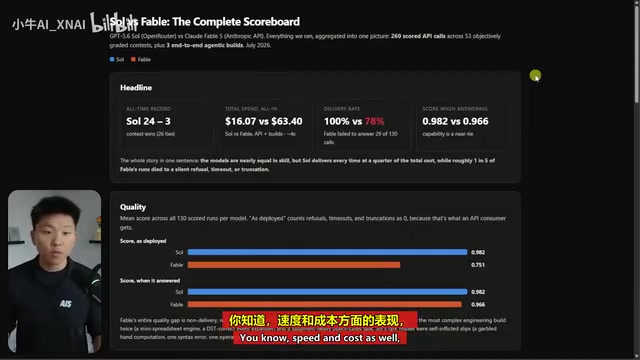
One detail: the flagship model outright refused to answer on several occasions—its safety guardrails are set relatively stricter. In terms of actual answer rate, Sol scored 0.98 and the flagship 0.966, not far apart; the latter's "losses" were mainly due to missing tool calls. On cost, Sol spent about $16, and the flagship about $63.
From this, the tester proposed a brilliant idea—unit economics based on task difficulty: this concept originates from the SaaS industry, referring to the cost-and-benefit analysis of a single service delivery. Applied to AI model selection, the core logic becomes: task difficulty determines the model capability needed, rather than defaulting to always chasing the strongest model. If a task's difficulty is a 5, you don't necessarily need a 10-out-of-10 model—a 5 or 6 model will do. For stateless, fast one-off requests, Sol's cost-effectiveness wins hands down.
A Fairer Point of Comparison
The tester argued that directly pitting GPT-5.6 against the flagship model isn't actually fair—the two aren't in the same league to begin with. A more reasonable comparison would be Sol 5.6 against similarly priced competitors: input costs are nearly identical, and output volumes are comparable. This also raises an intriguing question: if this is a "next-generation flagship," why name it just 5.6 rather than 6? GPT-5.6 Sol's pricing strategy (about 1/20 of the flagship's) reflects OpenAI's fine-grained tiering of its product matrix—using price signals to guide users toward selecting the right tool based on task complexity. Perhaps OpenAI is preparing a GPT-6 that can truly compete head-on with top rivals, at which point it will deploy the "flagship" positioning.
Latency and Stability: Sol Is Fast but Volatile
On latency, Sol's median API latency is faster than the flagship's, but its average latency is actually slower—indicating that Sol's response times fluctuate significantly, sometimes extremely fast and sometimes extremely slow; whereas the flagship is more stable, holding steady at around 20 seconds. In real-world agent-building scenarios, latency predictability is critical: latency jitter at each step of an agent loop gets amplified, making overall task completion time hard to estimate and undermining the system's SLA (Service Level Agreement) guarantees. The flagship model is almost always a bit slower, but wins on being stable and predictable—better suited for production environments with strict response-time requirements.

On token efficiency, the tester's verdict is: even if the two were priced identically, Sol would still be noticeably cheaper, because it processes tokens far more efficiently—likely closely tied to its underlying architecture (such as a more efficient attention mechanism or a more compact output strategy) and training approach.
Conclusion: Sol Is the Executor, the Flagship Is the Manager
After a full day of comprehensive real-world testing, the tester offered an incisive role characterization:
- The flagship model is better suited as a "manager/co-founder": stronger creativity, higher writing quality, better brainstorming, skilled at strategic planning, and it will even push back on your requests like a consultant (which is actually a strength). In overall capability, it's "a completely different league."
- Sol is an outstanding "executor": cheap, strong at code execution, careful at bug hunting, able to raise objections from multiple angles, and fast to respond.
The ideal workflow might be—have the flagship model orchestrate a fleet of Sol agents, playing to each one's strengths. This "Heterogeneous Agent Orchestration" architecture is becoming a new paradigm in AI engineering: high-capability models handle task decomposition and quality assessment, while low-cost models take on large-scale parallel execution work, striking a systematic balance between quality and cost.
In the final overall capability ranking, the tester felt GPT-5.6 is very close to similarly priced competitors, with Sol slightly ahead of both, but still a considerable gap behind the flagship model. Sol is definitely stronger than the previous-generation GPT-5.5 and is an extremely cost-effective model, but its pricing itself reflects the vendor's clear-eyed awareness of its own product positioning.
Perhaps the biggest takeaway from this evaluation is: the choice of AI models is shifting from "benchmarks-über-alles" toward "unit economics." There is no absolutely strongest model—only the model best suited to your task difficulty and budget. The 20x-cheaper Sol wins decisively on fast one-off tasks, while for pursuing ultimate creative quality, the extra money is still money well spent.
Key Takeaways
Related articles
Alibaba Launches Happy Shrimp: AI-Powered One-Click Complete Song Generation
Alibaba launches Happy Shrimp, an AI music generation tool that creates complete songs with lyrics, melody, arrangement, and vocals from natural language descriptions. In-depth analysis of its core features, differentiation from competitors like Suno, and industry impact.
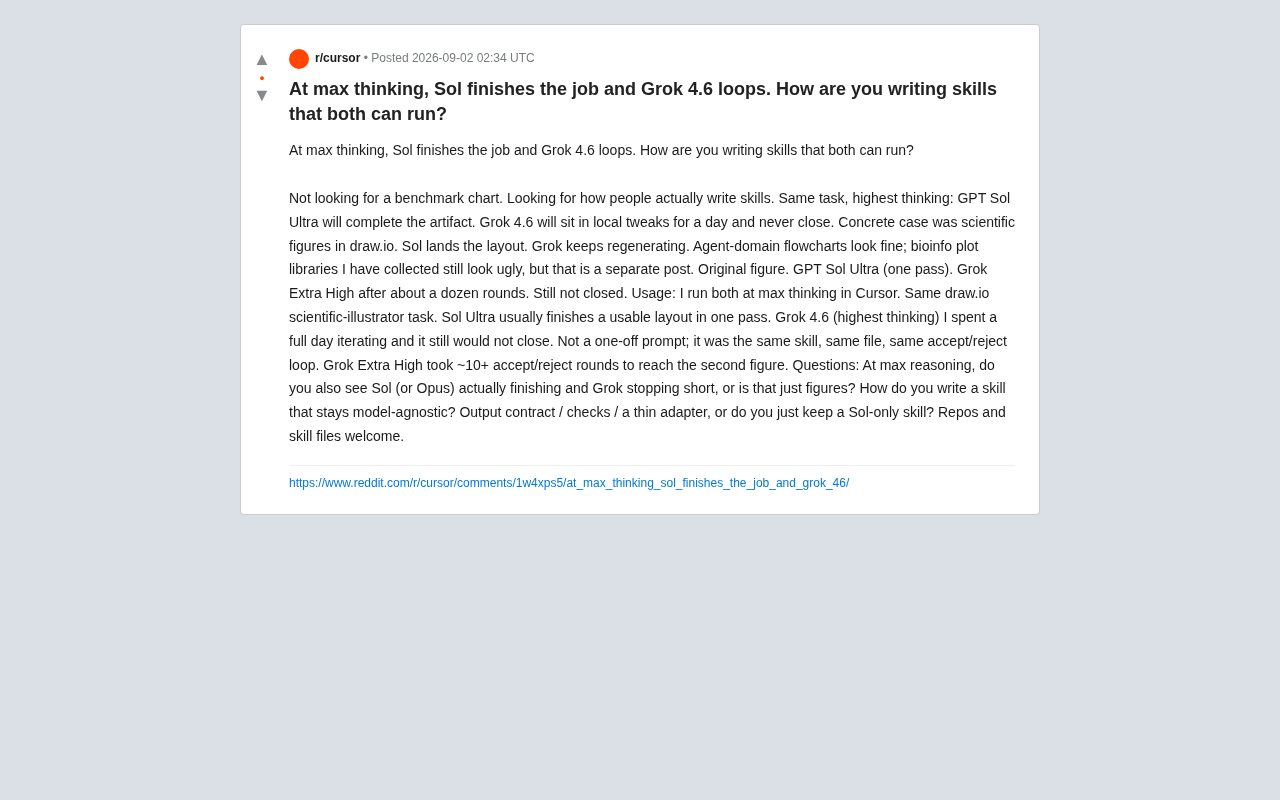
GPT Sol Ultra vs Grok 4.6: Real-World Task Completion Benchmark in Reasoning Mode
Developer benchmark reveals GPT Sol Ultra completes draw.io scientific diagrams in one iteration while Grok 4.6 fails to converge despite maximum reasoning mode, exposing that reasoning depth ≠ task delivery capability.
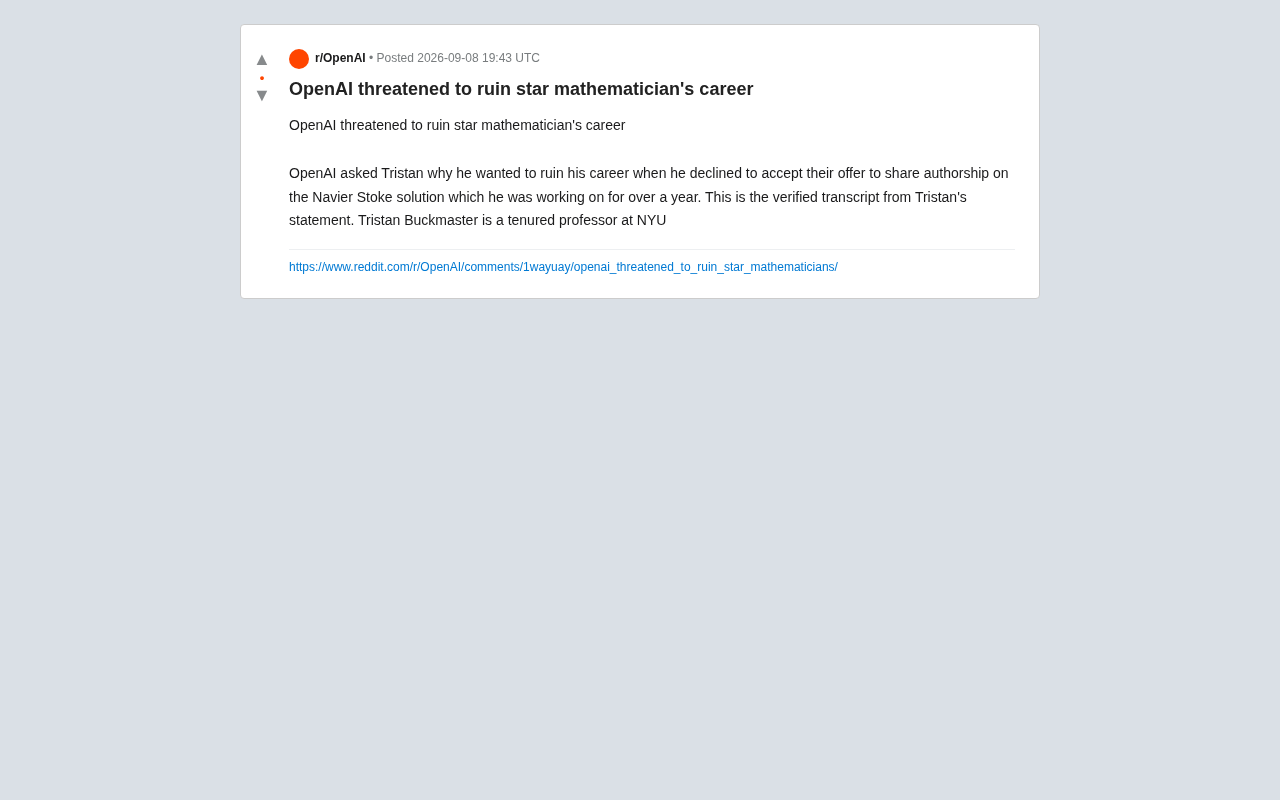
OpenAI Authorship Dispute: The Battle Over Academic Boundaries in the AI Era
OpenAI disputes authorship with mathematician Tristan Buckmaster over Navier-Stokes research, raising ethical questions about AI involvement in science.