GPT-5.6 Officially Released, MIIT Security Alert, and Microsoft's In-House MAI: Three Key Developments in the AI Industry

GPT-5.6 gets full release, MIIT warns of AI tool backdoors, and Microsoft pushes its in-house MAI model.
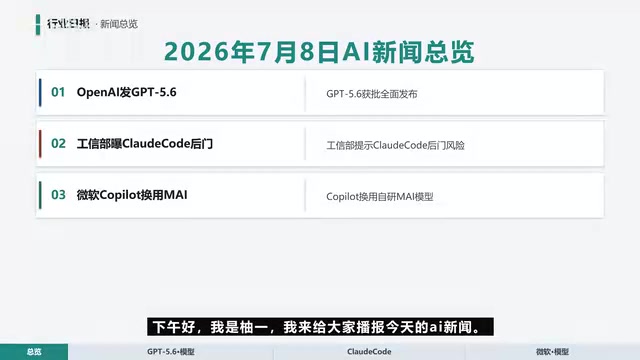
This week's three key AI developments reveal deep industry shifts: the U.S. Department of Commerce approved OpenAI's GPT-5.6 for full public release, China's MIIT warned of a security backdoor in an AI coding tool, and Microsoft is replacing OpenAI and Anthropic models in Copilot with its own MAI. Together they point to front-loaded regulation, rising data security concerns, and giants pursuing in-house AI.
The AI Industry Enters an Intensive Release Period
Recent weeks have seen a flurry of activity in the AI space—from regulatory clearance of frontier large models, to security risk warnings for domestic AI tools, to tech giants pushing in-house models to replace third-party ones. This series of developments signals deep structural shifts in the industry landscape. This week featured three particularly noteworthy pieces of news, covering the maneuvering and strategic positioning of OpenAI, regulators, and Microsoft.
This article examines the industry logic and deeper implications behind these developments across three dimensions: model releases, security regulation, and in-house model development by tech giants.
GPT-5.6 Approved for Full Release: How Regulation and Technology Seek Balance
The U.S. Department of Commerce has officially approved OpenAI to release GPT-5.6 at scale. Codenamed "Sol," this model will be rolled out to the public alongside two companion products, Terra and Luna. Previously, due to national security considerations, the model was only available to specific approved entities. Now, those control restrictions have been formally lifted.

Why Do Frontier Large Models Require Regulatory Approval?
This detail is quite significant. The U.S. Department of Commerce's regulatory authority over frontier AI models stems from the Export Administration Regulations (EAR) and related executive order frameworks. The 2023 AI executive order issued by the Biden administration first required that large models exceeding a specific computing threshold (approximately 10²⁶ floating-point operations) report safety test results to the government. This mechanism essentially borrows from the "dual-use" control logic applied in nuclear and biotechnology fields—where a single technology can serve both civilian purposes and potentially be used for military or destructive ends. As large models approach or even surpass human expert-level capabilities, their potential double-edged-sword effect becomes increasingly prominent. The Department of Commerce's involvement in the frontier model release process marks AI's elevation from a purely commercial product to a strategic resource involving national security. The rhythm of "temporary control → phased release" is essentially about finding an acceptable balance point between technological innovation and risk control.
The approval of GPT-5.6 means that regulators' safety assessment of it has passed. For ordinary users, this is good news; for the industry as a whole, it suggests that frontier model releases may generally undergo similar approval cycles, and front-loaded regulation is likely to become the new industry norm.
What Does the Coordinated Release of Terra and Luna Mean?
GPT-5.6 didn't debut alone but was launched simultaneously with Terra and Luna as a product matrix. This bundled release approach suggests that OpenAI is building a more complete product ecosystem, rather than simply iterating on model versions. Multi-product coordination may become a standard competitive strategy for large model vendors.
MIIT Issues Security Risk Warning: The Trust Crisis for AI Coding Tools
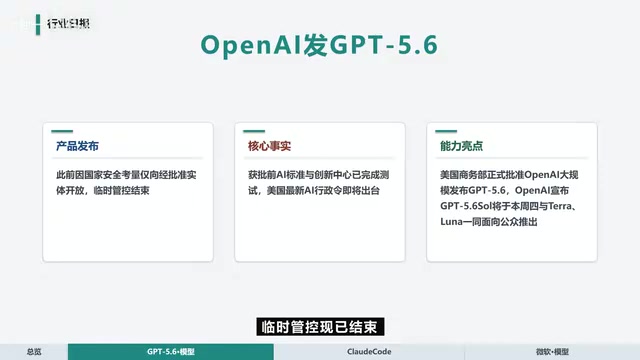
On the domestic front, China's Ministry of Industry and Information Technology (MIIT) issued an announcement warning about a security backdoor risk in a specific version (21.91-2.1-196) of a certain Cloud Code tool. The announcement stated that this version transmits sensitive information back without user consent, and advised users to immediately investigate and uninstall it or upgrade to a secure version.
Why Have AI Coding Assistants Become Security Risks?
This incident reveals an increasingly severe problem: security risks in AI coding tools are essentially a new variant of software supply chain attacks. Traditional supply chain attacks implant malicious code by tampering with open-source dependency packages (such as the 2020 SolarWinds incident), but the threat posed by AI coding tools is even more insidious—such tools typically run as IDE plugins and naturally possess permissions to read entire code repositories, access environment variables, and configuration files. Once unauthorized data exfiltration occurs, the resulting damage is no less severe than that of traditional Trojan programs.
Notably, the targeted implantation pattern of a specific version number (21.91-2.1-196) in this incident closely matches multiple supply chain attacks targeting developers in recent years—attackers often choose to embed backdoors in specific versions, both to evade automated security scanning and to precisely target high-value enterprises using that version. As a result, developers' workstations become an important breach point for infiltrating an enterprise's core code assets.

For enterprises and individual developers, this is a clear warning. While enjoying the convenience brought by AI coding tools, the security auditing of the tools themselves cannot be ignored. We recommend taking the following measures: regularly checking the tools' network behavior, prioritizing auditable open-source solutions, promptly upgrading to official patched versions, and using isolated development environments for projects involving sensitive business.
What Signals Does Regulatory Intervention Send?
MIIT proactively issuing a risk warning indicates that regulators have begun to bring AI tools under the scope of cybersecurity oversight. This is not just a warning about a specific product but sends a clear signal to the entire industry: the compliance and data security of AI tools will face increasingly strict scrutiny.
Microsoft's In-House MAI Model: Giants Accelerate Taking Control of AI's Core
The third major piece of news comes from Microsoft. Reportedly, Microsoft is gradually replacing the OpenAI and Anthropic models in its Copilot product line with its own in-house MAI models. Currently, MAI already processes tens of thousands of requests per week in Excel and Outlook, and Microsoft's CEO has clearly hinted that MAI will become the default foundation for Copilot in the future.
From Deep Partnership to In-House Replacement: Microsoft's Strategic Shift
This is a highly significant development, and the logic behind it follows the classic "vertical integration" strategy of the tech industry. Historically, Apple unified its in-house development of chips (the M series), operating systems, and software ecosystem, building a competitive moat that is difficult to replicate. Microsoft's MAI strategy is cut from the same cloth: deeply integrating AI foundation model capabilities with Office 365, Azure cloud services, and the Windows ecosystem to form a product loop that external model suppliers find hard to penetrate.
It is no coincidence that Excel and Outlook became the first pilot scenarios for MAI—these two products hold Microsoft's largest accumulation of enterprise user data, making them a natural corpus ground for training and optimizing vertical-domain models. At the same time, they are the core entry points in enterprise customer workflows with the highest data sensitivity and the greatest replacement cost. Microsoft was once OpenAI's most important strategic partner and investor, and the Copilot product line has long relied heavily on OpenAI's model capabilities. Now, its push for in-house MAI development is core-logically driven by reducing dependence on a single supplier and regaining control over AI foundation capabilities—a core competitive advantage. Microsoft's move may prompt other giants to follow suit, accelerating "de-outsourcing" competition in the AI foundation model field.
Commercial Impact on OpenAI and Anthropic
Microsoft's in-house route poses a direct challenge to the business models of OpenAI and Anthropic. When the largest customer begins building equivalent capabilities in-house, the market space for model APIs is bound to shrink. This also foreshadows that the relationship between large model vendors and application giants will evolve from a simple supply-demand partnership into a more complex dynamic of cooperation and competition.
Behind the Three Developments: Three Deep Trends in the AI Industry
Taken together, this week's three AI developments collectively outline several key directions for the industry's evolution:
First, the regulation of frontier model releases. The approval of GPT-5.6 shows that AI has been incorporated into the national strategic resource management system, and front-loaded regulation may become an industry standard.
Second, the surfacing of AI tool security issues. MIIT's risk warning reminds practitioners that efficiency and security must be equally prioritized—data security will be the key threshold determining whether AI tools can achieve large-scale adoption.
Third, the independence of giants' technology strategies. Microsoft's in-house MAI marks the acceleration of leading tech companies taking control of AI foundation capabilities, with AI competition entering a deeper phase of self-reliance.
For practitioners and users, while enjoying the dividends of AI technology, greater attention must be paid to compliance risks, data security, and ecosystem choices. In the second half of the AI industry, capability competition is merely the entry ticket—security, trust, and strategic depth are the true competitive barriers.
Key Takeaways
Related articles
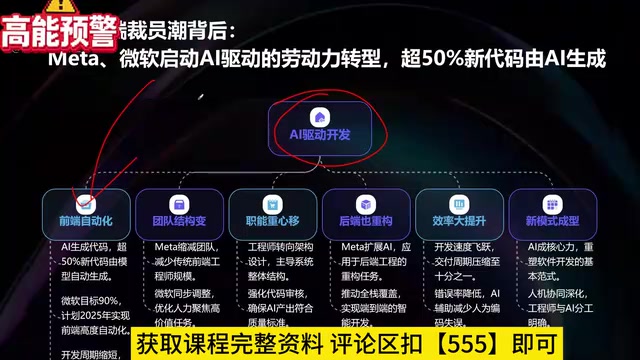
What Is Vibe Coding? The AI Programming Skill Every Developer Needs
What is Vibe Coding? Learn how AI programming is reshaping dev teams, why traditional programmers face displacement, and why Cursor & Claude Code matter.
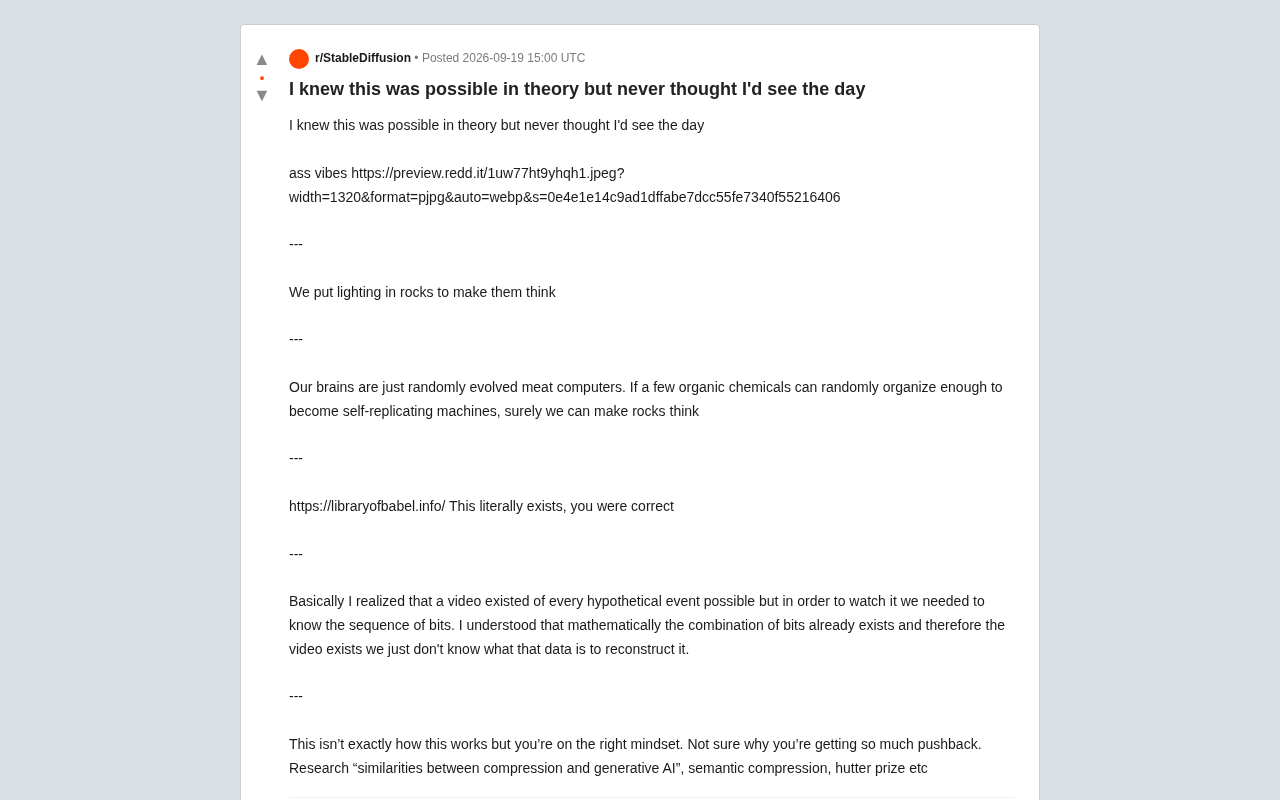
Making Rocks Think: A Philosophical Exploration of Generative AI and Information Compression
From a viral Reddit post to deep AI theory: why compression equals understanding, the Library of Babel thought experiment, semantic compression, and the Hutter Prize.
Irregular Warns: Four AI Lab Security Breaches Traced to the Same Root Cause
Irregular reveals four AI lab security breaches share a single root cause, exposing systemic risks from technology stack homogeneity across the AI industry.