GPT-6.1 Sol Hands-On Review: At 1/5 the Price, Can It Challenge Opus 5.5?

GPT-6.1 Sol delivers near top-tier AI performance at 1/5 the price — the ideal engineering workhorse.
OpenAI's GPT-6.1 Sol, unveiled at DevDay, positions itself as a high-value workhorse: scoring 52 on overall benchmarks (just one point below Astra), outperforming Opus 5.5 on Terminal Bench 4.0, and consuming significantly fewer tokens per task than Claude-series models. Hands-on testing confirms strong performance in terminal ops, algorithm visualization, scientific research, and complex long-running tasks (a full navigable Unity game built in 2h38m). Its LEGO instruction manuals even include clickable purchase links. Creative writing, fine art quality, and expressive lighting remain weaker areas where Opus 5.5 and Astra still lead.
GPT-6.1 Sol: The Star of OpenAI DevDay
GPT-6.1 Sol (referred to as 6.1 Sol below) was OpenAI's standout release at DevDay, and its biggest selling point isn't raw performance — it's value for money. The official pitch is straightforward: get close to Astra's top-tier intelligence at roughly 1/5 the price. This positions it as the "workhorse" for high-volume daily tasks — code review, architecture analysis, computer use, email management, and other high-frequency workloads are all default candidates for 6.1 Sol.
Bilibili creator Kate highlighted a key practical observation in her hands-on testing: under the 5X membership plan, 6.1 Sol consumed noticeably fewer weekly credits. For power users who need to run models continuously at high frequency, this "do more, spend less" characteristic often matters more than a point or two difference on a leaderboard.
Benchmark Data: One Point Less, But a Lot Cheaper
The benchmark data paints a clear picture of 6.1 Sol's positioning. It scores 52 on the overall capability leaderboard — one point below Astra and still behind Sonnet 5.5 (the comparison baseline referenced). But flip the perspective: trading one point of intelligence for a dramatically lower price is a worthwhile deal in real engineering deployments.
A few specialized results are worth highlighting:
- Terminal Bench 4.0: 6.1 Sol at the High reasoning tier outscores Opus 5.5, demonstrating a genuine advantage in terminal and command-line tasks.
- Token efficiency: GPT-series models consume far fewer tokens per task than Claude-series models — a hidden cost advantage. The same work done with fewer tokens means a lower actual bill.
- Reasoning tier matters: Setting the reasoning level to High yields the best scores for professional work and scientific research. In the science category, 6.1 Sol significantly outperforms Opus 5.5.
In short, 6.1 Sol isn't trying to "crush the competition across the board" — it's making precise trade-offs along the "good enough and affordable" path.
Terminal Bench is a benchmark suite specifically designed to measure model performance on command-line operations, terminal tasks, Shell scripting, and system-level workflows. Version 4.0 is its fourth major release. Unlike general reasoning leaderboards, it focuses on whether a model can correctly understand and generate Bash/Python scripts, debug error output, and handle file system operations in real developer workflows. 6.1 Sol surpassing Opus 5.5 here is especially noteworthy because the Claude series (Opus being its flagship) has long been considered strong in code assistance and engineering tasks — this result signals that 6.1 Sol now holds a meaningful edge in low-level engineering work close to the command line.
Token efficiency has a significant impact on real-world bills. LLM APIs typically charge based on total input + output token count. If GPT-series completes the same task in 2,000 tokens while Claude-series needs 4,000, the actual cost is nearly halved — even with identical per-token pricing. For high-frequency use cases like CI/CD pipeline code review or bulk email processing, token efficiency often determines monthly spend more than the model's listed price.
Generative Capabilities: Strong on Structure, Weaker on Creativity
Painting and Algorithm Visualization
The creator used 6.1 Sol to generate a piece in the style of Along the River During the Qingming Festival. The overall tone carries a classical painting feel, with docks, bridges, and boats along both banks rendered reasonably well. Zooming in reveals details like sedan chairs, shop signs, donkeys, horses, carts, and storefronts. The weak point: the riverbanks, which should be filled with shop signage, are relatively bare. The overall verdict is that it falls short of Opus 5.5, but represents a massive leap forward compared to GPT-4o.
On pure algorithmic and geometric tasks, 6.1 Sol performs consistently well — a clean 3D cobra page, neatly rendered hearts and stars — reflecting solid reasoning and algorithmic foundations.
Creative Writing Shortcomings
Given the same prompt — a 500-character internal monologue about receiving three messages on one afternoon — 6.1 Sol's output was noticeably less compelling than Astra's. This aligns with its positioning: strong on analytical tasks, relatively weak on emotional depth and literary expression.
Video and 3D Modeling: The Price-Performance Trade-Off

In the "three-wheeled vehicle commercial" test, 6.1 Sol handled the vehicle design, bumpy motion, braking, and a chance encounter with a chicken well — though cargo details were slightly blurry. The overall result falls short of Opus 5.5, but given the price gap, the output quality is genuinely competitive.
In the architectural video reconstruction from three reference photos, the key challenge was a tree growing from the first floor all the way up through the atrium. Opus 5.5 handled this best — a glass enclosure precisely framed the tree in the center, with well-executed textures, interior still life, terrace ornamental grasses, the restaurant, and sightlines from the bedroom bathroom all handled thoughtfully. 6.1 Sol's static object modeling and spatial sense were solid, but it exhibited frame flickering and an abnormal floor protrusion at the circular atrium planting area — a concerning structural error.
LEGO Building: The Details Tell the Story

This was the most revealing comparison. Building a LEGO cottage from a Grok-generated image, 6.1 Sol used over 1,000 pieces while Opus 5.5 used more than 2,000. Opus 5.5's build process, the small bed, the dressing mirror, and the articulated bear all showed superior craftsmanship.
However, 6.1 Sol had a standout feature: its instruction manual listed every component with part numbers and purchase information — click to view buying links — truly delivering a "what you see is what you get" experience. By contrast, Opus 5.5's parts list was comprehensive but lacked direct purchasing links. That said, Opus 5.5's instruction manual offered richer interactive detail and a better overall feel; its only shortcoming was not graying out already-installed parts (as official LEGO manuals do), making it slightly harder to follow along.
Science Communication and Product Demos: Typography Is the Weak Link
In the 3D modeling for a soap bubble science explainer, 6.1 Sol's bubbles appeared slightly monochromatic (grayish), while Opus 5.5 did a better job visually conveying the play of light and color.
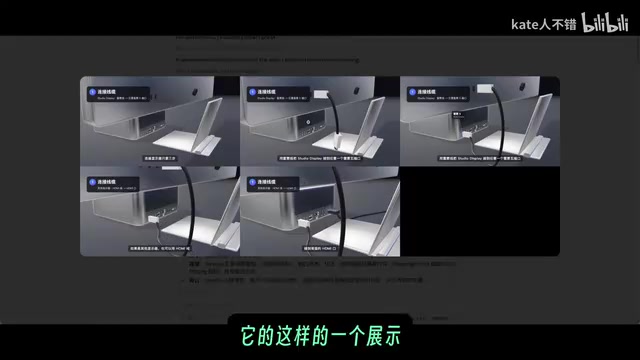
In the Mac Studio monitor setup product demo video, both models had issues: 6.1 Sol's modeling quality was decent, but text tended to appear as PowerPoint-style "page X" labels — wordy, less polished than Opus 5.5, and hard to read against bright backgrounds. The creator had to nudge it several times before reaching an acceptable result. Opus 5.5, meanwhile, struggled with color accuracy on the Mac Studio and kept failing to fix it, and the cable presentation lacked refinement. The ultimate solution was clever — bringing in Astra to correct Opus 5.5's modeling and cable work, with both models collaborating to produce a satisfying final video. This incidentally validates the practical value of multi-model task distribution.
Building an Entire "Pig Paradise" in Two Hours

The most impressive showcase was a Unity walk-through game called "Pig Paradise," generated over 2 hours and 38 minutes. The park includes a main hall, bread kiln, carousel, roller coaster, Ferris wheel, boat ride, merchandise slope, harvest spinner, bellows repair shop, and more. The roller coaster's structure and texture are sound, the little pigs can blink and wear different hats, and the leaf-decorated cottage scenes are genuinely charming.
Flaws exist — the swings are detached from the overhead bar — but overall, autonomously generating a navigable, detail-rich Unity game world in just over two hours is a compelling demonstration of 6.1 Sol's capacity for complex, long-running tasks.
Unity is one of the world's most widely used real-time 3D game engines, supporting deployment across Windows, macOS, iOS, Android, WebGL, and more. Having AI generate a Unity project — including scenes, assets, and scripting logic — is a complex "code + asset co-generation" task. The model must output C# scripts to control game logic, generate or invoke 3D models, materials, and animations, and ensure all component references are correct for the project to run in the engine. Compared to generating a single code snippet or image, this type of task demands much higher capabilities in long-context management, multi-step planning, and self-correction. Completing a fully navigable scene in roughly two and a half hours is strong evidence of 6.1 Sol's long-task execution ability.
Conclusion: Who Should Choose 6.1 Sol?
Across all tests, 6.1 Sol's profile is clear — it's not here to steal the "most powerful" title from Opus 5.5 or Astra. Instead, it delivers on a focused value proposition: intelligence close to the top tier, at 1/5 the price, with lower token consumption. Analytical tasks (terminal work, coding, scientific research, algorithm visualization, long-form game generation) are its strengths; creative writing, fine-grained artistic quality, and emotionally expressive color and lighting remain areas where Opus 5.5 and Astra hold the edge.
For budget-conscious developers and power users with high task volumes, 6.1 Sol is likely to become the go-to daily driver. When pushing for the absolute best output quality, pairing it with a top-tier model or using multi-model collaboration is the smarter approach right now.
Related articles

"Black October": Did AI Uncover 3% of All Critical Vulnerabilities Ever?
A Reddit post claims 3% of all critical software vulnerabilities ever were found in the past month, dubbed 'Black October.' We break down the statistical issues, how AI-assisted code auditing accelerates discovery, and how developers should respond.

Microsoft Project Gecko: Using AI to Bridge Language Gaps for African Farmers
Microsoft's Project Gecko launches PharmaChat, letting African farmers ask questions in their native language and get precise video clips and farming book chapters via AI. The project also releases three interactive manuals to advance inclusive AI.

Musk's Space Dominance: How Starlink Throttling Undermines Ukraine's Defense
SpaceX's Starshield throttling disabled Ukraine's high-speed interceptor drones, exposing how Musk's private control over low Earth orbit communications affects battlefield dynamics and national security, and highlighting the risks of commercial space militarization and space governance dilemmas.