GPT-6.1-Terra Hands-On Test: A Balance of Cost-Effectiveness and Speed

GPT-6.1-Terra costs only a fraction of competitors, strong on backend but weak on frontend, best suited for task allocation by scenario
A Bilibili hands-on test shows GPT-6.1-Terra has a major cost advantage: 0.85 per task versus Claude Opus 5.5's 13.41 and GPT-6.2's 7, a tenfold-plus gap. It ranks eighth overall, third in backend processing but only 18th in frontend interaction. A 3D parking lot webpage was built in under 10 minutes, meeting expectations but less refined than DeepSeek on frontend. Computer Use clicks are faster than version 6.1 but still stutter when selecting. Both tests consumed about 1% of Pro quota. The author recommends splitting tasks by capability matrix: frontend to specialized models, backend and automation to Terra.
A Hands-On Test of GPT-6.1-Terra: Balancing Cost-Effectiveness and Speed
In an era of increasingly rapid model iterations, benchmark scores alone can hardly guide practical model selection. What truly affects the development experience is often the per-task cost, response speed, and completion quality in specific scenarios. A recent hands-on test video from a Bilibili creator happens to provide exactly such an observation sample: the newly released GPT-6.1-Terra stands out in price and speed, but still has clear shortcomings in areas like frontend design.
Price Advantage: Completing the Same Task Costs Only a Fraction of Competitors
The most intuitive comparison in the video comes from cost consumption. When completing the same task, GPT-6.1-Terra costs 0.85, while Claude Opus 5.5 reaches as high as 13.41, and GPT-6.2 also hits 7. This means Terra's cost differs from some competitors by more than tenfold.
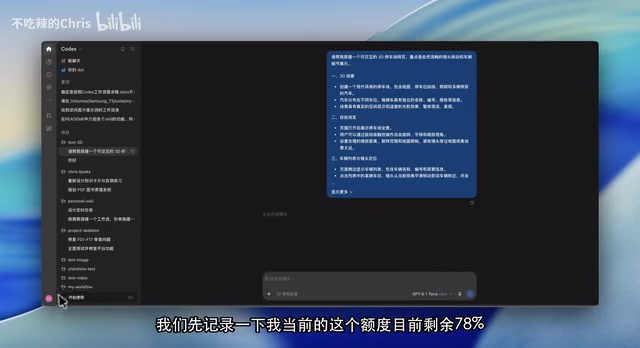
For developers who need to call models frequently and process tasks in batches, this magnitude of cost difference directly changes workflow design—scenarios that previously required careful budgeting due to token costs can now be handed to the model with more confidence. The creator also confirmed this when testing Pro subscription quota: completing a full 3D parking lot webpage build task consumed only about 1% of the quota.
Token cost is the core unit of measurement for large model API call costs. Models split input text and output text into tokens (roughly a Chinese character or part of an English word) and charge by token count. Unit prices vary enormously across models, and output tokens are usually several times more expensive than input tokens. For batch processing or high-frequency call scenarios, unit price differences amplify linearly with call volume, directly determining project feasibility. The "cost to complete the same task" mentioned in the article is exactly a horizontal comparison metric calculated by multiplying token consumption by unit price.
Overall Score Ranks Eighth: Backend Capabilities Shine but Frontend Is Weak
From the scoring dimensions, GPT-6.1-Terra ranks eighth overall. Its backend processing capability ranks third, which is a relatively strong area. Frontend interaction ranks lower, around 18th.
The creator stated outright in the video that for tasks involving frontend design, DeepSeekAd scores very high on frontend and is a more suitable choice. This uneven distribution of capabilities shows that Terra is not positioned as an all-rounder, but as a productivity tool with clear emphases.
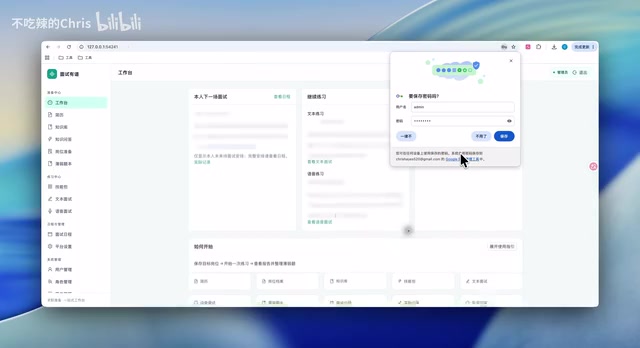
Computer Use refers to an AI model's ability to directly control a graphical interface by simulating mouse clicks, keyboard input, and other operations to complete tasks, as distinct from invoking tools via API. It relies on visually understanding screen content and planning operation sequences, placing high demands on the model's perceptual and decision-making coherence, so actual performance is often affected by factors such as network latency and interface rendering speed. The creator's test of page clicks in an interview system is a typical Computer Use scenario.
3D Parking Lot in Practice: An Interactive Result in Under 10 Minutes
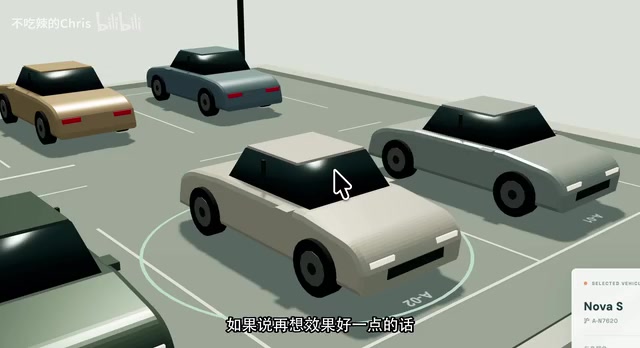
To verify actual performance, the creator gave the model a prompt requiring it to build an interactive 3D parking lot webpage and set the thinking depth to the highest level, Ultra. The model completed development through Codex in a total of 10 minutes and 52 seconds—including a few minutes spent troubleshooting a network connection issue, so the actual pure development time was under 10 minutes.
Looking at the finished result, the viewpoint can be switched freely, details can be viewed when zoomed in, and clicking any vehicle switches to a viewpoint near that car. The creator commented that producing such a result in such a short time met expectations, but further improving the effect would require continued adjustments to frontend design, and frankly admitted the result was not as good as DeepSeek.
Codex here refers to the code generation/execution environment provided by OpenAI (or a coding agent built on that capability), in which the model can write, run, and debug code to complete development tasks such as webpage building. Unlike pure text generation, the Codex environment lets the model actually execute code and observe results, making it suitable for engineering tasks that require iterative verification. The creator set the thinking depth to "Ultra," meaning the model performs a longer reasoning chain before generating, which usually improves completion quality on complex tasks but also increases response time.
Computer Use Hands-On: Faster Clicks but Still Some Stuttering
In the Computer Use segment, the creator used a self-developed interview system to test page clicks in the main business flow. The model was asked to complete the test through actual clicking.
The hands-on test showed that GPT-6.1-Terra clicks faster than the previously used 6.1 version, but stuttering still occurs—it pauses to think when selecting certain options, and the creator was unsure whether this was related to network conditions. Across the entire business self-test flow, quota consumption was even less than 1%, once again confirming its token-saving characteristics.
Selection Advice: Allocate Tasks by Scenario
Overall, GPT-6.1-Terra's positioning is quite clear: it suits cost-sensitive backend processing and automation scenarios that require fast responses; while for tasks requiring refined aesthetics such as frontend design, models like DeepSeek still have advantages. For developers using multiple models simultaneously, splitting tasks according to a capability matrix—assigning frontend to specialized models and backend and process automation to Terra—may be the more pragmatic strategy at this stage.
One-line Summary
GPT-6.1-Terra costs only a fraction of competitors, strong on backend but weak on frontend, suitable for splitting tasks by scenario
Paragraph Summary
A Bilibili creator's hands-on test shows that the newly released GPT-6.1-Terra has a significant cost advantage: completing the same task costs only 0.85, far below Claude Opus 5.5's 13.41 and GPT-6.2's 7, a difference of more than tenfold. Its overall score ranks eighth, with backend processing third but frontend interaction only 18th, indicating an uneven capability distribution. In practice, a 3D parking lot webpage was developed in under 10 minutes, meeting expectations but with less frontend refinement than DeepSeek. Computer Use click speed improved over version 6.1, but there is still stuttering when pausing to select. Both tests consumed about 1% of Pro quota, clearly showing its token-saving nature. The author suggests splitting tasks by capability matrix: assign frontend to specialized models, and backend and process automation to Terra.
Related articles

AI Can Read Neural Network Weights Directly: Do Models Already Exceed Expectations?
A Reddit developer experiment shows language models can directly read neural network weights and infer their function. Astra, Opus 5.5, and Muse Spark 1.3 all passed the test, sparking discussion on model generalization and training sources.

India's Microdrama Market Explodes: EloElo Secures $80M Investment from NBCUniversal
EloElo secures $80M from NBCUniversal to boost StoryTV, its microdrama platform with over 33M monthly active users, as India's microdrama market draws global capital.

Acoustic Detection of Multi-Rotor UAVs: Fusing Handcrafted Features with Pre-Trained Embeddings
Study reveals data leakage from random splits in UAV acoustic detection, proposes source-disjoint protocol with stacked ensemble of handcrafted features and YAMNet embeddings, achieving 95.29% accuracy for low-cost drone detection.