GPT-6.2 Astra and Sol: A Dual-Model Release Built for the Real World

The GPT-6.2 series' Astra and Sol are demoed in real office scenarios, emphasizing workflow embedding over benchmarks.
The article interprets the official demo video of the GPT-6.2 series' Astra and Sol. Presented as a workplace drama, the demo shows users issuing fragmented, colloquial, even interrupted voice commands that prompt the model to generate workbooks in real time, update accounts payable, create weekly meeting slides, and track cross-year financial metrics. The article infers the two models may focus on long-context financial modeling and real-time voice interaction respectively, and identifies three capabilities needed for enterprise deployment: multi-source information integration, real-time response and correction, and business context understanding. It notes this "real-world" positioning reflects a shift from capability demos to workflow embedding, but also brings evaluation challenges—traditional benchmarks struggle to measure task continuity in chaotic environments, and demo results still need third-party verification. Technical specs, pricing, and the division of labor remain undisclosed.
Product Positioning as Seen Through the Demo Video
According to the official YouTube demo, OpenAI (or a related team) has released two models in the GPT-6.2 series—Astra and Sol. The video unfolds as a workplace drama: under the pressure of meetings, financial updates, and presentation creation, an employee uses voice commands to have the model generate workbooks in real time, update accounts payable, and track metrics. This narrative style deliberately emphasizes "real-world" scenarios rather than benchmark scores.

Notably, the commands in the demo are fragmented and colloquial, even interspersed with interruptions and repetition. The model must maintain task continuity amid this chaos—precisely the challenge most commonly encountered when today's large models are deployed in enterprise settings.
Division of Labor Between the Two Models: Guessing the Differences Between Astra and Sol
The video title mentions two models, but the body text does not clearly explain the capability boundaries between them. Judging from the logic of the demo, Astra and Sol may correspond to different emphases—for example, one leaning toward long-context financial modeling and the other toward real-time voice interaction.

The command in the screenshot, "Track nap debt through 2031 and show next year's EPS, both against plans," shows that the model is asked to handle cross-year financial forecasting and comparative analysis. Such tasks place extremely high demands on structured reasoning and numerical accuracy, and are a touchstone for testing whether a model is truly "usable."
The Technical Implications of Long-Context and Real-Time Voice Interaction
Long-context capability refers to the number of tokens a model can process in a single pass (e.g., hundreds of thousands to millions), enabling it to read an entire financial report, multi-year budget spreadsheet, or long meeting transcript at once without losing intermediate information. This is especially critical for cross-year financial modeling, because the model must align line items, accounting standards, and assumptions across multiple years within the same reasoning process. Real-time voice interaction, by contrast, requires low-latency streaming recognition and generation, typically relying on techniques such as voice activity detection, interruption handling, and incremental decoding, so that the model can maintain conversational state even when the user inserts instructions mid-sentence. The two place different demands on compute and architecture: the former depends on memory and attention efficiency, while the latter depends on end-to-end latency. Therefore, if Astra and Sol do have a division of labor, it is likely a trade-off along these two technical routes rather than a simple difference in capability level.
Key Capabilities for Real-World Tasks
The scenarios that recur in the demo include updating accounts payable, creating slides for weekly meetings, and answering questions about savings delays. Together, these tasks point to three capability dimensions:
- Multi-source information integration: extracting key data from emails, voice messages, and instant instructions
- Real-time response and correction: quickly adjusting output after the user interrupts or adds information
- Understanding of business context: distinguishing "planned values" from "actual values," and "this year" from "next year"
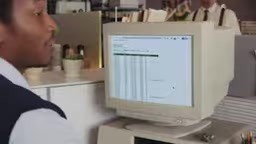
In the demo, the model outputs a conclusion such as "We'd owe 32 million more in 2031, but next year, we make 30 cents less per share." Although this is a demo script, it demonstrates the model's ability to turn complex financial implications into an actionable summary.
The Gap Between Benchmark Tests and Real Workflow Evaluation
Traditional benchmarks (such as MMLU, GSM8K, and FinanceBench) usually score on clean, single-turn, well-formatted inputs with unique standard answers, making horizontal comparison easy. But enterprise office tasks are often multi-turn, colloquial, information-scattered, and subject to mid-course goal changes. The evaluation difficulty lies in task continuity, referent resolution, and numerical consistency rather than single-question accuracy. As a result, the industry has seen the emergence of agent benchmarks (e.g., chaining multi-step tool calls and file operations into task chains) and human-graded workflow evaluations, but such evaluations are costly and poorly reproducible. The reason demo videos are treated as product descriptions is precisely that they present the messy context that benchmarks cannot cover; but videos can be edited and scripts can be designed, so they cannot replace third-party reliability testing on real business data.
Practical Significance for Enterprise Deployment

From an industry perspective, the GPT-6.2 series' emphasis on the "real world" rather than benchmark scores reflects that competition among large models is shifting from capability demonstrations to workflow embedding. What enterprise users care about is no longer whether the model can answer difficult questions, but whether it can finish a slide deck five minutes before a meeting and provide answers with numbers when the boss presses for details.
This positioning also brings new evaluation challenges: traditional benchmarks struggle to measure the ability to "maintain task coherence in a chaotic office environment." The demo video itself becomes part of the product description, but its real effectiveness still needs to be verified by third parties in actual business settings.
Questions to Watch
Currently, public information is mainly demo-based and lacks technical details, context window specifications, pricing, and availability information. There are still no answers regarding the specific division of labor between Astra and Sol, whether private enterprise deployment is supported, and how accurate financial calculations are. For teams focused on AI office deployment, what matters next is actual API performance and reliability testing in vertical scenarios, not the dramatic effects in the demo.
One-line Summary
The GPT-6.2 series' Astra and Sol are demonstrated in real office scenarios, emphasizing workflow embedding rather than benchmark scores.
Paragraph Summary
The article interprets the official demo video of the GPT-6.2 series' Astra and Sol. The demo is presented as a workplace drama, in which users issue fragmented, colloquial, and even interrupted voice commands that prompt the model to generate workbooks in real time, update accounts payable, create slides for weekly meetings, and track cross-year financial metrics. The article infers that the two models may focus respectively on long-context financial modeling and real-time voice interaction, and summarizes three capabilities required for enterprise deployment: multi-source information integration, real-time response and correction, and business context understanding. The author notes that this "real-world" positioning reflects a shift in large-model competition from capability demonstrations to workflow embedding, but it also brings evaluation challenges—traditional benchmarks struggle to measure task continuity in chaotic environments, and the demo's effectiveness still requires third-party verification. At present, technical specifications, pricing, and the division of labor between the two models have not been disclosed.
Related articles

Abnormal Error Rate Spike in Claude Mythos 5.2 and Fable 5.2
Claude Mythos 5.2 and Claude Fable 5.2 show an abnormal spike in request error rates, marked as investigating on the official status page. This article covers the incident overview, practical impact on developers, and recommended responses.

ReAct Runtime Context Trimming: Why Claude Code Acts at 70%
A deep dive into ReAct runtime context trimming: why Claude Code compresses at ~70% usage, why tool calls dominate, why messages must be dropped in pairs, and why codebases don't need RAG.

AI Agent vs LLM: How Cursor and Claude Code Actually Work
An in-depth analysis of the essential difference between AI Agents and LLMs: LLMs generate code suggestions, while Agents modify files and run tests via tool calls. Using a Spring Boot bug fix as an example, it breaks down the workflows, permission control, and verification mechanisms of Cursor and Claude Code.