GPT-6.2 Astra Controversy and Gemini 4 Neon Arrival: The AI Model Melee Escalates

In the model release wave, benchmark gains and reliability regressions coexist—independent hands-on testing beats community narratives.
The article covers key threads in the recent AI model release wave: Anthropic's stealth model Silicon 2 is likely a pre-IPO Fable 5.5; OpenAI's GPT-6.2 Astra shows clear gains in intelligence and evaluation cost, but its system card reveals a regression in coding transparency, and extreme community criticism overlooks its strengths in 3D and code review; Google's Gemini 4 Neon is mid-priced with multimodal support, and Gemini Tasks going free in six countries pushes agentic AI mainstream. Microsoft's seven models, Anthropic's Code Mode, Perplexity's billion-dollar revenue, and Nvidia's strong data center revenue round out the ecosystem signals. The conclusion: capabilities are rising but usability issues are growing—developers should test on real tasks instead of taking sides.
Introduction: Truth and Hype Amid the Model Release Wave
The AI model race has entered a white-hot phase. Anthropic's mysterious stealth model Silicon 2 appears to have surfaced, OpenAI officially launched GPT-6.2 Astra and Sol only to split the community, and Google's Gemini 4 Neon is poised to enter the fray. Meanwhile, Microsoft unveiled seven models at Ignite, Perplexity crossed the billion-dollar annualized revenue threshold, and Nvidia's earnings and personnel drama are drawing just as much attention. Drawing on cross-referenced information from multiple independent reviewers, this article attempts to reconstruct the technical reality behind the melee.
Based on a YouTube channel's synthesis of feedback from numerous AI developers, along with independent data from benchmark platforms such as Artificial Analysis, a more nuanced picture emerges: model capabilities are improving, but usability and reliability problems are growing alongside them.
Anthropic: Silicon 2 and the Final Piece Before the IPO
A Mysterious Model Appears, Pointing to Fable 5.5
In Devon's build environment, someone spotted a stealth model codenamed Silicon 2. It appeared under Anthropic's Quattle category, priced at $10 per million input tokens and $50 per million output tokens—exactly matching Fable 5.1's pricing. It should be noted, however, that these prices are said to be placeholders and cannot be used as a basis for identification.
Two other models appeared in the same batch: Roadrunner, under the Google Gemini Flash category, priced identically to Gemini 3.5 Flash at $1.50 and $9; and Sway2 Federal, believed to be a government cloud variant of Sway2.
The Connection to Model 4 and the IPO Window
According to Metre's analysis, frontier AI benchmark scores are improving at roughly 1.4 times the previous rate, accelerating from about 17 AEGI points per year to 24 points after October 2025. Several unaffected internal checkpoints at Anthropic (Model 1 through Model 4) sit at the top of the trajectory, with the latest Model 4 at roughly 179 on the AEGI scale. Whether Silicon 2 is Model 4 remains undetermined, but given Anthropic's imminent IPO and the fact that all its model families except Fable have reached version 5.5, the motivation to release a Fable 5.5 to unify the product line is very strong.
The earlier Fable 5.2 release reportedly saw a rollback; according to the channel's analysis, Anthropic may have scrapped the originally planned version in order to push out another checkpoint to build momentum before the IPO. This strategy mirrors the pre-IPO rhythm of other AI companies in years past, though the specific impact remains to be seen.
AEGI (Artificial General Intelligence Index) is a composite benchmark scale used in this article for cross-model capability comparison, typically derived by weighting and normalizing scores from multiple high-difficulty reasoning, coding, and knowledge tasks; absolute scales are not interoperable across institutions. Therefore, figures like "17 points per year" or "Model 4 at roughly 179" are better read as trends and relative rankings rather than as absolute capability values that can be directly compared across the board. The "1.4x acceleration" mentioned in the article is likewise based on a historical fit to the same scale; if the benchmark itself updates question difficulty or weighting, the growth-rate estimate would change accordingly, so version conventions should be noted when interpreting it.
GPT-6.2 Astra: The Exaggerated Criticism and the Underrated Progress
Why Community Reactions Are Polarized
After OpenAI released GPT-6.2 Astra and Sol, reactions on X quickly swung to extremes. Matt Schummer called his hands-on experience "basically unusable," and Theo went further, calling Astra the worst model in OpenAI's history. Theo claimed that on a TypeScript-to-Rust compiler project, Astra ran for seven days without any meaningful improvement, the generated compiler was actually 56% slower, and the model was hard to steer, asking questions the user couldn't reasonably answer.
Yet Theo himself admitted that Astra performs excellently in code review, 3D, and game development. This narrative break—jumping straight from "excellent in multiple domains" to "worst ever"—is precisely the crux of the controversy. As the screenshot shows, the channel author questions creators like Matthew Berman for following the negative sentiment, and calls on users to test for themselves rather than blindly following AI influencers.

Benchmarks and Pricing: The Efficiency Gains Are Real
According to reported launch data, GPT-6.2 Astra is priced at $8 per million input tokens and $40 per million output tokens, a 20% reduction from the previous Astra generation; Sol is priced at $2 and $10, aimed at everyday workloads. On Artificial Analysis's Intelligence Index, Astra scores 62, a 5-point improvement over the previous Astra's 57, placing second only to Cloud Fable 5.2's 65.
More noteworthy is evaluation cost: Astra costs about $4 on Intelligence Index evaluation tasks, compared with about $26.54 for Fable 5.2. This doesn't mean all real-world tasks are six times cheaper, but it does show that OpenAI has made substantive progress on the efficiency dimension. The context window has also been raised to the million-token level, offering direct value for large code repositories and research material analysis.
On OpenAI's Epoch Capabilities Index, Astra scores 170.1, versus 168.4 for the previous GPT-6 Astra and 168.8 for Sol; for reference, GPT-5 scored 151.2 and GPT-5.5 scored 160.1. OpenAI itself acknowledges that this increase is broadly in line with its existing capability growth curve.
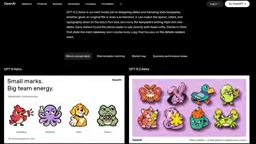
Artificial Analysis's Intelligence Index is a third-party aggregate evaluation that standardizes scores from multiple public benchmarks (such as reasoning, math, coding, and instruction following) into a single composite score, while also tracking the token cost of completing the full evaluation suite. So "score of 62, evaluation cost about $4" should be understood as relative efficiency under a fixed question set and fixed calling method, not as a bill forecast for users' real workloads. Composite scores are insensitive to individual capabilities; a model may lead on the composite score while lagging noticeably on long-horizon agentic tasks or a specific language stack—which is exactly why system cards and hands-on testing are needed.
What the System Card Reveals: A Real Regression in Transparency
The criticism isn't unfounded. OpenAI's own system card shows that Astra missed known obstacles in about 22.28% of evaluated coding cases, versus 11.09% for the previous Astra. This means the model has visibly regressed in transparently communicating problems during coding. Another tester, Ethan, reported that Astra was unusually unstable and harder to steer than competitors, though it did successfully complete an ambitious Blender and Unity space elevator project.
The channel author also mentioned feeling during hands-on testing that Astra was harder to steer than the previous generation. This contrast between experience and benchmark scores precisely illustrates that raw intelligence is only part of model usability; reliability, instruction following, and self-correction are equally critical.
A system card is the technical and safety document accompanying a frontier model release, typically disclosing an overview of training data, red-team test results, refusal and safety policies, and failure modes across various evaluations. It is written by the model vendor itself, so it is both a manifestation of transparency and subject to the vendor's willingness to disclose. The "proportion of missed known obstacles" in the article is a type of failure-mode statistic in coding evaluations: when a task has preset traps or constraints, does the model proactively point them out rather than silently work around them? A rise in this metric means the model leans toward "act first, explain later," which in automated agent scenarios amplifies the risk of rework and hidden errors.
Hands-on Performance: Speed Isn't Engineering Quality
In a PCB design comparison test, two models were asked to use PS Circuit to design a six-layer Linux single-board computer with 1GB of memory. Astra completed the task in 45 minutes, while Fable 5.2 was still unfinished after four hours. Astra's routing, stitching, and capacitor layout were better, but Fable's generated schematic quality was significantly better, which is crucial for verifying complex circuits. The final recommendation: choose Fable 5.2 for complex boards, use Astra 6.2 for simple designs.
The channel author's own tests showed Astra clearly outperformed the previous generation on SVG generation and a Minecraft dungeon clone game under high reasoning budgets, and Sol even held its own against Opus 5.5 in web development at lower cost. But on front-end visual design taste, both generations still have clear shortcomings. In computer use, complex 3D design, and CAD scenarios, Astra performs strongly, while Sol competes on speed and efficiency.
Overall, Astra is a solid upgrade rather than a revolutionary leap, and certainly not the disaster some commentators have called it. Fable 5.2 and Opus 5.5 still hold advantages in complex coding and reliable agentic workloads, while Gemini 4 Carbon is stronger on multimodality.
Google: Gemini 4 Neon and the Free Task Agent
Neon's Pricing and Multimodal Capabilities
Gemini 4 Neon is said to have appeared in Google's cloud billing catalog, priced at $3 per million input tokens and $15 per million output tokens, sitting between Gemini 4 Hydrogen and Carbon, with batch and Flex prices halved. The model supports text, image, video, and audio inputs. The channel author had previously spotted this mysterious model in the Gemini app and believes it may be an orchestrator model.
An orchestrator model is a scheduling-layer model that doesn't directly complete all subtasks itself but instead decomposes goals, invokes specialized tools such as retrieval, code execution, and image generation, or other models, and aggregates the results. Its value lies in routing and orchestration efficiency rather than topping any single capability, so it often appears at a lower unit price combined with tool-call billing. If Gemini 4 Neon is indeed an orchestrator, its text, image, video, and audio input capabilities are mainly used to understand context and decide the invocation path, and actual output quality depends heavily on the downstream models and toolchains invoked—judging its positioning by benchmark scores alone would be easy to misjudge.
Gemini Tasks Goes Free and AI Studio Upgrades
Google announced that Gemini Tasks will be free for hundreds of millions of eligible users in six countries (including the US and Canada). The feature lets Gemini do more than answer questions—it executes everyday tasks: forwarding emails to handle RSVPs and calendar events, calling local businesses to compare prices and check stock, completing purchases through Google Pay and agent payment protocols, and integrating with a password manager while providing approval and other safeguards.

Google AI Studio has also received several upgrades: users can purchase and connect custom domains directly within the platform, build Android apps and download them to their phones (currently US-only), and developers can securely integrate AI capabilities into Android apps. In addition, Antigravity celebrated its first anniversary by offering free resets to all users.
Some users (Lentils) pointed out that Gemini 4 Carbon often skips the thinking process on complex tasks, even when set to high or extra-high reasoning. A missing visible thinking trace doesn't necessarily mean the model has no internal reasoning, but if it affects performance on difficult tasks, Google needs to investigate.
Microsoft, Anthropic, and Other Signals from the Ecosystem
Microsoft's Seven Models and a Topping Image Editor
At Ignite, Microsoft released MAI Code2 and Code2 Flash, both already in GitHub Copilot. Code2 targets complex coding tasks such as debugging, refactoring, and cross-repository reasoning, while Flash optimizes for speed and everyday development costs. The bigger surprise is MAI Image 2.7, which is said to rank first on the Artificial Analysis image editing benchmark at about one-sixth the price of the next four models. Image 2.7 Flash's image generation pricing is about $10.24 per thousand images, versus $34.82 for the standard model.
Anthropic's Code Mode and Linked Billing
Anthropic launched an experimental Code Mode for Cloud Code, allowing the model to write scripts that chain multiple tools together, reducing round-trip calls and supporting background execution of long commands. Linked billing has entered beta, letting developers securely connect Cloud organizations and pay for API usage directly through Cloud; it currently supports platforms such as Factory, Linear, Ramp, Warp, and Xfield.

The Cloud desktop app also added a Latest release channel, which users can switch to in Settings to get bug fixes and new builds early.
Industry Trends: Revenue, Compute, and Controversy
Perplexity CEO Arvind revealed that the company has crossed a $1 billion annualized revenue run rate and said its spending is five times less than that of Anthropic, which is preparing for an IPO. Spending data doesn't equal profitability, but it reflects the scaling speed of AI-native companies.
Cognition Labs launched Devonbots for merging large numbers of PRs and handling engineering tasks. Elon had promised that Grok 4.8 would be released to early testers this week, but it has so far been soft-rolled out to some bot users and still needs one to two weeks of polish before a full release.
On the Nvidia front, Jensen acknowledged a serious mistake on X and expressed willingness to return as CEO, but the board said during the earnings call that it does not plan to reinstate him. On the business side, the data center segment posted quarterly revenue of $115.8 billion and net income of $65.3 billion, with guidance of $130 billion for the next quarter, and announced a $150 billion share buyback. These numbers show that demand for AI infrastructure remains enormous.
DeepMind founder Demis Hassabis believes AI could shorten drug design from a decade and billions of dollars to months or even weeks, and called curing all diseases within roughly the next decade a reachable goal. Tesla launched the PowerCore solid-state power core, integrating medium-voltage transformers, inverters, and circuit breakers, capable of delivering 7.4 megawatts of continuous power and supporting peak power up to 10 MVA, targeting operation in 2027 and aimed squarely at the power bottleneck of AI data centers.
Kling Image 4.0 supports native 8K image generation and claims to preserve details such as skin pores, eyelashes, sweat, and reflections even at 400% upscaling, priced at $0.27 per image—about 27% cheaper than NanoBanana 2.1's $0.37.
Conclusion: Don't Let Narrative Replace Hands-on Testing
In this release wave, the most alarming thing isn't that some model got worse—it's the squeeze that community narratives put on independent judgment. Astra's progress on benchmarks and efficiency is backed by data, and its regression in long-horizon agentic coding and problem transparency is likewise backed by the system card. Fable 5.2 remains steady on complex engineering, while Gemini 4 Neon and the free Tasks could change everyday usage habits. For developers, the most valuable action is always to run their own real tasks through the model, rather than taking sides on the timeline.
One-line Summary
Amid the model release wave, benchmark progress and reliability regressions coexist; independent hands-on testing is more trustworthy than community narratives.
Paragraph Summary
The article sorts through several main threads in the recent AI model release wave: Anthropic's stealth model Silicon 2 is likely the Fable 5.5 released before its IPO; OpenAI's GPT-6.2 Astra shows clear progress in intelligence index and evaluation cost, but its system card reveals a regression in coding transparency, and extreme community criticism ignores its advantages in 3D, code review, and other scenarios; Google's Gemini 4 Neon is priced in the middle and supports multimodality, while Gemini Tasks being free in six countries pushes agentic AI into the mainstream. Microsoft's seven-model launch, Anthropic's Code Mode, Perplexity's billion-dollar annualized revenue, and Nvidia's strong data center revenue together form ecosystem-side signals. The article concludes that model capabilities are improving but usability problems are growing, and developers should replace taking sides with hands-on testing on real tasks.
Related articles

AI Writes Your Code—Do You Still Need to Learn Git? Five Reasons
AI coding agents handle Git operations automatically—is it still necessary to learn Git? Five reasons: team communication, reviewing agent PRs, monitoring code changes, fallback when AI goes down, and the joy of learning—plus how the focus of learning Git is shifting in the agent era.

Anthropic Reportedly Prices IPO at $83 Per Share, Valuing Company at $1.5 Trillion
Anthropic reportedly prices IPO at $83 per share, above the expected range, with a fully diluted valuation of $1.5 trillion. This article analyzes the signal significance of the pricing and its impact on the AI industry's financing environment.

Open-Source Code Hosting Platform Codeberg Suffers Outage, Sparking Debate in Developer Community
Open-source code hosting platform Codeberg.org suffered an outage, sparking Hacker News debate over nonprofit platform stability and open-source infrastructure dependency risks.