GPT-6.2 Astra Full Hands-On Test: Frontend Rendering, Beat-Synced Video, Bug Fixing, and PPT Capabilities Put to the Test
GPT-6.2 Astra test: fast and cheap bug fixing, but frontend, refactoring, and beat-syncing lag behind.
A Bilibili creator tested GPT-6.2 Astra against Claude Fable 5.2, Sonic 5.5, GPT-6.1 Zoe, and GPT-6 Extra. Astra excels at cross-file bug fixing (2m13s, $0.22, a quarter of GPT-6 Extra's cost), but its frontend rendering lags behind competitors, 3D motion has weak aesthetics, beat-syncing is less precise than GPT-6.1 Zoe, and refactoring scores are lower—cause unclear. PPT generation is usable but rough on details.
Title
GPT-6.2 Astra Full Hands-On Test: Frontend Rendering, Beat-Synced Video, Bug Fixing, and PPT Capabilities Put to the Test
Meta Description
Based on hands-on testing by a Bilibili creator, a comprehensive comparison of GPT-6.2 Astra's performance in frontend rendering, 3D motion videos, audio beat-syncing, cross-file bug fixing, code refactoring, and PPT generation, with side-by-side comparisons against Claude Fable 5.2, Sonic 5.5, GPT-6.1 Zoe, and GPT-6 Extra, plus practical recommendations for choosing models by task.
Article Content
After OpenAI released its new model GPT-6.2 Astra, community discussion has been heated. Bilibili creator "今天不学习明天就变Rubbish" immediately conducted a multi-dimensional hands-on test covering frontend rendering, 3D product motion videos, audio beat-synced videos, cross-file bug fixing, code refactoring, and PPT/document generation. The tests compared Claude's Fable 5.2 and Sonic 5.5, as well as the creator's own GPT-6.1 Zoe and GPT-6 Extra. This article organizes the test results and my observations for your reference.
Frontend Rendering: Aesthetics and Interaction Details Still Behind Claude
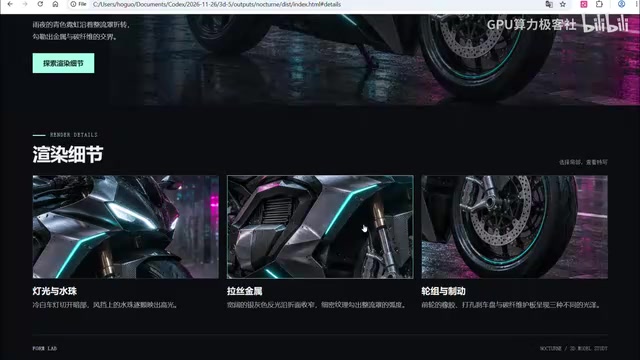
The creator used the same image and the same prompt to have GPT-6.2 Astra, Sonic 5.5, and Fable 5.2 each generate a frontend page. Sonic 5.5's water droplets and ground reflections were very realistic, the mouse-hover zoom feature was well implemented, and clicking on car part codes revealed detailed descriptions with zoomable close-ups. GPT-6.2 Astra's version had a logo flip, and the water droplet and lemon light details were acceptable, but it had fewer detailed images and no zoom feature, making it look thin by comparison. Fable 5.2 was the most complete of the three: rain effects, mouse-hover fill lighting, exposure/neon/glow adjustments, rainfall intensity control, and white-model self-illumination—the richness of interaction was clearly higher. The creator stated outright that "Fable 5.2's position is still unshakable."
For another hand-drawn style 3D image, GPT-6.2 Astra handled it with strong dimensionality and realistic lighting, making it directly usable as image material—a small bright spot in the frontend rendering segment.
3D Product Motion Video: Competent Cinematic Language, Aesthetics Hold It Back
The creator uploaded a reference video and asked the model to mimic the effects and rhythm. The result: the model brought the ball from the original video into its output and mistakenly used the original creator's voice instead of the specified background music. The shot transitions and the slow-to-fast pacing were mostly on point, but there was an insertion-blending issue in one place—what should have been a pressing operation blended into the background. The creator commented that "the cinematic language is actually fine, but the aesthetics are really mediocre—the color scheme didn't impress me."
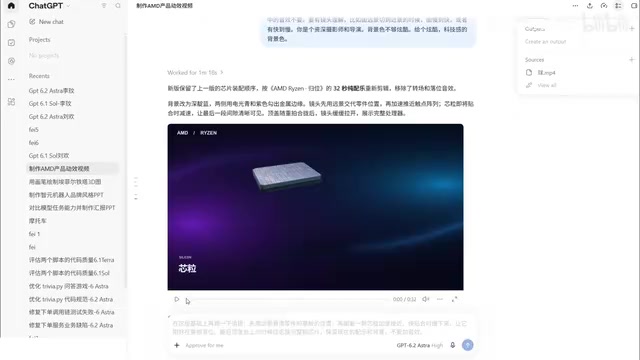
Video generation models are often evaluated across several dimensions: cinematic language refers to camera movement, shot-size transitions, and pacing control—structural capabilities that can be guided by prompts and reference videos; insertion blending refers to the physical consistency of newly inserted objects with the original footage in terms of lighting, perspective, and occlusion relationships—a key metric for whether a generation model understands 3D scenes; aesthetics involves color schemes, composition, and overall tonality, typically dependent on preference alignment in training data and difficult to correct quickly through prompts. What the creator described as "cinematic language is fine but aesthetics are mediocre" essentially means structural capabilities met the bar while subjective quality did not.
Audio Beat-Synced Video: GPT-6.1 Zoe Was Actually More Accurate
In the task of switching photos using the butterfly sound effect in the audio, the creator specifically emphasized key points in GPT-6.2 Astra's prompt, but the switch points didn't fully follow the butterfly. By comparison, GPT-6.1 Zoe's beat-syncing was very precise—"if you have high beat-syncing requirements, it's better to use 6.1 Zoe." This shows that the new version doesn't necessarily comprehensively surpass the old one on specific tasks.
Audio beat-syncing tasks require the model to precisely align the transient peaks of sound effects with video transition frames, testing multimodal timeline alignment capabilities. In such tasks, the model needs to first locate event onsets from the audio and then map them to the video frame sequence, with errors typically measured in frames. Improvements in general capabilities in a new version do not mean the time-alignment module was optimized in sync—different versions may adopt different alignment strategies or training data mixes, so "the old version is more accurate" is not uncommon. In practice, if beat-syncing is a hard requirement, you should stick with the version validated for that task rather than defaulting to the latest model.
Cross-File Bug Fixing: Fast and Cheap
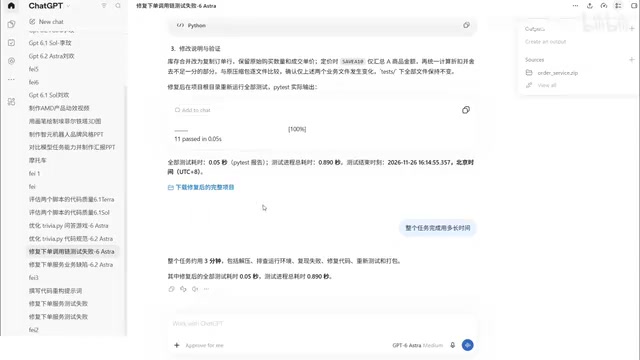
The creator found a small project involving multiple files; GPT-6.2 Astra took 2 minutes 13 seconds and cost $0.22, with all test cases passing. GPT-6 Extra took 3 minutes and cost $0.91 for the same content—more than four times the cost. The creator noted that this validates the official claim that "cost is less than one-third of GPT-6," and actual performance was even better. For development scenarios that require frequent test runs, this cost gap is very attractive.
Code Refactoring: Scores Dropped Instead of Rising, Cause Unknown
The creator had two models refactor the same 13-line code script, then evaluated the results using GPT-6.1 Sonic and 6.1 Terra. The results were surprising: GPT-6 Extra scored higher, while GPT-6.2 Astra scored lower. Switching to OPS 5.5 for scoring, the conclusion remained the same. The creator said, "I shouldn't have messed up, right? I don't dare say much—how come code refactoring ability actually declined with the version update?" and suggested interested readers test it themselves. This result may be related to prompts, evaluation criteria, or task characteristics; a single test isn't enough to draw conclusions, but it's certainly worth noting.
Using another model to score refactoring results falls under the LLM-as-a-Judge evaluation paradigm, whose reliability is affected by the scoring model's preferences, prompt design, and scoring dimension definitions. The fact that the same code got consistent conclusions under different judges (here GPT-6.1 Sonic, 6.1 Terra, and OPS 5.5) suggests some robustness, but systematic bias—"the scoring model prefers a certain code style"—cannot be ruled out. A more rigorous approach would introduce objective metrics such as unit test pass rate, cyclomatic complexity changes, duplicate code rate, and type coverage, cross-validated with subjective scores. A single 13-line code sample has limited statistical significance.
PPT and Document Generation: Generally Usable, Rough on Details
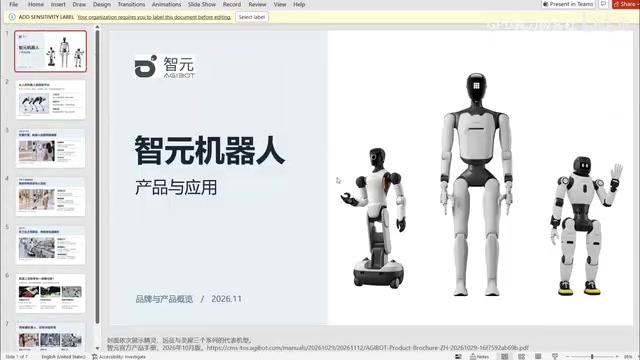
The creator uploaded materials and had GPT-6.2 Astra create a PPT about 智源 robots. The overall visuals were good, and the images likely came from the 智源 official website, but the page count was on the low side, possibly due to an incomplete prompt. The text-only PPT's color scheme was acceptable, the categorization by manufacturer was concise and clear, and the progress bars presented data clearly. The dual-layer document architecture was reasonable, and table insertion was mostly in place, but in the code refactoring section some text was bold and some wasn't—detail handling wasn't rigorous enough, and overall it "didn't make your eyes light up."
Summary and Buying Recommendations
Overall, GPT-6.2 Astra's strength lies in cross-file bug fixing—fast, low-cost, and high pass rate, suitable for automated fixes in development workflows. PPT and document generation capabilities meet daily needs, but detail polishing has room for improvement. Frontend rendering is not as good as Fable 5.2 and Sonic 5.5; 3D motion videos require more detailed prompts to produce good results; for audio beat-synced videos, it's advisable to continue using GPT-6.1 Zoe. The reason for the decline in code refactoring scores is unclear and requires more testing to verify.
The creator also emphasized that these are personal hands-on tests and the prompts weren't perfect—readers are encouraged to try for themselves. Different models win in different areas; choosing tools by task type is more practical than blindly chasing the newest.
One-line Summary
GPT-6.2 Astra hands-on test: fast and cheap at bug fixing, but frontend, refactoring, and beat-syncing lag behind older versions or competitors.
Paragraph Summary
A Bilibili creator conducted a multi-dimensional hands-on test of OpenAI's new model GPT-6.2 Astra, comparing it with Claude Fable 5.2, Sonic 5.5, GPT-6.1 Zoe, and GPT-6 Extra. Results show Astra excels at cross-file bug fixing—completing in 2 minutes 13 seconds at a cost of $0.22, just a quarter of GPT-6 Extra's, validating the official claim of "less than one-third the cost of GPT-6." However, in frontend rendering, its interaction details fall short of Fable 5.2 and Sonic 5.5; 3D motion has competent cinematic language but mediocre aesthetics; audio beat-syncing is less precise than GPT-6.1 Zoe; and code refactoring scores are lower than GPT-6 Extra, with multiple evaluation models reaching the same conclusion but the cause unclear. PPT and document generation are generally usable, with detail flaws such as inconsistent bolding.
Related articles

ChatGPT Plus Top-Up in China: Third-Party Website Recharge That Supports WeChat Pay and Alipay, No Overseas Card Needed
A Bilibili creator tests ChatGPT Plus top-up methods in China: comparing third-party website recharge, direct credit card, and mobile in-app purchase, with a full walkthrough of password-free WeChat/Alipay recharge and an analysis of Session credential and payment risk-control risks.

6GB Delivers Opus-Level Performance: Bonsai 2.5 27B Hands-On Test
Prism ML releases Ternary Bonsai 2.5 27B: ternary quantization brings it to just 5.9GB, runnable on a single consumer GPU while retaining 262k context and vision. Hands-on agentic benchmarks approach full-precision Qwen 3.8 27B, exceeding 150 tokens/s on a 4090, with impressive frontend and dashboard results, though game development and long tasks remain weak spots.

System Exchange Spawns an Offbeat Journey to the West: Why This Comedy Series Works
A Bilibili comedy short series reimagines Journey to the West with a system-exchange premise, as the protagonist challenges Sun Wukong, Erlang Shen, and other classics.