GPT-6.2 Astra Leak: Blazing Frontend Skills, So Why Is OpenAI Holding Back?

GPT-6.2 Astra leak shows a capability leap held back by safety concerns, as competition shifts to verification and release cadence.
This roundup covers multiple frontier model developments: suspected GPT-6.2 Astra jumps from 67% to 89% on BioBaseExpand, and early examples show its frontend and game generation producing near-finished assets directly from placeholders. But OpenAI has delayed release over safety and alignment issues and partnered with four independent organizations for internal model audits. Google's Gemini Neon and Oxygen names appear frequently, with iteration at an all-time high; Tencent's HY4 Flash offers comparable satisfaction at 4 cents per task, nearly 18x cheaper. On the developer side, Codex capacity errors dropped about 99%, Claude Code now verifies its own code, and Hugging Face integrates with OpenRouter. Altman's AGI comment and a superhuman timeline are also mentioned, but should be viewed with caution.
OpenAI's next-generation flagship model, GPT-6.2 Astra, has been thrust into the spotlight before its official release. According to a roundup by Bilibili creator WorldofAI, roughly 75 days have passed since GPT-6 Astra launched, and early access results plus a suspected benchmark leak for GPT-6.2 Astra are painting a picture of a model with a significant capability jump that is being held back by safety concerns.
The Leaked Benchmark: A Clear Jump in Scientific Reasoning
The most striking clue comes from OpenAI's own website. According to a report cited by WorldofAI, OpenAI accidentally exposed a hidden eighth model—suspected to be GPT-6.2 Astra—in a new interactive chart. On the BioBaseExpand benchmark, the hidden model reached 89% at the highest setting, compared with 67% for GPT-6 Astra, an improvement of about 22 percentage points. WorldofAI explicitly stated in his video that this finding has not been independently verified by him, and that the issue has reportedly been fixed.
If the data is accurate, it points to a major leap in scientific reasoning tasks rather than a mere improvement in conversational experience. Such benchmarks tend to better reflect a model's true level of complex reasoning.
BioBaseExpand is not an industry-standard benchmark. Judging from its name, it is an extended evaluation set aimed at biomedical/scientific literature reasoning, typically used to measure a model's ability on tasks requiring multi-step expert reasoning and cross-paragraph information integration. Domain-specific benchmarks like this (e.g., GPQA, PubMedQA) often distinguish reasoning depth better than general conversational evaluations, because the questions require professional background knowledge and discourage surface-level pattern matching. It should be noted that a large gain on a single benchmark does not necessarily extrapolate linearly to other capabilities, and since the data comes from a suspected leaked chart without independent reproduction, interpretation should be cautious.
Frontend and Game Generation: From Placeholders to Finished Assets
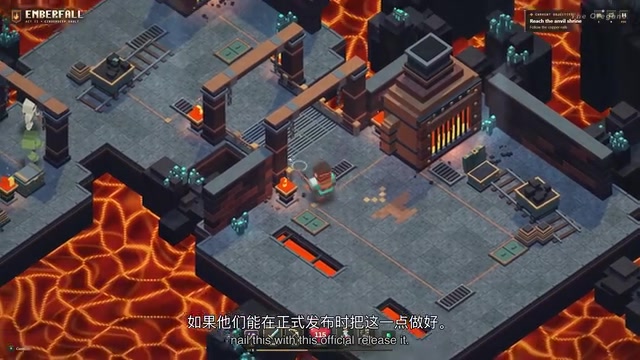
More intuitive than the benchmark numbers are the generation examples released by early users. WorldofAI showcased a complete dungeon-crawler game reportedly generated by GPT-6.2 Astra from a single prompt, including openable treasure chests, multiple monster types, dynamic mechanics replicating the original game, and scene details down to the texture level.
Even more noteworthy is the change in how generation works. According to WorldofAI's observations, when generating games with GPT models previously, the model would first place basic placeholder objects and then replace them with appropriate 3D assets; with GPT-6.2 Astra, the placeholders it produces directly are already close to finished game assets, with all code written by the model itself and no external assets or tools used. In a 3JS bicycle generation comparison, GPT-6.2 Astra's overall generation quality also surpassed the previous Astra.
According to WorldofAI and some users who received early access, GPT-6.2 Astra performs noticeably better than its predecessor on web development and frontend tasks, while being "a bit less defensive and restrictive." This happens to be an area where OpenAI models previously struggled.
The Tug-of-War Between Safety Protocols and Release Cadence
The stronger the capability, the slower the release. According to reports cited by WorldofAI, OpenAI is struggling with safety and alignment issues affecting GPT-6.1, GPT-6.2, and even GPT-6.5; the models are capable enough to support large-scale training, but turning them into safe and reliable publicly available models requires several additional weeks. Some reports even claim that OpenAI has become more cautious than Anthropic on safety concerns, which is one reason the original GPT-6.1 Astra release was cancelled.
Echoing this, OpenAI announced partnerships with four independent organizations—Apollo Research, Goodfire, Transluce, and one other—giving them deeper access to internal models to investigate risks and evaluate safety safeguards. WorldofAI also mentioned several deleted tweets from OpenAI engineers hinting that the company became extremely cautious after a safety incident.
In WorldofAI's view, the delay may be twofold: the model genuinely isn't fully ready, and it is also powerful enough to require additional safeguards before release.
Apollo Research, Goodfire, and Transluce are all research organizations in the field of AI interpretability and safety evaluation: Apollo Research is known for red-teaming deceptive alignment in models; Goodfire focuses on mechanistic interpretability, understanding and intervening in behavior by identifying internal model features; Transluce is dedicated to auditing model outputs with interpretability tools. Giving external organizations deep access to internal models (rather than just API calls) means researchers can inspect model weights, activations, and training details—a common practice for third-party risk audits by frontier labs before release. It also reflects higher regulatory and industry self-governance requirements for "pre-release validation."
Google's Model Naming Is Approaching the Periodic Table
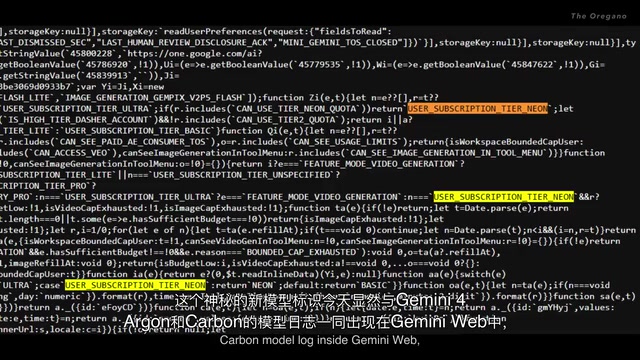
On Google's side, the release cadence is at an all-time high. According to backend logs observed by WorldofAI on X, two new identifiers appeared: Gemini Neon and Gemini Oxygen. Neon appears not only as a model name but is also associated with a subscription tier separate from the existing Ultra, alongside a Helium tier linked to Gemini Plus, and a warning system for low usage budgets on video generation and deep research. Oxygen is suspected to be a new Flash member of the Gemini 4 family—extremely fast, excelling at frontend and web development, and in some tests even outperforming Carbon.
WorldofAI's quip is apt: if Google plans to name models after every element on the periodic table, it might as well put the periodic table directly into the model catalog. Behind this is the fact that Google's model iteration speed is unprecedented, and it reignites discussion about whether Google has crossed a certain threshold.
Tencent HY4 Flash: A Flash Competitor Nearly 18x Cheaper
Tencent's HY4 Flash focuses on extremely fast performance at an extremely low price. According to Tencent's own blind test involving 85 users and 259 real-world tasks, HY4 Flash scored 2.79 in user satisfaction at the highest thinking mode, versus 2.81 for HY4 5.5—a negligible gap; but the average task cost was only 4 cents, compared with 71 cents for the latter, nearly 18 times cheaper, and the average time per task was about 6.7 minutes, faster as well.
In terms of specs, HY4 Flash has 224 billion total parameters with 12 billion activated, a 1 million token context window, native multimodal capabilities, generation speed exceeding 150 tokens per second, and API pricing starting at 7 cents per million input tokens and about 28 cents per million output tokens. Tencent also plans to release open weights. WorldofAI's assessment is that it struggles to match Claude Haiku 5.5 in raw intelligence, but for developers who need to handle large volumes of everyday tasks where speed and cost matter equally, it is an attractive alternative.
The distinction between "total parameters" and "activated parameters" corresponds to the Mixture-of-Experts (MoE) architecture: the model contains 224 billion parameters overall, but only about 12 billion are activated per forward inference, so compute cost is close to a 12-billion-parameter dense model while benefiting from a larger parameter pool for greater knowledge capacity. This is exactly the key to HY4 Flash achieving low price, high speed (150+ tokens per second), and still having native multimodal capabilities. A million-token context window means it can process very long documents or codebases in a single pass, but the effective context length is often lower than the nominal limit, so retrieval and reasoning stability over long texts still needs verification in practice.
Developer Toolchain: Shifting from Generation to Verification
On the Codex side, OpenAI published progress on fixing capacity errors. According to a chart cited by WorldofAI, between October 15 and November 12, at one point 6.89% of Codex daily active monthly users experienced at least one capacity-related error; after improvements such as prioritizing instructions, automatic delays, and WebSocket error handling, that proportion dropped to 0.085% by November 12—a decline of about 99%. WorldofAI noted that this doesn't necessarily mean more compute, but rather that the system's way of handling overload has improved.
Anthropic published a blog post explaining how Claude Code verifies its own work. According to the disclosure, Claude now writes and reviews nearly 90% of the Claude team's code. The core question: who ensures that AI-generated code actually runs? Their approach is to have Claude actually run real applications, test thousands of inputs and compare results, automatically fix vulnerabilities before committing, and create a slash-command verification skill that escalates to a human after three failed attempts. The team maintains 39 checks based on past vulnerabilities, and each change is checked against the most relevant one. WorldofAI's take: the competitive focus in AI coding has shifted from "how much code can it generate" to "can it prove the code works," especially when running dozens of coding agents simultaneously, where verification is as important as generation.
Behind "verification is as important as generation" is a shift in the AI coding paradigm from single-turn completion to multi-agent orchestration. When developers run dozens of coding agents simultaneously, code output far exceeds human review capacity, and the bottleneck shifts from "can it write it" to "can we confirm it wrote it correctly." Claude Code's approach—actually running the app, differential testing with thousands of inputs, automatic fixes before committing, and escalation to humans after three failures—essentially embeds automated testing and formal checks into the agent loop, migrating continuous integration and regression testing ideas from traditional software engineering into AI generation workflows. The 39-item checklist based on historical vulnerabilities is equivalent to crystallizing known failure modes into regression cases.
Open Model Integration and Ecosystem Updates
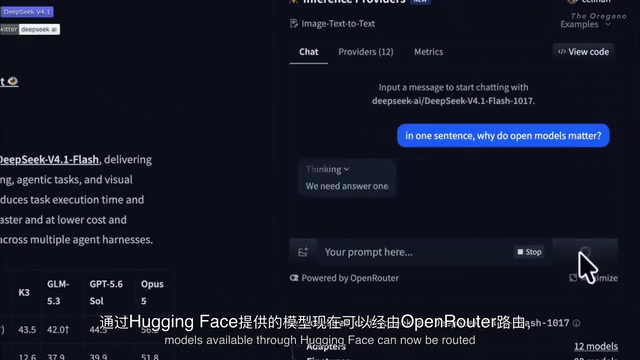
The Hugging Face and OpenRouter integration lets developers call models directly using their existing Hugging Face token and API, with OpenRouter automatically selecting the best provider based on price, speed, and reliability, and automatically failing over when a provider is unavailable—no need to manage multiple vendors. Another update allows request traces to be saved directly to Hugging Face storage for evaluation, debugging, and even fine-tuning.
Other developments include: Google added the ability to turn materials into interactive, shareable websites in Gemini Notebook, available to web users aged 18 and over worldwide; Anti-Gravity reportedly doubled the context window for Gemini for Carbon, Hydrogen, and Argon from 256K to 512K tokens, reducing context compressions by 3.5x; OpenCode Browser 0.10 was rewritten in Rust, cutting memory usage by 25x and size by 23x, and removing the dependency on Playwright; and Microsoft leaked the MAI Code to Flash model card ahead of Ignite, expected to launch as a Flash-tier model.
AGI Statements and the Superhuman Timeline
According to an interview cited by WorldofAI, Sam Altman said, "We didn't have AGI before, but now we do," and mentioned possibly being more aggressive on recursive self-improvement than now. WorldofAI is cautious about this, believing more context is needed to judge its true meaning, but if true, it could explain why OpenAI has slowed its model release cadence.
The same episode also cited an Anthropic researcher's judgment: broadly defined superhuman AI may arrive in only about 1.3 years, pointing to around the end of 2027, when AI will reach or exceed top expert level in almost all domains, including programming. Such timeline predictions vary enormously, and readers should treat them as a single source's view rather than consensus.
Research published by OpenAI around the same time shows that more than 1,800 participants in the ChatGPT academic researcher program reported that productivity nearly doubled after using AI, with uses spanning brainstorming, dataset analysis, coding, and accelerating research workflows. Note that this is self-reported data. OpenAI also announced stronger computer-use agents and more than 20 healthcare plugins, with organizations including Abridge, Ambiance, Signa, and CVS Health using them for administrative tasks such as insurance prior authorization, patient referrals, discharge planning, and outreach.
Summary
In this round of information, the most certain signal is this: the competitive focus among leading models is shifting from "can it generate" to "can it verify" and "does it dare to release." The leaked frontend capabilities of GPT-6.2 Astra are exciting, but OpenAI's safety protocols and release delays show that the tension between capability and controllability is becoming the real bottleneck for flagship model releases. For developers, the sharp drop in Codex capacity errors, Claude Code's verification workflow, and the Hugging Face–OpenRouter integration are changes that directly affect daily efficiency more than model benchmark scores.
Related articles

AI Writes Your Code—Do You Still Need to Learn Git? Five Reasons
AI coding agents handle Git operations automatically—is it still necessary to learn Git? Five reasons: team communication, reviewing agent PRs, monitoring code changes, fallback when AI goes down, and the joy of learning—plus how the focus of learning Git is shifting in the agent era.

Anthropic Reportedly Prices IPO at $83 Per Share, Valuing Company at $1.5 Trillion
Anthropic reportedly prices IPO at $83 per share, above the expected range, with a fully diluted valuation of $1.5 trillion. This article analyzes the signal significance of the pricing and its impact on the AI industry's financing environment.

Open-Source Code Hosting Platform Codeberg Suffers Outage, Sparking Debate in Developer Community
Open-source code hosting platform Codeberg.org suffered an outage, sparking Hacker News debate over nonprofit platform stability and open-source infrastructure dependency risks.