GPT-6.2 Astra Leak Preview: AGI Declaration and Safety-Driven Delays in Parallel

GPT-6.2 Astra leak shows game dev leap, safety alignment delays release, Gemini 4 and Tencent HY4 Flash expand.
This roundup focuses on the leaked preview and release delay of OpenAI's flagship GPT-6.2 Astra. Leaked cases show it can generate a complete playable dungeon game from a single prompt, with a significant leap in front-end and game development capabilities, and its hidden BioBasics benchmark score is reportedly 89% (vs. 67% for the previous generation). But OpenAI has proactively delayed release due to safety alignment issues and is collaborating with four independent organizations to assess risks; Sam Altman's remark that "we now have AGI" has further fueled speculation. Meanwhile, Google's Gemini 4 family adds the Neon and Oxygen model identifiers, Tencent HY4 Flash enters the market with a nearly 18-fold cost advantage, and toolchain updates such as the Codex capacity error fix and Claude Code's self-verification workflow are also worth watching.
Introduction: Flagship Model Stalled for 75 Days — What Is OpenAI Waiting For?
It has been about 75 days since the release of GPT-6 Astra, and OpenAI's flagship update cadence has noticeably slowed. Historically, its version iteration intervals have ranged from 28 to 77 days, and the delay of GPT-6.2 Astra has sparked widespread speculation. Meanwhile, Google's Gemini 4 family continues to expand, and players like Tencent and Microsoft are accelerating their own roadmaps. According to an aggregation and analysis by Bilibili creator WorldofAI, the week's core highlights center on: the leaked preview of GPT-6.2 Astra showing astonishing front-end and game development capabilities, Sam Altman's bombshell remark that "we now have AGI," and OpenAI proactively delaying release due to safety alignment issues.
GPT-6.2 Astra Leaked Preview: From a Single Prompt to a Complete Game
Hands-on Case: A Minecraft-Style Dungeon Game
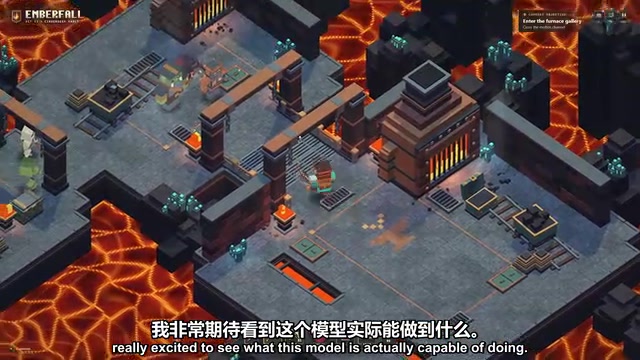
According to WorldofAI, a Chinese user gained access to what is suspected to be GPT-6.2 Astra through an API relay service and plugged it into Codex for testing. The most striking case is a complete dungeon-crawler game inspired by Minecraft Dungeons — from textures and monsters to chest-opening interactions, all generated from a single prompt. The creator stated he personally verified this case.
Another showcase included ships, cranes, textures, and environmental elements, with all assets generated purely through code and no external materials or tools. Unlike previous GPT models that generated games using placeholder objects before swapping in 3D assets, GPT-6.2 Astra's directly produced placeholder objects already carry production-grade visual completeness. This "one-step" generation quality hints at a leap in its front-end and game development capabilities.
Classic Benchmark Comparison: The Pelican Riding a Bicycle Test
In the community-favorite "pelican riding a bicycle" generation test, GPT-6.2 Astra showed better overall generation quality than the previous Astra model, even including a detail where a wing extends beyond the frame — a "breaking the frame" behavior that the creator viewed as reflecting the model's unique understanding of spatial relationships, turning it into a highlight.
Benchmark Leak: The Hidden BioBasics Score
Citing a discovery by BinkG, WorldofAI reported that OpenAI accidentally exposed the hidden score of an eighth model in an interactive BioBasics benchmark chart. After running a JavaScript command in the browser developer tools, GPT-6.2 Astra was shown scoring 89% on the benchmark's highest setting, compared with 67% for GPT-6 Astra — a 22-percentage-point improvement. The finding was reportedly patched, and the creator admitted he did not independently verify it. But if true, this jump on a scientific benchmark would be highly significant.
BioBasics benchmark is a specialized benchmark for evaluating large language models' knowledge understanding and reasoning in the biological sciences, typically covering multiple-choice and open-ended questions across molecular biology, genetics, ecology, and other subdisciplines. What distinguishes such domain benchmarks from general ones (like MMLU) is their higher demand for terminological precision and cross-disciplinary reasoning, so score improvements tend to better reflect genuine capability leaps in scientific scenarios. A "hidden" benchmark score usually means the developer did not proactively disclose a certain evaluation result on public leaderboards, but it may be accidentally exposed through front-end chart data bindings or API responses.
Safety Alignment as the Bottleneck: Why Is OpenAI Pumping the Brakes?
Four Independent Organizations Brought In for Evaluation
OpenAI recently announced partnerships with four organizations — Metre, Apollo Research, Goodfire, and Transluce — granting them deep access to internal models to investigate alignment risks and evaluate safeguards. The move is interpreted as OpenAI stepping up investment in safety review. According to reports cited by the creator, GPT-6.1, GPT-6.2, and even GPT-6.5 are all grappling with safety alignment issues — the models possess strong pretraining capabilities, but converting them into safely releasable versions requires weeks of delay.
Apollo Research is an independent research organization focused on evaluating AI deceptive alignment and scheming behavior, known for "pre-deployment" red-teaming of frontier models; Metre focuses on model behavior auditing and interpretability tools; Goodfire is dedicated to mechanistic interpretability research, attempting to understand internal model representations at the neuron level; Transluce develops model transparency and behavior-tracking technologies. By granting these organizations deep access to internal models, OpenAI means third parties can independently probe risks such as deception, power-seeking, and jailbreak resistance without relying on OpenAI's self-assessment — a contrast with the previous approach of relying mainly on internal safety teams.
Criticism of "Over-Caution"
Some argue that OpenAI has become more conservative on safety than Anthropic, which may explain why the initial release of GPT-6.1 Astra was canceled. The creator analyzed that OpenAI may be weighing two directions simultaneously: on one hand, using new models to counter Anthropic's IPO moves; on the other, genuinely becoming more cautious due to safety incidents (such as the Hugging Face incident).
The Subtext of the AGI Declaration
In an interview, Sam Altman reportedly said, "We didn't have AGI before, now we do," while also mentioning that "we could be closer to RSI (recursive self-improvement) than we are." The creator linked this to the release delay: if model capabilities have touched a sensitive threshold, it's no surprise that the safety team is pumping the brakes. However, the specific context of the remark still needs more clarification.
RSI (Recursive Self-Improvement) refers to an AI system's ability to autonomously improve its own algorithms, architecture, or training pipeline, with the improved system further accelerating the next round of improvement, forming a feedback loop of capability growth. This concept is regarded as one of the key paths to superintelligence and is also a threshold event of great concern in AI safety — once a model possesses substantive RSI capability, capability growth may outpace human oversight and governance. Altman's remark that "we could be closer to RSI than we are" suggests that within OpenAI, initial signs of self-improvement may have been observed in tasks such as code generation and research assistance, but the release of related capabilities has been proactively limited for safety reasons.
Google Gemini 4 Family Expands: Neon and Oxygen Appear
New Model Identifiers and Subscription Tiers
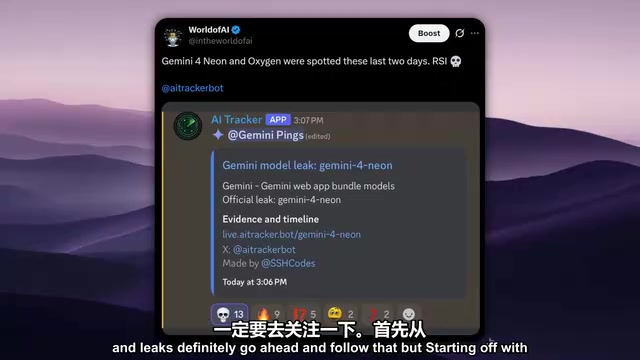
According to the creator's findings on X, Gemini 4 Neon and Gemini 4 Oxygen appeared in backend logs alongside Gemini 4 Argon and Carbon. Neon appears not only as a model name but is also associated with an entirely new subscription tier — there is even a Neon tier identifier linked to Gemini Ultra but independent of the existing Ultra subscription. Another Helium tier is associated with Gemini Plus and comes with a low-usage budget warning system involving video generation and deep research features.
Oxygen: A Faster Flash Model
Gemini 4 Oxygen is judged to be a new Flash model in the Gemini 4 family, performing excellently in front-end and web development, reportedly faster than Hydrogen and with output quality better than Carbon in multiple tests. In a voxel bench castle-generation comparison, Oxygen's detail richness and creativity clearly outperformed Hydrogen. The creator joked that Google's model naming is nearly completing the periodic table.
In Google Gemini's naming system, the Flash series is positioned as low-latency, high-throughput lightweight models, typically trading lower inference cost for near-Pro-level output quality, suitable for large-scale API calls and real-time interaction scenarios; Ultra is the highest-capability flagship tier of the same period, aimed at complex reasoning and high-value tasks. The Gemini 4 family uses element names (Argon, Carbon, Neon, Oxygen, Helium, Hydrogen) to distinguish model variants with different positioning — a naming approach that makes it easier for developers to select within the same generation by latency, cost, and capability gradient, but also increases the difficulty for the community to track specific model specs.
Other Notable Updates
Tencent HY4 Flash: Extreme Cost-Effectiveness
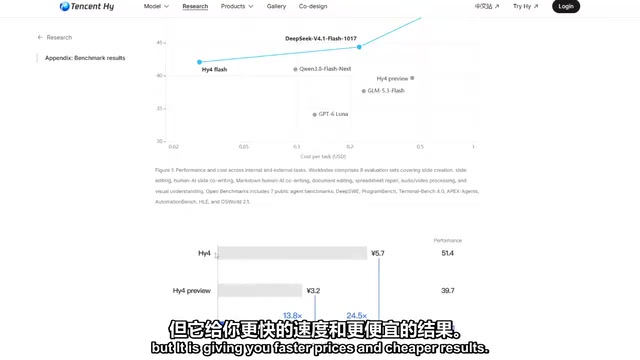
Tencent launched HY4 Flash, emphasizing speed and low price. According to Tencent's own blind-test data, 85 users completed 259 real-world tasks; HY4 Flash scored 2.79 in user satisfaction at its highest thinking mode, compared with 2.81 for Claude Haiku 5.5 — a negligible gap. But the average task cost was only 4 cents, versus 71 cents for Haiku 5.5 — nearly 18 times cheaper. Specs: 224 billion total parameters, 12 billion activated parameters, a 1-million-token context window, native multimodality, and generation speed exceeding 150 tokens/second. API pricing is 7 cents per million input tokens and about 28 cents per million output tokens. Tencent plans to open-source the model weights. The creator's judgment: HY4 Flash is a strong alternative to Haiku 5.5 on speed and cost, especially suited for high-volume routine tasks, though there is still a gap in pure performance.
Codex Capacity Error Fix
OpenAI fixed Codex's "model capacity full" error. According to a chart shown by the creator, between October 15 and November 12, capacity errors affected up to 89% of daily active Codex users. After an update on November 6, by November 12 capacity errors had dropped to 0.085% of daily active users — a reduction of about 99%. The creator noted this was more an improvement in overload handling and retry mechanisms than a compute expansion.
Claude Code and the Self-Verification Workflow
Anthropic disclosed that Claude currently writes and reviews nearly 90% of the Claude Code team's code. Its verification workflow has Claude run real applications, test thousands of inputs, compare results, and automatically fix defects before submission. The team maintains 39 checks based on historical bugs and has a /verify skill that brings in human intervention if problems persist after three attempts.
Open Source and Toolchain Updates
Hugging Face models can now be routed through OpenRouter, automatically selecting the optimal provider with failover support, and developers can continue using their existing HF tokens and API. OpenCode Browse 0.1.0 has been rewritten in Rust, with memory usage reduced 25-fold, size reduced 23-fold, and the dependency on Playwright removed.
AI for Science Data
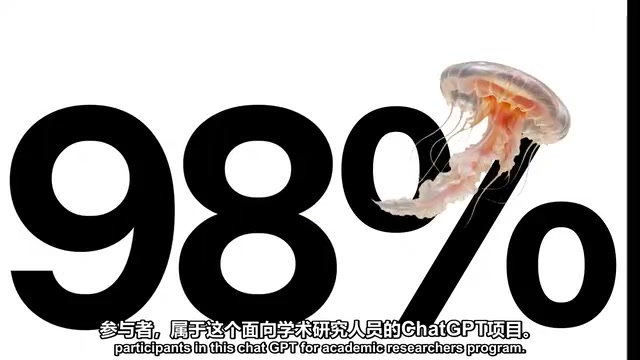
According to the creator's citation, OpenAI's ChatGPT academic researcher program involved over 1,800 participants, with scientists self-reporting nearly doubled productivity.
Industry Signals from a Multi-Source Cross-Perspective
Combining WorldofAI's aggregation with reports from various sources, this week's industry signals present two parallel main threads. First, the capability race is still accelerating: the leaked GPT-6.2 Astra demos, the密集 appearance of new Gemini 4 members, and Tencent HY4 Flash's cost-effectiveness offensive all point to a continued rise in model capabilities. Second, governance and safety are beginning to substantively affect release cadence: OpenAI's four-organization safety collaboration, Altman's AGI remarks, and an Anthropic researcher's timeline judgment that "broadly superhuman AI may take only 1.3 years" together sketch a phase in which capability and constraint are pulling against each other.
One caveat: leaked previews and hidden benchmarks are not officially confirmed information, and the creator himself marked some data as "not independently verified." Readers should maintain prudent space when interpreting.
One-line Summary
GPT-6.2 Astra's leaked preview shows a leap in game development, safety alignment delays release, and Gemini 4 and Tencent HY4 Flash expand in parallel.
Paragraph Summary
This roundup focuses on the leaked preview and release delay of OpenAI's flagship GPT-6.2 Astra. Leaked cases show it can generate a complete playable dungeon game from a single prompt, with a significant leap in front-end and game development capabilities, and its hidden BioBasics benchmark score is reportedly 89% (vs. 67% for the previous generation). But OpenAI has proactively delayed release due to safety alignment issues and is collaborating with four independent organizations to assess risks; Sam Altman's remark that "we now have AGI" has further fueled speculation. Meanwhile, Google's Gemini 4 family adds the Neon and Oxygen model identifiers, Tencent HY4 Flash enters the market with a nearly 18-fold cost advantage, and toolchain updates such as the Codex capacity error fix and Claude Code's self-verification workflow are also worth watching. Overall, the industry signals show capability competition and safety governance proceeding in parallel.
Related articles

AI Writes Your Code—Do You Still Need to Learn Git? Five Reasons
AI coding agents handle Git operations automatically—is it still necessary to learn Git? Five reasons: team communication, reviewing agent PRs, monitoring code changes, fallback when AI goes down, and the joy of learning—plus how the focus of learning Git is shifting in the agent era.

Anthropic Reportedly Prices IPO at $83 Per Share, Valuing Company at $1.5 Trillion
Anthropic reportedly prices IPO at $83 per share, above the expected range, with a fully diluted valuation of $1.5 trillion. This article analyzes the signal significance of the pricing and its impact on the AI industry's financing environment.

Open-Source Code Hosting Platform Codeberg Suffers Outage, Sparking Debate in Developer Community
Open-source code hosting platform Codeberg.org suffered an outage, sparking Hacker News debate over nonprofit platform stability and open-source infrastructure dependency risks.