GPT-6.2 Astra Nine Creative Tests: Capability Improved but Lazier

GPT-6.2 Astra has clearly better aesthetics but is lazier, requiring clear requirements plus multiple iterations to produce good work.
A Bilibili creator ran nine creative tests on GPT-6.2 Astra, covering the Dihuang cycling loop animation, a 30-second self-introduction video, fighting games, a Yang Le Ge Yang parody, a Cat Mario-style platformer, a CS combat scene, a paper-style horror game, first-person sword flight, and a Bilibili homepage clone. The overall conclusion is that the model has clearly improved modeling aesthetics over the previous generation—the gap between first and final versions of the stick-figure fight is huge—but has become lazier: simple prompts produce rudimentary output requiring one or two active iterations to be usable. Unlike Claude Fable 5.2's wish-driven development, it suits a workflow of clear requirements plus gradual dialogue iteration. It also tends to use image generation first for cool login screens, creating a big letdown when actually opened.
Model Release and Test Overview
After GPT-6.2 Astra was officially released, a Bilibili creator put it through nine creative tasks covering animation, games, 3D scenes, website cloning, and more. The overall conclusion: the model's capabilities have clearly improved over the previous generation, but it has become lazier—output from simple prompts is rudimentary, and users must actively iterate and revise to reach usable quality.
The tester's core judgment is that GPT-6.2 Astra doesn't offer the "wish-driven development" (one prompt produces a finished product) of Claude Fable 5.2, but under a workflow of clear requirements + step-by-step iteration, its performance is commendable.
"Wish-driven development" refers to users giving a single natural-language request and the model producing a complete, directly usable product in one shot (such as a fully runnable game or website), without multiple rounds of follow-up questions or manual patching. This capability relies on the model's ability to infer implicit requirements, long-context consistency, and stability of code/asset generation. Claude Fable 5.2 is regarded in this test as the reference object possessing such characteristics, while GPT-6.2 Astra shows a stronger tendency toward "round-by-round polishing": the first version often only builds a skeleton, and the user must explicitly point out problems before iterating. Understanding this difference helps determine the collaboration mode the model suits—"one-time delivery" or "co-development in dialogue."
Animation and Video Generation: Surprises but Different Direction
Dihuang Cycling Loop Animation
As a "must-have segment" of model reviews, the Dihuang cycling loop animation had background texture issues in its first version, and after minor fixes the final result was acceptable. The creator noted that Dihuang itself has motion and fairly refined 3D effects, which was "a pleasant surprise."
30-Second Self-Introduction Video
Asked to make a 30-second self-introduction, the first version's protagonist was a little star, which the creator found "a bit baffling." After two revisions and referencing Claude Fable 5.2's results, the final output was a video that "stands on its own." The creator believes GPT-6.2 Astra, unlike Claude, didn't visualize model parameters in code but took a "pragmatic" route—working hard to show how to get something done.
The direction may differ, but it's barely okay.
Game Development Tests: From Fighting to Horror Games
High-Speed Combat Animation
The first version had rough, slow movements. After the creator pushed for speed and demanded weapon and move variations, the final 3D combat visuals were "quite decent," and the revised result was good.
Yang Le Ge Yang Parody BGM and Game
The BGM was catchy and infectious—"it has that flavor"—and the level difficulty progression matched the original. Overall, it was standard fare.
Cat Mario-Style Platformer
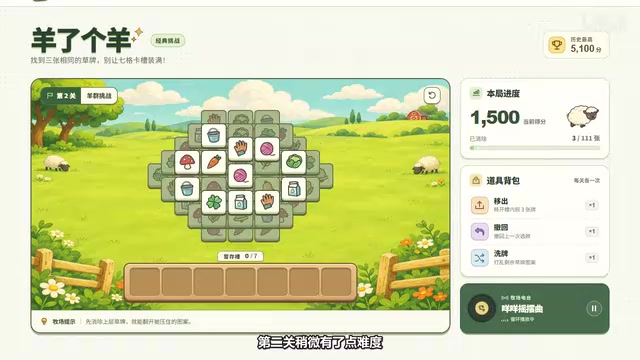
The style was cartoonish and cute, with six levels plus a boss level, excellent pacing, and a story. But the creator noted it didn't truly capture the essence of Cat Mario—the hidden traps were too obvious, lacking "the real feeling of playing Cat Mario"—rating it "not bad."
CS Combat Scene
The high-fidelity cover was "cool," and the creator felt the image2 feature helped a lot. But the first version was only 3v3; after adjusting to 5v5 and optimizing teammate AI and shooting feel, the gunfight atmosphere "had a bit of CS flavor," but the player's own shooting feel was "a bit lacking."
Paper-Style Horror Game
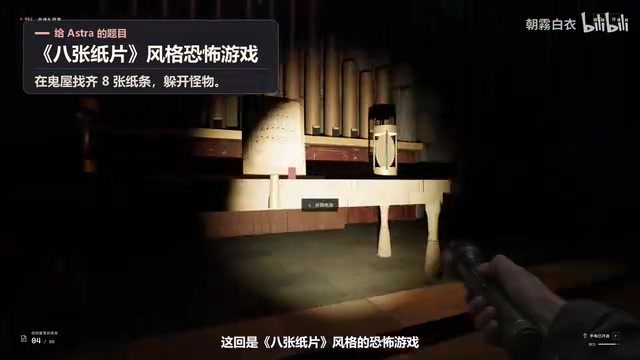
The first version's environment was too bright and didn't capture the essence of a horror game environment. After switching to a dim environment where the flashlight truly mattered, the horror atmosphere, monster chase system, and game modeling were all "acceptable," with some clipping flaws but no overall structural logic problems.
First-Person Sword Flight
The 3D modeling was good, the login screen "really had a feel to it," flight had a cloud-and-mist quality, and the mountain naming showed good taste. Close-up modeling had flaws that became more obvious the closer you got, but at a distance it was fine—overall "not bad."
"image2" in this context refers to the model's multimodal image generation/reference capability: the model can first generate concept art, covers, or login-page visuals, then embed them into the project or use them as visual anchors for subsequent generation. This "generate images first, then build" process can significantly boost first impressions (like cool covers and login screens), but may also create a gap where "the images look great but the actual interactive content is thin." In the test, the CS scene's high-fidelity cover was completed with this feature, and the login screen's sense of letdown stems from the same mechanism—misalignment between image generation quality and playable content generation is a dimension worth separate attention when evaluating such models.
Website Cloning: Visually Stunning but Limited Content
The Bilibili homepage clone was "quite good," with comments, danmaku, trending items, and animations; the big white-image animation in the middle was "bizarrely catchy." The model also proactively labeled the site as "a parody, not the official version," which the creator found shows strong safety awareness. Free assets led to limited content, but the overall website imitation was good.

Overall Assessment: Aesthetic Improvement Is Obvious, but Active Iteration Is Needed
The creator's final verdict: GPT-6.2 Astra has indeed improved over the previous generation, but has become lazier. Content from simple prompts is very rudimentary and needs multiple revisions; but after one or two revisions, modeling aesthetics are much improved over the previous generation—the gap between the first and final versions of the stick-figure fight is huge.
A notable pattern: the model tends to first create images with the image-generation feature, then place them in login screens and similar spots, making the login screen "cool" but creating a big letdown when actually opened.
The creator concludes: it's not as wish-driven as Fable 5.2, but if you have clear development requirements and are willing to iterate and improve gradually in dialogue, its performance is "still pretty good."
"Models getting lazy" is a common observation in recent LLM evaluations: models tend to satisfy surface-level instructions with minimal output rather than proactively filling in details or anticipating unstated user needs. Causes may include a preference for concise answers in training, conservative output from safety alignment, and a lack of explicit optimization for "product usability." For users, the strategy is to break prompts into verifiable small goals and give specific revision instructions round by round (e.g., "speed up the movements," "change to 5v5") rather than expecting a one-shot wish. This also explains why the same model scores noticeably higher under a "clear requirements + iteration" workflow than with simple prompts.
One-line Summary
GPT-6.2 Astra shows obvious aesthetic improvement but is lazier—clear requirements plus multiple rounds of iteration are needed to produce good work.
Related articles

Jingle Jam 2026 Registration Opens: Lewis Uses Old Footage to Rally Volunteers for Fundraising
Jingle Jam 2026 fundraising registration is open. Lewis uses old footage edited into a new video, calling on viewers to create fundraising pages at jingle jam.tiltify.com to support eight charities. The event takes place in the first two weeks of December.
Gemini 4 Neon Hands-On Test: Can It Replace Claude Opus 5.5?
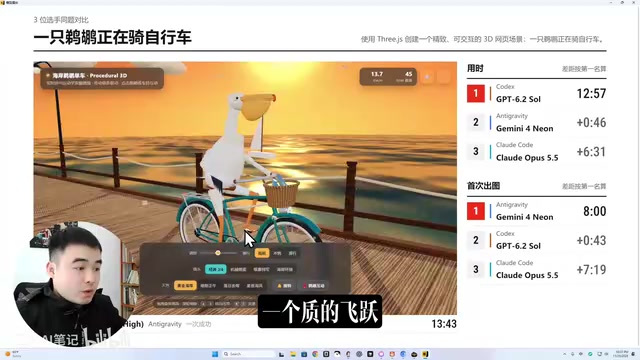
A Bilibili creator tests Gemini 4 Neon, Claude Opus 5.5, and GPT 6.2 across three coding Agent challenges—pelican animation, 3D racing, and code-generated video—to see if Gemini can replace Opus.
FBI-Warned Artex: How an AI Attack Framework With No In-House Model Pries Open Enterprise Doors
The FBI-warned open-source AI attack framework Artex has no model of its own—it plugs into Claude, GPT, and other external LLMs to drive an agent loop, turning ordinary tools like Nmap into an automated attack pipeline. This article examines three real cases—South Korean finance, ConnectWise, and Barracuda—analyzes the three drivers of speed, cost, and noise, and outlines defenses such as exposure inventory and short-lived credentials.