GPT-6.2 Astra vs. Sol Controversy: Behind the Polarized Reviews
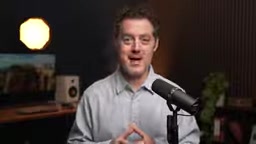
Hands-on with OpenAI's new flagships Astra and Sol 6.2: real strengths, controversy rooted in version desync.
The article walks through the backlash after OpenAI released Astra and Sol 6.2: early testers gave collective negative reviews, then OpenAI explained the tested build differed from the final release, with communication gaps amplifying the controversy. After extensive token-based testing, the author finds Astra competent but not outstanding — leading in computer use and browser control, able to autonomously recreate a 3D Tokyo scene, and even diagnosing and fixing an 18-month-old recording frame-drop issue. Video editing is an underrated strength, with the open-source app Scarlett nearing end-to-end editing. GPT leads on cost efficiency, but subscription quota advantage has shifted to Anthropic. The conclusion: route by task type, and the models deserve another chance.
OpenAI released two flagship models, Astra and Sol 6.2, at the same time — but the discourse surrounding the launch was anything but calm. Early-access testers almost unanimously gave negative reviews, followed by a counter-narrative that "actually, the models are pretty good." As one of the creators who participated in early testing, I spent a large number of tokens deeply testing both models and inadvertently got pulled into this controversy. This article walks through the timeline, presents my test results, and offers my honest assessment.
Where the Controversy Began: Collective Negative Reviews from Early Access Testers
According to feedback from creators in OpenAI's early access program, on the day Astra and Sol 6.2 launched, nearly everyone with advance access was publishing negative experiences. Matt Schumer publicly stated he "wasn't going to write a full review," calling the testing process "basically unusable"; Theo straight-up published an article titled "Why I Hate GPT-6.2 Astra"; Paul Soltz pointed out that the model is bad at communication, writes poor summaries, stops working prematurely, and misses the point. Dan Chipper's assessment was "overall disappointing."

Together, these voices set a negative tone in the early days after launch. But then the story took a turn — OpenAI's Thibaut explained on social media that early access testers had received a build from several weeks earlier, while the team had made substantial changes in the three or four days before launch and very likely didn't organize a re-test. In other words, the model the testers reviewed and the model that ultimately shipped were not the same.
Communication Failures Amplified the Controversy
What frustrated testers even more was the information gap. By convention, OpenAI notifies testers in advance to re-test when a model is updated, and typically gives at least a day's notice before launch. But this time, multiple early access testers said they only learned the model was going live when they saw the public launch tweet — Matt Schumer said he got about ten minutes' notice. This information breakdown made the "collective negative reviews" look more like a misunderstanding than a complete picture of the model itself.
Hands-On Experience: Astra Is "Good," But Not "Great"
My first judgment on Astra: it's a competent model, but that's it. On standard test projects — building games, building apps, creating 3D city simulations — its completion quality was solid. In a vacuum, the model is good; but users face a real binary budget decision, and once you compare it against Anthropic's Opus and Fable, the gap becomes apparent.
Browser Operation Remains OpenAI's Moat
Astra still clearly leads in computer use and browser control. I had it recreate a 3D scene of Tokyo in Unreal Engine, and the model was able to autonomously download assets like billboards and brand logos, and manually generate each building. The final product contained a large number of hand-built structures and was visually quite impressive.

But the process wasn't smooth. The model's initial approach was to generate building facades and download satellite imagery textures — which looked fine at first glance but had windows and doors in the wrong positions on closer inspection. Only after repeated prompting and step-by-step guidance did it switch to manual modeling. This tendency to "not follow instructions" is exactly what frustrated many testers — the instructions were clear, yet the model had to take a detour before complying.
computer use is the ability to let a model directly operate a graphical interface — moving the mouse, clicking buttons, and executing multi-step tasks in browsers and desktop applications — rather than just generating text or code. It typically relies on visually understanding screenshots, planning sequences of operations, and driving keyboard and mouse events through tool calls. This capability places higher demands on the model: it must accurately identify interface elements while maintaining state consistency over long workflows. Astra's lead here means it can perform actual operations on users' behalf in software environments that lack APIs — for example, automatically gathering assets, filling out forms, or moving data across applications. However, interface operation also tends to amplify the model's tendency to "take detours" — the model may choose a seemingly viable but inefficient path, requiring repeated correction from the user.
An Unexpected Surprise: Fixing a Chronic Problem That Had Persisted for 18 Months
My team occasionally experienced dropped frames while recording video, a problem that persisted for about 18 months. Swapping cameras, swapping HDMI cables, swapping computers, and hiring human experts to troubleshoot — none of it found the cause. I pointed Astra at the problem, and it checked camera settings and HDMI input one by one, then opened OBS and read the recording logs, discovering an issue with the buffer settings — even when set to automatic, OBS wasn't actually enabling buffering when frames dropped. Astra determined that it needed to be forced on, and the problem disappeared immediately.
Tasks like this — requiring cross-application troubleshooting, reading logs, and pinpointing root causes — fall squarely within Astra's capability range. It's not just a model that can write code; it's equally valuable for diagnostics in complex desktop environments.
Another Overlooked Strength: Video Editing
Beyond computer use, Astra's performance in video editing is severely underrated. I've been developing an open-source AI video editing app called Scarlett, and for the past several weeks, Astra has been driving all of its editing functionality. It performs reliably in conversational editing and has good judgment about pacing and what to cut.

The app is close to being able to complete my video editing end-to-end in a single pass. It should be noted that this is a single-source experience; Paul Soltz also mentioned that video editing capability was better than expected, which provides some cross-validation.
Cost and Quota: The Landscape Has Flipped
Comparison experiments circulating in the community show that for similar tasks, the GPT series generally has lower time and cost than Anthropic's models, and Astra and Sol have a clear advantage in cost-effectiveness. One creator compared four models using the same prompt: Fable led in output quality, Astra followed closely behind, and the cost difference reached several times — even orders of magnitude.
But the scales have tipped at the subscription level. A few months ago I would have recommended OpenAI, because the weekly token quota was far higher than Anthropic's; now Anthropic has ample compute capacity, and Opus 5.5 can run almost continuously all week without hitting the cap. If I could only pay for one, I'd recommend an Anthropic subscription. This has nothing to do with any single model's benchmark scores — it's a practical consideration of quota and availability.
Subscription quota (token quota) refers to the total number of tokens or API calls a paid subscription plan allows within a fixed period. For heavy users, a model's per-run benchmark advantage can be offset by quota limits: if you frequently hit the cap within a week, actual usability drops significantly. The article's mention of "running continuously all week without hitting the cap" reflects differences in compute supply and rate-limiting policies. Anthropic's recent ample compute capacity allows Opus 5.5 to remain usable under heavy use; while OpenAI, even with lower per-task cost, may still face bottlenecks at the subscription level due to total volume limits. Therefore, when choosing a subscription, you can't just look at unit price or benchmarks — you also need to consider quota ceilings, reset cycles, and peak-hour rate limiting. These factors directly determine whether a model can be reliably embedded in daily workflows.
My Conclusion
Astra and Sol 6.2 represent a clear leap over previous GPT generations, but they're far from perfect. They have real advantages in computer use, video editing, and cost efficiency, but still have shortcomings in communication, task persistence, and UI details. The collective negative reviews at launch were largely due to version desynchronization and communication gaps, not the models' true capabilities.

For developers, the more pragmatic approach is to route by task type: for scenarios requiring browser operation, desktop diagnostics, or video processing, Astra is worth a try; for scenarios demanding extremely high output quality and long-running task stability, Anthropic's models are still more reliable. OpenAI could certainly have handled this rollout better, but the models themselves deserve another chance.
Related articles
Anthropic IPO and GPT-6.2 Astra: Data Dependencies and Safety Concerns Behind the Model Competition
In-depth analysis of Anthropic's IPO and GPT-6.2 Astra: model performance depends on training data, not universal intelligence; chain-of-thought monitoring is failing as a safety pillar.
Atlassian Teamwork Graph: Giving AI Agents Better Context
Atlassian leverages Jira's contextual advantage to build Teamwork Graph, connecting people, projects, documents, and code so AI agents deliver better output with fewer tokens.

DeepMind CTO: Products Are the Real Path to AGI
Google DeepMind's Koray Kavukcuoglu on the podcast: AGI has no test; products are the real path to AGI; each Gemini generation is handcrafted, architecture keeps evolving, and safety relies on real-time monitoring of chain-of-thought.