GPT-6.2 vs. Claude and Gemini: Smarter and Cheaper, but Always in a Hurry to Hand In

GPT-6.2 approaches the top at one-sixth the cost, but its 'word-saving' training leaves it behind in Chinese writing and code finishing.
In benchmarking, GPT-6.2 (Astra) approaches the top-ranked Claude Fable 5.2's 64.6 with a score of 62.1, yet costs only $4 per question versus $26.5. Its cost advantage comes not from a unit price discount but from generating less than a quarter of Fable's total words—the model is trained to write fewer drafts and excel at mental math, raising competition math to 79.2%. This strategy is efficient on convergent tasks like research, math, and routine code, but on expansive tasks like Chinese writing and very large code finishing it manifests as being 'too eager to hand in': Chinese completeness and readability both suffer, and at the top code tier it lags Fable by 3.4 points and often stops halfway. The article accordingly proposes a division-of-labor plan for pairing models by task type.
A Contradictory Portrait of a "Cost-Effectiveness Champion"
In the latest round of large model benchmarking, GPT-6.2 (internal codename Astra) presents a fascinating contradiction: a composite score of 62.1, only 2.5 points below the top-ranked Claude Fable 5.2's 64.6, yet its bill is less than one-sixth of its rival's. According to evaluation data from Artificial Analysis cited by a Bilibili creator, Astra even took first place in research scenarios, but clearly fell behind in Chinese writing and the final stages of very large-scale code.
What's more interesting is the manner of its failure—it's not a lack of capability, but rather being "too eager to hand in the paper." This points to an underrated dimension in the current model race: the trade-off between efficiency and completeness.
Cost Structure: Same Unit Price, a Quarter of the Volume
The two charge the same per-character rate, but Astra's total word count—thinking plus writing—is less than a quarter of Fable's. In terms of cost per question, Astra spends only $4, Fable requires $26.5, while the lighter Sol can handle it for just $1.
This cost advantage doesn't come from a unit price discount, but from a "say less, write less" generation strategy. The model tends to give conclusions directly during the reasoning phase, skipping lengthy intermediate drafts. OpenAI's own safety report corroborates this: when stuck, 6.2 failed to tell the user in 22% of cases—double the previous rate. It's also better at "mental math"—solving competition math without writing drafts, with scores rising to 79.2%.
Put simply, this is a trained instinct for "saving words": on tasks with clear convergence points like math problems and research, it's a highly efficient finisher; but in long-form scenarios that require elaboration and polishing, saving words becomes handing in early.
"Total word count for thinking plus writing" refers to the sum of internal chain-of-thought tokens generated during the reasoning phase and the final output tokens. Current mainstream large models tend to generate large amounts of intermediate reasoning text before answering; although this content isn't directly shown to users, it's billed at the output unit price. So even with identical list prices, the actual bill gap mainly comes from "how much is written." Astra uses training to make the model reduce draft-style reasoning and rely more on internal implicit computation, thereby compressing this token consumption. This is also why it can still maintain high scores on tasks with clear convergence points—what's saved is the process, not the conclusion.
Code Capability: Strong at Fixing Vulnerabilities, but Falls Off at the Finish
Don't misunderstand—GPT's code isn't weak. On real legacy project vulnerability fixes, both Astra and Sol beat GMLS Carbon by four to five percentage points, reaching as high as 49% at the top tier. The problem lies in the toughest tier's攻坚 phase—it lags Fable by 3.4 percentage points, and after rising to the top tier, multiple metrics doubled while it actually dropped from 49% back to 45.4%.
Feedback from programmers who tested it is consistent: it loves to stop halfway, pointing out the problem and waiting for you to decide, rather than pushing forward. This interaction habit is an advantage in small-step iterations (controllable, cost-saving), but becomes a weakness in the final stages of large code that need to be completed in one go.

Chinese Writing: Little Measured Improvement, Losing on Both Completeness and Readability
What really falls behind is Chinese writing. In testing, 6.2 showed little improvement over its predecessor, with both completeness and readability inferior to Opus 5.5 and Carver. On the Chinese blind test leaderboard, Gemini 4 swept the top three, Carver took second, the two Claudes ranked fourth and fifth, and OpenAI's best only reached seventeenth.
OpenAI itself admits that the new model defaults to writing short and drags draft shorthand into the final text, making Chinese read dry and jumpy. This is two sides of the same coin as its strong "mental math" ability—saving elaboration also saves the rhythm and transitions that text should have.

Why It's Always in a Hurry to Hand In
Connecting the threads, the logic becomes clear: the model was trained to save more words and do more mental math, yielding huge gains on tasks with verifiable answers like math and research—performance genuinely improved. But complete writing and large engineering finishes precisely require "saying a few more words and pushing a few more steps," and the word-saving training objective becomes an obstacle here.
In one sentence: it's smart, but a bit lazy. This "laziness" isn't a capability defect but a byproduct of the optimization objective—when training rewards favor quickly giving verifiable answers, the completeness of long text and the persistence of engineering are naturally sacrificed.

Convergent tasks vs. expansive tasks is a practical framework for understanding model bias. Convergent tasks refer to problems with verifiable answers and short-circuit-able paths, such as math competitions, factual Q&A, and vulnerability localization, where the model only needs to find the correct endpoint and fewer intermediate steps are more economical. Expansive tasks require sustained elaboration and advancement, such as long-form writing and large engineering finishes, where quality is reflected precisely in the completeness and coherence of the process rather than some determinable endpoint. If training rewards favor "quickly giving verifiable answers," the model will exhibit systematic bias across the two task types: efficient on convergent, sloppy on expansive. This distinction guides practical model selection better than a single composite score.
How to Pair Them for the Least Hassle
Based on the above characteristics, a pragmatic division of labor is: use Astra as the main force for daily work, research, and routine code, and use Sol to save money; hand the final stages of very large code to Claude; and give Chinese drafts and reader-facing polishing to Carver. This way you get Astra's cost and reasoning advantages while avoiding its weaknesses in finishing and Chinese.
For developers, this also suggests a selection approach: don't just look at composite score rankings, but at the model's bias on "convergent tasks" and "expansive tasks." GPT-6.2 is a main player that pushes efficiency to the extreme, but it needs a partner that can make up for finishing and literary flair.
Related articles

Jingle Jam 2026 Registration Opens: Lewis Uses Old Footage to Rally Volunteers for Fundraising
Jingle Jam 2026 fundraising registration is open. Lewis uses old footage edited into a new video, calling on viewers to create fundraising pages at jingle jam.tiltify.com to support eight charities. The event takes place in the first two weeks of December.

Gemini 4 Neon Hands-On Test: Can It Replace Claude Opus 5.5?
A Bilibili creator tests Gemini 4 Neon, Claude Opus 5.5, and GPT 6.2 across three coding Agent challenges—pelican animation, 3D racing, and code-generated video—to see if Gemini can replace Opus.
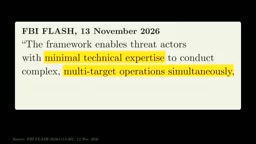
FBI-Warned Artex: How an AI Attack Framework With No In-House Model Pries Open Enterprise Doors
The FBI-warned open-source AI attack framework Artex has no model of its own—it plugs into Claude, GPT, and other external LLMs to drive an agent loop, turning ordinary tools like Nmap into an automated attack pipeline. This article examines three real cases—South Korean finance, ConnectWise, and Barracuda—analyzes the three drivers of speed, cost, and noise, and outlines defenses such as exposure inventory and short-lived credentials.