GPT-6 and the ARC-AGI Benchmark: A Substantive Leap in Abstract Reasoning

GPT-6 shows a major leap in abstract reasoning with a reported 60% bare-model score on ARC-AGI.
GPT-6 (Astra) has sparked widespread discussion with its reported performance on the ARC-AGI benchmark, achieving approximately 60% as a bare model — a significant jump in abstract reasoning. This article analyzes the technical significance behind the scores, the debate over reasoning harness frameworks versus raw model capability, the evolution of test-time compute scaling, and what these trends mean for the path toward AGI.
GPT-6 Officially Arrives
Recently, news of OpenAI releasing GPT-6 (codenamed Astra) has sparked widespread discussion across technical communities like Reddit. According to benchmark screenshots circulating in these communities, GPT-6 demonstrates significant improvements across multiple high-difficulty evaluations — particularly on the ARC-AGI series of benchmarks, widely regarded as the litmus test for general reasoning capabilities.
The Generational Evolution of Large Language Models
The GPT series is a family of Generative Pre-trained Transformer models developed by OpenAI. From GPT-1's 117 million parameters in 2018, to GPT-3's 175 billion parameters, to the multimodal capabilities introduced by GPT-4, each generation has represented a quantum leap in deep learning architecture, training scale, and optimization methods. GPT-5, the previous generation, reportedly already showed significant improvements in reasoning capabilities, while GPT-6 (Astra) marks yet another major breakthrough in reasoning depth and abstract ability. Notably, the development of large models has shifted from purely pursuing parameter scale toward optimizing reasoning efficiency, reliability, and general problem-solving capabilities.
It should be noted that this article is based on public community discussions and circulating benchmark data. In the absence of comprehensive official disclosures, readers should treat specific scores with caution — though the technical trends they reflect are still well worth exploring in depth.
Why ARC-AGI Is the Litmus Test for True Intelligence
The Fundamental Difference Between Pattern Matching and Abstract Reasoning
ARC-AGI (Abstraction and Reasoning Corpus), proposed by François Chollet, was designed to distinguish between a model's "memorization ability" and "genuine abstract reasoning ability." Unlike traditional language comprehension or math benchmarks, ARC-AGI requires models to face entirely novel visual logic puzzles that cannot be solved through memorized training data — they must induce underlying rules from a handful of examples and generalize them.
The Technical Principles Behind the ARC-AGI Benchmark
ARC-AGI was proposed by Google researcher François Chollet in 2019 and consists of 400 training problems and 400 test problems. Each problem contains 2–3 input-output examples and one test case to be solved. Problems are presented in grid format and require identifying abstract patterns involving color, shape, symmetry, and more. Its core design philosophy is based on "developer-aware generalization" — models cannot solve problems through large-scale data memorization and must possess the ability to inductively generate new rules on the fly. Humans score approximately 85% on average, while traditional neural networks have long hovered below 20%. This enormous gap highlights the fundamental shortcomings of current AI in fluid intelligence. Chollet argues that this kind of abstract reasoning ability is the core hallmark of general intelligence.
This characteristic makes it one of the most widely recognized benchmarks that is hardest to "game." For a long time, large language models have performed far worse than humans on this benchmark, which has become a key argument for questioning whether large models possess genuine intelligence.
What GPT-6's ARC-AGI Scores Actually Mean
According to information circulating in the community, GPT-6 achieved high scores on ARC-AGI-3 with the help of a dedicated reasoning framework (harness), while the bare model — without any auxiliary framework — also reached approximately 60%.
If this figure is accurate, it represents considerable progress. In earlier versions, even top-tier models struggled to break through relatively low thresholds under unassisted conditions. A 60% bare-model score suggests that GPT-6 may have achieved a substantive breakthrough at the architecture or training methodology level in the core cognitive dimension of abstract rule induction, rather than merely relying on external toolchains to "cheat."
The Reasoning Harness: Capability Amplifier or External Crutch?
Regarding GPT-6's use of a reasoning framework (harness), rational discussion has emerged in the community. A harness typically refers to an external reasoning orchestration system built around the model — such as multiple sampling, self-verification, programmatic search, or structured prompt pipelines — designed to amplify the model's raw capabilities.
Technical Implementation of Reasoning Harnesses
A reasoning harness is an augmentation system wrapped around the base model, typically comprising the following components: a prompt engineering module responsible for constructing structured inputs; a sampling strategy that controls generation diversity and exploration depth; a verifier that filters or scores candidate answers; and a memory mechanism that maintains intermediate states during the reasoning process. For tasks like ARC-AGI, a harness may implement program synthesis — converting visual patterns into executable code and verifying rules through symbolic reasoning. This hybrid architecture combines the pattern recognition capabilities of neural networks with the logical rigor of symbolic systems. The controversy lies in this: if the harness contributes significantly, should the results be attributed to model capability or engineering tricks? The industry is increasingly leaning toward evaluating both as an integrated system, since in actual deployment the two are inseparable.
Here lies a notable divergence in evaluation perspectives:
- One view holds that high scores obtained with a harness cannot fully represent the model's intrinsic capabilities, since additional computation and engineering measures are introduced, making it a different evaluation dimension from "bare model" testing.
- The other view emphasizes that in real-world applications, models never operate in isolation — the supporting reasoning system is itself part of the product's capability. Being effectively "amplified" by a framework actually demonstrates the model's strong composability and stability.
For this reason, OpenAI's simultaneous publication of scores with and without harness is a relatively transparent approach — showcasing the product's practical ceiling while preserving an honest assessment of baseline capabilities.
The Evolution of Reasoning from GPT-5 to GPT-6
Deep Reasoning Becomes the Focal Point of LLM Competition
Looking at the trajectory of large model development over the past two years, the competitive focus has shifted from mere "knowledge breadth" and "language fluency" toward "deep reasoning" and "complex problem-solving." From Chain-of-Thought to test-time compute scaling, every major lab is exploring how to make models "think longer and deeper."
Test-Time Compute Scaling Technology
Test-time compute scaling is a technical paradigm that invests more computational resources during the model's inference phase to improve output quality. Unlike the traditional "single forward pass for a result" approach, these methods allow models to engage in multi-step thinking, self-verification, or search exploration. Typical implementations include: Chain-of-Thought prompting, which lets the model unfold its reasoning process step by step; Self-Consistency sampling, which generates multiple outputs and votes to select the best answer; and Monte Carlo Tree Search (MCTS), which explores multiple paths through the decision space. OpenAI's o1 series of models explicitly adopted this strategy, trading extended "thinking time" for higher accuracy. This represents a strategic shift from "bigger models" to "smarter reasoning" and is a hot research direction in the current AGI landscape.
GPT-6's performance on ARC-AGI is a continuation of this trend. It suggests that OpenAI may have made focused investments in test-time compute, self-reflection mechanisms, or novel training objectives.
A Signal Toward AGI or Just Another Iteration?
Every new GPT release is accompanied by discussions about "whether we're closer to AGI." Objectively, improvement on a single benchmark is not enough to herald the arrival of artificial general intelligence, and ARC-AGI is just one of many dimensions. However, the sustained climb in abstract reasoning capability is indeed one of the necessary conditions on the path to stronger general intelligence.
Benchmark Saturation and the Evaluation Arms Race
Benchmark saturation refers to the phenomenon where, as model performance approaches human-level or the test set ceiling, the benchmark loses its power to differentiate between different systems' capabilities. The AI field has experienced this multiple times: ImageNet image classification gradually lost its authority after being surpassed in 2015; the GLUE natural language understanding benchmark prompted researchers to develop the more challenging SuperGLUE. ARC-AGI faces the same pressure — while the original version remains challenging, targeted optimization could inflate scores artificially. That's why the Chollet team continuously releases new versions (such as ARC-AGI-2 and ARC-AGI-3), increasing problem difficulty and diversity. This "benchmark-model" co-evolution reflects a fundamental dilemma in evaluation science: any fixed test set will eventually be optimized through, and truly general intelligence must face an infinite space of novel tasks.
It's worth being vigilant: as models are continuously optimized against specific benchmarks, the "gold content" of the benchmarks themselves is being diluted. ARC-AGI has already released multiple versions (such as ARC-AGI-3) precisely to address this "benchmark saturation" problem, maintaining its discriminative power by continually raising the difficulty bar.
A Rational Perspective on the GPT-6 Hype
For technology practitioners, maintaining three key perspectives when facing news like GPT-6 is particularly important:
First, benchmark scores do not equal real-world productivity. A high-scoring model's performance in actual business scenarios still needs to be validated through specific tasks.
Second, focus on methodology over numbers. If GPT-6 has indeed delivered an architectural improvement in reasoning capability, the technical thinking behind it is far more valuable to the industry as a whole than any single score.
Third, take a dialectical view of the harness vs. bare model debate. The two represent different evaluation contexts, and understanding the applicable boundaries of each is essential for forming a complete judgment of model capabilities.
Conclusion
The arrival of GPT-6 (Astra), regardless of how its specific details are ultimately disclosed, once again confirms the fact that the capability boundaries of large models are expanding rapidly. The progress on the ARC-AGI benchmark — especially the bare model's 60% score, if officially confirmed — would represent an important milestone in the field of abstract reasoning.
While looking forward to technological progress, we should also examine each release with a more mature perspective — scores will keep being surpassed, but what truly drives the field forward will always be a deeper understanding of the nature of reasoning and methodological innovation.
Related articles
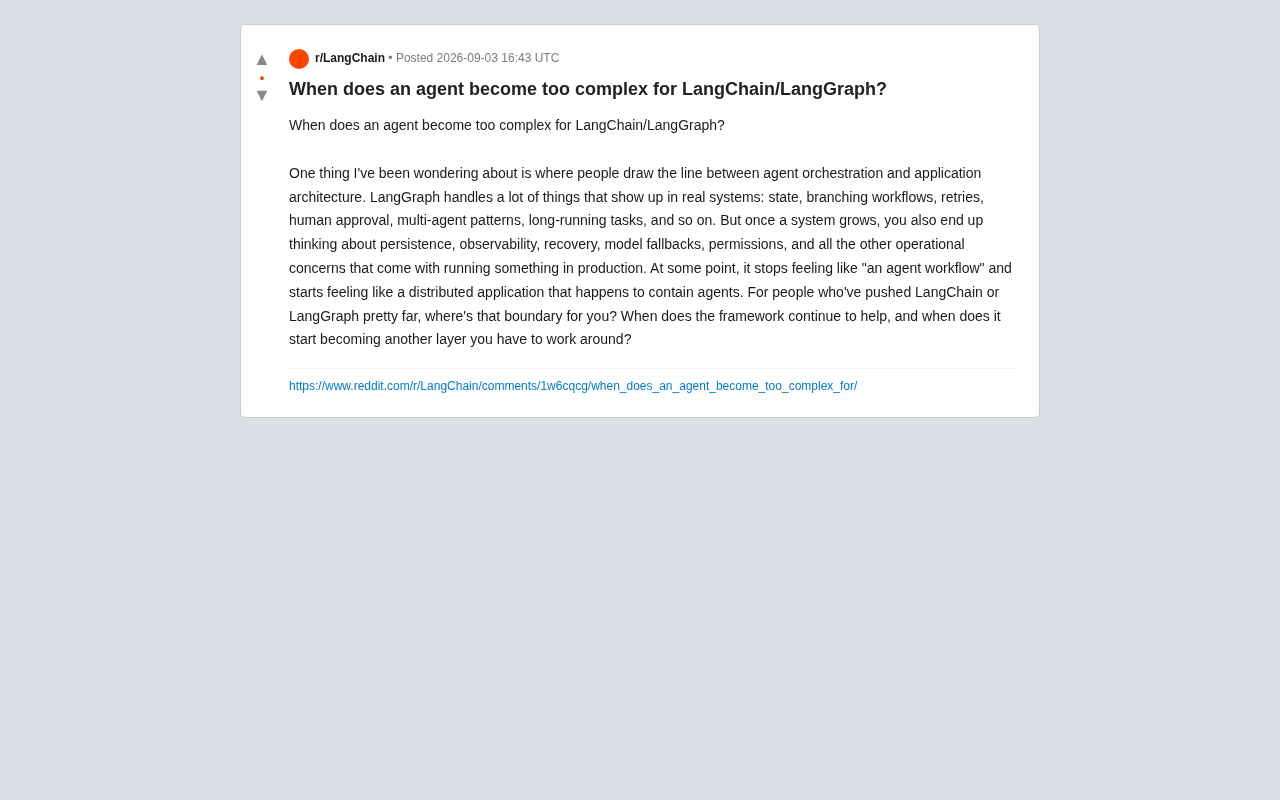
The Boundaries of LangGraph: When Does an Agent Become a Distributed Application?
Explore the capability boundaries of Agent orchestration frameworks like LangGraph, and learn when AI Agent systems cross the line from workflow orchestration into distributed application architecture.
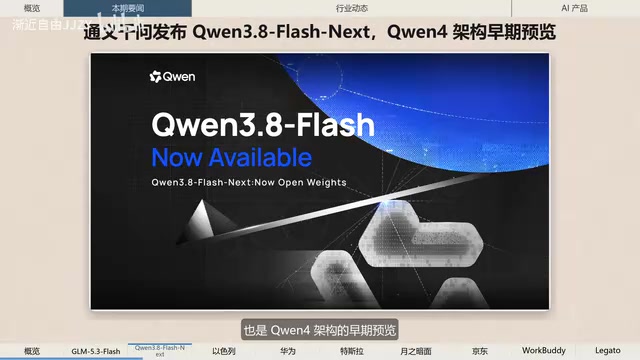
Zhipu Open-Sources GLM-5.3-Flash 320B Model as Alibaba's Qwen4 Architecture Preview Launches Same Day
Zhipu open-sources GLM-5.3-Flash native multimodal model (320B total/18B active params) while Alibaba launches Qwen3.8-Flash-Next as Qwen4 architecture preview, both redefining LLM efficiency.
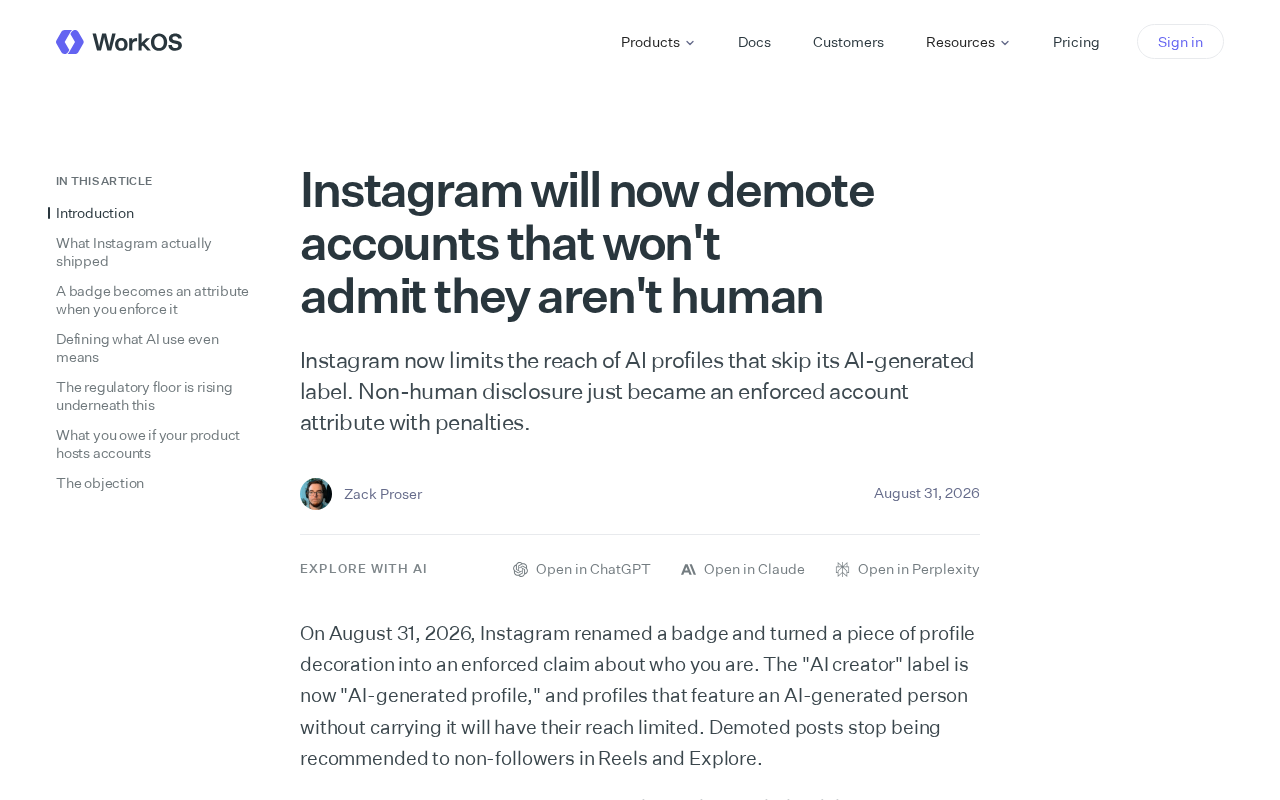
Instagram's New Rule: AI Accounts That Don't Disclose Their Identity Will Be Throttled
Instagram mandates AI identity disclosure — accounts that refuse will be throttled. Explore the enforcement challenges, detection limits, and industry impact.