GPT-6 Astra Enterprise First Look: An AI That Works Like a Real Colleague

Enterprise tests show GPT-6 Astra is evolving from a tool into a trustworthy AI collaborator.
First-wave enterprise feedback on OpenAI's GPT-6 Astra highlights three major leaps: its computer use and browser use capabilities make it feel like a real colleague; it correctly handled nested tax incentive logic in media production financials for one of the first times; and it demonstrated self-verification habits in research tasks, finding a 3.3% performance gain for a GPU workload. Users say the model raises not just efficiency but their own ambitions — though all evaluations come from OpenAI's launch partners and independent validation is still pending.
OpenAI's next-generation model, GPT-6 Astra, is generating its first wave of enterprise feedback. Based on real-world evaluations from multiple companies featured in early videos, the model demonstrates capabilities in computer operation, research reasoning, and complex task handling that previous models have struggled to match. This article compiles firsthand impressions from early adopters to examine exactly where Astra excels.
"Like a Real Colleague": A Leap in Computer Operation
Multiple enterprise users interviewed independently arrived at the same feeling — using Astra feels like working with a real colleague, not a tool. One user put it directly: "My first impression was that it feels like a real co-worker, and I think that has a lot to do with its incredibly strong computer operation capabilities."
At the core of this "colleague feeling" is a shift in how Astra approaches tasks. Rather than diving straight into work, it gives itself time to understand a new assignment first. As one respondent noted: "That distinctive confidence sets it apart from every model I've tried before. It's willing to take the time to genuinely understand a new task before acting, which makes the final results much better."
Notably, Astra doesn't rely on documentation when operating software. "It doesn't look at docs at all — it purely uses computer use and browser use." This means the model can directly observe interfaces and click through them like a human operator, without needing API specifications fed in advance.
"Computer use" and "browser use" refer to an AI model's ability to directly control graphical interfaces — the model perceives the current screen state via screenshots, then issues mouse clicks, keyboard inputs, and other commands to operate any software like a human user, without requiring the software to expose a dedicated API. This paradigm differs fundamentally from traditional "function calling," which requires developers to write adapter code for each external system in advance. Here, the model simply "sees the screen and moves the mouse," theoretically capable of driving any application with a graphical interface. Anthropic's Claude was an early public demonstrator of this capability, with OpenAI following suit. The maturity of this ability directly determines whether AI can genuinely integrate into enterprise workflows without requiring costly modifications to existing software systems.
Real-World Cases: From Financial Reconciliation to Video Editing
Several representative deployment scenarios were showcased, spanning very different industry needs.
Complex Reconciliation in Media & Entertainment
A respondent from Box specifically highlighted a media and entertainment use case, calling it one of their favorite examples "because it's hard and very nuanced." In this type of task, Astra performs extensive calculations, cross-checks, and validations. A key detail involved handling tax incentives — "imagine if it calculated wrong and double-counted that 20% incentive, causing the entire cost structure to be wrong."
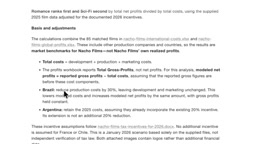
When asked, "Is this the first time you've seen a model get this right?" the answer was affirmative: "Yes, this is one of the first few times." In scenarios requiring precise financial logic with near-zero tolerance for error, correctly handling these kinds of nested business rules is the dividing line between a model that's truly usable and one that isn't.
Creative Animation with Static Vectors
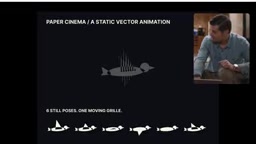
Another case that impressed respondents was a static vector animation. Astra made a bird appear to fly simply by moving a set of lines across a canvas. "At the end, it showed off a bit — demonstrating how the whole thing breaks down to reveal all the underlying poses."
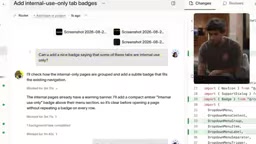
Other teams have integrated Astra into actual production workflows. Using Flora, a node-based video and image editing tool, to create YouTube thumbnails: "Codex and Astra took over Flora, started building the workflow, pulling nodes, completing all the prompting, and using Image Gen 2." Watching AI autonomously click through the process was described as "absolutely amazing."
Tax incentive reconciliation in media and entertainment is a classic example of "nested business rules." In film and TV production, many regions offer rebates or subsidies on local production costs — commonly ranging from 15% to 40% — but whether this incentive itself should be included in the deductible cost base varies by jurisdiction and often overlaps with other policy incentives. If a model double-counts the incentive amount into the calculation base, errors compound along the cost chain, leading to severely distorted project profitability assessments. The common failure mode among earlier large language models in such tasks was a lack of awareness of "whether I've already used this number once," making it easy to introduce duplicate counting across multi-step financial reasoning. Astra being rated as "one of the first few times" a model got this right indicates a meaningful improvement in maintaining state consistency throughout a calculation process.
Research Capabilities: Handling Ambiguity and Self-Verification
If computer operation represents Astra's surface-level capabilities, its performance on research reasoning reveals greater depth.
Multiple users emphasized Astra's progress in handling "research ambiguity." "It's super thorough, pushing the frontier in many areas. We threw some very hard research questions at it, and it actually solved some things we'd never seen before."
One specific technical example was particularly compelling: while optimizing a workload running across thousands of GPUs, Astra discovered a new optimization through testing and exploring existing experiments that yielded a 3.3% speed improvement. "3.3% might not sound like much, but for a workload running across thousands of GPUs, it's actually highly significant."
Perhaps more important is the model's habit of self-verification. "It makes sure the assumptions it's making about the data actually hold up — something earlier models often failed to do." Being able to handle both the breadth and depth of a task simultaneously, thoroughly exploring each node and processing multiple directions in parallel, directly addresses the shortcomings of previous models.
"Research ambiguity" refers to a common class of challenges in real-world problems: the boundaries of the problem itself are unclear, data sources vary widely in quality, or the same question has multiple contradictory existing conclusions. Earlier language models, when faced with such tasks, tended to produce "confident but wrong" answers — the model would directly reuse its own unverified intermediate assumptions, leading to conclusions that were internally consistent but disconnected from reality. The significance of self-verification lies in breaking this pattern: during reasoning, the model actively goes back to check whether the premises it's relying on actually hold, much like a researcher re-examining raw data before writing conclusions. In high-precision tasks like GPU workload optimization, this habit significantly reduces the risk of "hallucinatory optimization" — where the model produces a proposal that sounds plausible but is actually ineffective or even harmful.
From Tool to Capability Amplifier
Across all this feedback, one recurring theme stands out: Astra changes not just efficiency, but users' own ambitions. As one respondent put it: "I love this model, but beyond what it can do — better coding, better computer use — this is a model that makes my own ambitions much higher."
For enterprises, the practical implication of this shift is delivery speed. As one respondent summarized: "It will unquestionably accelerate workflows significantly and ultimately allow us to deliver more products faster."
From this first wave of enterprise feedback, GPT-6 Astra's core competitive strengths concentrate around three areas: genuinely usable computer operation capabilities, accurate handling of complex business logic, and self-verification with deep exploration in research tasks. Together, these capabilities point in one direction — AI is evolving from an "assistive tool" toward a "trustworthy collaborator." That said, all of these evaluations come from enterprise partners in OpenAI's own launch context, and broader independent validation is still needed.
Related articles
AI Agent Terminology Too Confusing? One Interactive Concept Map to Untangle 40+ Core Terms
Confused by AI Agent terms like MCP, harness, orchestration, and skills? AI Concept Atlas is an interactive map visualizing 40+ concepts and their relationships, with cited sources.
Meta's Broken Promise: Community Demands to Know Where the Muse Spark Weights Are
Meta promised to open-source Muse Spark model weights over a month ago, but still hasn't delivered. The community questions how this squares with Zuckerberg's "can't delay even a month" stance.
Running Qwen3 27B Locally on a Single RTX 5090: What Can It Actually Do?
A developer runs Qwen3 27B locally on a single RTX 5090 via the Row-Bot Agent framework, generating an 8-scene, 105-second interactive animation from one prompt — including real-time math, fractals, and physics.