GPT-6 Astra Explained: The Shift from Answering Questions to Getting Things Done
OpenAI's GPT-6 Astra is built to autonomously execute complex tasks, not just answer questions.
GPT-6 Astra is OpenAI's latest flagship model, repositioned not as a better question-answerer but as an autonomous work executor — capable of reasoning, operating computers, browsing the web, using software, and writing and debugging code across multi-step workflows. OpenAI highlights strong performance in cybersecurity, software engineering, and scientific research, and has released impressive benchmark numbers including 98% on Frontier Math Tier 4 and 100% on Exploit Bench, though all figures are self-reported and await independent verification. Astra's deeper significance lies in narrowing the gap between generating an answer and delivering an outcome, marking a shift from AI as advisor to AI as executor. The author recommends treating it as a directional signal rather than a fully proven capability until more independent evaluations emerge.
What Is Astra, Exactly
The name everyone in the AI world is talking about right now is Astra — specifically, GPT-6 Astra, OpenAI's latest flagship model. Rather than thinking of it as yet another more powerful chatbot, it's better understood as a fundamental shift in how AI capability is positioned: moving from "answering questions" to "getting work done."
That distinction matters more than it might seem. Previous AI models were genuinely good at generating text, writing code, and analyzing information — but turning those outputs into real results still required a human to bridge the gap. What Astra is trying to eliminate is precisely that space between "here's your answer" and "here's the outcome."
What It Can Do
According to OpenAI, Astra doesn't just generate content — it can reason through a problem, operate a computer, browse the web, work with software, write and debug code, analyze business processes, and handle multi-step workflows.
In other words, the old mode was "here's how you could do this," and the new direction increasingly looks like "let me do it for you." That shift — from advisor to executor — is the core of why this model is generating so much discussion.

Where It Excels
OpenAI specifically highlights Astra's strong performance in several areas: cybersecurity, computer use, software engineering, scientific research, and various professional tasks. The company also notes improvements in handling ambiguous instructions and better tracking of temporal context — both of which matter enormously for an AI that's actually meant to work, since real-world tasks are often loosely defined and span multiple steps.

The Move Toward AI Agents
Astra is positioned as a major step toward capable AI agents. The term "agent" here doesn't mean passively generating answers — it means actively taking a sequence of actions to reach a concrete outcome.
This is the most fundamental difference from traditional language models. A system that can browse the web on its own, invoke software tools, write code, and fix its own errors could theoretically handle an entire workflow end-to-end, rather than just contributing to one piece of it.

The concept of AI agents has existed in academia for decades, but in the current context it specifically refers to large model systems that can perceive their environment, form plans, and autonomously execute multi-step actions. Unlike traditional question-and-answer interactions, agents are typically equipped with tool-use capabilities — they can actively invoke search engines, code executors, file systems, and even GUI interfaces. More critically, agents can dynamically adjust subsequent steps based on intermediate results. This "plan–execute–feedback" loop is what fundamentally separates them from ordinary conversational models. The main challenges the industry faces in this area include error accumulation over long tasks, hallucination-induced mistakes, and finding the right balance between autonomy and human oversight. Astra's stated direction is to push through on exactly these challenges.
Benchmark Results Worth Noting
The benchmark numbers are another reason Astra has attracted attention. OpenAI's published figures include: Frontier Math Tier 4 at 98%, RKGI 3 at 99.9%, and Exploit Bench at 100%.
Those numbers look striking. That said, it's worth noting that all of these figures come from OpenAI's own reporting, and the specific testing methodology and independent replication are still pending. High benchmark scores don't always translate to reliable performance in real, open-ended scenarios — especially when tasks involve ambiguous instructions and multi-step execution.
Some context helps in interpreting these scores. Frontier Math is a high-difficulty problem set specifically designed to test frontier mathematical reasoning, with Tier 4 representing the hardest difficulty tier — one where top models have historically passed at rates well below 50%. Exploit Bench is a security-domain benchmark for evaluating automated vulnerability exploitation; a score of 100% means the model can complete penetration-testing-style tasks end-to-end, which is why its cybersecurity capabilities are drawing both excitement and concern. The inherent limitation of benchmarks is that they typically run in closed, deterministic environments, while real-world tasks are noisy, ambiguously specified, and full of edge cases. That systematic gap means high benchmark scores should always be interpreted alongside independent replication results.
Where the Real Change Lies
Focusing only on "AI gives better answers" misses the point. The real story with Astra is that AI is getting better at closing the distance between a question and an outcome — it's starting to walk through the execution process on your behalf.
If this trajectory continues, both how we use computers and what skills we need to collaborate with them could change significantly. When machines stop just giving advice and start actually doing things, the human role shifts increasingly toward defining goals, reviewing results, and maintaining direction. That's both an opportunity and a source of new questions around reliability, safety, and accountability.
Keeping a Level Head
The buzz around Astra is considerable, but the publicly available information is still primarily coming from official communications and promotional framing. The capabilities being described are genuinely compelling — but there's often a meaningful distance between "can do" and "does it consistently and well." Until more independent evaluations and real-world usage reports emerge, treating Astra as a clear directional signal is probably more grounded than taking it as fully arrived, production-ready capability.
Related articles
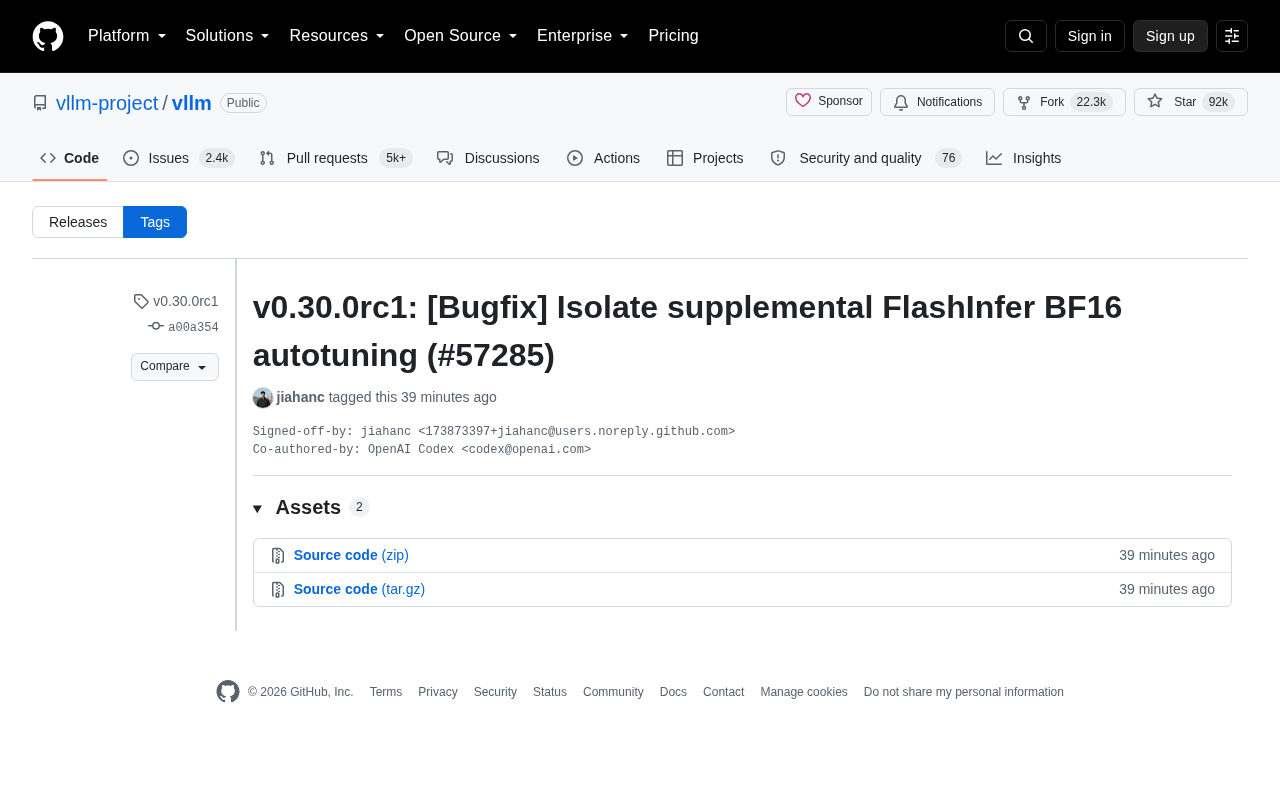
vLLM v0.30.0rc1 Released: Isolates FlashInfer BF16 Autotuning Logic
vLLM v0.30.0rc1 release candidate fixes FlashInfer BF16 autotuning isolation (PR #57285). Learn the technical background and its impact on inference deployment.

Comp AI Raises $34M Series A, Bets on Agentic Security Compliance
Comp AI raises $34M Series A led by Roo Capital and Grand Ventures, betting on "continuously agentic" AI to transform compliance from periodic audits into real-time monitoring.

MIT Technology Review's 35 Innovators Under 35: A Climate Tech Edition Explained
MIT Technology Review's latest 35 Innovators Under 35 list focuses on climate tech, spotlighting nine young global innovators. Here's what the list means and why it matters.