GPT-6 Astra Free Usage Tutorial? Hands-On Test of a Multi-Model Aggregator Site
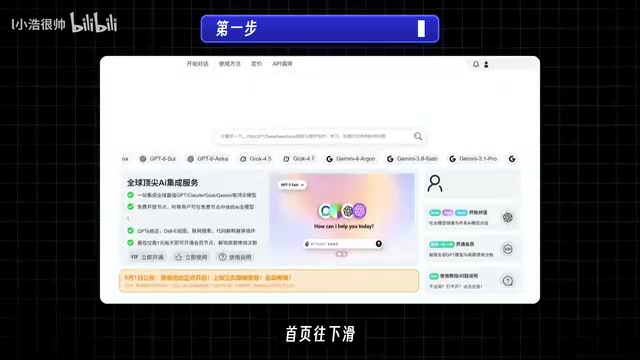
The no-registration all-model mirror site shown in the Bilibili tutorial is actually a reverse proxy or shared account pool, with ban and data-leak risks behind the "free" label.
The article breaks down a popular Bilibili tutorial: the creator claims to have found a "treasure site" that requires no registration, works on mobile and desktop, and can switch between full models such as GPT-6 Astra, Claude, Gemini, and Grok, demonstrating a web game generated in a minute and a half, a Chinese poster from one sentence, and three copy posts in 10 seconds. The author points out that such mirror sites are usually implemented via reverse proxy or shared account pools, bypassing official registration and payment, and the front end may directly reuse or imitate the official interface. The confusing model naming in the video shows the operators intentionally stay vague. The real costs of free services include API keys being banned at any time, opaque data flows through third-party servers, and sudden site failure. The author recommends using official free quotas or legitimate aggregation platforms, treating mirror sites only as temporary fallbacks, and avoiding sensitive information or long-term workflow dependence.
Recently, a Bilibili creator posted a video claiming to have found a "treasure site" that lets you use GPT-6 Astra as well as Claude, Gemini, Grok, and other full models with zero barrier and no registration, emphasizing that it works on both mobile and desktop and is completely free. This kind of "freebie tutorial" spreads quickly on social platforms, but the technical details and potential risks involved deserve a calm breakdown.
What the Tutorial Claims
According to the video, the path is roughly: scroll down on the site's homepage, select "free node", and enter the "all-model mirror site". The page presents a chat interface similar to the official GPT site, with a selector in the top-left corner to switch between models. The drawing feature corresponds to Image 2.6, and the selectable models include Claude, Gemini, Grok, and one called "Deep Sea Tianwen Pimi".
The creator also demonstrated hands-on sessions: asking GPT-6 Astra to write a "neon stall tongue-eating" web game, claiming it was done in a minute and a half; switching to Image 2.6 for "a poster in one sentence", with special emphasis that not a single Chinese character was wrong; and using Cloud (presumably a slip of the tongue or transliteration for Claude) to write copy, producing three Moments posts in 10 seconds.
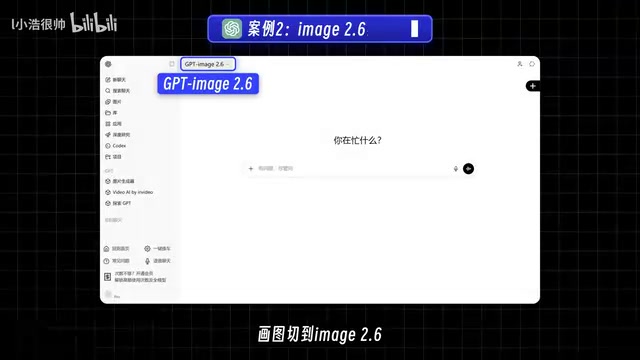
If these demos are genuine, they show that the aggregator does connect to several mainstream models and responds reasonably fast. But the video itself shows no technical principles, account sources, or terms of service—every conclusion rests on "I'll demonstrate it for you".
The Technical Nature and Gray Area of Mirror Sites
A so-called "all-model mirror site" usually has two implementations. One is a reverse proxy—the builder calls official APIs through their own API key or enterprise account, then forwards the results to front-end users. The other is a shared account pool, allocating sessions from several paid accounts to different users. Both bypass the official registration and payment process.
According to the Bilibili creator in the video, the site "is directly the original GPT official chat page", which suggests the front end may directly reuse or closely imitate the official interface. The top-left interaction for switching between all models also fits the typical design of aggregator mirror sites. However, such sites often have no published privacy policy, and the conversation content users enter passes through third-party servers, with data flows completely opaque.
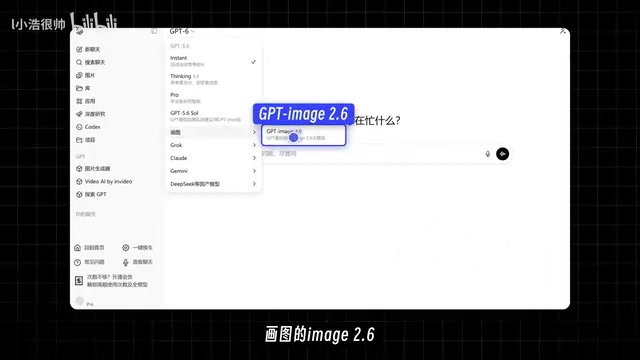
Another issue to note is the confusing model naming. Terms like "Gemini Rock", "Cloud Opus", and "Deep Sea Tianwen Pimi" that appear in the video do not match official product names; they may be the creator's slips, transliterations, or rewrites by the site to evade keyword detection. This itself is a signal: the operators of such services intentionally keep things vague.
Reverse proxy means the mirror site operator sets up an intermediary server. User requests first go to this server, which then forwards them to official APIs such as OpenAI and Anthropic using the operator's own API key, and finally sends the returned results back to the front end as-is. To the official provider, requests come from the proxy server; to the user, they never touch the official account. This approach can hide the real key and centralize billing, but it also means all conversation content can be fully read on the server side. Shared account pools mean the operator buys several paid subscription accounts and lets multiple users take turns using the same account through session isolation or cookie distribution, spreading costs thin—but this easily triggers the official concurrency detection and ban mechanisms, and once an account is flagged, users depending on it fail at the same time.
The Real Cost Behind "Free"
The video repeatedly stresses that "all of the above is completely free" and urges viewers to "save it first", "hit follow", and "spam 666 in the comments". From a content creator's perspective, this looks more like a traffic-funnel video—the real product may be a paid community later, advertising partnerships, or simply monetizing traffic for the mirror site itself.

For ordinary users, there may indeed be short-term free access to strong model capabilities. But the risks are equally concrete: the mirror site may fail at any time because the official API key is banned; user conversation data may be recorded, analyzed, or even resold; and if the site asks for a phone number or email, there is also the possibility of information leakage. The "no registration" mentioned in the video lowers the barrier to use, and also means there is no account system to constrain service quality.
API key bans are the most common cause of death for such sites. The terms of service of providers like OpenAI and Anthropic generally prohibit reselling or sharing accounts or keys with third parties. Once abnormal call volumes, multi-region IPs, or request patterns inconsistent with the official front end are detected, the key is directly disabled, and the mirror site collapses entirely without warning. Users often find the page won't open and all chat history is lost with no preparation. In addition, some mirror sites inject scripts into the page to collect device fingerprints, clipboard contents, or even login states—risks far beyond "your conversations being seen".
A Rational View of "Zero-Barrier Freebies"
Multi-model aggregation itself is nothing new; platforms like OpenRouter and Poe have long offered similar capabilities, except that they have clear billing rules and privacy terms. The value of this Bilibili tutorial is that it makes more people aware that different models can be switched within a single interface; but it makes "free" the core selling point while avoiding sustainability and security issues.
If you just want to try GPT-6 Astra's coding or drawing capabilities, using the official free quota or the trial plans of legitimate aggregation platforms is a safer choice. Mirror sites can serve as a temporary fallback, but you should not enter sensitive information into them, and it is even less advisable to make them part of a long-term workflow. The line in the video, "don't scroll away yet—after watching, you'll understand", should mean understanding not just how to open the web page, but also the price behind a free lunch.
Related articles

Zero-Code Replication of a $10,000 3D Website with Claude Code: A Six-Tool Breakdown
Bilibili creator Yomi used Claude Code plus five free tools to build a 3D product landing page quoted at $10,000 overseas—zero code. Breakdown of the six-tool division of labor, image-to-3D workflow, and the core collaboration method: "give AI a reference, not 'make it look better.'"
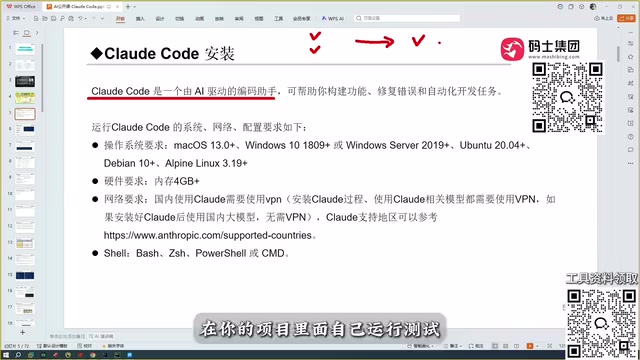
Claude Code in Practice: Install, Connect Models, Calculate Tokens, and Ship a Full-Stack Project with a Single Document
Based on a Bilibili public course demo, this covers Claude Code installation, model connection, token cost calculation, and the practical path of shipping a full-stack project with a single document, plus comparisons with Copilot, Cursor, Trae, and other coding assistants.
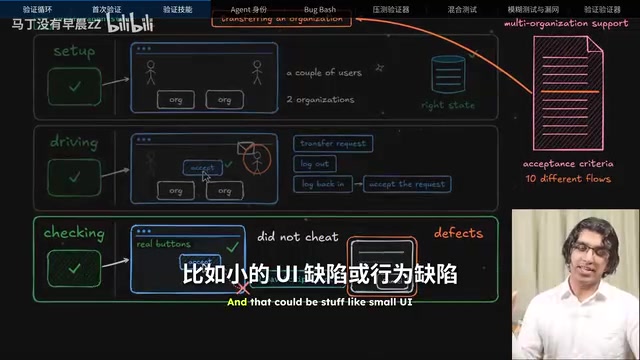
Who Accepts AI-Written Code? A 25-Minute Deep Dive into Verification Loops and the New Code Review Paradigm
After AI writes lots of code, how should Code Review verify it? This article breaks down the Claude Code team's verification loop framework: surface-level end-to-end verification, setup/drive/check three-stage skills, hybrid end-to-end testing and reliability checklists, and how to tighten the loop when issues slip through.