GPT-6 Astra Rumors Explained: What AI-Built Virtual Worlds and Multi-Agent Collaboration Really Mean

Analyzing the GPT-6 Astra rumors: AI-built virtual worlds, multi-agent collaboration, and a rational perspective.
A viral Reddit post describes a rumored GPT-6 Astra creating a full Unreal Engine world populated with collaborating AI agents. This article analyzes the technical feasibility behind such claims — from embodied intelligence and emergent multi-agent behavior to AI orchestration capabilities — while maintaining a rational perspective on the gap between stunning demos and production-ready systems.
A Mind-Blowing AI Experience
Recently, a post originating from Reddit and reshared by X (formerly Twitter) user Matt Schumer has sparked heated discussion. The user described his "holy shit" moment while interacting with the rumored "GPT-6 Astra" — he asked the AI to create a complete world in Unreal Engine, populate it with multiple Astra-powered agents, and have these "human" characters collaborate with each other to survive.
Unreal Engine is one of the world's leading game engines, developed by Epic Games, with UE5 being the latest version. It's widely used not only in AAA game development but also in film production (such as virtual production for The Mandalorian), architectural visualization, military simulation, and autonomous driving training. UE5's Nanite virtualized micropolygon geometry system and Lumen global illumination technology enable extremely high-fidelity real-world simulation. For AI research, Unreal Engine provides a comprehensive Blueprint visual scripting system and C++ API interface, allowing external programs to dynamically create scenes, spawn characters, and control their behavioral logic through code — this is precisely the technical foundation for AI agents to interact with 3D simulated worlds.
It's important to note that "GPT-6 Astra" remains in the realm of community discussion and leaks, with no official confirmation yet. Therefore, this article is more of an analysis of the technological trends and potential implications behind this concept, rather than a review of a released product.
From Single Tasks to Complex Systems: Why This Case Deserves Attention
AI Evolving from Tool to System Builder
Traditional interactions with large language models typically follow a "one question, one answer" or "one instruction, one output" pattern. What this case demonstrates is an entirely new capability concept: using natural language instructions to directly generate a runnable, dynamic simulation system containing multiple autonomous agents.
This involves the stacking of capabilities across three layers:
- Environment generation: Building a 3D world with physical rules, terrain, and resources in Unreal Engine
- Agent generation: Giving each "human" character in the world an independent AI brain with perception, decision-making, and action capabilities
- Emergent group collaboration: Multiple agents spontaneously forming division of labor, communication, and cooperative behavior under survival pressure
Each layer alone is already quite challenging to implement. Integrating all three into a single-instruction-driven workflow represents AI's role shift from "tool" to "system builder."
The Research Value of Multi-Agent Collaboration
Having multiple AI agents collaborate toward shared goals in a common environment is itself one of the frontier directions in current AI research. These experiments are often used to observe emergent behavior — how simple individual rules can produce complex, never explicitly programmed social behaviors at the group level, such as resource allocation, leadership formation, conflict, and cooperation.
Emergent behavior is a core concept in complex systems theory, with roots tracing back to biological studies of collective intelligence in ant colonies and bee swarms. In the AI field, the "Generative Agents" paper published by Stanford University and Google in 2023 was a landmark work — researchers placed 25 LLM-powered agents in a sandbox environment resembling The Sims, with each agent possessing memory, reflection, and planning capabilities. The results showed that these agents spontaneously organized parties, spread information, formed social relationships, and even exhibited campaigning behavior — none of which was explicitly programmed by the researchers. This study proved that LLM-driven multi-agent systems can indeed produce meaningful emergent phenomena, opening entirely new paths for social science simulation.
If a model can automatically build such experimental platforms, it becomes not just a content generation tool but potentially a simulation laboratory for social science, economics, and collective behavior studies.
Deep Technical Analysis
Embodied Intelligence: AI Stepping Beyond Text Space
The most striking aspect of this case is AI's embodiment. Previous large language models primarily operated in text space, but placing Astra agents into Unreal Engine's 3D world means AI must handle spatial perception, physical interaction, and real-time decision-making. This aligns closely with the "embodied intelligence" approach emphasized in robotics, autonomous driving, and related fields.
The core premise of embodied intelligence holds that true intelligence cannot exist detached from physical-world perception and interaction. This idea stems from philosopher Merleau-Ponty's phenomenological tradition and was further developed in AI by MIT's Rodney Brooks and others. Current embodied intelligence research follows two main tracks: deploying robots in the real physical world (such as work by humanoid robotics companies like Figure and 1X Technologies), and training and testing AI's spatial interaction capabilities in high-fidelity virtual environments. Representative platforms for the latter include Meta's Habitat, NVIDIA's Isaac Sim, and Unreal Engine. Virtual environment training offers advantages in lower cost, faster iteration, and massive parallelization, with results transferable to the real world through Sim-to-Real technology.
The choice of Unreal Engine as the medium is also deliberate — it provides high-fidelity physics simulation, rendering, and interaction frameworks, making it a mature industrial-grade platform for building virtual simulation worlds. AI directly interfacing with such an engine is essentially orchestrating complex software across modalities and systems.
Orchestration and Scheduling Are the True Core Capabilities
It's worth emphasizing that the model's core capability for achieving such results may not lie in "stronger language understanding" but rather in orchestration and scheduling: understanding the user's high-level intent, decomposing it into a series of subtasks including environment setup, code generation, agent configuration, and logic integration, then invoking the appropriate toolchains to complete the loop.
This is also the central thesis of the AI Agent movement in recent years — evolving from "generating content" to "completing tasks" to "building autonomously running systems." AI Agents represent one of the most important paradigm shifts in AI during 2023–2024. The core idea is to have large language models serve not just as text generators but as a "brain" that perceives environments, formulates plans, invokes tools, and executes multi-step tasks. Representative frameworks include OpenAI's Function Calling mechanism, LangChain's Agent framework, and Microsoft's AutoGen multi-agent orchestration framework. From a technical architecture perspective, a complete Agent system typically comprises four modules: a perception module (receiving external information), a memory module (storing and retrieving historical information), a planning module (decomposing complex goals into subtasks), and an execution module (invoking APIs, code executors, and other external tools). The progression from "single conversation" to "autonomous task completion" to "orchestrating multiple agents to build systems" represents three escalating levels of Agent capability.
Beyond the Leaks: Maintaining a Rational Perspective
The Gap Between Rumors and Reality
Despite how exciting this demonstration appears, we must remain cautious. First, the authenticity of "GPT-6 Astra" has not been verified, and social media leaks often involve exaggeration or selective presentation. Second, a description like "create a world and fill it with collaborating agents" leaves the actual results, stability, and reproducibility completely unverifiable — there is often an enormous gap between a carefully selected success case and a stable, usable product capability.
Challenges from Stunning Demos to Real-World Deployment
Even if technically feasible, there's still a long road from a "stunning demo" to a "practical productivity tool." The computational costs of multi-agent systems, behavioral controllability, result reliability, and how to apply them to real scenarios like game development, simulation training, and educational research are all challenges that must be tackled one by one.
From an engineering perspective, multi-agent systems face multiple challenges in moving from academic demonstrations to real-world applications. First is the computational cost problem: each agent requires an LLM inference call for every decision step. With N agents running for T time steps, total inference calls are O(N×T), and API costs and latency for large-scale scenarios will escalate dramatically. Second is the issue of behavioral consistency and controllability: LLM randomness may cause agents to produce unexpected "hallucination behaviors," which is unacceptable in safety-sensitive simulation scenarios. Additionally, there are classic distributed systems challenges like inter-agent communication protocol design, state synchronization, and deadlock avoidance. Current industry solutions being explored include: using smaller, faster specialized models instead of general-purpose large models, introducing hierarchical agent architectures to reduce unnecessary communication, and developing standardized multi-agent orchestration protocols.
Conclusion: A Technical Direction Worth Watching
Regardless of this specific case's authenticity, the technological direction it reflects is clear: AI is evolving from a passive content generator to an active system builder and world simulator. When a single natural language instruction can spawn a virtual world containing autonomous agents capable of self-running and evolving, the boundaries of AI applications will be dramatically expanded.
For developers, researchers, and content creators, this represents both an expansion of imaginative possibilities and a preview of future ways of working. We would do well to maintain an open yet rational mindset and continue following real progress in multi-agent collaboration and AI simulation.
Key Takeaways
Related articles
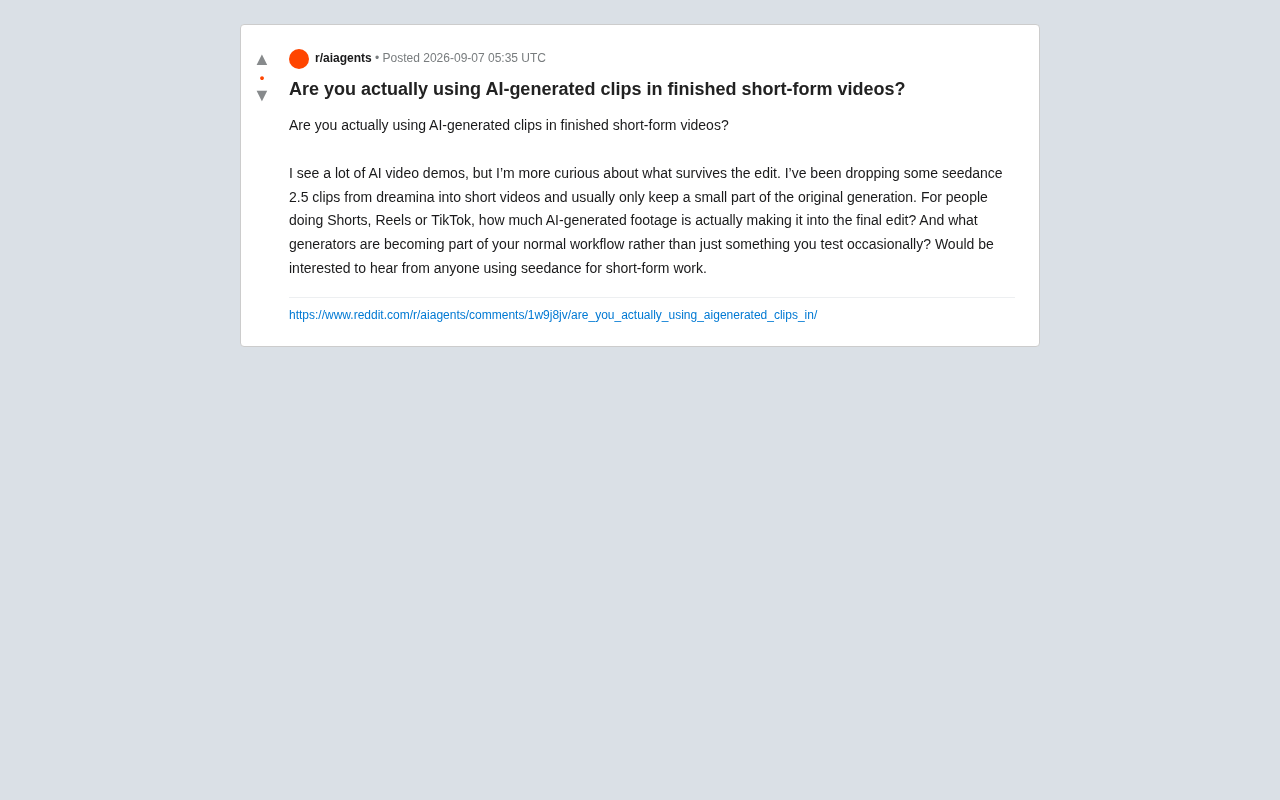
How Short-Form Video Creators Are Using AI Video Generation Tools
Exploring the real-world application of AI video generation tools in short-form video creation. From Seedance to Runway, how do creators integrate AI assets? Revealing the gap between demos and production use.

Home Data Center Setup Guide: A Complete Self-Hosted Private Cloud Implementation
Deep dive into building a home data center: hardware selection, software architecture, cost analysis, and operational challenges. From data sovereignty to technical implementation, build your private cloud infrastructure and control your digital assets.
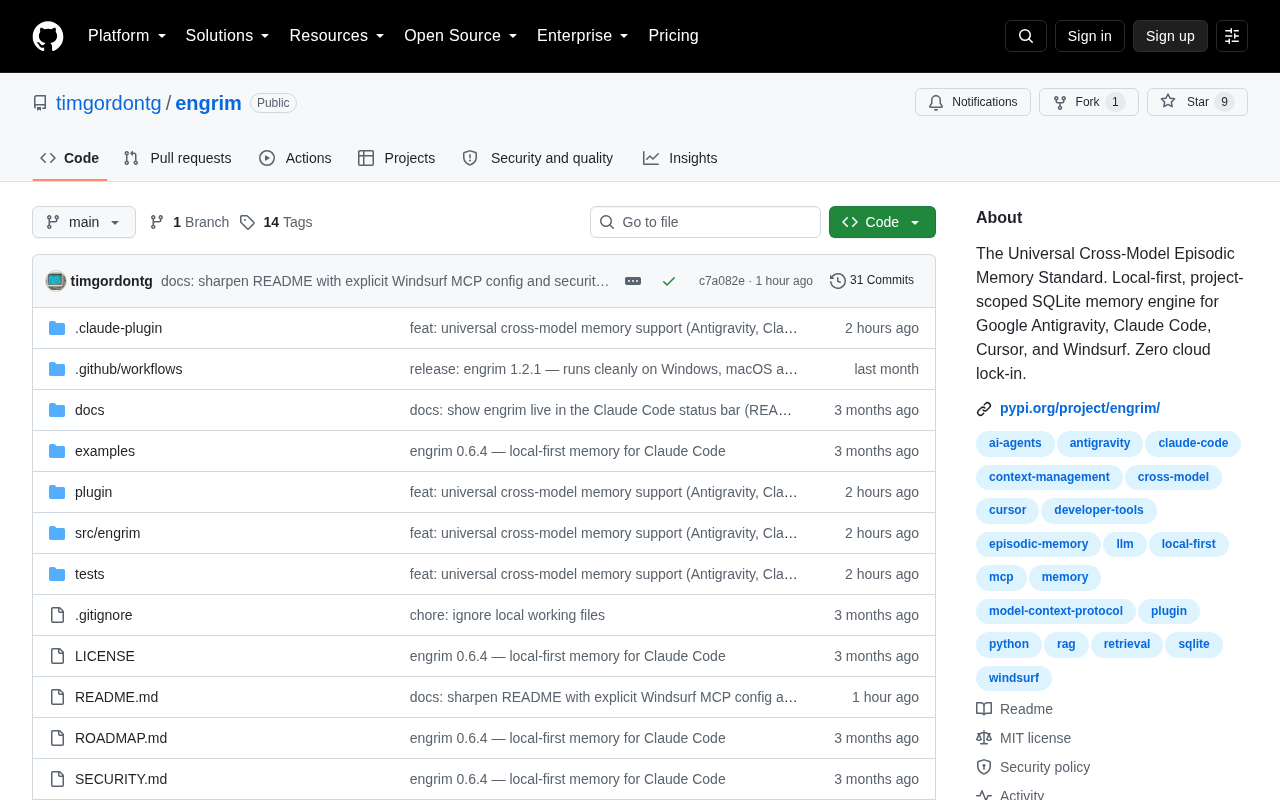
Engrim: A Local Memory Engine Solution for AI CLI Tools
Engrim is an open-source, local-first SQLite memory engine built for AI CLI tools like Claude Code and Aider, solving context loss while keeping data private.