GPT-6 Astra Tested: 5 Real-World Cases That Put the 'AGI' Claim to the Test
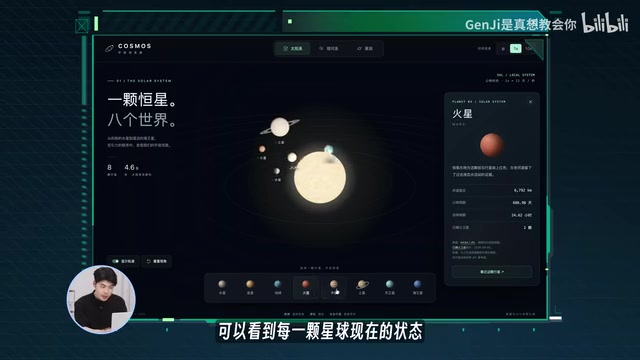
Hands-on benchmark pits GPT-6 Astra against Kimi K3 and GLM 5.3 across five real-world cases.
After OpenAI launched GPT-6 Astra with an 'AGI' declaration, a Bilibili creator ran identical prompts through GPT-6, Kimi K3, and GLM 5.3 across five cases: a universe browser, an Apple-style product page, a Plants vs. Zombies clone, Blender 3D modeling, and a Xiamen city flythrough. GPT-6 led on overall polish and was the only model to integrate directly with Blender, but domestic models stayed competitive, with GLM showing standout visuals in places. The creator's deeper takeaway: as AI compresses workflows, aesthetic judgment and creative intuition become the truly scarce skills.
OpenAI officially launched GPT-6 Astra on September 4 (Beijing time). At the launch event, the company's president declared "Welcome to AGI" — a line that sent plenty of people into a frenzy. "Astra" comes from the Latin word for "star," and the moment that truly ignited the conversation was a live demo showing AI directly operating Blender to complete a 3D modeling task.
A Bilibili content creator ran the same set of prompts through GPT-6 Astra, the domestic Kimi K3, and Zhipu GLM 5.3 in a side-by-side benchmark, covering dimensions including web development, AI coding, and 3D modeling. This article is based on that hands-on test, walking through five core cases to see just how much substance lies behind the "AGI" label on GPT-6.
Case 1: Universe Browser Page — Interaction Details Reveal True Capability
The first case carried forward Astra's "star" theme — asking AI to build a standalone universe browser web page from scratch, complete with the solar system, the Milky Way, and a black hole.
With Ultra full-access permissions enabled, GPT-6 Astra completed the entire project in about 29 minutes and 45 seconds. The finished product lets users drag and rotate to view individual planets, toggle orbital paths on and off, switch to a top-down Milky Way view, and experience a lens-stretch animation as you approach a planet. A time-speed controller in the upper right supports 10x and other playback rates. The creator noted this kind of interactive experience has genuine value for astronomy education aimed at younger audiences.
The same prompt was then sent to Kimi K3 and GLM 5.3. GLM 5.3's overall logic was quite similar to GPT-6 — it also supported planet locking, a timer, and speed control, with a notably distinctive visual rendering of the black hole. On the polish of the UI, though, the creator personally preferred GPT-6's approach.
Case 2: Apple-Style Product Page — Scroll Interactions That Feel Right
The second case tested each model's ability to replicate a product marketing webpage. The creator invented a fictional product — "Nebula Wireless Earbuds" — and asked for two pages: an Instagram-style brand landing page and an Apple-style product launch page.
GPT-6's product page was priced at ¥1,299, featured hover feedback effects, and had one particularly clever touch: the speed at which the user scrolls controls the playback speed of the earbuds' motion animation — a detail that closely mirrors the feel of Apple's actual website. The two pages were also linked, and clicking into a subdirectory didn't lead to a blank page but instead displayed corresponding product renders.

By comparison, Kimi K3 took two hours and GLM 5.3 took one hour. Kimi's basic product imagery was complete, but the layout of some elements left room for improvement; GLM focused more on rendering the texture quality of a single earbud. Each model had its own strengths in the raw output, but GPT-6 edged ahead on overall polish.
Case 3: Plants vs. Zombies Clone — Core Game Functions Largely Intact
Cloning the classic game Plants vs. Zombies is a demanding stress test for AI coding. The prompt explicitly called for elements including a lawn, spikes, plants, zombies, and level design.
GPT-6 completed the build in roughly 23 minutes. The result was impressively functional: 15 types of zombies, 20 types of plants, attack animations for the Jalapeño, a slowing effect for the Snow Pea, basic leg animations on zombies as they walk, and reproductions of the shovel tool, background music, and even the classic mechanics of plants getting eaten and the lawnmower saving your last lane.

For this section, Kimi and GLM instead demonstrated a Minecraft-style scene. GLM 5.3 supported basic scene movement via WASD keys, but more detailed interactive elements were unresponsive when clicked.
There was also a brief bonus case — an SVG animation of a scooter rider holding a kettle — designed specifically to test whether AI "dumbs down" on physics: do the wheels spin, the scarf flutter, and the background scroll in a logically consistent way? The creator concluded that GPT-6 passed this sanity check.
Case 4: Blender 3D Modeling — AI Operating a Modeling Application Is the Showstopper
This is the capability the creator called the most exciting moment of the entire launch — AI directly operating Blender to complete a 3D model. Neither Kimi nor GLM currently supports direct Blender integration, so this round was GPT-6's alone to run.
The creator uploaded a 2D floor plan and asked for an editable model in Blender, rendered as a 2560×1440 orthographic axonometric image. The delivered package was remarkably complete: an editable Blender project file, a top-view reference image, a usage guide and parameter documentation, and labeled notes explaining the purpose of each file.
The most unexpected detail: the render included low-poly style trees — something that appeared nowhere in the original 2D floor plan. This was spontaneous creative initiative on the AI's part. The overall model had a clear, well-defined form, and from a professional delivery standpoint, this was the case with the most real-world productivity value in the entire benchmark.
Blender is a free, open-source professional 3D creation suite supporting modeling, sculpting, animation, rendering, video editing, and more. It is widely used in film VFX, game asset production, and architectural visualization. An orthographic axonometric render is one of the standard deliverable formats in architecture and interior design: unlike perspective projection, orthographic projection does not scale objects based on distance — all parallel lines remain parallel, making it easy to take precise measurements and verify designs. Low poly style refers to building geometry with as few polygons as possible, producing an angular, abstracted aesthetic commonly seen in indie games and concept visualization. The fact that the AI autonomously added low-poly trees without any explicit instruction suggests the model understood the context of "architectural scene rendering" and applied an industry-standard visual convention rather than mechanically executing the raw input — which is why the creator described it as "spontaneous creative initiative."
Bonus Case: Xiamen City Flythrough — Higher Terrain Rendering Precision
The finale was a bonus challenge: recreating the entire geographic environment of Xiamen. The prompt was minimal, yet it asked for accurate city terrain and landmark placement, with mouse-based rotation, zoom, and pan, plus fly-to animations when clicking on points of interest.
GLM 5.3's version let users enter an ocean scene, switch between landmarks (such as Wulao Mountain Battery), and control the weather, with falling particles and lightning effects in the air.

GPT-6's version used flat texture mapping for the ocean, but the terrain and map rendering precision was noticeably higher. Gulangyu Island was reconstructed to its actual scale; clicking on landmarks like Sunlight Rock or Xiamen University brought up links to their official pages; and switching between cloudy and rainy weather produced a convincing rain effect. The creator noted that this kind of application has genuine practical value for quickly getting oriented in a new city or planning a travel itinerary.
Is This Really AGI? Thoughts Beyond Speed
After running all five cases, one consensus emerged: AI is compressing what used to be long development and design workflows into a fraction of the time. A game that once took a team years to polish can now produce a playable demo in a day; ten days of design work can yield ten distinct versions in ten minutes.
But the creator pushed the reflection a layer deeper. AI stands for Artificial Intelligence — and between Art and Intelligence, there is a complementary tension. When "clicking buttons faster" and "writing code faster" are no longer the bottleneck, what becomes genuinely scarce is precisely what can't be directly measured: aesthetic judgment, taste, conceptual thinking, creativity, and the wisdom to decide what is worth doing in the first place.
His advice: don't blindly chase every new frontier model and application. Instead, start by asking yourself what core skills you've built up through long-term, deliberate practice. In the AI era, the intuition forged through repeated trial, failure, and iteration is what remains hardest to replace.
Looking at this benchmark overall, GPT-6 Astra demonstrated a clear lead in overall completion quality across web development, game cloning, and 3D modeling. Direct Blender integration is its unique killer feature. That said, the domestic models — Kimi K3 and GLM 5.3 — did not fall dramatically behind on most tasks, and GLM even showed standout results in certain visual effects. Whether AGI has truly been achieved is a matter of interpretation, but AI's maturity as a productivity tool is already sufficient to change how many industries work.
AGI (Artificial General Intelligence) refers to an AI system capable of reaching or exceeding human-level performance across nearly all cognitive tasks — as opposed to today's dominant "narrow AI," which excels only in specific domains. The industry is fundamentally divided on whether AGI has been achieved: proponents argue that the cross-domain reasoning and tool-use capabilities demonstrated by large language models already touch the threshold of AGI; critics point out that current models still have clear limitations in causal reasoning, continual learning, and autonomous goal-setting. The OpenAI president's "Welcome to AGI" at the launch event was more of a market statement designed to spark discussion than a technically verified claim endorsed by the academic community. Keeping this context in mind helps readers maintain a healthy critical distance when encountering assertions that "AGI has arrived."
Related articles
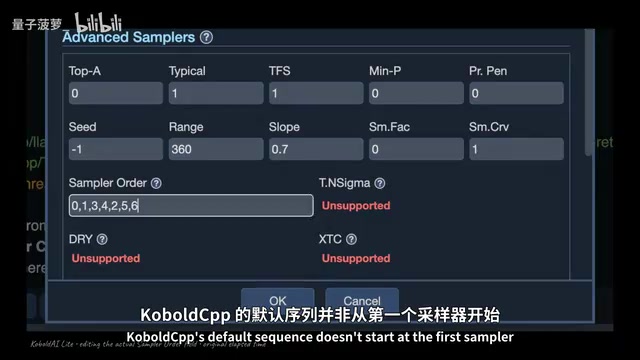
Can KoboldCpp Replace Ollama? A Deep Dive into Local AI Tool Control
KoboldCpp and Ollama both run on llama.cpp. This deep dive compares control granularity, default settings, context shifting, and exclusive features to help you decide which local AI tool to use.
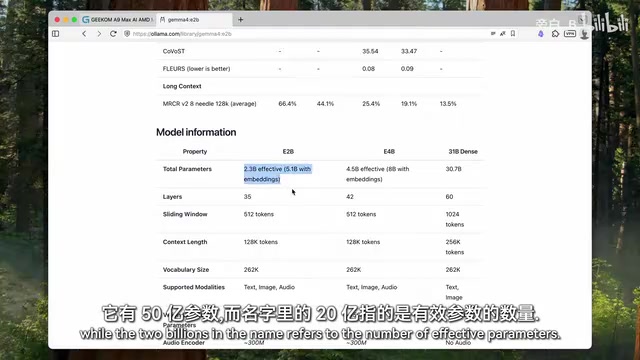
Running Local LLMs on a Regular Home PC: Which Models Are Actually Worth Keeping?
A Bilibili creator tested local LLMs on a Geekom mini PC with 24GB VRAM. MoE models like Gemma 26B hit 31 tok/s; Qwen3 27B runs at 14 tok/s — no workstation needed.

Structural Infertility: Why This Generation Finds Having Children Nearly Impossible
Vox podcast interview with journalist Anna-Louise Sussman unpacks "structural infertility": how housing costs, childcare, the anxious class, climate anxiety, and financialized fertility tech make family formation feel impossible.