GPT-6 Frontend Capabilities Put to the Test: A 3D Universal Studios Sandbox Generated in 46 Minutes

GPT-6 generates a full 3D Universal Studios interactive sandbox in just 46 minutes via natural language.
A developer tested GPT-6's frontend generation capabilities by building a complete 3D Universal Studios theme park sandbox in 46 minutes using only natural language prompts. The project included first-person navigation, day-night lighting, landmark teleportation, and an auto-generated 52-second promotional video with music — showcasing AI's breakthrough in multimodal task orchestration and its profound implications for frontend development and 3D design careers.
A Real-World Test of GPT-6's Frontend Generation Capabilities
Recently, a developer tested GPT-6's frontend generation capabilities late at night — and the results were stunning. Using nothing but natural language descriptions, he had GPT-6 build a complete 3D interactive sandbox of a Universal Studios theme park in just 46 minutes. The project included interactive features, a day-night switching system, and even an auto-generated 52-second promotional video with music. This hands-on test not only showcased AI's breakthrough progress in frontend development but also sparked deep industry-wide discussions about the future of design and development roles.
Technical Implementation: From Zero to a Fully Interactive System
The entire project was remarkably streamlined. Without Blender installed locally, the developer simply described requirements verbally and let GPT-6 handle the rest:
- Environment Setup: Automatically installed Blender and related MCP (Model Context Protocol) dependencies
- 3D Modeling: Generated 3D models of iconic structures including Hollywood Boulevard, Hogwarts Castle, Jurassic Park, and WaterWorld
- Interactive System: Implemented a first-person perspective allowing users to freely walk and explore
- Day-Night Switching: Developed a complete lighting system with a toggle button for day/night modes, with real-time lighting responses
- Camera Control: Supported quick scene navigation — clicking a landmark teleports you directly to that location
MCP Protocol: The Key Bridge for AI to Control External Tools
The MCP (Model Context Protocol) mentioned here is an open protocol standard proposed by Anthropic in late 2024, designed to give large language models a unified way to connect with and operate external tools, data sources, and services. In traditional AI interactions, models can only process text input and output. MCP allows models to call local software, read and write files, operate databases, and even control hardware devices — much like a plugin system. In this case, GPT-6 established a connection with Blender through MCP, enabling it to directly send modeling commands, adjust material parameters, and render scenes without requiring the developer to manually write middleware code. The emergence of this protocol marks a paradigm shift for AI — from "conversational assistant" to "system operator."
Blender: The Ideal Platform for AI-Driven 3D Creation
Blender is an open-source professional 3D modeling and rendering application widely used in film VFX, game development, and architectural visualization. It features a built-in Python scripting engine that allows programmatic automation of modeling, material setup, lighting layout, and animation rendering. This capability is precisely what enables AI models to control Blender by generating Python scripts for complex 3D creation tasks. The community had previously developed plugins like BlenderGPT to integrate large language models with Blender, but those efforts were limited by model capabilities and could typically only handle simple geometric operations. GPT-6's breakthrough lies in its ability to understand complex spatial relationship descriptions and generate structurally complete, logically consistent long-sequence modeling scripts.

From a technical perspective, this case demonstrates GPT-6's significant progress in multimodal task integration. Multimodal task integration refers to an AI model's ability to simultaneously process and generate multiple types of content within a single task execution — including text, code, 3D models, audio, and video. Traditional AI systems are typically unimodal, meaning one model excels at only one type of task. What GPT-6 demonstrates is essentially a "Task Orchestration" capability: after understanding the user's high-level requirements, the model autonomously decomposes them into multiple subtasks (such as 3D modeling, frontend development, audio generation, etc.) and sequentially or concurrently invokes the appropriate toolchains to complete each subtask, ultimately integrating all outputs into a unified deliverable. This capability relies on the model's large context window (for maintaining consistency across long task sequences), tool-calling abilities (operating external systems through Function Calling or MCP), and planning and reasoning capabilities (breaking complex goals into executable steps).
Quality of Generated Details: A Level of Completeness Beyond Expectations
The most surprising aspect was the level of detail in GPT-6's output. This sandbox wasn't a simple static display — it contained multiple layers of interactivity:
Scene Accuracy: All of Universal Studios' iconic zones were faithfully recreated, including Minion Land, the Kung Fu Panda area, and Jurassic Park. The architectural styles closely resembled the actual locations.
Interaction Logic: Users could move through the scene as if playing a first-person game, with smooth and natural perspective transitions. Clicking specific landmarks enabled instant teleportation, greatly enhancing the virtual tour experience. Under the hood, this in-browser 3D interactive experience was likely built on WebGL technology. WebGL (Web Graphics Library) is a JavaScript API that enables high-performance 3D graphics rendering directly in the browser by leveraging the GPU, with no plugins required. Three.js is currently the most popular WebGL wrapper library, abstracting low-level shader programming into an easy-to-use JavaScript object model and significantly lowering the barrier to Web 3D development. Features like first-person navigation, day-night lighting systems, and quick scene positioning all have mature implementation patterns within the Three.js framework — including PointerLockControls (first-person controller), DirectionalLight/PointLight (lighting system), and Camera animations (camera transitions). GPT-6's ability to generate this complex frontend 3D code indicates that its training data includes extensive WebGL and Three.js best practices.
Lighting System: The day-night toggle wasn't a simple filter swap — it was a complete lighting computation system. In night mode, building lights turned on one by one, creating an authentic nighttime atmosphere.

Promotional Video Generation: Beyond the interactive sandbox, GPT-6 autonomously generated a 52-second promotional video complete with background music and multi-angle scene showcases. This means AI now possesses full-pipeline generation capabilities — from functional implementation to marketing content. From a technical pipeline perspective, this process involves the coordinated work of multiple AI subsystems. The video portion was likely achieved through programmatic camera path planning — within the constructed 3D scene, the AI automatically designed a smooth camera trajectory showcasing each landmark, then rendered it frame by frame using Blender's rendering engine (such as the Eevee real-time renderer or the Cycles ray-tracing engine). The music was likely generated by an AI music model (such as Suno, Udio, or a similar built-in audio generation capability), automatically producing upbeat, cheerful background music suited to a "theme park promotion" context. Finally, the video and audio were composited into a complete promotional clip. Just two years ago, this fully automated content production pipeline would have required the collaboration of at least three specialized professionals: a 3D animator, a video editor, and a music producer.
GPT-6's Impact on the Frontend Development Industry
This test triggered deep career anxiety among developers. When a complete 3D visualization project can be independently completed by AI in under an hour, traditional roles in frontend development, 3D modeling, and UI design clearly face enormous challenges.
Which Roles Are Most Vulnerable to AI Disruption?
- Junior to Mid-Level Frontend Engineers: Repetitive page building and component development could be replaced at scale by AI
- 3D Art Designers: Technical work like scene modeling and texture mapping can now be accomplished through natural language descriptions
- Visualization Engineers: The development barrier for data visualization, virtual tours, and similar applications has dropped dramatically
Where Does Human Core Value Lie in the AI Era?
Despite AI's impressive capabilities, this test also revealed areas where humans remain indispensable:
- Requirement Definition and Creative Ideation: The project's starting point was the developer's clear articulation of requirements and creative vision
- Quality Control and Direction Adjustment: The development process required continuous human feedback and iterative guidance
- Business Understanding and Context Adaptation: Judging whether generated content meets client needs and business objectives still requires human experience

A New Paradigm for AI-Assisted Development
Rather than viewing GPT-6 as a threat, it's better to see it as a revolutionary upgrade in productivity tooling. This case demonstrates a new workflow:
Traditional Development Model: Designer creates mockups → 3D modeler builds models → Frontend engineer develops → Testing and optimization (weeks to months)
AI-Assisted Development Model: Product manager describes requirements → AI generates first draft → Professionals refine and optimize → Rapid delivery (hours to days)
This model doesn't completely replace humans — it liberates professionals from repetitive labor so they can focus on higher-value creative and decision-making work. A designer or developer proficient in AI tools could potentially achieve 10x or more the output efficiency of traditional workflows.
It's worth noting that AI-assisted development is fundamentally reshaping the methodology of software engineering. Both the traditional waterfall model and agile development are built on the basic assumption of "human coding," where project management centers on coordinating personnel, estimating work hours, and managing code quality. Under the AI-assisted model, the development process more closely resembles "requirement-driven iterative generation" — product managers or designers directly describe desired outcomes, AI rapidly generates prototypes, humans review and refine instructions, and AI generates improved versions. This model blurs the boundaries between requirement documents, design mockups, and code, because AI can leap directly from natural language requirements to a working product. Research firms like Gartner predict that by 2028, over 75% of enterprise software engineers will use AI coding assistants in their daily work, and full-stack AI tools (like the capabilities GPT-6 demonstrated in this case) will further compress the cycle from idea to product.
Looking Ahead: Proactive Adaptation or Passive Obsolescence
The frontend generation capabilities GPT-6 has demonstrated are just one milestone in AI's ongoing evolution. We can expect:
- Deeper Toolchain Integration: AI will seamlessly integrate professional tools like Figma, Blender, and Unity
- More Natural Interaction Methods: Voice, gestures, and even brain-computer interfaces may become mainstream interaction modalities
- Continuously Improving Generation Quality: The leap from demo-level to production-level quality is within reach
For industry professionals, the key is to proactively embrace change. Learning how to efficiently use AI tools, how to translate professional expertise into precise AI prompts, and how to add high-value creative optimization on top of AI-generated output — these skills will become the core competitive advantages in the future workplace.
As this developer demonstrated: when you master AI tools, 46 minutes is enough to complete a project that previously required weeks of team collaboration. The question isn't whether AI will replace humans — it's whether people who master AI will replace those who don't.
Related articles
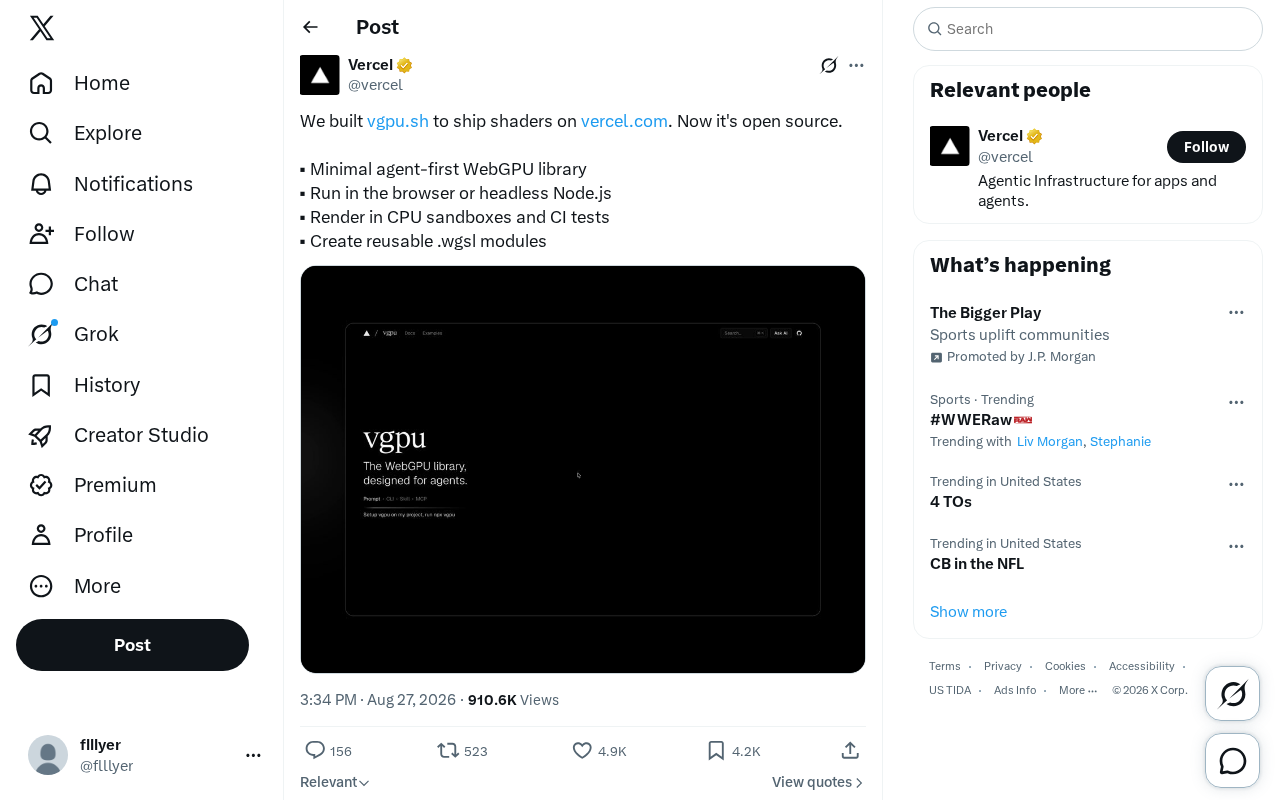
Open-Source WebGPU Library: A Lightweight Shader Solution for Browsers and Node.js
A lightweight, open-source WebGPU library supporting browsers and Node.js, with CPU sandbox rendering, reusable WGSL modules, and CI integration. Production-ready for web graphics and GPU compute.
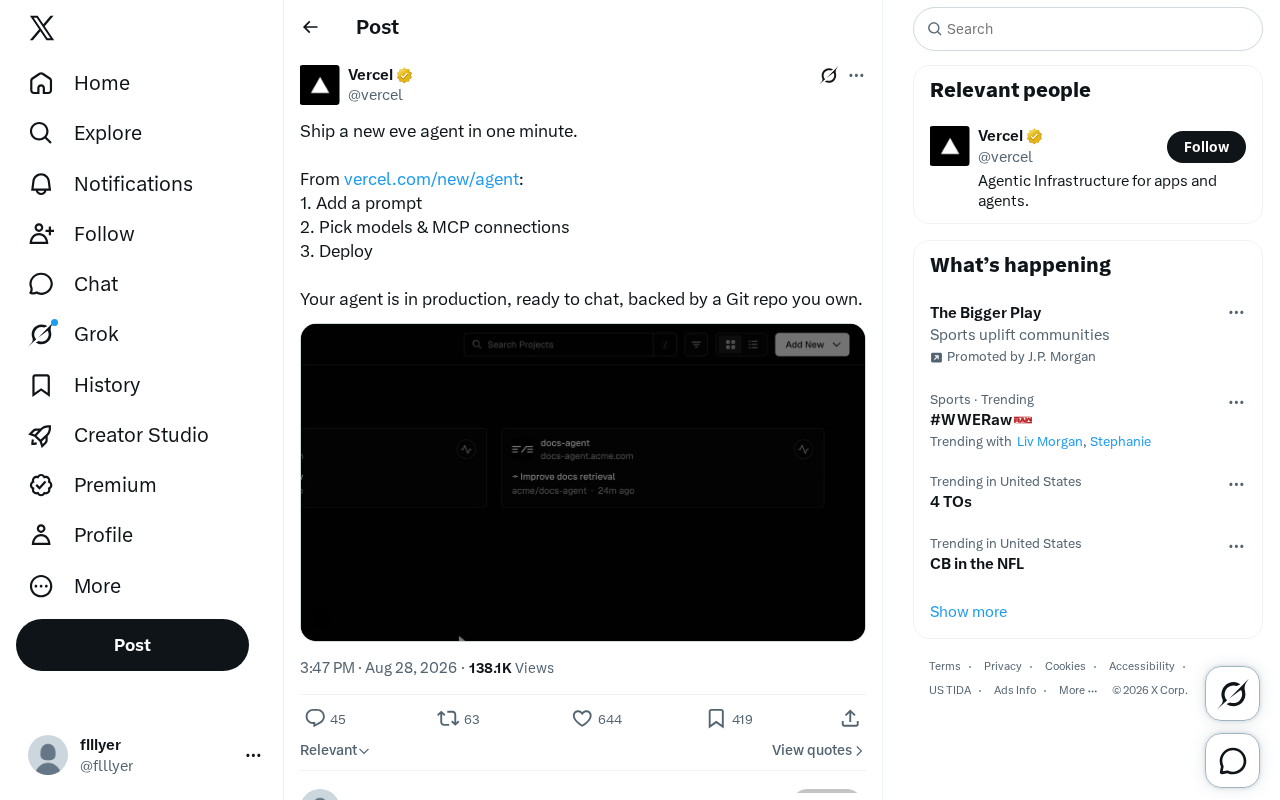
Deploying AI Agents on Eve Platform in Three Steps: A Minimalist Solution from Prompts to Production
Deep dive into how Eve platform achieves one-minute AI Agent deployment through prompt configuration, model selection, and MCP connections. Covers Git repo code ownership, MCP protocol integration advantages, and production challenges behind rapid deployment.

Codex Beginner's Guide: Installation, Registration, and Subscription for Users in China
A complete guide to OpenAI Codex: four installation methods (desktop, IDE plugin, CLI, web), ChatGPT Plus subscription via WeChat Pay, permissions, and model selection.