GPT-Live Hands-On: Voice Finally Gets GPT-5.5 — How Good Is the Full-Duplex Experience?

GPT-Live brings GPT-5.5 Thinking, full-duplex voice, and tool calling to ChatGPT's voice mode.
OpenAI's new GPT-Live upgrades ChatGPT's voice experience with GPT-5.5 Thinking integration, a full-duplex architecture for natural back-and-forth conversation, real-time web search, visual cards, and lightweight agent-style tool calling — marking a major leap from the previous Advanced Voice Mode.
Voice Gets a Long-Overdue Upgrade
ChatGPT's model iteration has always been impressive, but its voice conversation feature had gone without any meaningful update for quite some time. Now, OpenAI has finally launched GPT-Live, breathing new life into a long-stagnant voice experience.
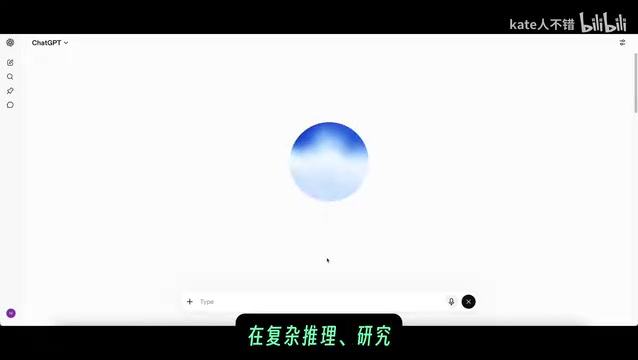
According to a hands-on demo by Bilibili creator Kate, users can now click the "Use Voice" icon on the ChatGPT web interface, where a "Live" option appears in the top-left corner as the default mode. The top-right corner lets you select different intelligence levels — choosing "High" invokes GPT-5.5 Thinking under the hood.
GPT-5.5 Thinking belongs to OpenAI's Reasoning Model series, which traces its roots to the o1 model released in September 2024. Unlike standard language models that generate responses directly, reasoning models go through an internal Chain-of-Thought process before producing output — generating numerous intermediate reasoning steps and then deriving a final answer from them. This mechanism performs significantly better than standard models on tasks like mathematical proofs, code debugging, and complex logical reasoning, at the cost of higher inference latency and greater computational overhead. GPT-Live's approach to integrating this into voice interaction shows genuine engineering ingenuity: the conversation layer maintains real-time responsiveness while the Thinking model runs asynchronously in the background, injecting its results into the conversation stream once complete. From the user's perspective, it feels like the AI "looked something up before telling you" rather than a long, painful wait. This architecture provides a reusable design pattern for bringing more powerful models into voice AI in the future.
This change is significant. The previous Advanced Voice Mode (AVM) often struggled with complex questions, and GPT-Live's biggest breakthrough is its ability to delegate complex tasks to the more powerful GPT-5.5 model. Voice conversation is no longer just a simple Q&A tool — it's now a genuinely intelligent assistant capable of deep reasoning and real-time information retrieval.
Full-Duplex Architecture: Redefining Natural Interaction
GPT-Live uses a Full-Duplex structure, which is the core technical feature that sets it apart from traditional voice assistants.
Full-duplex communication is a foundational concept in telecommunications, referring to the ability of both parties to send and receive signals simultaneously — as opposed to half-duplex, where transmission can only flow in one direction at a time, like a walkie-talkie. Most traditional voice assistants (including early Siri and Alexa) operate in half-duplex or "push-to-talk" mode: the user finishes speaking, the system processes the input, then responds — creating a noticeable "taking turns" feel. Bringing full-duplex to AI voice interaction is technically challenging: the model must process incoming audio streams in real time while simultaneously generating output, and dynamically determine when to interrupt and when to wait — requiring coordination across end-to-end speech models, streaming inference, and emotional prosody modeling. OpenAI first demonstrated a prototype of this capability when it launched GPT-4o in 2024, and GPT-Live engineers it further into a stable, production-grade full-duplex experience.
In practice, full-duplex means the model can simultaneously "listen" and "speak" — it can use filler words like "mm-hmm" or "yeah" to signal it's listening, stay quiet while you think, and even keep up with your pauses, interruptions, and changes in pace without waiting for you to finish a complete sentence.
This interaction style dramatically improves conversational fluency. In Kate's hands-on test, the AI handled topic switches and fact-checking smoothly, and even proactively corrected itself when it made a mistake. For example, when the user asked about "Grok 4.5," the AI initially misunderstood, then immediately said, "I got that wrong — let me look that up again" — demonstrating strong contextual understanding and self-correction capability.
Across-the-Board Performance Gains Over Legacy AVM
OpenAI's Advanced Voice Mode (AVM) officially opened to Plus users in the fall of 2024, with its core breakthrough being an end-to-end native audio model that processes audio input and output directly — rather than the traditional three-stage pipeline of speech-to-text → text processing → text-to-speech. While the three-stage pipeline is technically mature, each conversion step introduces latency and information loss — paralinguistic cues like tone, emotion, and pauses are often lost in the transcription process. AVM's end-to-end architecture solved the latency problem, but it was still constrained by the underlying model's capability on complex reasoning tasks. GPT-Live's key architectural upgrade is the introduction of a "task delegation" mechanism: the voice interaction layer maintains low-latency responsiveness, while computationally intensive reasoning tasks are asynchronously dispatched to GPT-5.5 Thinking — achieving a clean decoupling of smooth experience and deep intelligence.
According to official benchmarks, GPT-Live 1 significantly outperforms the previous AVM across multiple evaluations — from expert-level scientific reasoning to agentic web search, Live 1 shows substantial improvements over AVM across the board. Additionally, GPT Voice's audio has been re-recorded, resulting in a more natural and fluid listening experience.
Visual Cards and Tool Calling
GPT-Live is no longer a purely audio-only experience — it can display visual cards for weather, sports events, and more during conversations, and supports search, memory, and image and file uploads.
Visual Cards are an interaction paradigm that embeds structured data as graphical UI elements within the conversation flow — essentially part of multimodal conversational interface design. Introducing visual cards into a voice-first interaction context addresses a fundamental weakness of pure voice in conveying structured information: match schedules, weather forecasts, stock data, and similar content are verbose and hard to remember when spoken aloud, but immediately clear when presented as a card. This design philosophy aligns with Apple's Siri combined with iOS widgets and Google Assistant's Rich Response Cards, but GPT-Live integrates it deeply with real-time web search: the AI can not only retrieve live data, but also dynamically decide whether to present it as a spoken summary or a visual card — reflecting a dynamic tradeoff between information type and presentation efficiency.
In Kate's test, when asked about World Cup knockout stage results, the AI pulled up a visual interface displaying the official match schedule and results, clearly showing match outcomes and upcoming fixtures.

On the topic of tool calling, the AI candidly listed the tools it can currently invoke directly: real-time web search, in-call timers and stopwatches, and the ability to end the call. One notable detail: the AI can independently determine when it needs to go online — when a question involves the latest or external information, it proactively searches without requiring a reminder from the user each time.
Current Functional Boundaries
That said, GPT-Live still has clear capability limits at this stage. During testing, the AI explicitly stated it could not fulfill two types of requests: proactively sending scheduled messages or setting background automated tasks (e.g., "send me trending news every morning"), and singing copyrighted popular songs. These limitations reflect OpenAI's cautious approach to copyright protection and the design of proactive task features.
Live Demo: Product Idea Brainstorming
The most impressive segment of this hands-on session was Kate asking GPT-Live to help with product research for a Mac app. This process fully demonstrated GPT-Live's real value as a "think-while-you-talk" tool.
What GPT-Live exhibited here is essentially a lightweight AI Agent workflow. What distinguishes an Agent from ordinary conversational AI is its ability to autonomously plan task steps, call external tools, process the results those tools return, and synthesize multiple rounds of tool calls into a final answer. The AI's behavior chain can be broken down as: understanding user intent (Mac app research) → planning information sources (Reddit, Hacker News, App Store, etc.) → calling search tools → extracting structured insights → cross-checking competitor data → ranking recommendations based on constraints. This process closely mirrors the design logic of Agent frameworks like LangChain and AutoGPT — the difference is that GPT-Live wraps the entire Agent loop inside a fluid voice conversation experience, dramatically lowering the barrier to entry.
The AI first scanned communities including Reddit, Hacker News, Mac Rumors, and Twitter, identifying several clear paid-demand directions: one-click workspace restoration, cleanup tools for locked Finder folders, automation tools for non-technical users, and meeting and focus assistance tools.
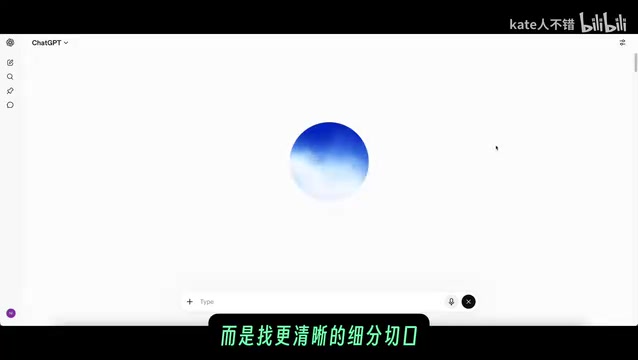
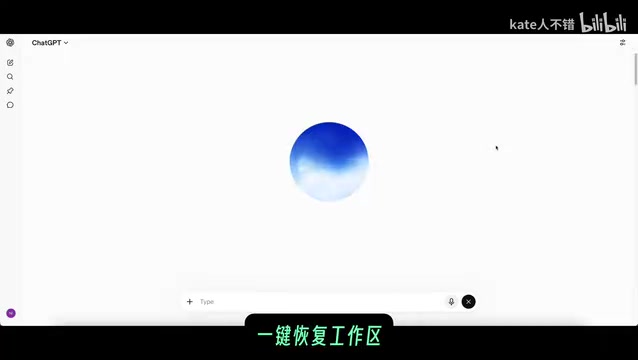
The AI further recommended a specific feature direction: "Workspace Restore" — taking a snapshot of the current work state (open apps, window positions, web pages, terminal directories, etc.) for one-click restoration. When pressed on market competitors, the AI proactively cross-referenced App Store data, noting that window management tool Magnet has approximately 134,000 ratings and a 4.9-star score — evidence that users are genuinely willing to pay for productivity tools.
From Vague Need to Precise Product Opportunity
The AI didn't stop at generalities — it distilled three clear, focused entry points:
- External Monitor Window Fixer: Solves the problem of windows scrambling after connecting or disconnecting an external display
- Project Launcher: A workflow quick-launch tool aimed at developers
- Meeting Workspace Assistant: A productivity aid focused specifically on meeting scenarios
The AI's top recommendation was the first option, citing that it's "narrow enough, addresses a strong pain point, and is viable as a high-value MVP." This reasoning chain — from vague need to precise product positioning — fully demonstrated the analytical depth of GPT-5.5.
Current Limitations and Usage Tips
Despite the significant improvements GPT-Live brings, some limitations remain. The most notable: Live mode does not currently support simultaneous use of voice, video, or screen sharing — if you need screen sharing, the system automatically switches back to the traditional Advanced Voice Mode. Additionally, there is no fixed maximum duration for a single call; sessions typically end due to usage quotas, session length, or system limits, with an on-screen prompt appearing when you're approaching the limit.
Overall, GPT-Live represents a meaningful evolution in ChatGPT's voice interaction capabilities. Full-duplex natural conversation, deep reasoning from GPT-5.5, and the integration of tool calling and visualization together take voice from "functional" to genuinely "good." For users who like to think out loud, need instant information retrieval, or want a brainstorming partner, this is an upgrade well worth exploring.
Key Takeaways
Related articles
What Is Vibe Coding? The AI Programming Skill Every Developer Needs
What is Vibe Coding? Learn how AI programming is reshaping dev teams, why traditional programmers face displacement, and why Cursor & Claude Code matter.
Making Rocks Think: A Philosophical Exploration of Generative AI and Information Compression
From a viral Reddit post to deep AI theory: why compression equals understanding, the Library of Babel thought experiment, semantic compression, and the Hutter Prize.
Irregular Warns: Four AI Lab Security Breaches Traced to the Same Root Cause
Irregular reveals four AI lab security breaches share a single root cause, exposing systemic risks from technology stack homogeneity across the AI industry.