GPT-Next Leaked, Gemini 4 Argon Speeds Up, Fable 5.5 May Launch Today

OpenAI, Google, and Anthropic update intensively, with the GPT-Next leak and subscription value in focus
The AI world saw dense updates this week: OpenAI's early Alpha version of GPT-Next leaked unexpectedly, outperforming GPT-6.1 in some tests, with early data suggesting potentially extremely low inference costs, and it may become part of Tibo's "28-day continuous release plan," whose first day already sped up GPT-6 Extra and 6.1 Soul by about 50%. Google's internal Gemini 4 Argon testing has accelerated and may be released early; NanoBanana 2.1 is live but performs middlingly, and RSI rumors remain speculation. Semi Analysis tests show that at the $200 tier, Claude Max's equivalent API value is about 5 times that of ChatGPT Pro, but API cost does not equal subscription superiority. In addition, OpenAI will launch TextScreen text watermarking in the EU, ReflectionAI released the 501-billion-parameter MoE open-source model BIM, and Claude Code and Projects also have practical updates.
OpenAI's "28-day continuous release" plan has just kicked off, and a mysterious model called GPT-Next has already leaked ahead of schedule; Google's internal testing of Gemini 4 Argon is accelerating, with NanoBanana 2.1 quietly going live; and Anthropic's Fable 5.5 could open up at any moment. The density of updates in the AI world this week is higher than many expected.

OpenAI: GPT-Next Leak and the 28-Day Release Plan
GPT-Next came to light in a rather unexpected way—it drew attention because of its unusually fast content generation. According to analysis by a Bilibili creator, this model is still an early Alpha version, but in some tests it outperforms GPT-6.1. The gap isn't huge, yet subtle differences in engagement and creativity can be felt, particularly in 3D environment building and web development tasks.
What really makes this model worth watching is cost. Early estimates show that about 40,000 credits can provide roughly 5 billion dimensions (including cached dimensions). If these figures hold, GPT-Next would be an extremely efficient checkpoint, likely to be released as part of the "28-day release plan" promised by OpenAI product manager Tibo.
Tibo announced on X that over the next 28 days OpenAI will ship at least one major improvement every day, focused on four things: simplifying products, improving efficiency, making usage limits more reasonable, and releasing new models. Day one's action has already landed—GPT-6 Extra and 6.1 Soul default speed increased by about 50%, from 30 tokens per second to 50 tokens per second, with partners logging in via ChatGPT (OpenCode, Pi, Amp, Devin, etc.) benefiting as well.
There's an interesting backdrop here: Anthropic's new models are putting pressure on OpenAI in terms of efficiency and quotas. Tibo's "28-day challenge" is less a product cadence than a direct response to the competitive situation. As for his post saying "6.1 is coming," which he later clarified referred to the fast version of 6.1 Soul rather than the cancelled 6.1 Extra—this detail shows that OpenAI's model naming system itself is undergoing a round of reorganization.
On the "dimensions" and "credits" billing terminology
The "dimensions" (a homophone of token) that appear repeatedly in the text are the basic units of text processed by large models; one English word corresponds to roughly 1–2 tokens, while Chinese is usually counted by character. "Credits" are OpenAI's prepaid metering unit for certain product lines (such as the API or specific subscription tiers): users top up credits first, then have them deducted based on usage. The claim that "40,000 credits can provide about 5 billion dimensions" is essentially describing output efficiency per unit of credit—that is, each credit can be exchanged for roughly 125,000 tokens of inference. If this data holds, it means GPT-Next's inference cost is an order of magnitude lower than existing models, which is exactly what "extremely efficient checkpoint" means. It should be noted that such early leaked conversion figures often come from unofficial test environments, and cache hit rates, context length, and output length all significantly affect actual consumption.
Google: Gemini 4 Argon Early, NanoBanana 2.1 Live
Activity on Google's internal servers has increased noticeably, with multiple new internal model names (including LSP and Barium checkpoints) appearing in the logs. These are test versions with different configurations, including fixes, summaries, and experimental variants, and they are moving fast.
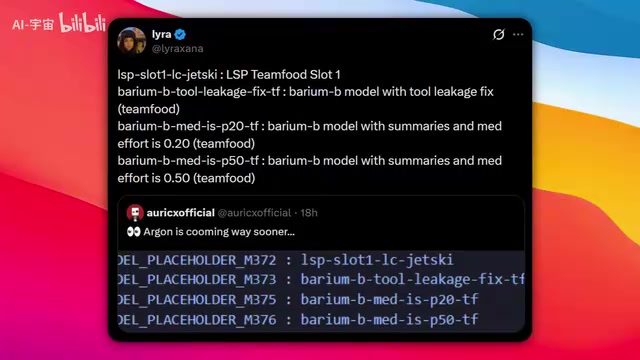
Judging from current benchmark performance, the quality differences are already quite significant, but there's no indication in the logs that this is another major update on top of Ergon. Given the density of testing progress, the model's public release could come sooner than expected—possibly even this week. One demo for reference: the same Gemini 4 Argon beat Fable 5.5 in an SVG test simulating a credit card transaction, generating an interface that included payment, receipt printing, and a short animation.
NanoBanana 2.1 has already appeared in the Gemini web and mobile apps. Its release process was quite chaotic: the earliest checkpoint was Instant Ramen, which was thought to be NanoBanana 2 Lite when it appeared on Arena in June; Instant Ramen 2 was released in August, expected to be named NanoBanana 2.5 Lite; two days later the checkpoint was renamed Spicy Mayo; in September, when partners accessed it via Vertex, it was labeled NanoBanana 2.5; on October 2, the GemPix image generator appeared in the mobile app. In the end, NanoBanana 2.1 in both the web and mobile apps uses the same GemPix2 Flash ID—Google not only changed the version number but also moved it from the Lite category to Flash.
Actual performance can only be described as middling. In a comparison test with Tencent's HY Image 3.5, both models received the same 5 queries, one attempt each, with no editing. NanoBanana 2.1 was clearly better at maintaining character similarity to the original image, with solid consistency; HY Image 3.5 was superior in lighting atmosphere and overall mood, with more creative features. NanoBanana 2.1 also had an issue where it completely ignored the "do not add text" instruction. On price, HY Image 3.5 costs about 2 cents per 2K image, while NanoBanana 2.1 running through Google Flow consumes subscription credits.
RSI Rumors: Coincidence or Signal
Rumors about Google conducting recursive self-improvement (RSI) experiments were initially thought to be fake, but mysterious new internal model markers did appear in the logs. This is not enough to prove that Google has solved RSI—internal models or placeholders alone prove nothing; it could just be a name, or some kind of simulation.
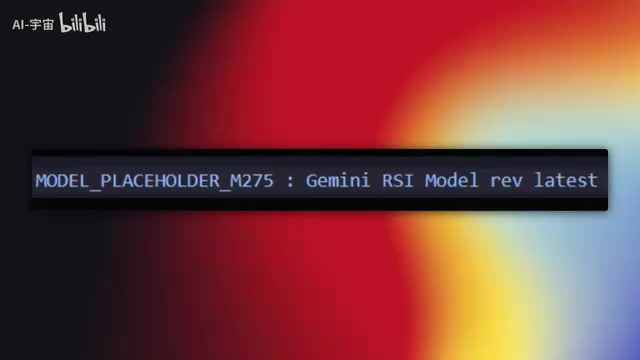
But combined with Google's recent pace of model development, this discovery fills in a piece of the puzzle: if there is some system that can accelerate model iteration, it might explain why Google can push so many variants forward in a short time. This is only speculation, not a conclusion.
What are "checkpoints" and Arena testing?
In the large model development process, a checkpoint refers to a snapshot of model weights saved periodically during training. Teams perform evaluations, alignment, and internal trials on different checkpoints, so multiple differently named checkpoints appearing in logs usually indicates that a model is in an intensive iteration phase rather than finalized. The codenames Instant Ramen, Spicy Mayo, etc. in the text are internal names Google gave to different training stages or differently configured variants.
Arena refers to blind testing arenas for large models such as LMArena: users vote on answers from two anonymous models, and models appear under codenames. New models often first run anonymously on Arena to collect human preference data before official release, so "appearing on Arena" is often seen as a signal that release is near. This is also the basis for inferring NanoBanana version evolution from clues such as checkpoint renamings and Arena appearances in the text.
The meaning and controversy of recursive self-improvement (RSI)
RSI (Recursive Self-Improvement) refers to AI systems participating in improving the next generation of AI themselves, forming a positive feedback loop of "capability improvement—improved methods—further capability improvement." In extreme scenarios, this loop could lead to an intelligence explosion; but in reality, RSI is more about using models to assist with data filtering, evaluation design, code writing, and training tuning, thereby shortening R&D cycles.
Judging whether RSI is happening depends not on whether mysterious model names appear, but on whether the improvement loop is measurably accelerating: for example, whether benchmark gains per unit of human input continue to grow faster. Internal model markers or placeholders alone cannot prove anything; they could be experimental branches, evaluation stubs, or even just naming remnants. Therefore, the article's treatment of this clue as speculation that "fills in a piece of the puzzle" rather than a conclusion is appropriate.
Subscription Value: Semi Analysis's Empirical Conclusions
Semi Analysis published an empirical report on the limits of mainstream AI subscriptions, covering Anthropic, OpenAI, Meta, Cursor, and Cognition, and its conclusions sparked considerable discussion in the community.
The core numbers are these: at the same subscription price of about $200, Claude Max is estimated to provide about 12,500 Sonnet uses, about 12,000 Opus uses, or 2,500 Fable uses; ChatGPT Pro is estimated to provide about 2,000 GPT-6.1 Soul uses or 3,000 GPT-6 Extra uses. Converted to equivalent API value, Opus 5.5 is about 5 times that of GPT-6.1. The report also notes that OpenAI recently cut the limits of its $200 plan by about half, on the grounds that GPT-6.1 itself is more efficient—which is not surprising under the interpretation that this is paving the way for an IPO.
But API-equivalent cost only explains half the picture. It shows how much compute money can buy, which does not directly equal which subscription is better. Model quality, speed, context limits, agentic coding capability, tool integration, and ecosystem fit all affect the actual experience. It is a fact that Anthropic has an advantage in API cost ratio, but that does not mean Claude Max is automatically better than ChatGPT Pro for everyone. The real divide lies in usage intensity: if you run agents, write code, and consume massive amounts of tokens every day, this gap will be very striking.
Watermarks, Open-Source Models, and Tool Updates
OpenAI is responding to EU AI Act requirements: in the coming weeks, text generated via ChatGPT and Codex in the EU will contain invisible watermarks under the technology name TextScreen. It does not insert visible marks into the text; instead, it embeds statistical signals in the model's word choices that can later be detected. OpenAI says its effectiveness rivals or surpasses Google's SynthID and that it has not caused a noticeable drop in output quality, and it plans to open-source the technology. Global API customers can use it in designated models starting today. OpenAI also acknowledges clear limitations: watermark recognition fails after text is rewritten or tampered with.
New lab ReflectionAI released the open-source model BIM: about 501 billion total parameters, with only 23 billion active parameters, using a MoE architecture that activates only part of the parameters at a time to improve inference efficiency. The company says it is designed specifically for reasoning, coding, and analysis, and leads Western open-source model development in these areas—objectively speaking, there are not many open-source models in the US at present, so this positioning has some room. One notable point is that BIM was pre-trained entirely from scratch rather than built on existing open-source models, and the full model will be publicly released later this month.
There are also several tool-level updates: Google AI subscribers can now directly use Opus 5.5 Medium and Sonnet 5.5 Medium, but with strict quota limits; Claude Code added a Mods feature, among which the Cache Control Mod is worth recommending—it provides a visual panel showing the 5-minute window of query caching and sends notifications, helping you keep the cache active during long sessions and reduce repeated processing of the same tokens, thereby extending session length; Claude Projects added the ability to connect directly to local folders, so cloud-based Claude sessions can read or edit files on your computer as needed without repeated downloading.
Finally, a Fable 5.5 demo: someone gave the model a request to create a Pokemon-style game (a combination of Pokemon and Balatro), and about an hour later got a finished product including graphics, music, and complete game mechanics. From basic prototype to coherent and polished completion, this demo carries considerable weight. Fable 5.5 could be released as early as today, so it is worth keeping an eye on.
Statistical text watermarking and MoE architecture
Schemes like TextScreen belong to statistical watermarking: when generating each token, the model uses a key known only to the service provider to slightly bias candidate words, so that the output contains patterns that are hard for humans to perceive but statistically identifiable by detectors. Its advantages are that it is invisible to the naked eye and has little impact on text quality; its disadvantage is fragility—once the text is rewritten, translated, summarized, or heavily edited, the statistical signal is destroyed. This is also why OpenAI acknowledges the limitation; actual deployment usually needs to be combined with source labeling mechanisms such as content credentials.
MoE (Mixture of Experts) architecture splits the feed-forward layer into multiple "expert" subnetworks and uses a routing network to select only a few experts for each token to participate in computation. Therefore, the total parameter count can be large to accommodate knowledge, while a single inference activates only a small portion of parameters, balancing performance and compute. The 501 billion total parameters and 23 billion active parameters of BIM in the text are a typical configuration; active parameters more directly determine single-inference cost.
Related articles

5 Practical Ways Real Estate Agents Can Use AI to Boost Efficiency (2026 Edition)
How can real estate agents use AI to boost efficiency? Based on a YouTube walkthrough, this breaks down five methods — ChatGPT for listing descriptions, Canva for marketing materials, forms for open house leads, Zapier for automated follow-up, and seller meeting prep — and flags risk boundaries like fair housing laws, photo authenticity, and price verification.

Grok Bot vs ChatGPT Agent: Which AI Agent Is More Powerful?
How does Grok Bot differ from ChatGPT Agent? This comparison examines how they work: Grok Bot has a cloud computer and runs persistently inside tools to execute multi-step tasks automatically; ChatGPT Agent operates web pages in a browser and is more mature at general tasks. Includes selection advice.

Walmart Agent Gateway: AI Shops for You Automatically—Why Is Amazon Going the Opposite Way?
Walmart's Agent Gateway lets ChatGPT, Gemini and other AI assistants access its product catalog to search, compare and add to cart, with spending limits and per-purchase approval. Amazon blocks external AI agents—two retail giants, opposite paths. Currently US-only, India may follow.