GPU-Accelerated Plane-Wave DFT: K-Point Batching and Mixed Precision Break Through Bottlenecks

NVIDIA proposes K-point batching and mixed precision to optimize GPU plane-wave DFT and accelerate MLIP data generation.
The article discusses two technologies from the NVIDIA developer blog for GPU-accelerated plane-wave DFT: K-point batching and mixed precision. The bottleneck of plane-wave DFT on GPUs is not insufficient compute but insufficient parallel granularity and memory bandwidth pressure. K-point batching merges computations of multiple K points into batched kernels, amortizing launch overhead and improving SM occupancy, but requires balancing batch size and memory usage. Mixed precision uses low-precision storage and transfer in bandwidth-bottlenecked stages while retaining FP32 in sensitive stages, requiring convergence verification for specific systems. Both optimizations require joint tuning and do not change DFT algorithmic complexity. For MLIP data production, these optimizations can improve throughput and shorten active learning iteration cycles, but benefits are highly dependent on system characteristics, and profiling should be performed before adoption to identify the real bottleneck.
Training next-generation machine learning interatomic potentials (MLIPs) requires high-quality ground-truth data, and such data often comes from density functional theory (DFT) calculations. The problem is that producing tens of millions or even hundreds of millions of DFT samples means traditional plane-wave DFT solvers on GPUs are far from satisfactory in efficiency—a large amount of time is consumed by communication, memory movement, and repeated matrix operations rather than actual floating-point computation. A recent technical article on the NVIDIA developer blog discusses how to alleviate the bottlenecks of plane-wave DFT on GPUs along two main lines: K-point batching and mixed precision.

Why Plane-Wave DFT Doesn't Run Fast on GPUs
The core computation of plane-wave DFT is repeatedly solving the Kohn-Sham equations: for each K point, construct the Hamiltonian, perform diagonalization or iterative solution, then update the electron density from occupation numbers, looping until self-consistency. This workflow formed an implementation paradigm in the CPU era with "K-point parallelism" as the default granularity, and when migrated to GPUs, the problems become apparent.
The computational load of a single K point is often insufficient to fill the large-scale parallel resources of a GPU, especially when the system is small or the K-point grid is dense. Each diagonalization call's GPU kernel suffers from launch overhead and insufficient utilization. On the other hand, the FFT and Hamiltonian application of the plane-wave basis require frequent switching between real space and reciprocal space, and the memory bandwidth pressure brought by data layout transformations further dilutes compute utilization. The original article points out that this is precisely one reason why DFT data generation becomes the bottleneck of the overall pipeline when training MLIPs: it's not that GPU compute is insufficient, but that the compute is not being effectively fed.
The Kohn-Sham equation is the core working equation of density functional theory. It transforms the many-electron interaction problem into a set of equivalent single-electron equations, each corresponding to a wavefunction solution at a K point. The equation includes the kinetic energy term, external potential, Hartree potential (classical electrostatic repulsion between electrons), and exchange-correlation potential (approximate treatment of quantum many-body effects). The solution process is essentially a large-scale matrix eigenvalue problem, typically solved using iterative diagonalization methods (such as the Davidson algorithm). The self-consistent loop refers to: given an initial electron density → construct the Hamiltonian → solve the eigen equations to obtain wavefunctions → update the electron density from the wavefunctions → check convergence, and repeat if not converged. It is precisely the repeated matrix construction and diagonalization in this loop that constitutes the main GPU computational load.
K-Point Batching: Re-Aggregating Fragmented Parallelism
The basic idea of K-point batching is to merge the computations of multiple K points into larger batch tasks submitted to the GPU at once. Small-scale kernels originally triggered independently for each K point are consolidated into batched matrix operations and batched FFTs, thereby amortizing kernel launch overhead and improving SM occupancy.
This change may seem like just an adjustment at the loop level, but it actually affects data layout. For batched operations to execute efficiently, wavefunction coefficients and Hamiltonian matrix blocks need to be rearranged along the batch dimension to make memory access contiguous. The original article emphasizes that bigger batch size is not always better: the larger the batch, the higher the intermediate cache usage, which may actually trigger memory pressure when the number of K points is large and the plane-wave cutoff energy is high, requiring a balance between throughput and occupancy.

From an engineering perspective, the value of K-point batching lies in transforming the structural problem of "insufficient parallelism" into the configurable problem of "batch size tuning." For MLIP scenarios that require batch generation of training data, this configurability is more practical than single-point极致 optimization—data generation tasks can typically accept some latency in exchange for improved overall throughput.
K points are sampling points in reciprocal space (momentum space). In periodic crystals, electron wavefunctions have Bloch form, and their periodic part needs to be integrated within the primitive cell in reciprocal space (the first Brillouin zone). Practical calculations approximate this integral through discrete sampling, and these sampling points are K points. The density of the K-point grid directly affects computational accuracy and cost: metallic systems typically require dense grids (tens to hundreds of K points), while insulators can be sampled sparsely. Hamiltonian construction and diagonalization at different K points are independent of each other and naturally parallelizable. Traditional CPU implementations allocate processes by K point, but on GPUs the parallelism of a single K point is insufficient, leading to idle resources—this is precisely the problem that K-point batching aims to solve.
Mixed Precision: Trading Throughput Within Controlled Error
DFT is sensitive to numerical precision, and directly switching entirely to low precision is unrealistic. The mixed-precision path discussed in the original article introduces precision formats below FP32 at appropriate locations while keeping error-sensitive accumulation and key diagonalization steps at higher precision.
Typical approaches include: using lower-precision storage and transfer in bandwidth-bottlenecked stages such as Hamiltonian application and FFT to reduce memory traffic; while maintaining FP32 for matrix multiplication accumulation and the iterative process of eigenvalue solving to avoid error accumulation and amplification in the self-consistent loop. This approach is logically consistent with mixed-precision strategies in deep learning training—the basis for precision allocation is "how sensitive that stage is to the final result" rather than a one-size-fits-all approach.
For MLIP data generation, this trade-off has additional significance: errors in ground-truth data are directly propagated into the trained potential functions, so convergence verification must be performed when introducing low precision to confirm that deviations in energy, forces, and stresses remain within acceptable ranges. The original article does not provide a universal precision recipe, which itself indicates that implementing mixed precision requires specific tuning by system and functional.

FP32 (single-precision floating point) is a 32-bit floating-point format commonly used in scientific computing, providing approximately 7 significant decimal digits. FP16 (half precision) is 16-bit with approximately 3-4 significant digits, but storage and bandwidth requirements are halved, and matrix multiply-add units have higher throughput on modern GPUs. TF32 is a 19-bit format introduced with NVIDIA's Ampere architecture (8-bit exponent, 10-bit mantissa), designed specifically for deep learning tensor cores, reducing precision while maintaining FP32's dynamic range. Mixed precision means using different precision formats in a mixed manner within the computational flow: lower precision for error-insensitive operations (such as data transfer and some matrix multiplications), and retaining FP32 for accumulation and key solution steps. In DFT, Hamiltonian application and FFT are bandwidth-limited stages suitable for low precision; while the iterative process of eigenvalue solving must maintain higher precision because errors accumulate.
Synergy and Boundaries of the Two Approaches
K-point batching addresses parallelism and scheduling efficiency, while mixed precision addresses memory bandwidth and arithmetic throughput. They act at different levels, and the benefits when combined are not simply additive. Batching amplifies the workload of a single kernel, making the throughput advantages of low-precision operations more apparent; and the reduced memory footprint from low precision in turn leaves room for larger batch sizes. The technical narrative in the original article suggests that these two optimizations require joint tuning—tuning one alone may yield suboptimal batch size and precision combinations.
It is important to recognize clearly that such optimizations do not change the algorithmic complexity of plane-wave DFT. The number of iterations in the self-consistent loop and the scaling law of diagonalization size still exist; GPU optimization only reduces the constant factor. For extremely large systems, algorithmic improvements (such as more efficient iterative solvers and better preconditioners) remain irreplaceable.
Algorithmic complexity describes the asymptotic law of how computational load grows with problem size. The number of self-consistent loop iterations in plane-wave DFT is typically related to the number of electrons in the system, and the complexity of diagonalization per iteration is approximately O(N³) (where N is the size of the plane-wave basis set). GPU optimizations (such as batching and mixed precision) only reduce the constant factor and do not change the O(N³) growth trend. This means that when the system size doubles, computation time will still increase to approximately 8 times. Therefore, for extremely large systems, algorithmic improvements—such as linear-scaling methods, improved preconditioners, or more efficient iterative solvers—are necessary to substantially reduce computational cost.
Practical Significance for MLIP Data Production
Bringing the perspective back to the application side: the data volume required for MLIP training means that the unit cost of DFT calculations directly determines project feasibility. The throughput improvements from K-point batching and mixed precision mean that more configuration samples can be generated with the same hardware and time, or a larger configuration space can be covered. For research teams that need active learning loops, faster single DFT evaluations also shorten the "train—sample—re-evaluate" iteration cycle.
You may not have noticed (this is an analytical judgment, not a conclusion from the original article) that the benefits of such optimizations are highly dependent on system characteristics: systems with dense K points and small per-K-point computational load benefit more obviously from batching; while for large systems where single-point computation can already fill the GPU, benefits may mainly come from the mixed-precision side. Before introducing these technologies, teams should first perform profiling to confirm whether the bottleneck is actually in scheduling, bandwidth, or compute.
Summary
The core message of NVIDIA's technical article can be summarized in one sentence: the bottleneck of plane-wave DFT on GPUs is mostly not insufficient compute, but rather that parallel granularity and data precision have not been reasonably designed. K-point batching re-aggregates fragmented parallelism, and mixed precision releases bandwidth and throughput at stages where sensitivity is controllable. Together, they provide an engineering-feasible acceleration path for the large-scale DFT data generation required by MLIPs. As for how much acceleration can be achieved, it depends on the system, K-point grid, and precision tolerance—which is precisely the part that users need to tune themselves.
Related articles

Snapchat Opens AI Assistant Lens Building: Supports Claude Code and Cursor
Snapchat lets Lens creators describe AR filters in natural language, with AI assistants like Claude Code and Cursor handling the full build process, greatly lowering the AR creation barrier.
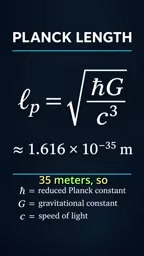
Is the Planck Length the Smallest Distance? Why Physicists Are Skeptical
The Planck length is often called the smallest distance in the universe, but science videos point out this claim has never been experimentally confirmed. This article explains the origins of the Planck length, the obstacles of microscope thought experiments, and what it really tells us—the scale at which quantum gravity becomes unavoidable, not spacetime pixels.

AI Agents Drive Spend Management: Payhawk Raises $280M
Payhawk raises $280M at a $2B valuation. The 2018-founded enterprise finance platform uses AI agents to track and manage expenses and procurement. This article analyzes its product evolution, valuation signals, and impact on the spend management space.