Granular.Build: Putting AI Agents Inside a Visual Workspace
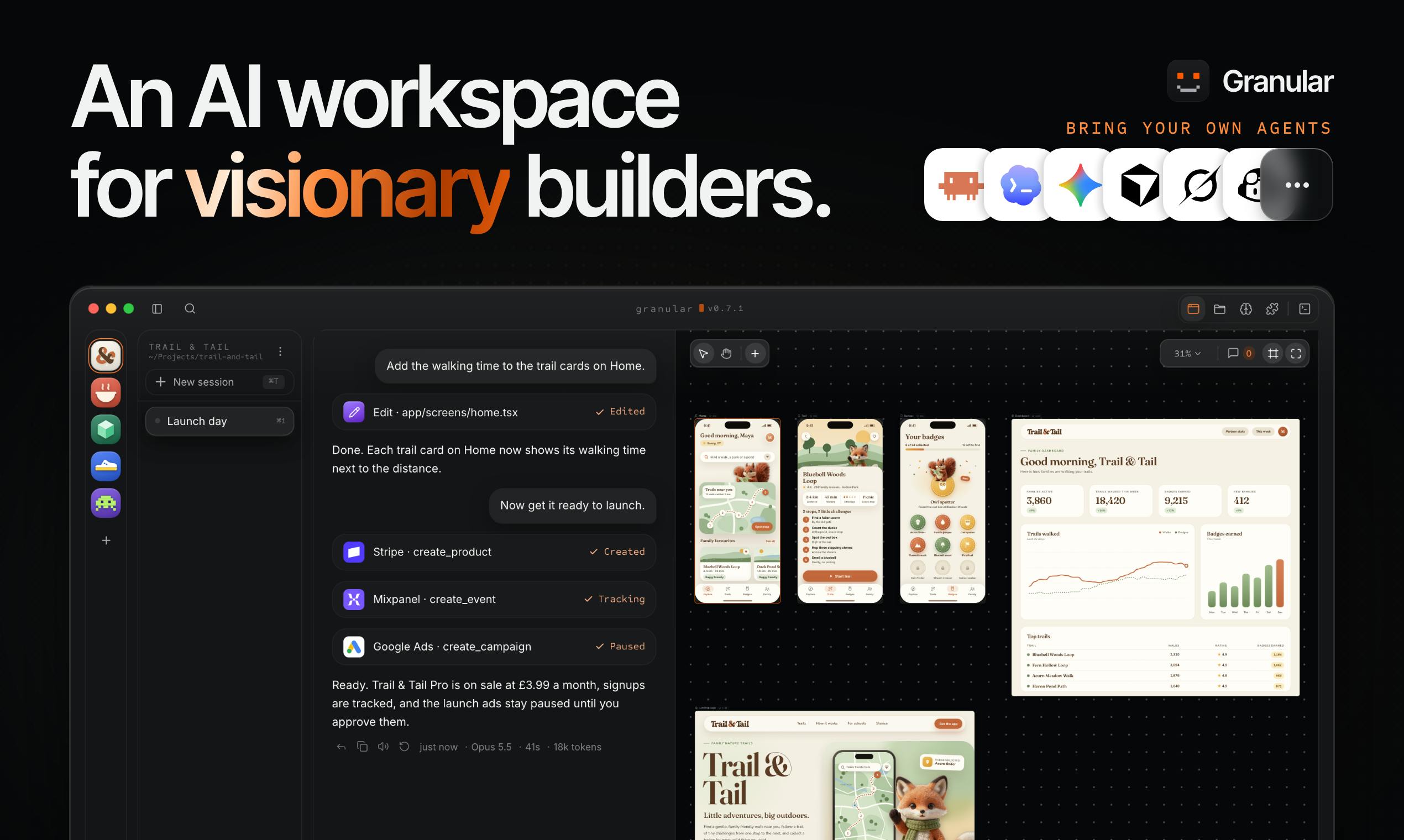
Granular.Build uses a visual workspace to bring boss agents, specialized agents, models, and project context together in one place.
Granular.Build ranked second on Product Hunt with its "visual workspace": users give a goal to a "boss agent" that orchestrates multiple specialized agents in parallel to produce apps, designs, or videos with real-time previews, reducing tool switching. It emphasizes project-level context management and supports bring-your-own AI, plus a built-in terminal and plugins. The real test for multi-agent orchestration lies in task decomposition reliability, parallel conflict handling, and preview performance, with actual performance still unverified.
In an era where AI tools are becoming increasingly fragmented, a single idea often requires jumping back and forth between chat windows, code editors, design tools, and terminals. Granular.Build, which ranked second on Product Hunt, attempts to consolidate these elements into a single interface through a "visual workspace": you give a "boss agent" a goal, and it orchestrates multiple specialized agents to work in parallel, with apps, designs, or videos gradually taking shape in real-time previews.
One Goal, Multiple Agents Collaborating in Parallel
The core interaction of Granular revolves around the "boss agent." Users don't need to break down tasks themselves; instead, they hand a goal to it, and it internally coordinates different specialized agents to advance in parallel. This is fundamentally different from the experience of single-threaded conversational AI assistants: parallelism means multiple subtasks can progress simultaneously rather than queuing up.
According to the official description, the output formats cover apps, designs, and videos, all presented via real-time previews. For users without an engineering background, this lowers the barrier from idea to deliverable—the product tagline directly states that "big ideas shouldn't require a dozen AI tools or a programming background."
Multi-Agent Orchestration refers to a scheduling layer (here, the "boss agent") breaking down high-level goals into subtasks, dispatching them to agents with different specialties for execution, and finally aggregating the results. The challenge lies not in the capability of individual agents, but in the rationality of task decomposition, dependency and concurrency control between subtasks, and conflict resolution—for example, how to merge or roll back when two agents modify the same file simultaneously. Common industry approaches include explicit task graphs (DAGs), shared blackboards, and resource access mechanisms with locks. The statement "parallelism means multiple subtasks can progress simultaneously" describes precisely the core benefit of such systems, but it also means errors get amplified, so observability and human intervention points are typically key to whether such products can be successfully deployed.
Centralized Management of Models, Files, and Project Context
Another selling point of Granular is project-level context management. Each project has independent memory and files, with models, agents, and project materials stored in the same workspace rather than scattered across session histories in different tools.
It also supports "bring your own AI," meaning users can use their existing model services rather than being locked into a single vendor. When more control is needed, users can also access the built-in terminal and plugins. This design philosophy is closer to a "studio" than a "chat box": you retain the choice of toolchain, while the platform handles connecting collaboration and context.
Context windows and project-level memory are key to understanding this type of workbench. Large models have limited context windows, and long projects cannot fit all history into a single request, so "project memory" needs to be maintained externally—typically manifested as file systems, vector retrieval databases, or structured summaries, with relevant fragments recalled on demand and injected into prompts for each call. The statement "each project has independent memory and files" essentially binds this external memory to project boundaries, preventing context from different projects from contaminating each other. A related concept is BYOK (Bring Your Own Key), where users connect their own model service credentials; the platform neither bears inference costs nor locks in vendors. The benefit is controllable cost and compliance, while the trade-off is that users must weigh the capability differences between models themselves.
Who It's For, and What to Watch
From its positioning, Granular targets individual creators and small teams who have clear delivery goals but don't want to get bogged down in tool switching. On Product Hunt, it received 99 votes and 8 comments, ranking second for the day, indicating that visual multi-agent collaboration is indeed a trending direction.
However, the real test for multi-agent orchestration products lies in stability and controllability: whether the boss agent's task decomposition is reliable, how parallel agents avoid conflicts, and how real-time previews perform in complex projects—all of these require actual use to judge. Currently, public information remains mostly at the product positioning level, and specific performance and boundary conditions have yet to be verified.
If you're looking for a workbench that unifies models, agents, files, and project memory, Granular.Build is worth adding to your watchlist.
When evaluating multi-agent products, several commonly cited observation dimensions are worth noting: first, robustness of task decomposition—whether the system generates subtasks that deviate from expectations when goal descriptions are vague; second, concurrency consistency issues—conflict handling strategies when multiple agents write to the same codebase or design draft in parallel; third, cost and latency—parallel calls to multiple models significantly amplify token consumption, and real-time previews have higher requirements for response time; fourth, traceability—whether users can review what each agent did and why it made certain decisions. Product Hunt votes reflect attention on launch day rather than long-term retention, so such early-stage products are better suited for trial with small-scale, low-risk projects first.
One-line Summary
Granular.Build uses a visual workspace to bring boss agents, specialized agents, models, and project context together in one place.
Paragraph Summary
Granular.Build is the second-ranked product on Product Hunt for the day, featuring a "visual workspace": users give a goal to a "boss agent," which orchestrates multiple specialized agents to advance in parallel, producing apps, designs, or videos presented via real-time previews, thereby reducing back-and-forth switching between chat windows, editors, and terminals. The product emphasizes project-level context management, with each project having independent memory and files, and models, agents, and materials stored centrally; it also supports bring-your-own AI models and provides a built-in terminal and plugins to preserve toolchain choice. It targets individual creators and small teams with clear delivery goals who don't want to rely on a multitude of tools or a programming background. The article notes that the real test for multi-agent orchestration lies in task decomposition reliability, parallel conflict handling, and real-time preview performance in complex projects; currently, public information remains at the positioning level, and actual performance awaits verification.
Related articles

distribution.dev: One Campaign, Multiple Developer Sites
distribution.dev is a developer ad network jointly launched by daily.dev and DEV, enabling one campaign across multiple developer sites with ads adapted to each platform's reading environment.
SparrowDesk Puts Phone Support Into an Omnichannel Inbox With Usage-Based Pricing
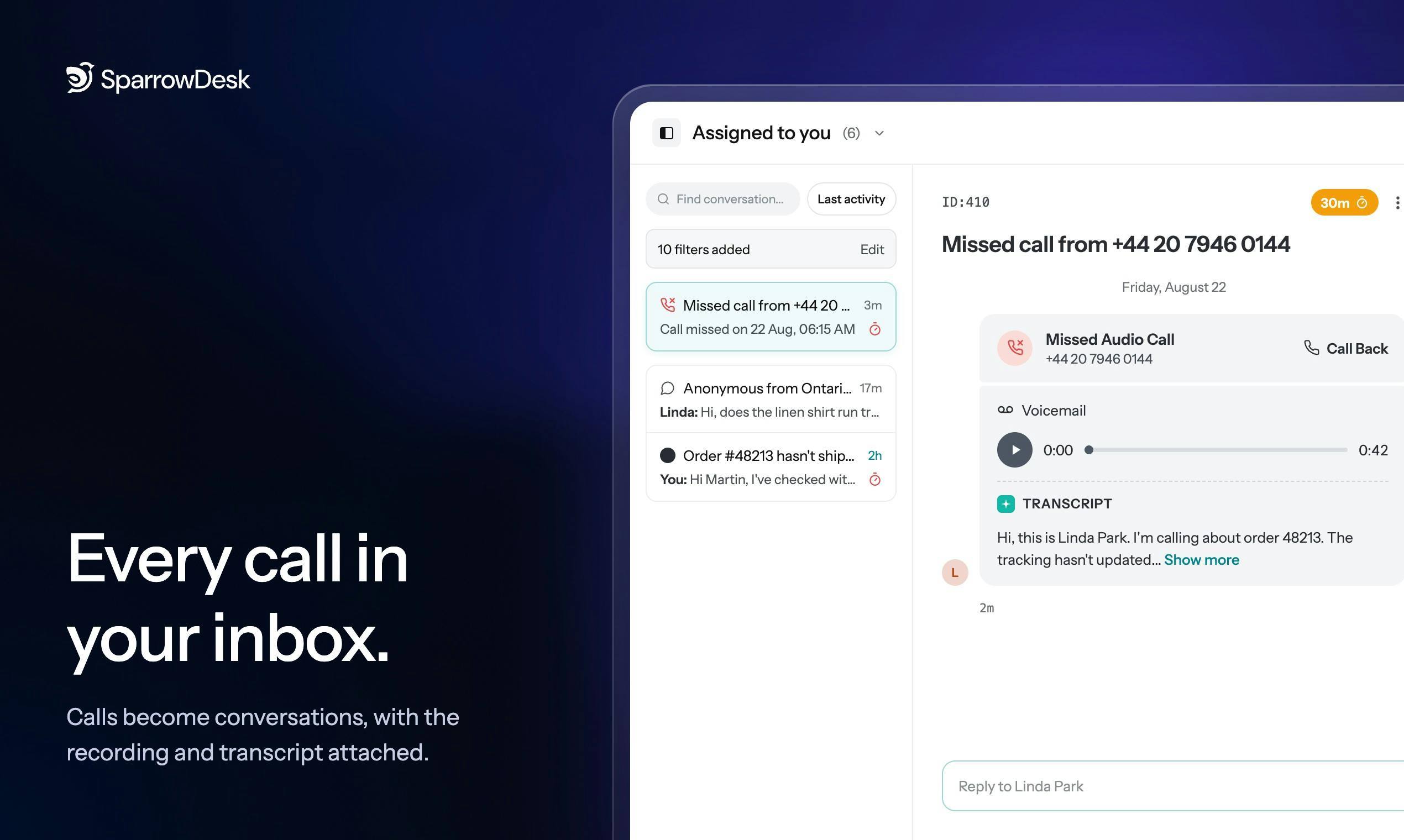
SparrowDesk launches Phone Calls on Product Hunt, bringing phone support into the same inbox as email, chat, and WhatsApp, with numbers in 51 countries, visual IVR, AI agent routing, call recording and transcription into tickets, and a prepaid Voice Wallet with usage-based pricing that avoids per-seat fees.
frwrd.to: Get AI to Redo Your Link in Bio with a Single Message
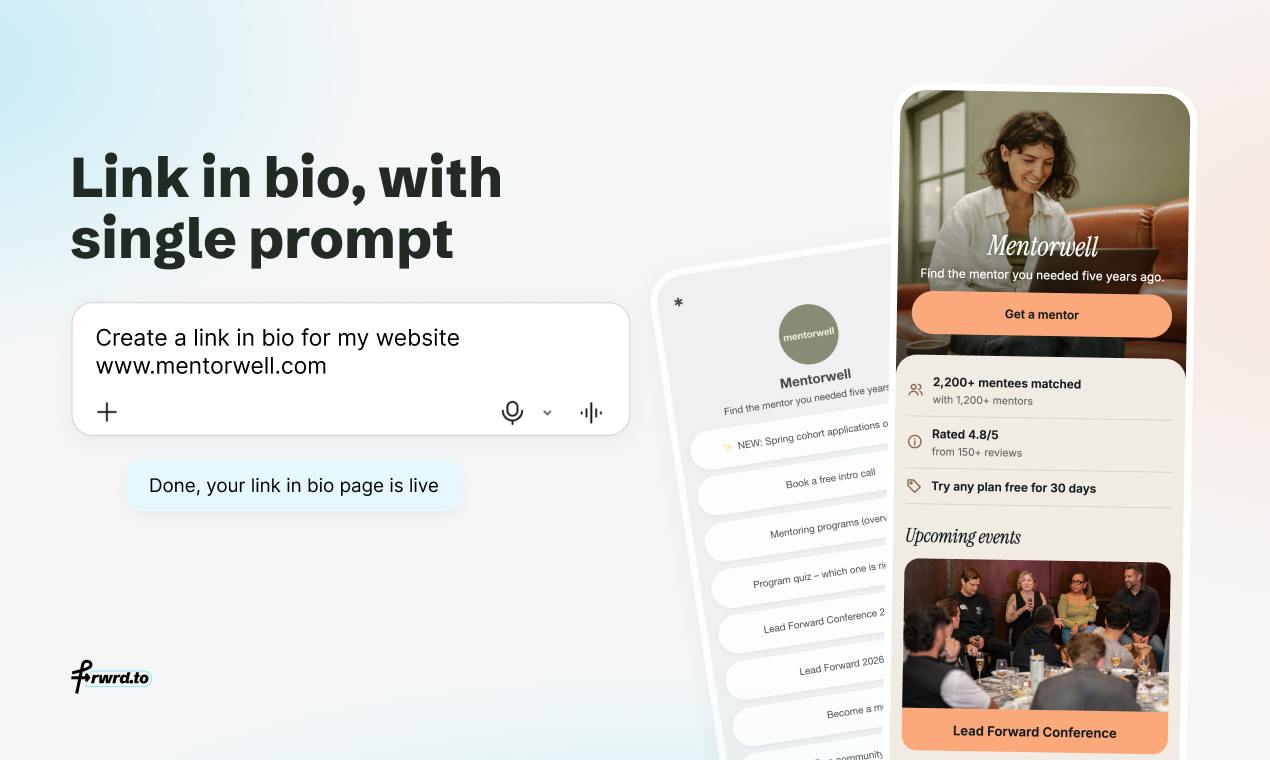
frwrd.to launched on Product Hunt: send your existing link in bio to an AI assistant to preserve key content, match your brand, generate multilingual pages, auto-end expired campaigns, and keep manual editing. This article analyzes its features and use cases.