SparrowDesk Puts Phone Support Into an Omnichannel Inbox With Usage-Based Pricing
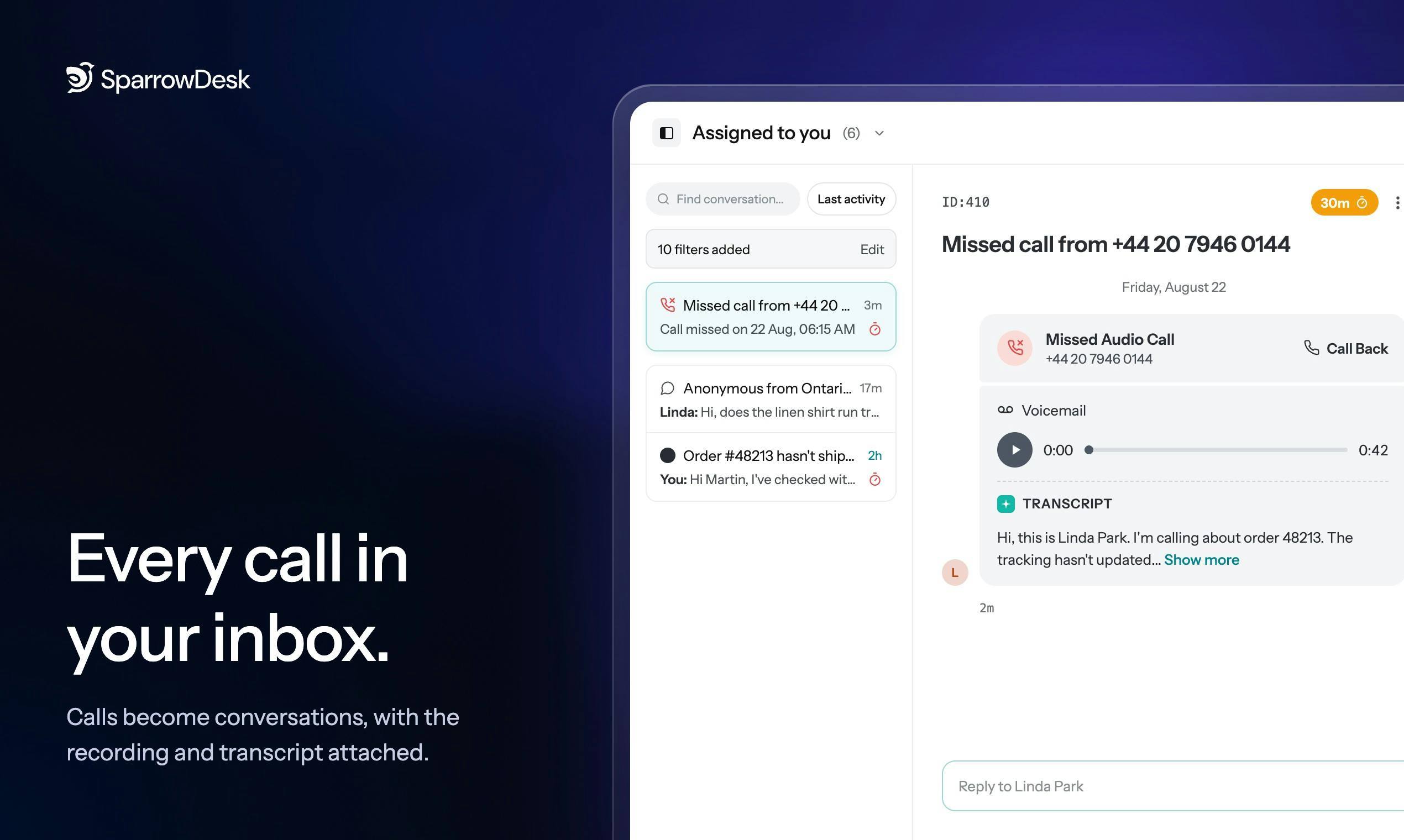
SparrowDesk launches Phone Calls, bringing phone into the omnichannel inbox with usage-based pricing.
SparrowDesk launched Phone Calls on Product Hunt to solve the disconnect between phone and other support channels. It puts phone support into the same inbox as email, chat, and WhatsApp, auto-recording and transcribing calls into tickets so agents see prior interactions. It supports numbers in 51 countries, visual IVR or AI agent routing, and browser answering. Pricing uses a prepaid Voice Wallet with usage-based billing and no per-seat voice fees. It earned 91 votes and a top-three spot on Product Hunt, but call quality and regional compliance still need real-world verification.
Customer support teams have long faced a split: email, live chat, and WhatsApp each live in separate tools, and phone support is an entirely separate system. Agents bounce between multiple windows, and call records never connect with ticket history. SparrowDesk's Phone Calls feature, launched on Product Hunt, tries to solve this with a "one inbox for all channels" approach—phone is no longer an isolated island but, like email and chat, becomes a ticket that can be recorded, transcribed, and tracked.
Phone Is No Longer an Outsider in the Support System
SparrowDesk Phone Calls makes a straightforward claim: put phone support inside the existing helpdesk inbox, alongside email, chat, and WhatsApp. For support teams, this means agents don't need to manually log information after a call ends—the call itself is recorded, transcribed, and handled like any other ticket.
The value of this design lies in context continuity. A customer might send an email first and then call to follow up. If the two channels live in different systems, the agent can't see the prior conversation when picking up the phone. Once phone calls enter the unified inbox, historical interactions are naturally linked, reducing repetitive questions and making follow-ups traceable.
Omnichannel Inbox is a core concept in customer support SaaS, referring to bringing all customer contact channels—email, live chat, social media, phone, and more—into a single work interface. Unlike "multichannel," omnichannel emphasizes context continuity across channels: an agent can see a customer's history in any channel. The traditional approach is a separate tool per channel, requiring agents to switch windows and manually sync information, which easily leads to repetitive questions and broken follow-ups. An omnichannel inbox uses a unified ticket model so every call and every message becomes a trackable record—this is the theoretical basis for SparrowDesk bringing phone into the inbox.
Numbers in 51 Countries, Visual IVR, and AI Agents
On the access side, SparrowDesk offers several practical capabilities: purchase numbers in 51 countries, route incoming calls with a visual IVR or AI agent, and let agents answer directly in the browser with no extra hardware or softphone.
Visual IVR lowers the barrier to configuring call flows—support managers without a technical background can adjust routing rules themselves. AI agents handle front-line screening and triage, keeping simple inquiries away from human agents and routing complex issues to the right team members. Browser-based answering is especially friendly to remote and distributed teams—agents can start working by opening a browser, without relying on desk phones or complex plugins.
Every call is recorded and transcribed, and the significance goes beyond archiving. Transcribed text turns call content into searchable, analyzable data, useful for quality assurance and training, and it also accumulates material for future AI applications.
IVR (Interactive Voice Response) is an automated voice navigation system that plays before a caller reaches a human agent—the typical scenario is "press 1 to check your order, press 2 for a representative." Traditional IVR relies on telecom providers to write flows, with long modification cycles and high costs. Visual IVR turns routing rules into drag-and-drop flowcharts, so support managers can adjust key branches, business hours, and transfer rules without technical staff. AI agents go a step further, using speech recognition and natural language understanding to converse directly with callers, identify intent, and complete routing or self-service answers. The shared goal of both is to reduce ineffective human answering and route complex issues precisely to the right team members.
Usage-Based Voice Wallet, Bypassing Per-Seat Pricing
Pricing is another angle where SparrowDesk differs from traditional cloud call centers. It explicitly advertises "no per-seat voice fees" and uses a prepaid Voice Wallet with usage-based billing.
Traditional voice plans bill per seat, which is unfriendly to teams with high agent turnover or volatile call volumes—paying fixed seat fees for members who rarely make calls easily leads to runaway costs. Usage-based pricing ties cost to actual usage: top up as you go, which is more flexible for small and mid-sized teams and seasonal businesses. It's easy to see why it earned 91 votes on Product Hunt and placed in the top three for the day—pricing structure is often a sensitive point when choosing support tools.
Per-seat pricing is the most common pricing model for cloud call centers and customer support SaaS: each agent pays a fixed monthly fee regardless of actual call volume. This model is not friendly to teams with high agent turnover or seasonal call volume fluctuations, and it easily results in "paying for members who don't make calls." Usage-based pricing ties fees to actual consumption, with a prepaid wallet as a common implementation—teams top up first, and calls are charged per minute or per call. For small and mid-sized teams, this structure lowers upfront fixed investment and makes it easier to incorporate voice costs into unified ticket-process accounting, but teams need a basic estimate of call volume to avoid insufficient balance affecting answering.
The Competitive Logic of the Omnichannel Inbox Race
Bringing phone into the omnichannel inbox has been a main line of evolution in customer support SaaS in recent years. SparrowDesk's differentiation isn't in a single feature but in the combination of integration depth and cost structure: one inbox covering email, chat, WhatsApp, and phone, paired with a usage-based voice wallet, targeting teams that don't want to purchase a separate system for voice.
Of course, the stability of the phone channel and call quality in real business scenarios still need to be verified through actual use. Coverage of numbers in 51 countries is a plus for cross-border businesses, but number availability and compliance requirements may vary by region, so teams should confirm based on their own business areas when choosing.
For teams already using SparrowDesk for email and chat, the appeal of Phone Calls is adding the phone channel without migration; for teams currently evaluating options, it offers a new choice that ties voice costs to the ticket process.
One-line Summary
SparrowDesk launches Phone Calls, bringing phone into the omnichannel inbox with usage-based pricing.
Paragraph Summary
SparrowDesk launched Phone Calls on Product Hunt, aiming to solve the disconnect between phone and other support channels. The feature puts phone support into the same inbox as email, chat, and WhatsApp, automatically recording and transcribing each call and handling it as a ticket, so agents can see a customer's prior interactions when answering. On the access side, it supports purchasing numbers in 51 countries, routing calls via visual IVR or AI agents, and answering in the browser. Pricing uses a prepaid Voice Wallet with usage-based billing and explicitly no per-seat voice fees, offering flexibility for teams with high agent turnover or volatile call volumes. The product earned 91 votes on Product Hunt and placed in the top three for the day, but its call quality and regional number compliance still need to be verified in practice.
Related articles

distribution.dev: One Campaign, Multiple Developer Sites
distribution.dev is a developer ad network jointly launched by daily.dev and DEV, enabling one campaign across multiple developer sites with ads adapted to each platform's reading environment.
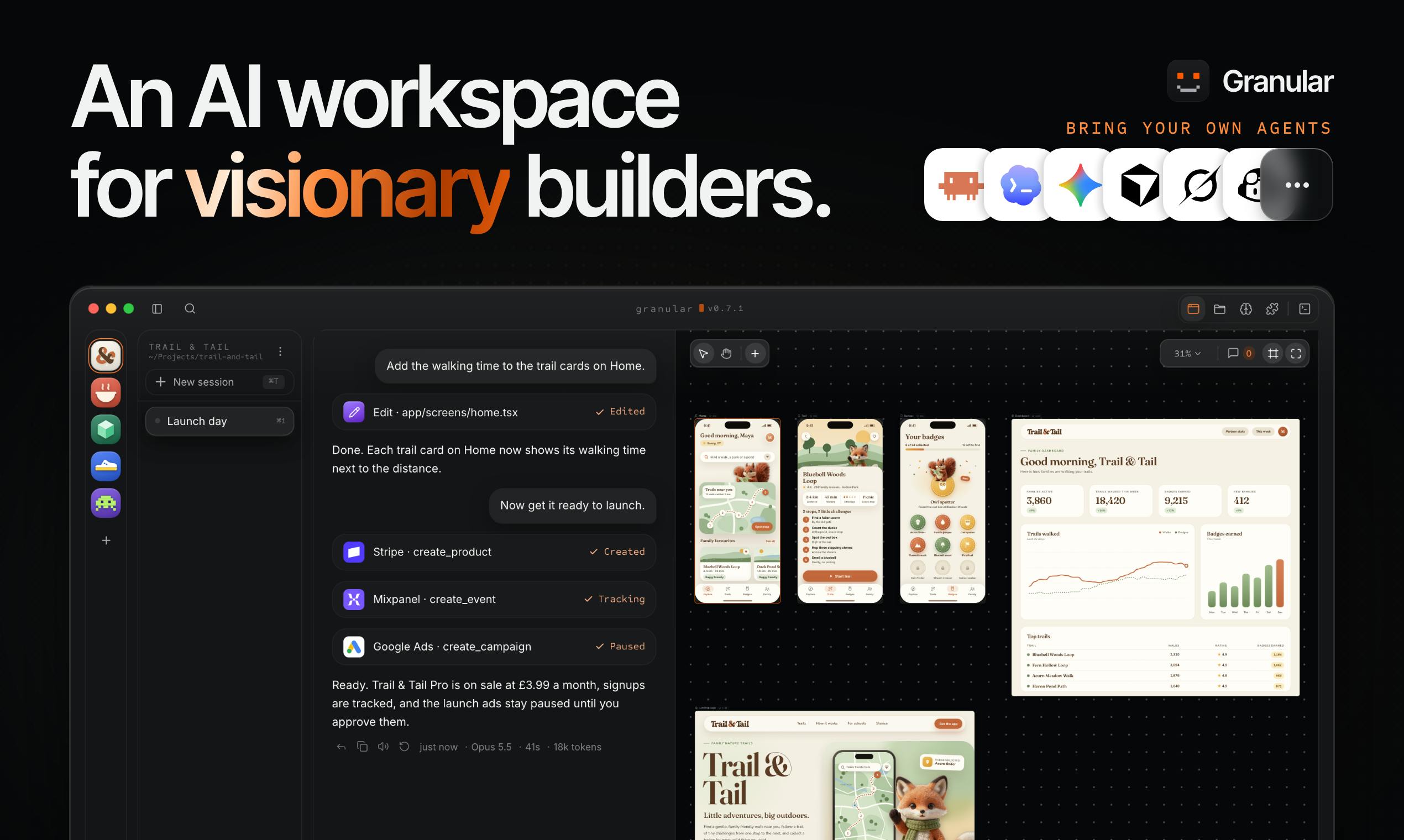
Granular.Build: Putting AI Agents Inside a Visual Workspace
Granular.Build is a visual AI workspace on Product Hunt where boss agents orchestrate specialized agents in parallel, with centralized models, files, and context.
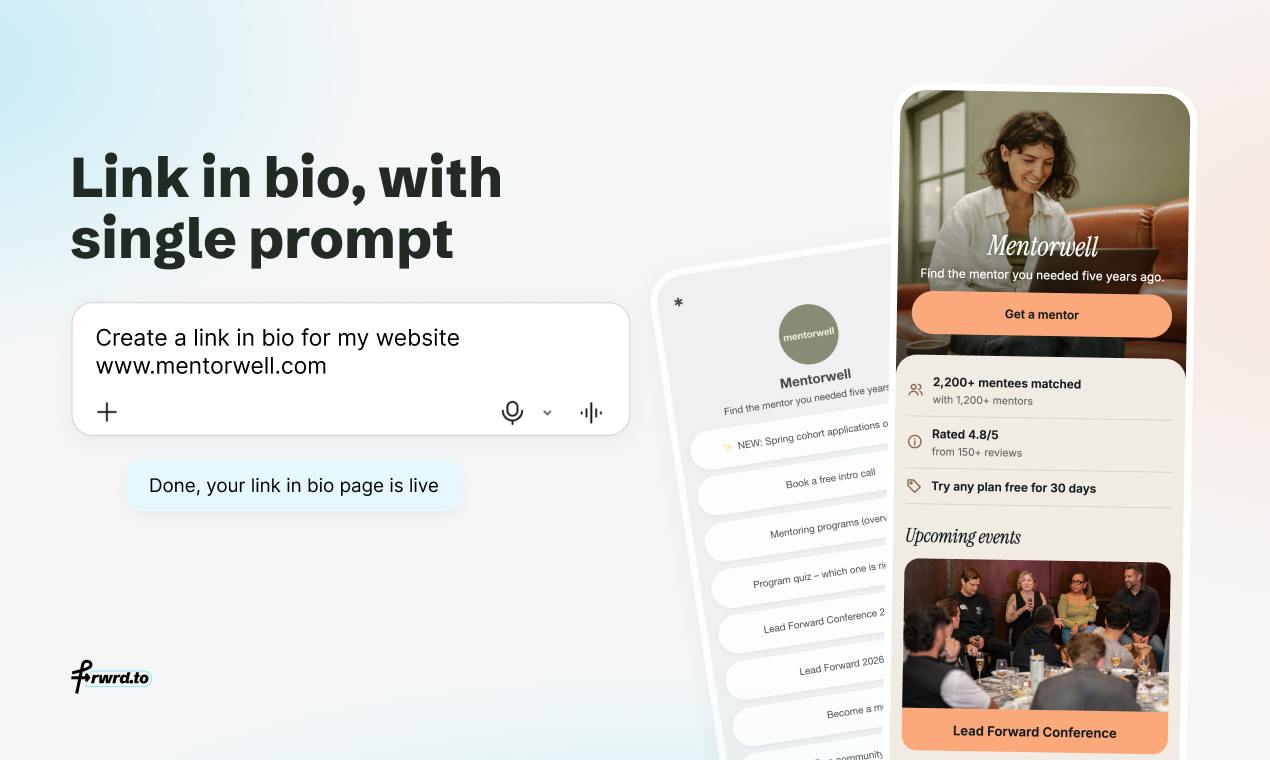
frwrd.to: Get AI to Redo Your Link in Bio with a Single Message
frwrd.to launched on Product Hunt: send your existing link in bio to an AI assistant to preserve key content, match your brand, generate multilingual pages, auto-end expired campaigns, and keep manual editing. This article analyzes its features and use cases.