GrapheneOS Phone Auto-Wipe Triggers Criminal Charges: Privacy Rights Clash with Border Enforcement
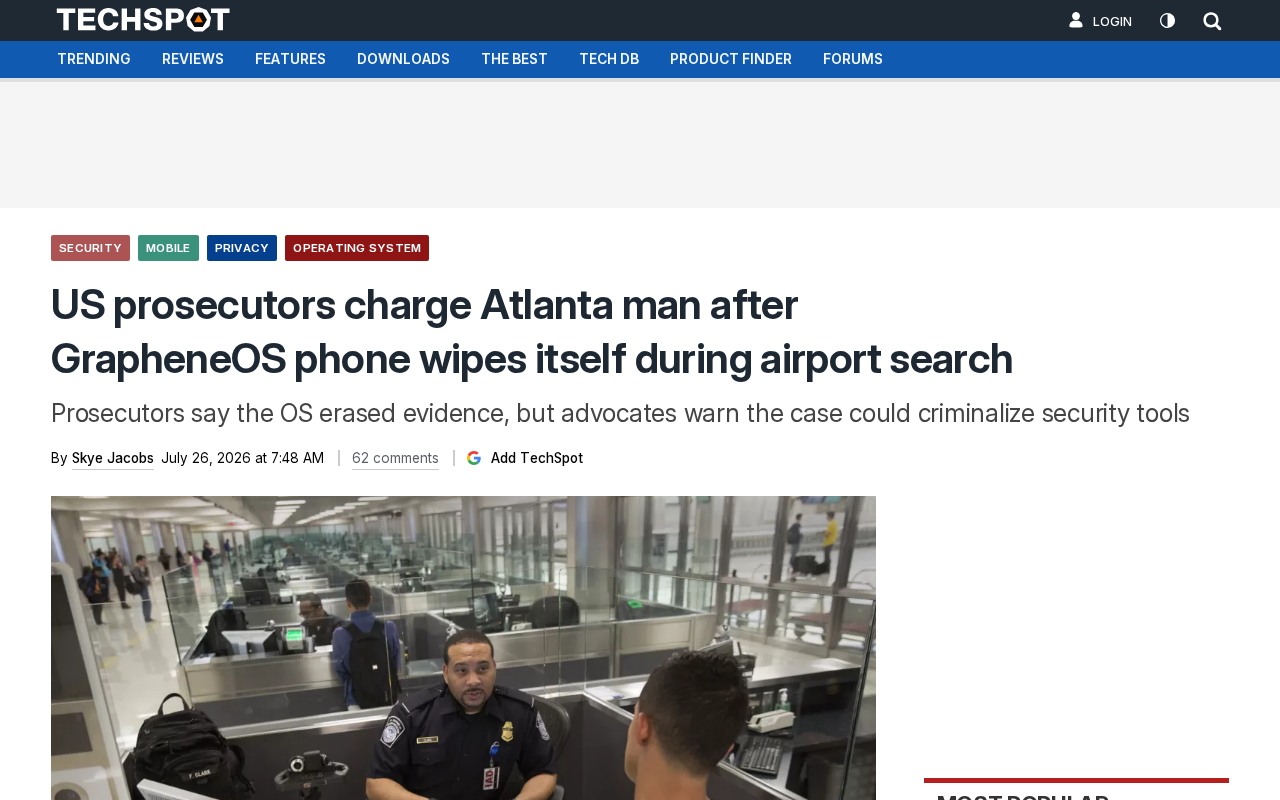
GrapheneOS auto-wipe during a U.S. border search leads to criminal charges, highlighting privacy vs. law enforcement tensions.
A U.S. citizen was criminally charged after their GrapheneOS phone triggered an automatic data wipe during an airport border search. The case has ignited debate over whether security features like duress PINs constitute evidence destruction or legitimate privacy protection. With border searches exempt from warrant requirements and obstruction laws broadly written, the incident exposes a growing clash between privacy-hardened technology and law enforcement authority in the digital age.
Overview: GrapheneOS Phone Triggers Data Wipe During Airport Search
A border search incident at a U.S. airport is sparking widespread discussion in the privacy and security community. According to reports, a U.S. citizen's GrapheneOS phone triggered its data wipe mechanism during a device search at the airport, leading to criminal charges against the citizen. The incident generated significant attention on Hacker News, garnering 226 upvotes and 139 comments, touching on sensitive topics including digital privacy, border enforcement authority, and secure operating system design.
What makes this case particularly noteworthy is how it directly pits two previously independent domains—high-security mobile operating systems and border enforcement practices—against each other. It's not just a legal case; it's a real-world test of how privacy-preserving technology is interpreted in actual law enforcement scenarios.
What Is GrapheneOS? Why Privacy-Conscious Users Love It
A Privacy OS Built on Deeply Hardened Android
GrapheneOS is a deeply hardened mobile operating system based on the Android Open Source Project (AOSP), primarily running on Google Pixel devices. AOSP is the open-source Android codebase maintained by Google—anyone can build their own operating system on top of it. However, while most phone manufacturers add commercial features and ad-tracking components, GrapheneOS takes the opposite approach: stripping out all potentially privacy-leaking components while significantly strengthening security protections.
GrapheneOS chose Pixel devices as its only supported hardware because Pixels are among the few Android phones that support full Verified Boot, allowing users to run a custom operating system while re-locking the bootloader, thereby maintaining boot security comparable to the factory OS. Verified Boot is a boot chain verification mechanism that starts from a hardware Root of Trust—each time the device powers on, firmware sequentially verifies the digital signature integrity of the bootloader, kernel, and system partitions. Any tampering at any stage halts the boot process. The Titan M security chip built into Google Pixel devices serves as the hardware Root of Trust, storing verification keys and enforcing rollback protection. GrapheneOS maintains its own signing key infrastructure, and after installation, users can re-lock the bootloader, making the device's boot security fully equivalent to one running the factory system. This means that even if an attacker gains physical access, they cannot implant persistent malicious code after the device is powered off. By contrast, most Android phones permanently degrade their security level once the bootloader is unlocked.
In terms of security enhancements, GrapheneOS implements multiple protections far exceeding stock Android. Its hardened memory allocator (hardened_malloc) effectively defends against memory corruption attacks—one of the most common exploit vectors on mobile devices. Specifically, hardened_malloc is based on OpenBSD's malloc implementation philosophy, using randomized memory allocation layouts, guard pages to isolate allocation regions, and immediate zeroing of memory contents upon deallocation. This makes exploitation of common memory vulnerabilities like use-after-free and heap overflow extremely difficult. These vulnerability classes account for a significant proportion of Android security bulletins in the CVE database. Additionally, GrapheneOS enables more aggressive SELinux policies and independently hardens WebView (the browser engine), since WebView represents one of the largest remote attack surfaces on mobile devices.
Its network permission controls allow users to block network access on a per-app basis—a capability absent in stock Android. It also implements sensor permission controls, contacts scoping, storage scoping, and other fine-grained permission management features. Within the privacy OS ecosystem, GrapheneOS is often mentioned alongside CalyxOS, LineageOS, and similar projects, but the security research community's consensus places GrapheneOS at the forefront in terms of depth and rigor of security hardening. Thanks to its excellent security, GrapheneOS has long been favored by journalists, activists, security researchers, and privacy-conscious everyday users.
The Controversial "Data Self-Destruct" Mechanism
At the heart of this incident is a security feature offered by GrapheneOS—the so-called "duress PIN" or automatic data wipe mechanism. Users can configure conditions under which a full data wipe is automatically triggered (such as reaching a certain number of incorrect password attempts, or entering a specific "duress" password). The original purpose of this feature is to ensure that sensitive data remains protected even when a user is coerced into unlocking their device.
From a technical standpoint, modern Android devices universally use File-Based Encryption (FBE), where data is stored in encrypted form and decryption keys are derived from the user's lock screen credentials. Android's FBE uses the Linux kernel's fscrypt framework, encrypting each file's content with an independent 256-bit AES-XTS key and file names with AES-CBC-CTS encryption. These keys are ultimately derived jointly from the user's lock screen credentials (PIN, password, or pattern) through key derivation functions (such as scrypt or Argon2id) and key material stored in the hardware security module. FBE divides storage into two encrypted zones: Device Encrypted (DE) storage for data needed before the first unlock (such as alarms and emergency calls), and Credential Encrypted (CE) storage for the user's personal data. When a data wipe is triggered, the core operation is destroying critical links in the derived key chain—once the keys are destroyed, even though the encrypted data physically remains on the storage chip, it cannot be restored to readable content. This cryptographic erasure method completes almost instantaneously, far faster and more thorough than bit-by-bit overwriting of storage.
Notably, similar secure wipe mechanisms are not unique to GrapheneOS—Apple's iOS has offered a "wipe data after 10 incorrect password attempts" option since the early days of iPhone, and this feature is widely enabled by hundreds of millions of ordinary users.
However, it is precisely this protective design that, in the context of a border search, was interpreted by law enforcement as "destroying evidence" or "obstruction of justice," forming the basis for criminal charges. The line between technical "self-protection" and legal "obstruction of law enforcement" has become the most contentious focal point of this case.
The Core Controversy: Legal Boundaries Between Privacy Rights and Law Enforcement Authority
The Special Legal Status of U.S. Border Searches
In the United States, border areas have long been considered a "gray zone" where Fourth Amendment protections are relatively weak. The Fourth Amendment explicitly states that "the right of the people to be secure in their persons, houses, papers, and effects, against unreasonable searches and seizures, shall not be violated." However, federal courts have long established the "Border Search Exception" doctrine through a series of precedents—the government does not need a warrant, or even reasonable suspicion, to conduct searches at international borders, ports of entry, and their functional equivalents (including airports serving international flights).
The legal foundation of this exception traces back to the founding era, originally targeting physical contraband inspections. But in the digital age, its scope has expanded to electronic devices. In 2014, the U.S. Supreme Court's landmark ruling in Riley v. California held that law enforcement must obtain a warrant to search a suspect's phone during an arrest, because the vast amount of personal information contained in phones makes them fundamentally different from traditional personal items like wallets. Chief Justice John Roberts wrote in the opinion what has become a widely cited statement: "Modern cell phones are not just another technological convenience. With all they contain and all they may reveal, they hold for many Americans the privacies of life. The fact that technology now allows an individual to carry such information in his hand does not make the information any less worthy of the protection for which the Founders fought." This 9-0 unanimous decision established the principle that digital devices enjoy special privacy protection status. However, the ruling did not explicitly overturn the border search exception, and its scope was limited to search-incident-to-arrest scenarios in domestic law enforcement.
Currently, Customs and Border Protection (CBP) divides device searches into two tiers in practice: a "basic search" allows border officers to browse through device contents without any justification; an "advanced search"—involving the use of specialized tools connected to the device to extract data—requires "reasonable suspicion" but still does not require a warrant. According to data published by CBP, the number of electronic device searches conducted annually has grown significantly over the past decade, from approximately 8,500 in 2015 to over 40,900 in 2019. During "advanced searches," CBP uses forensic tools including commercial mobile device forensic products like Cellebrite UFED and GrayKey, which can bypass certain lock screen protections, extract deleted data, parse application database structures, and generate structured forensic reports. Devices can be retained for up to 5 days (extendable to 30 days), during which users cannot access their own devices. This means phones, laptops, and other devices face the risk of being examined, copied, or even seized during border crossings.
It is precisely this legal backdrop that drives privacy-conscious users to prefer systems with strong protective capabilities. But when technical data protection mechanisms are triggered at the point of enforcement, things become complicated: is the device's automatic wipe a deliberate act of destruction by the user, or an automatic response by the system following pre-configured rules? The two carry vastly different implications for legal liability.
Legal Standards for Obstruction of Justice
Within the U.S. federal legal system, provisions related to obstruction of justice and evidence destruction are scattered across multiple statutes. The most relevant to this case likely include 18 U.S.C. § 1519 (destruction, alteration, or concealment of records or documents in federal investigations) and 18 U.S.C. § 1505 (obstruction of federal administrative proceedings).
18 U.S.C. § 1519 was born from the Sarbanes-Oxley Act of 2002, passed in the wake of the Enron financial fraud scandal. In the Enron case, its auditing firm Arthur Andersen destroyed audit documents on a massive scale after learning of the SEC investigation, prompting Congress to enact stricter evidence preservation laws. The statutory language is extremely broad: anyone who "knowingly alters, destroys, conceals, covers up, falsifies, or makes a false entry in any record, document, or tangible object with the intent to impede, obstruct, or influence the investigation or proper administration of any department or agency of the United States" can be prosecuted, with a maximum penalty of 20 years imprisonment. Notably, this statute does not require the defendant to know that a specific investigation or proceeding has been initiated—it only requires proof that their actions carried an anticipatory intent to obstruct. In 2015, the Supreme Court in Yates v. United States narrowed the interpretation of "tangible object" (that case involved a fisherman throwing undersized fish back into the sea), but whether digital data falls within the statute's scope remains debated among legal scholars.
A core element of these statutes is "knowingly" and "intent"—prosecutors must prove that the defendant knew an investigation or legal proceeding existed and intentionally acted to obstruct it. In the era of paper documents, identifying evidence destruction was relatively straightforward—shredding or burning documents constituted clear deliberate acts. But in the digital realm, things have become unprecedentedly complex. If a user configured auto-wipe rules months in advance and those rules were triggered during a search, does that constitute "knowing destruction"? What if the user didn't even know that a particular input would trigger the wipe? These questions have not been adequately answered in existing case law, which is why this case could carry precedential significance.
Divergent Views in the Tech Community
Discussion on Hacker News revealed a clear split in opinions:
- Privacy-first advocates argue that using an operating system with self-destruct capabilities is an entirely lawful personal privacy choice, and equating the system's automatic behavior with deliberate evidence destruction is a misreading of the technology. They draw an analogy: paper shredders are legal office equipment, routine shredding is normal information management practice, and only shredding after knowing you face litigation or investigation could potentially be illegal.
- Legal realists caution that once you enter a criminal investigation context, any action deemed to "deliberately render evidence inaccessible" can carry serious legal consequences, regardless of its technical implementation. They emphasize that the law focuses on the actual effect of behavior and the subject's mental state, not the specific technical mechanism of implementation.
This divergence fundamentally reflects the gap between technical design intent and legal interpretation—engineers think in terms of threat models when designing features, while prosecutors focus on behavioral intent in the courtroom.
Practical Takeaways for Privacy Tech Users
Security Tools Are Not Legal Shields
This case serves as a wake-up call for all privacy-conscious tech users: no matter how powerful a security tool may be, it does not provide legal immunity. In high-risk scenarios like border or law enforcement searches, users need to clearly understand local laws regarding device searches and data erasure, rather than relying solely on technical measures.
For users who frequently travel internationally, the common industry recommendation is a "data minimization" strategy—store sensitive data in the cloud or on home devices before crossing borders, carry a "travel phone" with minimal data, and fundamentally reduce the risks of searches rather than relying on automatic wipe mechanisms at the border. Organizations like the Electronic Frontier Foundation (EFF) and the American Civil Liberties Union (ACLU) have long published digital privacy guides for border travel, and their core advice is highly consistent: don't carry data you wouldn't want searched. Specific steps include using a dedicated travel device, signing out of all cloud service accounts beforehand, enabling full-disk encryption but not configuring auto-wipe features that could be interpreted as adversarial. Importantly, data stored in the cloud rather than locally on the device falls under a different legal search framework—CBP's current policy explicitly states that border search authority is limited to data stored locally on the device and does not extend to remote content accessible only via the internet.
Security Feature Design Must Account for Legal Risk
For security operating system projects like GrapheneOS, this case raises a thought-provoking question: while security features protect users, could they also place users at new risk in certain legal environments? This isn't about negating the value of these features, but rather reminding both developers and users to evaluate with a more comprehensive "threat model"—threats don't only come from data breaches; they can also arise from the legal liability triggered by data protection actions themselves.
In the field of security engineering, a Threat Model is a systematic analysis framework used to identify assets to be protected, potential threat sources, attack vectors, and corresponding defensive measures. The concept of threat modeling was first systematized in the software security domain by Microsoft's STRIDE model, which categorizes threats into Spoofing, Tampering, Repudiation, Information Disclosure, Denial of Service, and Elevation of Privilege. In the personal privacy protection space, the EFF has popularized a threat modeling approach more accessible to everyday users, guiding them through five core questions: What do I want to protect? Who do I want to protect it from? How bad are the consequences if I fail? How likely is it that I will need to protect it? How much trouble am I willing to go through?
Traditional mobile device threat models primarily consider technical threats like device loss/theft, malware, and network eavesdropping. But this case reveals a frequently overlooked dimension: lawful but adversarial law enforcement actions themselves are factors that need to be considered in threat models, and the best response to this type of "threat" may not be technical measures at all, but rather legal preparation and operational strategy. When "the act of protection itself" becomes a new source of risk, users no longer face a simple technical adversary problem—instead, they need to navigate a multi-dimensional balance between technical protection, legal compliance, and operational security (OPSEC). This requires security system designers to clearly communicate in their documentation and user education: what is the feature's design intent, in which jurisdictions might its use pose legal risks, and what are the recommended alternative strategies.
Conclusion: The Balancing Act Between Privacy Protection and Law Enforcement
This case of a U.S. citizen facing charges over a GrapheneOS phone's data wipe is far more than a tech news story. It reflects the increasingly sharp tension between digital-age privacy protection technologies and traditional law enforcement frameworks. As more users adopt high-security systems, similar legal conflicts are likely to become more frequent.
Ultimately, finding a balance between safeguarding citizens' privacy rights and maintaining necessary law enforcement capabilities requires the joint participation of the tech community, the legal profession, and policymakers. For ordinary users, understanding the boundaries of their tools' capabilities and acquiring essential legal knowledge may be more important than simply relying on a "self-destruct button."
Related articles

Four Stages of LLM Commercialization: The Evolution from Foundation Models to AI Agents
Explore the four stages of LLM commercialization: foundation models, prompt engineering, RAG, and AI Agents. Learn each stage's strengths, limitations, and a 3-month learning roadmap.

How Theo Rewrote His AGENTS.md to Double AI Coding Efficiency
T3 founder Theo shares how rewriting AGENTS.md and Skills configs doubled his AI coding output, covering trigger design, contrastive examples, and behavioral auditing.

Argentic: Building Toll Booths for AI Crawlers with the Lightning Network
Argentic uses the L402 protocol and Bitcoin Lightning Network to build a micropayment toll system for AI crawlers. This article analyzes its technical principles and implications for the agent economy.