Greplica: A Self-Updating Code Knowledge Base Built for AI Coding Agents

Greplica provides shared, persistent codebase memory for AI coding agents and development teams.
Greplica is an open-source tool that creates a self-updating Wiki for coding agents, automatically extracting tacit knowledge like decisions, constraints, gotchas, and failed approaches from programming sessions. It enables cross-agent and cross-developer knowledge sharing through on-demand retrieval, supports local and managed deployment, and stays grounded in the actual codebase to maintain accuracy.
When Coding Agents Start Forgetting
As AI-assisted programming becomes increasingly widespread, a widely overlooked problem is gradually surfacing: coding agents lack persistent, shareable "memory." Every time a conversation ends, the contextual understanding, pitfalls encountered, and decisions made by the agent often vanish along with it. When multiple developers and multiple AI agents collaborate simultaneously within a team, this fragmentation of knowledge leads to redundant work, solution rollbacks, and even contradictory implementations.
To understand the root of this problem, we need to recognize the underlying limitations of current mainstream coding agents. Whether it's GitHub Copilot, Cursor, or Devin, they fundamentally rely on the large language model's context window to understand code. The context window refers to the maximum number of tokens a model can process in a single inference, with current mainstream models ranging from 128K to 200K tokens. While these numbers seem large, they're still far from sufficient for a real project with hundreds of files and tens of thousands of lines of code. More critically, context windows are "session-level" — once a conversation ends or tokens are cleared, all understanding the model has accumulated is lost. This is the fundamental reason why coding agents need external persistent memory systems.
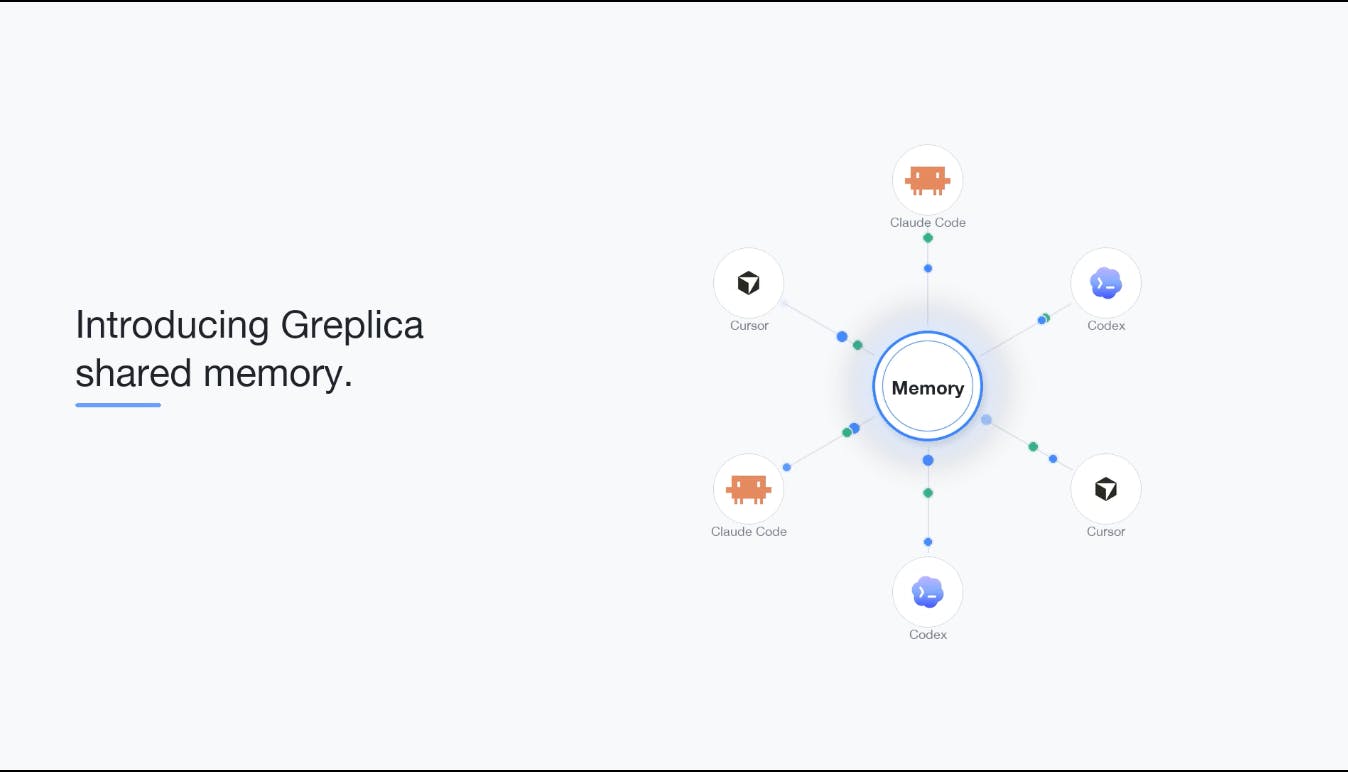
The open-source tool Greplica, which recently launched on Product Hunt, targets precisely this pain point. Its positioning is concise and precise — "Self updating wiki for coding agents." In simple terms, Greplica attempts to provide a shared codebase memory for the entire engineering team and every AI agent.
What Core Problem Does Greplica Solve
Continuously Extracting Tacit Knowledge from Coding Sessions
According to the official description, Greplica continuously extracts key information from coding sessions, including:
- Decisions: Why the team or agent chose a particular technical approach
- Constraints: Limitations that must be adhered to within the project
- Gotchas: Edge cases that are easy to stumble into
- Failed approaches: Which solutions have been proven unworkable
- File-level context: The responsibilities and background of specific files
This information is precisely what traditional documentation struggles most to cover — it mostly exists in developers' minds, or is scattered across chat logs and commit messages, making it difficult to systematically capture and preserve. In knowledge management theory, this type of knowledge is called "Tacit Knowledge," as opposed to "Explicit Knowledge" that can be documented. Japanese scholar Ikujiro Nonaka's SECI model describes how tacit knowledge is transformed into organizational knowledge through four processes: socialization, externalization, combination, and internalization. In software engineering, the proportion of tacit knowledge is extremely high — why a particular module was designed this way, why a seemingly reasonable approach was abandoned, what counter-intuitive edge cases exist in specific business scenarios — these are often known only to those who experienced them firsthand. Greplica is essentially attempting to automate this "externalization" process — automatically structuring the tacit knowledge generated during programming practice into searchable explicit knowledge, forming a living knowledge base.
On-Demand Retrieval: Providing Only Context Relevant to the Current Task
You might not have noticed, but Greplica doesn't simply dump all information into the agent at once. It emphasizes on-demand retrieval (retrieves only what matters for the task at hand), extracting only relevant knowledge fragments based on the current task's context. This design is critically important in real-world engineering: the knowledge volume of large codebases is enormous, and injecting context without filtering would not only overflow the model's context window but also introduce significant noise, actually degrading the agent's performance.
From a technical implementation perspective, this on-demand retrieval mechanism is likely based on a RAG (Retrieval-Augmented Generation) architecture. RAG is a technical paradigm that combines external knowledge bases with large language models: first, content in the knowledge base is segmented into semantic chunks and vectorized through embedding, then stored in a vector database; during inference, the most relevant knowledge fragments are retrieved based on query semantics and injected into the model's prompt as context. Compared to stuffing all knowledge into the context, RAG can precisely match relevant information, reduce noise, and break through context window length limitations. In code scenarios, RAG faces unique challenges including structural semantic understanding of code, tracking cross-file dependencies, and index update issues caused by frequent code changes — which is also an important reason Greplica chose a "self-updating" mechanism.
Key Differences Between Greplica and Traditional Approaches
Static Documentation vs. Siloed Agent Memory
Greplica's official description clearly distinguishes it from two categories of existing solutions:
- Compared to static documentation: Traditional READMEs, Wikis, and design documents start becoming outdated the moment they're written, with high maintenance costs and lagging behind code evolution.
- Compared to siloed agent memory: Even if a single AI agent has memory capabilities, it's often limited to its own sessions and cannot be shared across agents or developers.
Currently, AI agent memory systems generally follow three technical paths: first, summary memory based on conversation history, which compresses past interactions into stored summaries; second, semantic memory based on vector databases, which encodes experiences as searchable vectors through embedding; third, structured memory based on knowledge graphs, which explicitly models entities and relationships. OpenAI's ChatGPT memory feature adopts the first path, while more complex agent frameworks like LangChain's Memory module support various combinations. Greplica's choice of a Wiki format anchored to code repositories essentially layers structured knowledge organization on top of semantic memory, making knowledge not only searchable but also readable and auditable — which is crucial for building trust within engineering teams.
Greplica's core proposition is being always grounded in the repo. Its knowledge originates from real code and programming processes, rather than being documentation independent of the code, thus maintaining knowledge freshness and accuracy.
Knowledge Sharing Across Developers, Agents, Clones, and Forks
Another highlight is Greplica's collaboration scope. According to the description, it can share knowledge across "developers, agents, clones, and forks." This means that when you fork a repository or clone it locally, the relevant contextual memory can flow along with it, rather than being trapped on a particular machine or within a specific account. For distributed teams and open-source collaboration, this cross-boundary knowledge flow is quite valuable.
Deployment Options: Open Source, Local Execution, and Managed Mode
Greplica adopts a developer-friendly multi-deployment strategy:
- Open Source: Code is publicly available; teams can audit, customize, or self-host.
- Runs locally: For code-security-sensitive teams, local deployment means source code and knowledge bases don't need to be uploaded to third-party servers.
- Managed shared mode: An official hosted version is also available, enabling out-of-the-box cross-member knowledge sharing.
This deployment strategy reflects a deep industry context. In the code intelligence tools space, security and privacy are developers' most sensitive concerns. Codebases often contain business logic, security credentials, proprietary algorithms, and other highly confidential information. The 2023 incident where Samsung employees input internal code into ChatGPT, resulting in data leakage, made the entire industry more vigilant about data security with AI tools. Greplica's local execution option directly addresses this concern — all data processing is completed locally, and source code and extracted knowledge never leave the developer's infrastructure. Meanwhile, being open source means code logic is transparent and auditable, allowing security teams to evaluate its data handling behavior. This "trust by design" has become a best practice in the developer tools space, with similar strategies widely adopted by tools like Ollama (local LLM execution) and Sourcegraph (code search).
This "open source + local + managed" combination balances privacy control with ease of use, aligning with the mainstream trend in the developer tools space. On Product Hunt, Greplica is categorized under open source tools, developer tools, artificial intelligence, and GitHub — a very clear positioning.
Why Agent Memory Infrastructure Deserves Attention
From a broader perspective, Greplica represents an important direction in the evolution of AI programming tools — agent persistence and collaboration.
Over the past year, the industry's focus has largely been on making individual agents "smarter" — stronger reasoning capabilities, longer context windows, better tool calling. But as agents begin to truly enter teams' daily development workflows, a new bottleneck has emerged: knowledge persistence and shareability. No matter how intelligent an agent is, if it has to understand the codebase from scratch every time, it can never accumulate team-level engineering wisdom.
The emergence of this bottleneck is closely related to the development stages of AI programming tools. The first stage was code completion (like early Copilot), solving the "write faster" problem; the second stage was conversational programming assistants (like ChatGPT, Claude's code mode), solving the "understand and explain" problem; the third stage is autonomous coding agents (like Devin, OpenAI Codex), taking on end-to-end development tasks. The emerging fourth stage is multi-agent collaboration and organizational-level knowledge management — precisely where Greplica is positioned. At this stage, individual agent intelligence is no longer the sole bottleneck; the efficiency of knowledge flow between agents, and between humans and agents, becomes the new critical variable.
Greplica aims to serve as a "shared brain" between agents, and between humans and agents. If this type of infrastructure can mature, it has the potential to significantly reduce the friction costs of AI collaboration in large projects. Of course, as a newly launched early-stage product, whether it can stably extract high-quality knowledge from actual large codebases while controlling false positives and noise still requires time and real-world validation.
Summary
Greplica targets a real and increasingly urgent pain point in the AI programming era: the lack of shared, continuously updated codebase memory between agents and teams. Its core philosophy centers on "grounded in the repo, on-demand retrieval, cross-boundary sharing," and it earns developer trust through open source and local execution options. For engineering teams that are adopting AI coding agents at scale, this type of "agent memory infrastructure" is worth watching closely — it may be the key factor determining the upper limit of AI collaboration efficiency.
Related articles
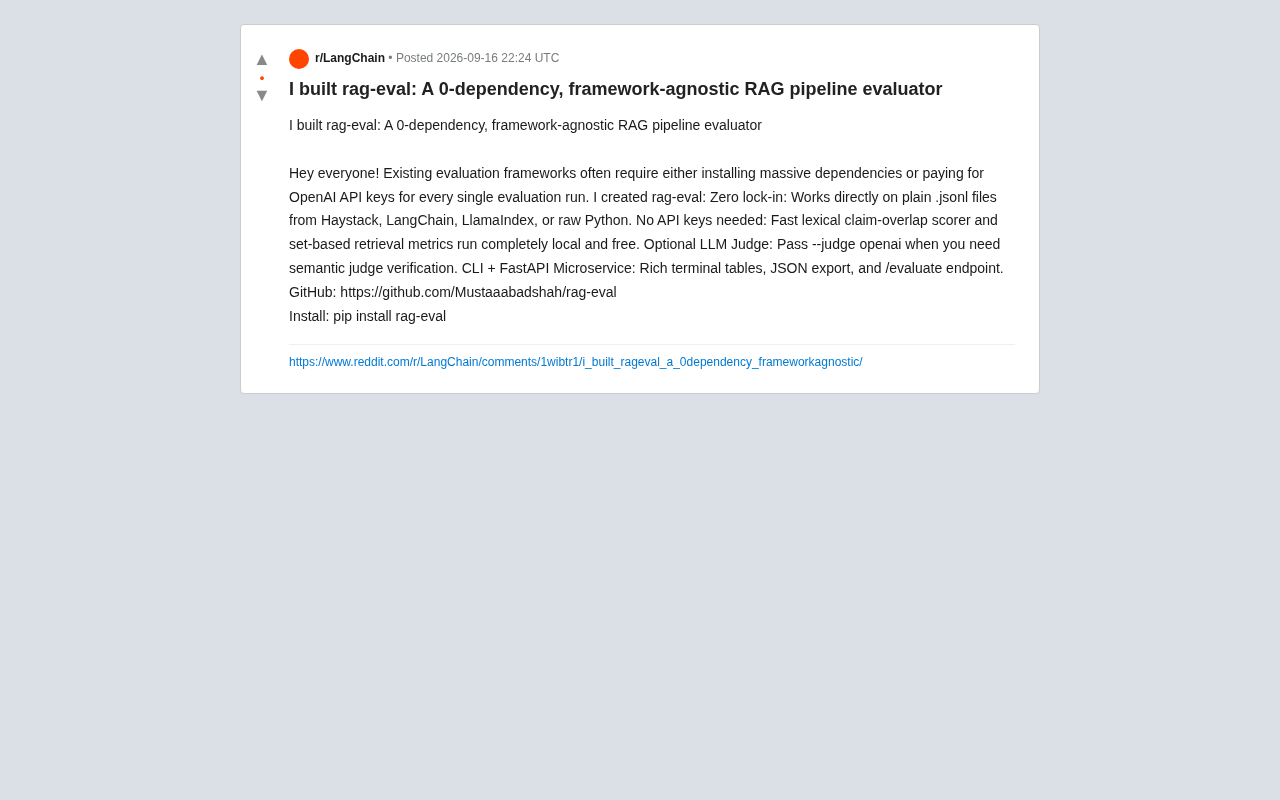
rag-eval: A Zero-Dependency, No-API-Key RAG Evaluation Tool
rag-eval is a zero-dependency, framework-agnostic open-source RAG pipeline evaluation tool. It supports free local lexical and retrieval metrics with no API keys required, and offers optional LLM Judge for semantic validation. Compatible with Haystack, LangChain, and LlamaIndex.
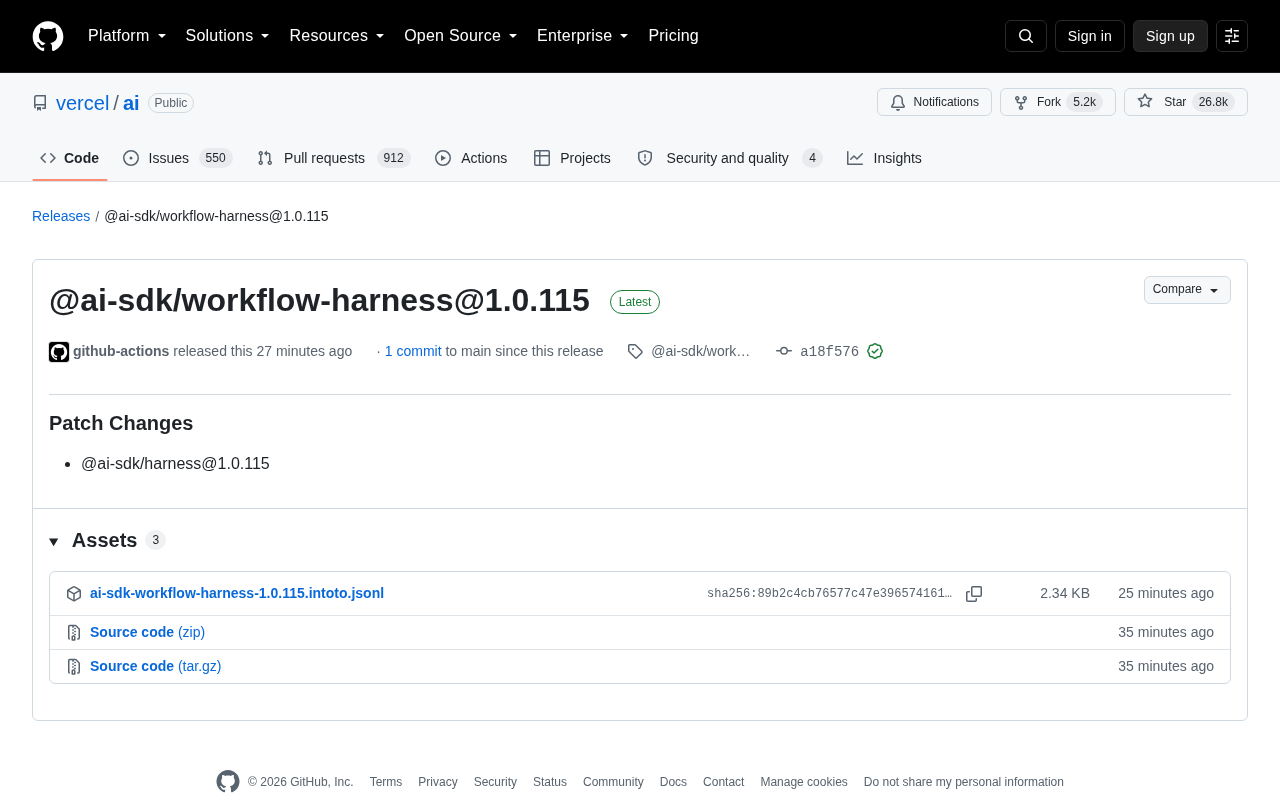
Vercel AI SDK Releases workflow-harness 1.0.115 Patch Update
Vercel AI SDK releases @ai-sdk/workflow-harness 1.0.115 patch update, syncing the @ai-sdk/harness dependency. Learn about the update, release mechanism, and what it means for developers.
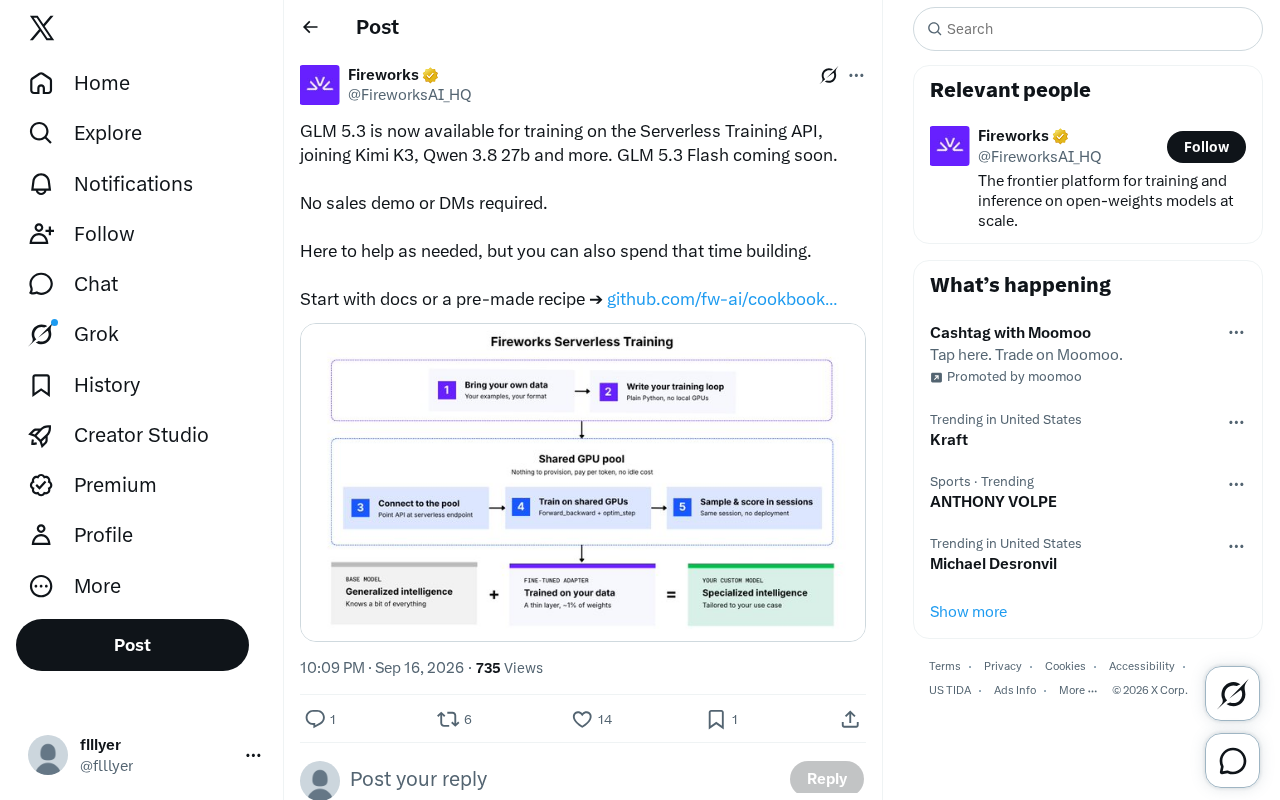
GLM 5.3 Now Available on Serverless Training API — No Sales Process Required
GLM 5.3 is now available on Serverless Training API alongside Kimi K3 and Qwen 3.8 27b. No sales process needed — start fine-tuning directly via docs or pre-made recipes.