Greptile Uses Multi-Agent Code Verification, a New Review Paradigm for the AI Programming Era

Greptile v5 uses multiple sub-agents to review PRs in parallel, combining open-source and frontier models to improve code review independence and speed.
Greptile v5 tackles the review bottleneck caused by growing AI-generated code with multi-sub-agent parallel review. Each PR triggers multiple sub-agents checking code changes from different angles, pairing open-source and frontier models: frontier models handle complex reasoning, open-source models take on high-frequency pattern-based checks, and Together AI provides inference support to cut cost and latency. The article stresses that the first review round must be independent and fast, and that multi-model cross-validation reduces single-model blind spots. The solution is positioned as the automated first gate in the PR process, front-loading mechanical checks rather than replacing human review, while orchestration strategy, benchmark data, and actual cost savings remain to be verified.
AI is writing code faster and faster, but the code review bottleneck is becoming increasingly obvious. As the volume of AI-generated code grows exponentially, traditional manual review or single-model review can no longer keep pace. Greptile's proposed solution: use multiple sub-agents to review every PR in parallel, combining open-source and frontier models to make code review independent, fast, and low-cost.

Why AI Programming Needs Independent Code Review
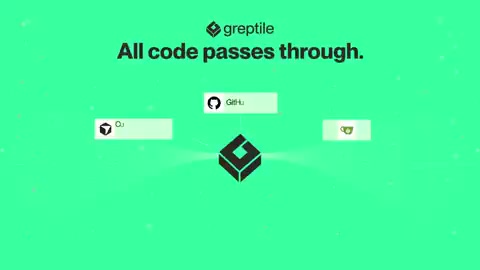
When code is generated by AI, the review process faces a fundamental contradiction: if the reviewer is also an AI, it may share the same blind spots as the model that generated the code. Greptile's v5 agent is designed precisely for this problem—it launches multiple sub-agents on each PR to execute review tasks in parallel.
The core logic of this design: a single model always has areas it can't cover, while a combination of multiple models can compensate for each other's blind spots. According to Greptile's introduction on Twitter, the v5 agent pairs open-source models with frontier models to ensure that "one model's blind spot doesn't determine what gets missed."
Sub-agent refers to lightweight agent instances that are dynamically generated by a scheduler under the main agent framework, each undertaking specific subtasks. Unlike a single large agent processing all steps serially, the sub-agent architecture breaks complex tasks into multiple parallelizable sub-problems, with each sub-agent having its own independent context window, toolset, and model configuration. In code review scenarios, sub-agents can separately handle different dimensions such as security vulnerability scanning, logic consistency checking, and style guideline verification, with a summary module integrating the results at the end. The advantages of this model: parallelism shortens latency, isolation reduces single-point bias, and heterogeneous model combinations improve coverage breadth. The cost is increased orchestration complexity, requiring solutions for task allocation, result conflict resolution, and cost control.
How the Multi-Agent Architecture Works
Greptile v5's review process can be broken down into three layers:
Sub-agents launch in parallel. After each PR is triggered, the system generates multiple sub-agents that review code changes from different angles. This parallel mechanism not only improves coverage but also shortens overall review time.
Open-source + frontier model pairing. Different models have different strengths and weaknesses in code understanding. Combining open-source models with frontier models balances cost and capability—frontier models handle complex reasoning, while open-source models take on high-frequency, pattern-based checking tasks.
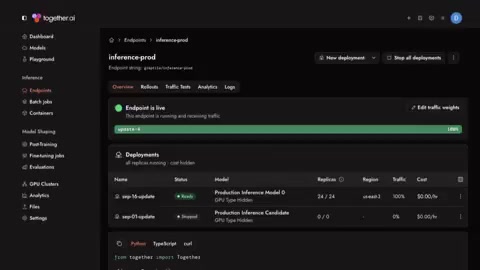
Together AI provides inference support. Greptile publicly mentioned that Together AI provides inference compute support for its open-source model components, helping review results return faster while reducing unit costs. This is particularly critical for code review scenarios that require frequent model calls.
Frontier model and open-source model pairing strategy is essentially a capability-cost tradeoff. Frontier models (such as GPT-4, Claude 3.5, and other closed-source commercial models) typically perform better on complex reasoning, long-context understanding, and edge-case judgment, but have high per-call costs and high latency; open-source models (such as the Llama, Qwen, and DeepSeekAd series) excel in cost-effectiveness for pattern-based checking, syntax-level analysis, and batch tasks, and can be deployed privately. In code review, high-frequency, rule-clear checks (such as naming conventions, null pointer risks, and common security patterns) are suitable for batch processing by open-source models, while tasks involving architectural soundness and cross-file logic reasoning are handled by frontier models. Together AI is a platform providing inference services for open-source models, reducing per-token costs through optimized inference engines and GPU scheduling, enabling the open-source model components to return results with lower latency and cost.
Why Review Independence Matters
Greptile emphasizes that "the first round of review must be independent and fast." Behind this judgment is a practical consideration: when AI-generated code enters the review process, if the review tool shares the same training data or model family as the generation tool, the independence of the review is weakened.
Independent review means the reviewer does not depend on the context or model preferences at code generation time, but rather judges based on the correctness, security, and maintainability of the code itself. Multi-model combination achieves this independence to some extent—different model vendors have different training data and fine-tuning strategies, and cross-validation can reduce systematic blind spots.
Review independence in the context of AI-assisted development refers to the absence of shared training data bias, fine-tuning objectives, or model family associations between the review model and the generation model. If the model generating code and the model reviewing code come from the same source, they may have the same "blind spots" for the same types of errors—for example, both being insensitive to a certain API misuse, or both tending to ignore certain boundary conditions. Multi-model cross-validation reduces this systematic bias by introducing models from different vendors and different training corpora. This aligns with the diversity redundancy principle in software engineering: the probability of multiple independently implemented versions failing simultaneously is far lower than that of a single version. However, independence does not equal correctness—multiple models can agree and still be wrong together, so human review is still needed as the final safeguard.
Impact on Development Workflows
From a developer's perspective, Greptile v5 is positioned as the automated first gate in the PR process. It doesn't replace human review but front-loads mechanical, pattern-based checks so that human reviewers can focus on architectural decisions and business logic.
This model aligns with the current trend in AI programming tools: as generation speed increases, the verification step must accelerate in tandem. Greptile chose multi-agent parallelism to meet this need while controlling costs through open-source models, making high-frequency review economically viable.
According to Greptile on Twitter, its goal is to "verify every piece of software on Earth." This statement has a visionary flavor, but points to a very practical problem: as AI-generated code accounts for an increasing share, the infrastructure for code verification needs to be redesigned.
Several Issues Worth Watching
The actual effectiveness of multi-model review depends on the sub-agent orchestration strategy—how to allocate tasks, how to aggregate results, and how to handle conflicting judgments between models. These details matter more than "how many models were used." Greptile has not yet disclosed its specific orchestration logic or benchmark data.
On cost, the hybrid approach of open-source + frontier models is theoretically superior to pure frontier model calls, but the actual savings depend on the task allocation ratio. How much latency and cost Together AI's inference support can reduce also requires more empirical data to verify.
Review independence is a direction worth tracking. As AI programming tools become widespread, model diversity in the review process may become a new dimension for measuring the level of code quality assurance.
Benchmark in the code review field typically refers to using code datasets annotated with real defects to evaluate a review tool's recall, precision, and false positive rate. Common public benchmarks include the CodeReviewer dataset and Defects4J. For multi-agent review systems, benchmarks also need to examine the impact of orchestration strategy: how overall detection rates change under different task allocation ratios, the accuracy of conflict judgment between models, and end-to-end latency and cost. Greptile not disclosing its orchestration logic and benchmark data means it's difficult for outsiders to reproduce its effectiveness claims or to make fair comparisons with single-model solutions. When selecting tools in practice, teams should pay attention to whether vendors provide verifiable evaluation results, or conduct small-scale A/B tests on their own codebases.
One-line Summary
Greptile v5 uses multiple sub-agents to review PRs in parallel, combining open-source and frontier models to improve code review independence and speed.
Paragraph Summary
Greptile v5 addresses the review bottleneck caused by the growth of AI-generated code with a multi-sub-agent parallel review approach. Each PR triggers multiple sub-agents that check code changes from different angles in parallel, pairing open-source models with frontier models: frontier models handle complex reasoning, open-source models take on high-frequency pattern-based checks, and Together AI provides inference support for the open-source model components to reduce cost and latency. The article emphasizes that the first round of review must be independent and fast, and that multi-model cross-validation can reduce the systematic blind spots of a single model. The solution is positioned as the automated first gate in the PR process, not replacing human review but front-loading mechanical checks. The article also notes that orchestration strategy, benchmark data, and actual cost savings remain key questions to be verified.
Related articles
AWS Launches Official Agent Toolkit: Letting AI Agents Directly Build and Manage AWS Applications
AWS launches the official Agent Toolkit, letting AI coding agents directly build and manage AWS apps across CDK, CloudFormation, Serverless, Bedrock Agents, and DevSecOps.
Does Agentic AI Need Its Own "Second Foundation"? A Three-Loop Architecture Explored
Inspired by Asimov's Foundation series, a multi-agent AI architecture hypothesis proposes execute, verify, and adapt control loops to reduce correlated errors and improve trust in AI results.
Rewriting a Commercial Engine in Jai: The Trade-off Between Performance and Productivity
Exploring the engineering practice of rewriting a commercial game engine in Jai: compile-time metaprogramming and data-oriented design advantages, plus ecosystem maturity and learning curve challenges.