Grokbot Hands-On: Building an AI Bookkeeping Agent Team in 5 Minutes
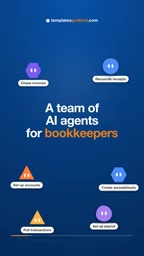
Grokbot promises a 5-minute AI bookkeeping team via Multi-Agent + MCP, but accuracy and compliance remain unverified.
Grokbot is an AI Agent platform targeting bookkeeping workflows, promising deployment in five minutes with no technical background required. Its architecture pairs six specialist agents with one coordinator using a Multi-Agent model, where each agent handles tasks like reconciliation or expense categorization and the coordinator manages scheduling. The technical foundation is the open MCP (Model Context Protocol), enabling standardized connections to bank data, accounting software, and profession-specific template libraries. The product's core expansion logic is profession-based templatization — users select a job role and the system auto-deploys a matching agent configuration. However, all performance claims are vendor-stated, and the platform's handling of edge cases, data security, and compliance has not been independently verified. Piloting at small scale with human review is strongly recommended.
When Repetitive Work Consumes the Bookkeeper's Day
For any bookkeeper, entering transactions, reconciling bank statements, and tracking expenses can consume an entire workweek. These tasks are highly repetitive, unforgiving of errors, and yet unavoidable. The solution proposed here is to hand off these workflows to a set of specialized AI Agents — and the tool to do it is Grokbot.
Grokbot's core selling point is speed. According to its marketing, a functional AI Agent can be ready in five minutes. For finance professionals without a technical background, that's a deliberately low barrier: most bookkeepers have no interest in prompt engineering or API calls — they just want an assistant that works out of the box.
How Grokbot's Setup Process Works
As described, the deployment process breaks down into a few clear steps. First, install Grokbot, then add a "template creator bot" and connect it to the Grokbot MCP server at templates.grokbot.com.
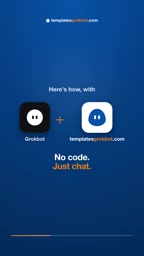
The key step is issuing a plain-language instruction — type something like "I'm a bookkeeper, find and install all relevant bots" — and the system will automatically search for and deploy agents tailored to that profession. This job-role-as-entry-point design removes the burden of understanding individual feature modules. Users don't need to know which bots they need; the system figures that out for them.

The Coordinator Agent and Multi-Agent Collaboration
The "team" concept here is worth paying attention to. After installing the specialized agents, you also add a coordinator bot so the entire "team" can work in sync. The final configuration is six specialist agents plus one coordinator — a seven-member virtual team.

This architecture reflects a prevailing trend in the AI Agent space: moving from a single general-purpose assistant toward a Multi-Agent division of labor. Each specialist agent handles one category of task — one for reconciliation, one for expense categorization, for example — while the coordinator handles task decomposition and scheduling. Compared to loading everything onto a single large model, this division theoretically improves focus and reliability at each step, and more closely resembles how a real team operates.
The central engineering challenge of Multi-Agent architecture lies in task decomposition and result integration. The Orchestrator agent doesn't directly execute business operations; instead, it breaks high-level user instructions into subtasks, distributes them to specialist agents, and then aggregates their outputs, detects conflicts, and produces the final result. This pattern is known in engineering practice as the "Orchestrator-Worker" model — conceptually similar to the primary/replica architecture in software engineering. The inherent risk is that the coordinator itself is an LLM: if it misinterprets a task, that error propagates down the entire chain and is far harder to diagnose than a failure in a single-model setup. In a domain like accounting, where accuracy requirements are extremely high, the coordinator's instruction logs (traces) should be auditable so that human reviewers can quickly identify the point of failure when intervention is needed.
The Role of the MCP Protocol
The MCP (Model Context Protocol) server connection that appears repeatedly throughout the workflow is the technical foundation of this approach. MCP is an open protocol that allows AI models to connect to external tools and data sources in a standardized way. In a bookkeeping context, this means agents can connect to bank data, accounting software, or template libraries without requiring custom development for each data source. Grokbot also hosts its template distribution on an MCP server, with the intent of making "profession-specific templates" into reusable, shareable standardized assets.
MCP was proposed and open-sourced by Anthropic in late 2024, with the goal of addressing the "interface fragmentation" problem between AI models and external tools. Before MCP, every AI application had to write its own adapter for each external system — databases, APIs, file systems — which was expensive and difficult to maintain. MCP's approach is analogous to the USB standard: as long as a tool provider implements the MCP server interface, any MCP-compatible AI client can call it directly without redundant development. In a bookkeeping scenario, this means the same MCP server interface could theoretically serve multiple AI Agent frameworks simultaneously, without being locked into any single vendor's ecosystem. Grokbot's choice to host template distribution on an MCP server similarly reduces the technical friction of template reuse. That said, MCP is still in early-adoption stages; its ecosystem completeness and security audit standards are not yet mature, and enterprises should carefully evaluate data permission boundaries before integrating it.
Templatization: Ready-to-Use Solutions for Every Profession
The product emphasizes that "there's a template for every job," pointing to templates.grokbot.com/for-my-job as the entry point. This is the most scalable part of the product's logic — bookkeeping is just one example among many professions. Templatization means the vendor has pre-packaged workflows for common job roles; users simply pick their profession and receive a fully configured agent team. No assembly required.
This approach lowers the barrier to using AI Agents, transforming the expert task of "how to assemble an agent stack" into a consumer-grade action: "choose your profession." For small businesses and freelancers, this kind of plug-and-play solution has real appeal.
A Measured Take: The Gap Between Marketing and Reality
It's worth noting that the source material is essentially promotional content. Claims like "five-minute setup" and "six expert agents" come entirely from the vendor and have not been independently verified. Bookkeeping is a field with extremely high accuracy requirements — error rates in reconciliation and categorization, handling of exceptional receipts, and data security and compliance are all topics the source material does not address.
For anyone considering adopting tools like this, the prudent approach is to start with a small-scale, low-stakes pilot, cross-check AI outputs against manual results, and only then gradually expand the scope of automation. AI Agents can absolutely serve as efficiency multipliers for bookkeepers — but for the foreseeable future, human review remains an indispensable last line of defense.
Related articles
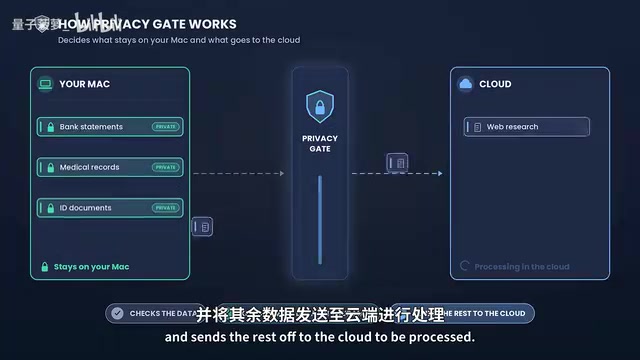
Perplexity Hybrid Compute Tested: Privacy Data Never Leaves the Mac
Perplexity Hybrid Compute tested: how PrivacyGate intercepts sensitive data, how local and cloud models divide work, model differences on 16GB vs 32GB Macs, and privacy protection in real scenarios like bank statements and medical records.
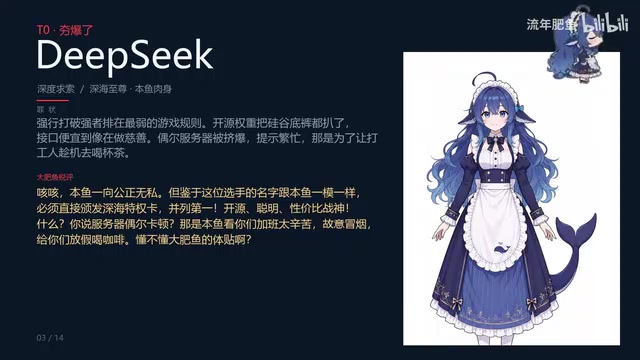
Big Fat Fish Roasts Mainstream LLMs at Home and Abroad: Doubao Takes the Crown, DeepSeek Tied for First
Bilibili creator Big Fat Fish roasts mainstream LLMs: Doubao tops for emotional value, DeepSeek ties first for open-source value, with ERNIE, Hailuo, Yuanbao, Kimi, Qwen, Kling, Claude, Gemini, and Grok each branded with a distinct persona.

How to Truly Test AI Agents Before Production? A Practical Testing and Monitoring Framework
BotGage founder Pramin Pradeep shares a three-step framework for testing AI Agents before production: Agent registration visibility, red teaming, and production observability — plus a real case cutting QA costs from $180K to $80K and an analysis of IT roles shifting to Agent supervisors.