GTA 6 Multiplayer Racing Gameplay: Fun Times with Friends
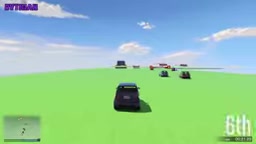
A friends' GTA 6 racing session showing six new maps' puzzles, custom car disputes, and asymmetric chaos.
This article uses a YouTube multiplayer gameplay video to present six GTA 6 racing maps in action. Friends banter over voice chat through rule disputes over custom vehicles, sticky bomb boost shenanigans, color-and-number puzzle tracks, and planes-vs-scooters asymmetric confrontations—all filled with the chaos and laughter of a friend lobby. The video also reveals complaints about pricing, network sync, and control improvements, ending with a joking "six out of six" verdict. Though not a formal review, it offers players following the multiplayer mode a reference beyond official trailers and reflects their sensitivity to fairness, puzzle integration, and asymmetric balance.
When "GTA 6" Turns into a Friends' Party
A multiplayer gameplay video on YouTube showcases six new racing maps in GTA 6, with a group of friends bantering over voice chat—turning everything from custom vehicles to puzzle tracks into one big chaotic good time. The video title bluntly reads "GTA: 6 races with friends!" and the content indeed revolves around six new and old tracks.
According to the conversation in the video, getting everyone into the multiplayer session "actually took ages," and they joked about the game price being "100 pounds" and quipped "a pound per gigabyte." This kind of price grumbling is common among players, but it also reflects expectations for the content volume of a top-tier blockbuster.
Custom Vehicles and "No-Holds-Barred" Tactics
The first race already featured classic friction among friends. Someone used a custom Weevil (Weevil Knievel) and was called out by others: "we said no custom." In racing games, vehicle performance differences often directly determine victory, and in friend lobbies, this kind of "rule-breaking" behavior becomes a punchline instead.
The race also featured tactical use of "ass wind" (slipstream) and the cheeky move of using sticky bombs on a puzzle map to give teammates a "boost." In the video, someone tossed a sticky bomb near a teammate, claiming "well-timed sticky," only to be mocked as "sadist and masochist at the same time." This kind of informal play is common in multiplayer communities, and it shows that players' understanding of map mechanics often exceeds designers' expectations.
Weevil (Weevil Knievel) is a highly customizable compact vehicle in GTA Online, its name parodying stunt driver Evel Knievel. In racing modes, players can improve performance by modding the engine, tires, suspension, and other parts, but some community races agree to ban custom vehicles to keep things fair. The conflict in the video—"we said no custom"—stems precisely from this implicit "stock vs. modded" rule. Breaking the agreement among friends becomes a joke, but it also reflects players' instinctive sensitivity to competitive fairness.
Puzzle Maps: A Mixed Test of Colors and Math
One track in the video is called a "puzzle map," requiring players to choose the correct route based on color and number hints. The conversation mentions "red plus white plus blue minus four," then someone calculates "12 minus four is eight," followed by "number nine is blue," "number two is red," "number one is white." This design of embedding simple arithmetic into racing makes players who aren't good at puzzles call it "boring" while having to admit defeat.
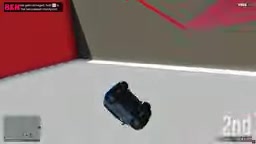
More amusingly, someone discovered you can "look up" to judge in advance which path is blocked by a tanker truck and avoid the trap. This exploitation of a viewpoint loophole was criticized by others as "ruins it," but it also demonstrates players' creativity when exploring maps. In the end, Ozzy, who joined midway, was the first to solve the puzzle, jokingly dubbed "Ozzy solved the puzzle of the GTA 6."
Asymmetric confrontation in multiplayer games refers to the two factions having completely different abilities, objectives, or resources—classic examples being the Killer and Survivors in Dead by Daylight. The "planes versus scooters" map in this article is exactly this kind of design: the plane side must ram the runners, while runners have three lives and rely on mobility to dodge. This mode creates natural drama but demands extremely high balance tuning—network sync errors and unclear control prompts (like "Y is get out") can both ruin the experience. The "network desync" that players complain about in the video is precisely the Achilles' heel common to asymmetric gameplay.
Asymmetric Confrontation: Planes vs. Scooters
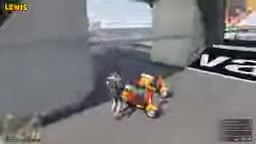
Another map is "Dusters versus Faggios"—planes versus scooters. Runners have three lives, while the plane side must ram the runners. In the video, someone complains "Why is it telling me I need to return to the play area?" and someone else discovers that "Y is get out" causes misinputs. This asymmetric design isn't new in multiplayer games, but the roughness in execution details (like network sync issues) is called out directly by players: "You'd think they would've fixed the network desync GTA 6 error bug."
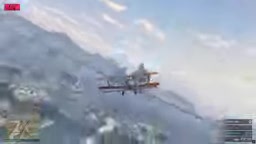
One player mentions "the best news I ever heard about GTA 6 was that you no longer need to tap the goddamn button to run," indicating the new game has improved control convenience. And the joke about "Nintendo Thumb" turns hand discomfort from long gaming sessions into a punchline.
"Nintendo Thumb" is a player community term for thumb soreness caused by prolonged use of Nintendo controllers (especially the hard D-pads of early DS/3DS models), later generalized to any hand fatigue from intense gaming. The mention of this meme in the video is both self-deprecating humor about long multiplayer racing sessions and a reflection of players' concern for control comfort. Echoing this is the improvement of "no longer needing to mash the button to run"—reducing repetitive strain is an important trend in modern game control design.
Player Reviews and Community Expectations
When asked "what is your guys' review of GTA 6?" the answer is "Six out of six"—a pun on GTA 6. This joking assessment certainly can't be taken as a formal review, but it reflects players' enthusiasm for the multiplayer mode. At the end of the video, someone mentions "It's been two and a half years since we last performed it," hinting that it's been a long time since the multiplayer racing experience of the previous entry.
The entire video has no serious review framework—it's more like a weekend game night among old friends. But several trends can be observed: players' demand for controlling custom content, attempts to blend puzzle elements with racing, and the balance challenges of asymmetric confrontation. For players following GTA 6's multiplayer mode, these gameplay clips offer another reference beyond the official trailer.
Conclusion
From "six new races" to "six stars," these content creators use a chaotic yet joyful multiplayer session to showcase the potential and rough edges of GTA 6's racing gameplay. No scripts, no polished editing—just real voice chat and crash moments. Perhaps that's the most authentic form of multiplayer gaming.
Related articles

From Command Line to MCP: Two Paths for Connecting Existing Scripts to AI Assistants
How can an existing report-inspection script connect to an AI assistant? This article compares command-line and MCP adapter designs, covering argv parameter passing, tool discovery, ID mapping, result contracts, and timeout cleanup boundaries, helping developers make the same tool return consistent meanings through two entry points.

GPT-6.2 Dual Models, Microsoft MAI Code 2: Six Major AI Stories Explained
Six AI stories explained: OpenAI's GPT-6.2 Astra and Sol dual models, Microsoft MAI Code 2, NVIDIA Singapore's $104B revenue methodology, Kling Clean Image 4.0, JPMorgan agent payments PoC, and the Xiaomi MiMo funding rumor.

Is Distance Real? Causal Set Theory Offers a Disruptive Answer
Causal Set Theory proposes a disruptive idea: distance may not be a fundamental property of the universe. This article explains how distance can emerge on larger scales from discrete events and causal order, and explores the difference between "emergent reality" and "fundamentality."