H3 HyperFlow: An Open-Weight Video Generation Model Focused on Camera Control and Consistency

H3 HyperFlow is an open-weight video model claiming better camera control, consistency, and detail — now on Hugging Face.
H3 HyperFlow is a newly released AI video generation model with publicly available weights on Hugging Face. It claims improvements in four areas: camera control precision, temporal consistency, material and detail rendering, and balanced overall capabilities — covering the most common pain points in open-source video generation. Open weights are its most compelling feature, enabling local deployment and independent verification. However, public information currently comes almost entirely from the developers, with no concrete benchmarks or large-scale community testing yet, making it too early to draw firm conclusions.
H3 HyperFlow Sparks Community Interest
A video generation model called H3 HyperFlow has recently sparked discussion on Reddit. The developers behind it made a series of bold performance claims on social media, and have since published the model weights on Hugging Face — catching the attention of developers and creators following the AI video space.
Judging by the community's tone, phrases like "if it delivers, this is a game-changer" are nothing new in AI video generation. Over the past two years, the space has seen a wave of new models, and nearly every launch comes with similar fanfare. As a result, the community remains cautiously skeptical — real value has to be proven through hands-on testing, not marketing copy.
Four Key Improvements Claimed by HyperFlow
According to the developers, HyperFlow targets improvements in the following areas:
Better Camera Control
Camera control has long been one of the most frustrating pain points in AI video generation. Users typically want precise control over how the camera moves — push in, pull out, pan, track — rather than leaving it up to the model to improvise. If HyperFlow genuinely improves in this area, it would directly enhance a creator's ability to direct the final output.
On the technical side, camera control in AI video models generally takes one of two approaches: implicit guidance through text prompts (e.g., "slow zoom in"), or explicit control via camera parameters (e.g., rotation angle, translation speed, focal length changes). The former depends on the model's natural language understanding and tends to produce inconsistent results; the latter requires the model to be aligned during training with datasets annotated with camera trajectories, raising the technical bar considerably. Most mainstream open-source video models — such as CogVideoX and Wan — suffer from imprecise camera response, while some specialized tools (like CameraCtrl and MotionCtrl) attempt to address this through plugins or LoRA adapters as a patch. If HyperFlow can deliver more reliable camera control at the base model level, it would fill a clear gap in the open-source ecosystem.
Better Consistency
Consistency covers frame-to-frame coherence as well as the stability of characters and objects along the timeline. Video generation models frequently produce artifacts like morphing objects, flickering details, or drifting characters. Consistency is a key metric for determining whether a model is viable for real production use.
Better Material and Detail
Material rendering and visual detail determine the overall quality and texture of generated content. By listing this as a core selling point, the developers are positioning HyperFlow as a step up in visual fidelity compared to existing solutions.
More Balanced Across Capabilities
Many models excel in one area while falling short in others. HyperFlow's emphasis on "balance" suggests it aims to be a more well-rounded general-purpose option rather than a specialized tool that only shines in narrow scenarios.
Open Weights Are the Biggest Draw
One of the most noteworthy aspects of HyperFlow is that its model weights are publicly available on Hugging Face. Compared to products that only offer online demos or closed-source APIs, open weights allow researchers and developers to deploy locally, fine-tune, and independently verify performance.
This decision largely determines how well the community will receive the model. Open weights mean that claimed performance can be reproduced and tested, and that the model can be adapted and integrated into existing workflows. For teams looking to build their own video generation pipelines, downloadable weights are far more persuasive than any marketing copy.
It's worth noting the subtle difference between "open weights" and "open source" in practice. Open weights simply means the trained model parameter files are publicly available for download and local inference. Full open source goes further, including training code, dataset recipes, and a complete reproduction pipeline. Many "open weights" models on Hugging Face don't come with training code, meaning users can run and fine-tune them but cannot fully reproduce the training process. That said, downloadable weights alone already allow the community to independently test, benchmark against other models, and integrate with existing inference frameworks like ComfyUI and diffusers — providing far more transparency than a fully closed product. For most users and developers, whether local inference works and whether the model integrates with mainstream workflows often matters more than whether training code is available.
How to Evaluate New Models Like This Rationally
With a new release like HyperFlow, the sensible approach is to separate claims from empirical results. The word "better" in marketing materials typically lacks a concrete baseline — which model is it being compared to, under what dataset or scenario, and by what evaluation criteria? These critical details remain unclear at this point.
For users interested in evaluating this model, here are some practical angles to test:
- Camera control: Use the same prompt with different camera motion instructions and observe how accurately the model responds.
- Consistency: Generate longer clips and check how stable characters and scenes remain across the timeline.
- Material and detail: Compare rendering quality on complex surfaces like metal, fabric, and water.
- Overall balance: Test across a variety of subjects and judge whether the "balanced" claim holds up.
Since publicly available information currently comes almost entirely from the developers themselves, the community has yet to produce large-scale independent test results — making it too early to draw conclusions about real-world performance. For interested developers, the best way to judge whether it lives up to the hype is to download the weights and run it yourself.
Conclusion
H3 HyperFlow enters the video generation space with open weights, targeting four key areas: camera control, consistency, material detail, and balanced overall capability. These happen to be some of the most widely discussed challenges in current AI video generation. Whether it truly delivers on those claims still needs to be verified through community testing. For those following open-source video generation, it's at least a new option worth trying out firsthand.
Related articles

Identifying Characters from 'Time Difference 5 Hours 3' Posters: A Fun Observation Experiment
A content creator fails to recognize even himself in Time Difference 5 Hours 3 posters, revealing how humans navigate image recognition when art styles are unified.
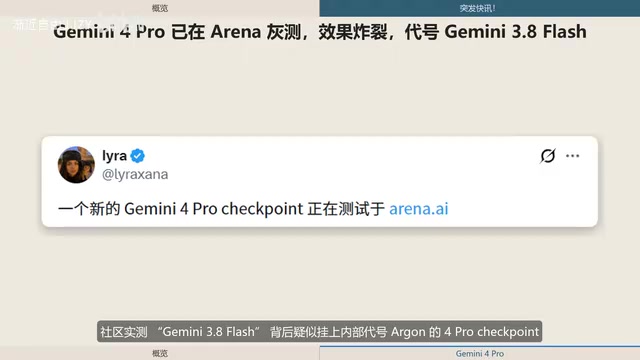
Gemini 4 Pro Spotted in Arena Ghost Testing: Major Upgrades in 3D and Physics Capabilities
Google's Gemini 4 Pro, codenamed Argon, may be ghost-testing in Arena as Gemini 3.8 Flash. Community tests show major 3D, physics, and interactive content gains, 256K output, and rumored 2M context.
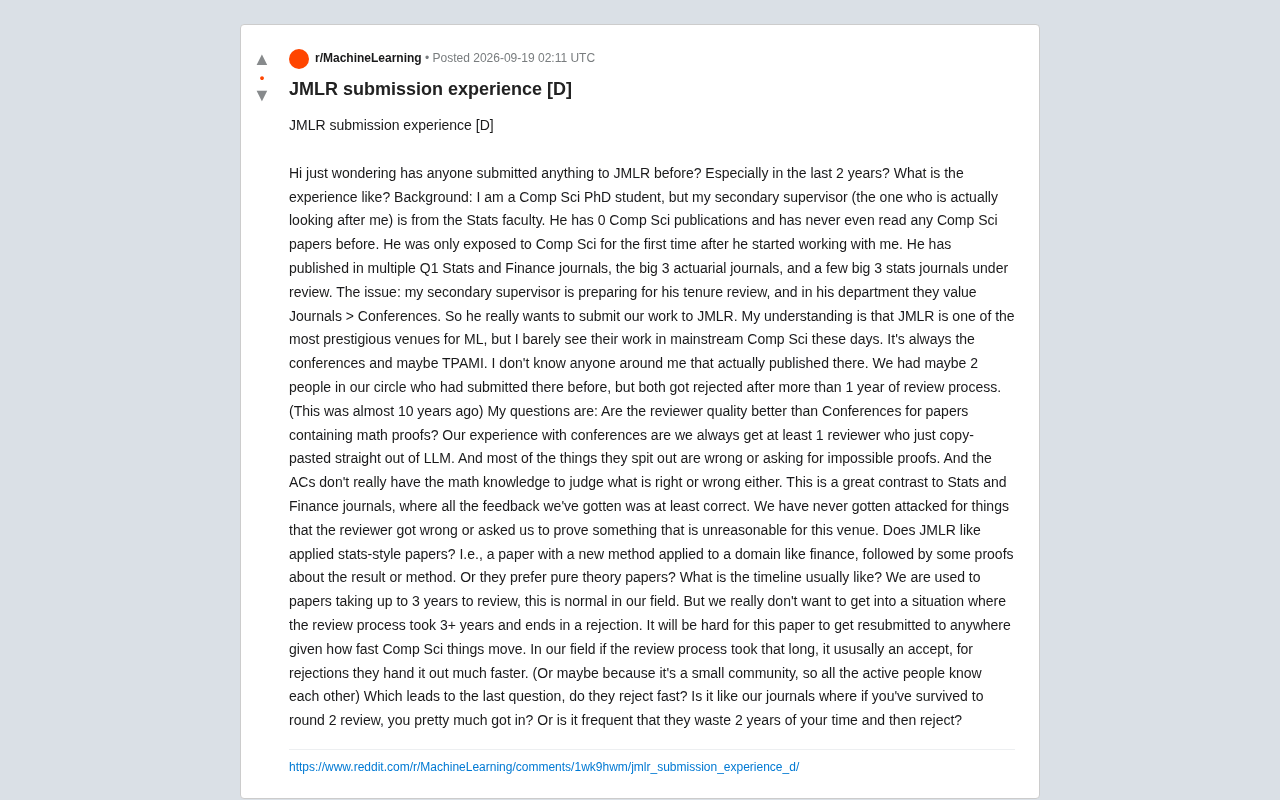
What's It Like to Submit to JMLR? The Real Dilemmas of an Interdisciplinary PhD
A CS PhD student on Reddit asks about submitting to JMLR amid a clash between two academic cultures — exploring review quality, paper style, and timeline risks.