Hailuo H3 Camera Motion Control Update: An Open-Source Solution Explained

Open-source tool brings precise 3D camera motion control to the Hailuo H3 AI video model.
The Reddit community shared an open-source GitHub project called `3d-Camera-control-H3-Minimax`, designed to provide fine-grained 3D camera motion control for Minimax's (Hailuo AI) H3 video generation model. Unlike text-prompt-based camera control, this tool lets users define translation, rotation, and zoom parameters in 3D space for cinematic moves like push-ins, orbits, and tracking shots. Released as open-source, it allows community inspection and customization. Specific features and output quality still need hands-on testing via the GitHub repository.
Overview
A recent post in the Reddit community introduced an update on camera motion control for the Hailuo (海螺) H3 video generation model. The author shared a GitHub open-source project called 3d-Camera-control-H3-Minimax, which aims to provide more precise three-dimensional camera trajectory control for the H3/Minimax series of video models.
For AI video generation, camera motion control is one of the key factors that determines the professional quality of the output. Traditional text-to-video models often struggle to precisely control camera movements like push-ins, pull-outs, pans, and tracking shots. Tools specifically designed for camera path control are exactly the kind of capability boost that community creators have been looking for.
Project Purpose and Value
The core goal of this open-source project is to provide a 3D camera control solution for Minimax's (the company behind Hailuo AI) H3 video model. Based on the project name 3d-Camera-control, it focuses on enabling users to define camera movement paths in three-dimensional space — rather than relying on text prompts and hoping the model interprets them correctly.
In practice, tools like this typically allow users to specify camera translation, rotation, and zoom parameters, enabling cinematic camera language such as orbit shots, push-in close-ups, and smooth tracking movements. For creators looking to use AI video for short films, advertisements, or concept demos, controllable camera motion translates directly into stronger narrative expression.
The Significance of Open-Source Tooling
Notably, this control solution has been released as an open-source project on GitHub. Open-source means the community can freely inspect the implementation details, submit improvements, and fork the project for their own use cases. Compared to closed, official features, open-source tools tend to offer greater flexibility and faster iteration cycles, and are easier to integrate into existing workflows.
In the rapidly evolving field of AI video, community-driven tooling is an important signal of a healthy ecosystem. When official model capabilities are limited or updates lag behind demand, contributions from third-party developers help fill the gaps and elevate the overall user experience.
Usage Recommendations and Caveats
Since the original post only provided a project link without detailed feature descriptions or demo results, interested users are encouraged to visit the GitHub repository directly to review installation instructions, environment dependencies, and documentation.
When adopting community projects like this, a few things are worth keeping in mind: first, check the project's maintenance activity and update frequency; second, evaluate compatibility with the version of H3/Minimax you're currently using; third, pay attention to community feedback to understand real-world output quality and stability. Open-source projects vary widely in quality, and hands-on testing is usually the most reliable way to judge.
Summary
This update reflects the AI video community's ongoing demand for fine-grained control capabilities. Camera motion is a core element of visual storytelling, and its controllability directly determines whether AI-generated content can reach a professional standard. As more open-source tools emerge around mainstream video models, creators will find themselves with increasingly director-level control over the "lens." That said, given the limited depth of the original information, the actual performance and output quality still need to be verified through real-world testing.
Related articles

Hailuo H3 Camera Control Update: Open-Source Tool Now Available in English
Hailuo H3 open-source camera control tool gets an update with bug fixes and a new English version, helping creators precisely control 3D camera movements in AI video generation.
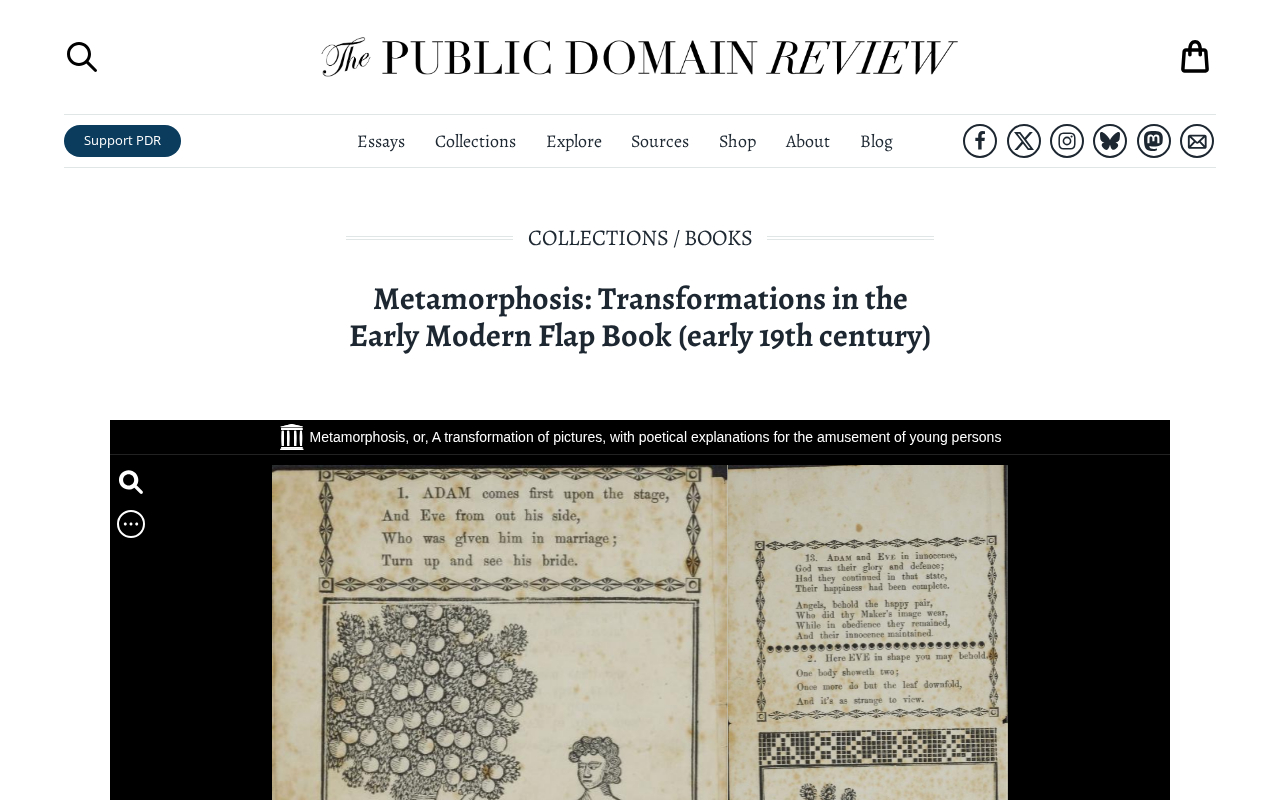
Metamorphosis in Print: A Brief History of the Early Modern Flap Book
Flap Books are an early form of interactive design from the print era, using movable paper flaps to transform images on the same page. A brief history of this early modern printed form.
Anthropic CEO Warns: AI Agent Swarms Could 'Take Over the Internet' Within Six Months
Anthropic CEO Dario Amodei predicts AI agent swarms could 'take over the Internet' within 6–12 months. We break down what this really means and why frontier lab forecasts deserve careful scrutiny.