Hands-On Introduction to Workbuddy + DeepSeek Agent Workflows
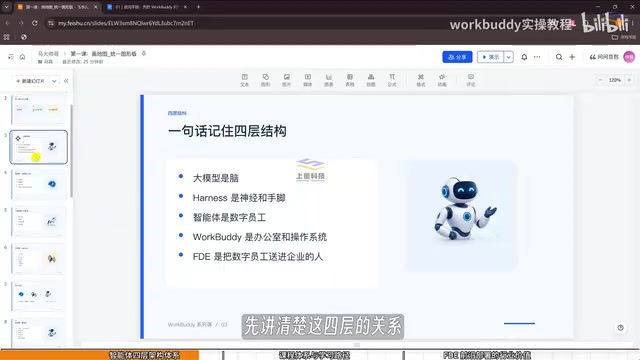
A four-layer map explaining the path from large models to agent platforms and the learning route.
The article summarizes Bilibili creator "Hailang"'s course, which proposes a four-layer structure for AI implementation: large models handle understanding and generation; the Harness turns models into capable agents through context management, tool calling, task loops, and permission control; agents execute tasks reliably; and platforms like Workbuddy integrate many agents to solve complex problems. Workbuddy is positioned as a domestic alternative to Codex with a low barrier to entry, capable of writing proposals, making spreadsheets, and operating browsers. The article also introduces FDEs (Forward Deployed Engineers), who bridge the last mile between agents and enterprise business and need both technical and communication skills, and provides a three-step zero-based learning path. The author notes that the value lies in the conceptual framework rather than hands-on practice, and claims such as the Codex alternative need reader verification.
Agent concepts are everywhere, but few people clearly explain the path to actually putting them into practice. In this course, Bilibili creator "Hailang" uses a four-layer map to thoroughly break down the relationship between large models, Harness, agents, and the Workbuddy platform, and provides a complete zero-to-one route to getting Workbuddy up and running.
Four-Layer Structure: From Large Models to Agent Platforms
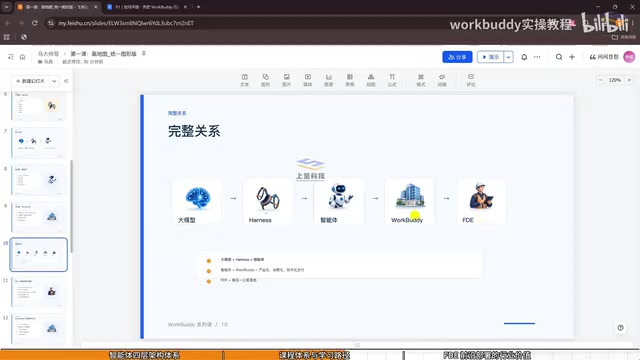
The creator divides the entire AI implementation system into four layers: Large Model → Harness → Agent → Agent Platform (WorkbuddyAd). The large model is the core, responsible for language understanding, logical reasoning, and content generation. DeepSeekAd and ChatGPT both belong to this layer.
Harness (literally "horse tack" in English) is the second layer. The creator's metaphor is precise: a large model is a wild horse—you can't ride it before it's tamed, so you need a saddle, reins, and a whip to brake, accelerate, and ride long distances. In engineering terms, context management and memory, tool calling (Skill), task loops and self-verification, and permission control (such as Doubao's expert mode vs. regular chat mode) all fall under Harness. Only when this layer is well built does AI truly "deliver value."
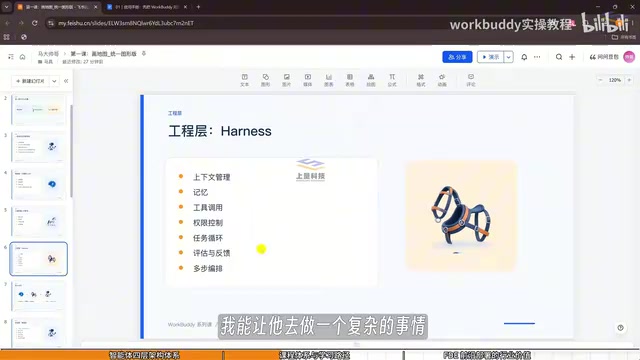
A large model equipped with a Harness constitutes an agent that can execute tasks reliably. Platforms like Workbuddy are a higher level of integration—not a single agent solving a single problem, but integrating a large number of agents to collaborate on complex problems. The creator's analogy of "a Mongol army vs. a single soldier" vividly illustrates this level difference.
Harness and the Agent Loop: In engineering practice, the core mechanism of the Harness is the "Agent Loop"—model output → parse intent → call tools → observe results → decide again. In each loop, the Harness needs to stitch tool return values back into the context, control context length (truncation, summarization, or retrieval), and intercept and confirm when the model proposes dangerous operations (such as deleting files or sending emails). Tools like Claude Code and OpenAI Codex CLI are essentially runtimes built around this loop. Understanding the Agent Loop helps explain why "the same model connected to different Harnesses can differ enormously in task capability."
Tool Calling (Function Calling / Skill): A large model itself can only output text and cannot directly read files or run commands. Tool calling is when the model outputs a structured request in an agreed format (such as JSON), which an external program executes and returns the result. Anthropic's "Skill" concept further packages tools into reusable capability bundles with documentation, which the model loads on demand. This is also the technical foundation that enables platforms like Workbuddy to "take over the browser and operate software."
What Is Workbuddy: A Domestic Alternative to Codex
According to the video's positioning, Workbuddy can be understood as a domestic alternative to Codex—an AI digital assistant that works directly on your computer for you. It has a low barrier to entry, requires no network environment or complex configuration, and is friendly to beginners. Writing proposals, making spreadsheets, analyzing data, generating posters, developing software, and even taking over the browser to operate other software are all within its capabilities.
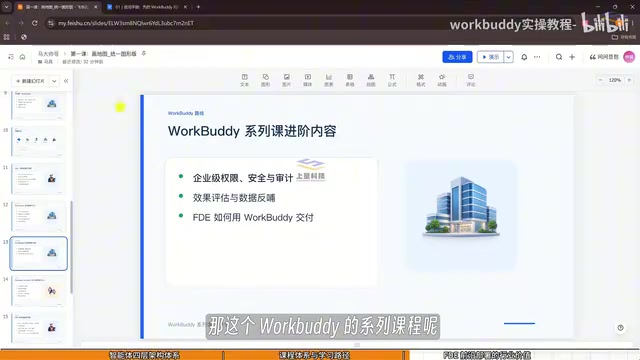
The course comes with a "Blue Book" covering the full chain from installation and configuration, hands-on cases, and Skill customization to industry implementation, plus 10 commonly used office Skills and practical materials. The creator claims this course series has ten episodes in total, with subsequent episodes covering installation, connectors, expert skills, automation, Feishu communication, and remote control.
What Codex Refers To: Codex here is not OpenAI's early code-generation model, but rather OpenAI's Codex CLI / Codex agent product—a coding agent that runs in the local terminal, can read and write code repositories, execute commands, and autonomously complete development tasks. Its characteristic is that it "works in your own computer's environment" rather than just chatting. Only by understanding this can you understand the meaning of "domestic alternative": using domestic models + a similar runtime to reproduce a comparable experience without network barriers.
How Browser Takeover Works: Platforms typically use browser automation protocols (such as Chrome DevTools Protocol) or browser extensions to let agents click, type, and read pages. While this capability brings convenience, it also implies high privileges, and enterprises deploying it need to pay attention to permission isolation and operation auditing.
FDE: The "Last Mile" of Agent Implementation
Between a single agent and an enterprise-grade platform, there are many connection points that need to be bridged, and this is exactly the responsibility of the FDE (Forward Deployed Engineer). The creator points out that FDEs need two capabilities: first, familiarity with technical concepts, underlying principles, and toolkits; second, extremely strong communication skills—the ability to quickly structure a company's business, produce solutions that fit its needs, and call on tools to bridge the gaps between large models, Harness, agents, and platforms.
The video mentions that FDEs are currently in high demand at both big tech companies and mid-sized companies, with salaries reaching hundreds of thousands to over a million RMB. This claim is the creator's personal observation and lacks specific data support; readers should treat it as a reference rather than a definitive conclusion.
FDE's Professional Background: The role of FDE (Forward Deployed Engineer) was first practiced at scale by Palantir—engineers stationed directly at customer sites to transform a general-purpose platform into a system tailored to specific business needs. As large model applications have taken hold, this model has been widely adopted by AI companies: model capabilities are general-purpose, but every company's data, processes, and permission systems are different, so someone is needed who understands both technology and business to "translate" requirements. This also explains why the video emphasizes that FDEs need both technical understanding and communication skills.
Learning Path and Applicable Scenarios
The creator outlines three stages for zero-based learners: first, use Workbuddy to solve actual work scenarios (teachers making PPTs, preparing lessons, and reviewing homework; lawyers screening risk points and finding legal support), then customize your own Harness and dedicated agents, and finally develop toward a professional FDE direction. He also recommends "Cybernetics" by former Microsoft scholar Sun as an introductory read for understanding Harness theory, saying it provides a high-level overview.
Objectively speaking, the value of this episode lies in providing a clear conceptual framework and a layered learning path rather than specific operational demonstrations. For beginners who have never encountered agent concepts, this "map" helps build an overall understanding, but actual hands-on implementation still requires following subsequent courses. In addition, the video's positioning of Workbuddy as a "Codex alternative" requires readers to verify its functional boundaries themselves, since the actual capabilities and ecosystem differences between platforms may be considerable.
One-line Summary
A four-layer map that clearly explains the path from large models to agent platforms and the learning route.
Paragraph Summary
The article summarizes the course content of Bilibili creator "Hailang," proposing a four-layer structure for AI implementation: large models handle understanding and generation; the Harness (horse tack) tames the model into a capable agent through context management, tool calling, task loops, and permission control; agents execute tasks reliably; and platforms like Workbuddy integrate many agents to collaborate on complex problems. Workbuddy is positioned as a domestic alternative to Codex, with a low barrier to entry and no complex configuration, capable of writing proposals, making spreadsheets, and operating the browser. The article also introduces FDEs (Forward Deployed Engineers), who are responsible for bridging the last mile between agents and enterprise business and need both technical and communication skills, and provides a three-step zero-based learning path. The author notes that the value of this content lies in its conceptual framework rather than hands-on practice, and claims such as the Codex alternative need to be verified by readers themselves.
Related articles
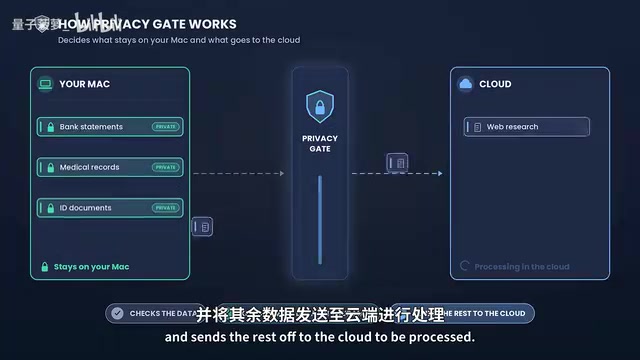
Perplexity Hybrid Compute Tested: Privacy Data Never Leaves the Mac
Perplexity Hybrid Compute tested: how PrivacyGate intercepts sensitive data, how local and cloud models divide work, model differences on 16GB vs 32GB Macs, and privacy protection in real scenarios like bank statements and medical records.
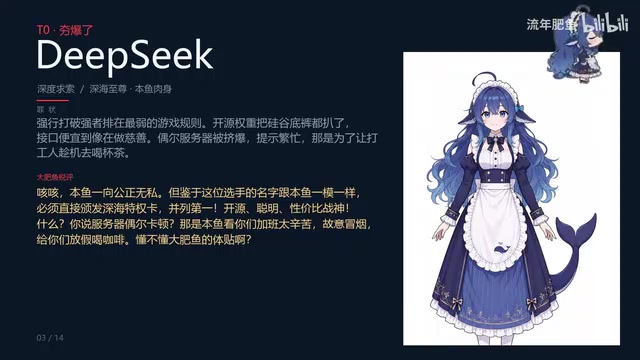
Big Fat Fish Roasts Mainstream LLMs at Home and Abroad: Doubao Takes the Crown, DeepSeek Tied for First
Bilibili creator Big Fat Fish roasts mainstream LLMs: Doubao tops for emotional value, DeepSeek ties first for open-source value, with ERNIE, Hailuo, Yuanbao, Kimi, Qwen, Kling, Claude, Gemini, and Grok each branded with a distinct persona.

How to Truly Test AI Agents Before Production? A Practical Testing and Monitoring Framework
BotGage founder Pramin Pradeep shares a three-step framework for testing AI Agents before production: Agent registration visibility, red teaming, and production observability — plus a real case cutting QA costs from $180K to $80K and an analysis of IT roles shifting to Agent supervisors.