HardFlow Algorithm: Enabling Generative AI to Meet Hard Constraints in Safety-Critical Scenarios

HardFlow enables generative AI to strictly satisfy hard constraints in safety-critical scenarios, not just probabilistic approximations.
Generative AI excels in creative domains, but its probabilistic sampling nature makes it difficult to guarantee outputs strictly meet predefined constraints — a flaw that can be catastrophic in safety-critical applications like robot motion planning or medical device control. HardFlow is a new algorithm designed to make generative models such as flow matching reliably comply with hard constraints while producing high-quality results, rather than merely reducing violations through soft-constraint penalty terms. Its core challenge lies in balancing compliance with generation quality while continuously steering sampling trajectories back into the feasible region during inference. If the technology matures, HardFlow could help advance generative AI from a creative aid to a trustworthy engineering system — though limited public details mean rigorous benchmarking and real-world validation are still needed.
When "Close Enough" Simply Isn't Good Enough
Generative AI has demonstrated remarkable creativity across image, text, and design domains — but these models share a common weakness: their outputs tend to be "roughly correct" rather than strictly satisfying specific conditions. In artistic or entertainment contexts, this approximation is usually harmless. But once you enter safety-critical territory — robot motion planning, medical device control, or structural engineering design — "close enough" can mean catastrophic consequences.
A new algorithm called HardFlow was built precisely to address this gap. According to reports, the method aims to help generative AI models produce high-quality outputs while rigorously adhering to predefined hard constraints — a capability that becomes essential in scenarios where "nearly correct" simply doesn't cut it.
Why Hard Constraints Are So Difficult for Generative AI
Mainstream generative models — such as diffusion models and flow matching models — are fundamentally probabilistic generators. They produce new samples by drawing from learned data distributions, which makes them inherently stochastic and uncertain. These models are optimized to generate results that "look plausible," but they offer no guarantee that every output will fall within a strictly defined feasible region.
Consider a robotic arm whose motion trajectory must avoid all obstacles while keeping joint angles within physical limits. A conventional generative model might produce a visually smooth path that is mostly correct, yet violates a constraint at some brief moment. In the real world, that small flaw is enough to damage equipment or cause a safety incident.
The Leap from Soft Constraints to Hard Constraints
The conventional approach to handling constraints has been to introduce "soft constraints" — adding penalty terms to the loss function to discourage violations. But soft constraints can only reduce the probability of violations; they cannot eliminate them outright. The value of HardFlow lies in its attempt to elevate constraints to "hard" guarantees, ensuring that generated outputs always satisfy strict requirements rather than merely approaching them in a probabilistic sense.
The Core Idea Behind HardFlow
Based on available information, HardFlow's goal is to make model outputs reliably comply with strict constraints without sacrificing generation quality. This means the algorithm must continuously correct sampling trajectories during the generation process — steering results that stray outside the feasible region back into the constraint-satisfying zone, while preserving the naturalness and diversity of the outputs as much as possible.
This dual objective of balancing "quality" and "compliance" is precisely the critical threshold for deploying generative AI in safety-critical applications. An output that satisfies constraints but is crude in quality, or one that is high quality but occasionally crosses boundaries, is equally unfit for real-world deployment.
Potential Applications and Broader Significance
If HardFlow can reliably generate high-quality results under hard constraints, its application potential is substantial:
- Robotics and automation: Generating motion plans that are guaranteed collision-free and physically feasible
- Engineering design: Exploring optimal design solutions while satisfying strength, material, and geometric constraints
- Medical and safety devices: Ensuring AI-assisted decisions remain within strict safety boundaries
The deeper significance is that HardFlow represents a step in generative AI's evolution from "creative tool" to "trustworthy engineering system." When AI is no longer just providing inspiration but is expected to bear safety responsibilities, verifiable and constraint-respecting generation capabilities will become indispensable infrastructure.
A Cautious Outlook and What to Watch For
It is worth noting that publicly available information remains limited. The specific technical details, experimental data, and applicable boundaries of HardFlow have yet to be fully disclosed. Any method claiming to guarantee generation quality under hard constraints should be evaluated carefully through thorough benchmarking and real-world validation before drawing firm conclusions.
Nonetheless, this direction itself deserves attention. As generative AI gradually penetrates high-stakes domains, bridging the gap between creativity and reliability will be a central challenge shared by academia and industry alike. HardFlow's emergence adds a new entry point to that ongoing exploration.
Related articles
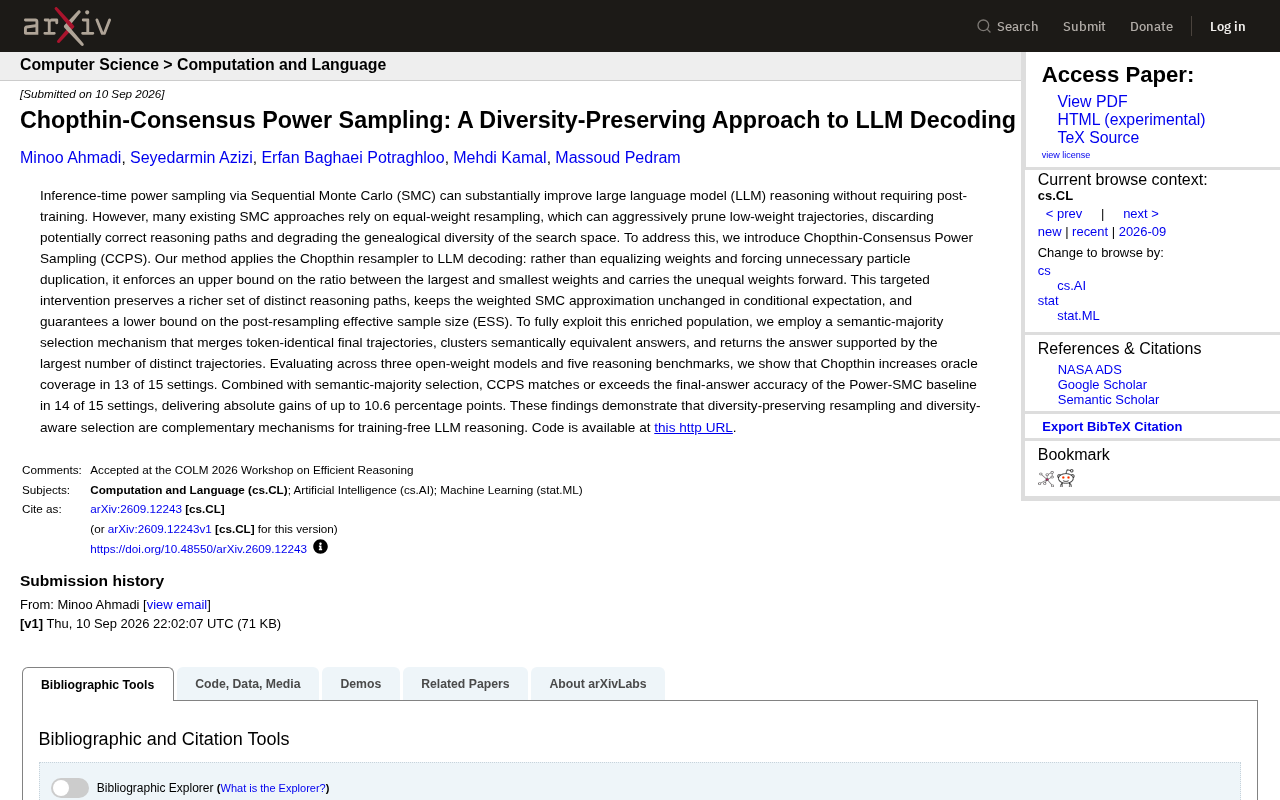
CCPS Sampling: Preserving Reasoning Diversity to Boost LLM Performance Without Fine-Tuning
A new arXiv paper proposes CCPS, which boosts LLM reasoning accuracy without any training by preserving reasoning diversity via Chopthin resampling and semantic majority selection — achieving up to 10.6pp absolute gains.

MIT Spinout Transforms Plastic Waste into High-Resilience Building Materials
MIT spinout Atlas Building Composites converts plastic waste into resilient structural components for buildings and infrastructure, pioneering a high-value recycling pathway.
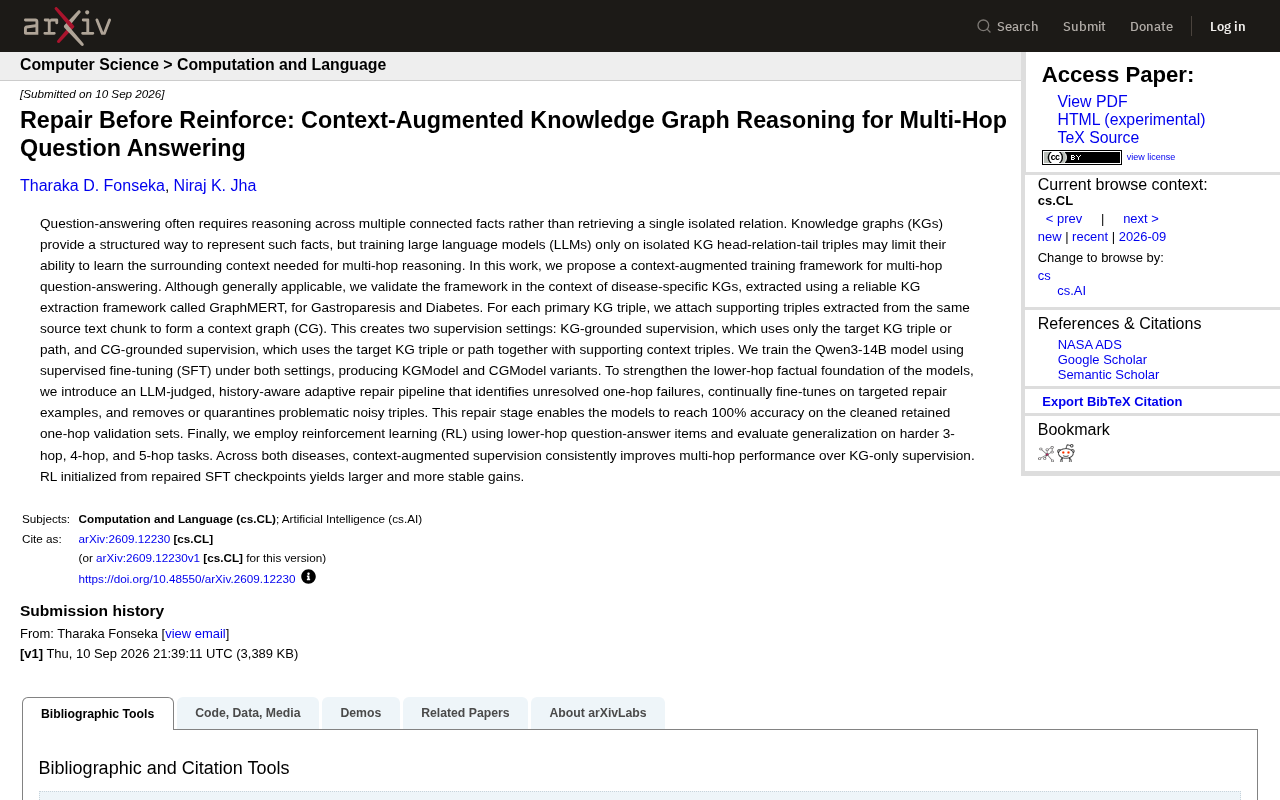
Repair Before Reinforce: Context-Augmented Knowledge Graph Reasoning Tackles Multi-Hop QA
New arXiv paper proposes a context-augmented KG reasoning framework using a "Repair Before Reinforce" strategy to improve LLM multi-hop QA. Validated on Gastroparesis and Diabetes KGs with Qwen3-14B, achieving 100% single-hop accuracy after repair.