Harness Engineering Architecture Explained: An Essential Skill for AI Agent Developer Roles

Harness Engineering is the architectural paradigm powering top AI agents — and a must-have skill for landing agent developer jobs.
Harness Engineering is rapidly emerging as a core competency for AI agent developers, underpinning products like Claude Agents and LangChain's DeepAgents. This article explains what Harness architecture is, why it's become a hiring filter, how leading agent products implement it, and how developers can build practical skills using the DeepAgents framework to advance their careers.
Why Harness Engineering Is Becoming the New Focus in AI Agent Development
As large model applications evolve at a rapid pace, a new technical keyword is gaining serious traction among developers — Harness Engineering. This architectural paradigm has become an important benchmark for evaluating AI agent developers, and it can directly determine whether a job candidate even gets an interview.
What Is Harness Engineering? The term "Harness Engineering" is borrowed from the software testing concept of a "Test Harness" — a scaffolding framework that provides a controlled runtime environment for the system under test. In the context of AI agent development, the core idea behind Harness architecture is to provide AI Agents with a standardized "runtime harness layer" that uniformly manages tool invocation, context maintenance, task orchestration, and error recovery. Unlike simple Prompt Engineering or one-off API calls, Harness Engineering focuses on an Agent's ability to run continuously and reliably in complex, dynamic environments. It is essentially the engineering bridge that takes an agent from "lab prototype" to "production-grade system."
Industry observers note that in the near future, if a job candidate's resume claims experience with AI agent projects but shows no involvement with Harness Engineering architecture, they may struggle to even land an interview. The reason is straightforward: hiring managers are increasingly filtering for candidates who genuinely understand the underlying architecture and can build customized agents — not just "surface-level players" who know how to call an API.
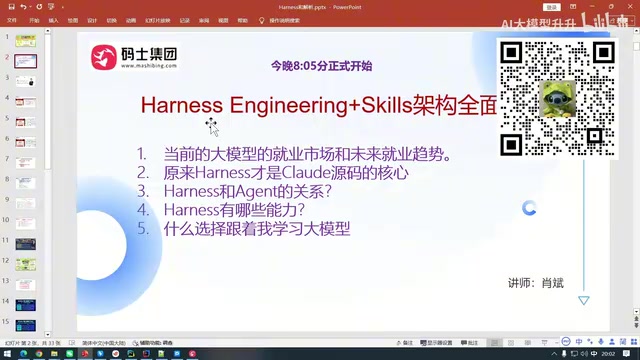
This reflects a meaningful rise in what the industry expects from AI agent developers. As more general-purpose agent products flood the market, companies need engineers who can work at the architectural level and solve real engineering problems. Harness architecture happens to be the foundational design paradigm shared by most mainstream agent products today.
Why Harness Architecture Is Generating So Much Buzz Among Developers
It's worth clarifying what "popular" means here — this refers specifically to popularity among developers and professionals working in large model roles, not among everyday users. Casual enthusiasts who just want to experiment with LLMs may have never heard of this concept. But for anyone hoping to break into the LLM industry and work on agent development, it's an unavoidable core skill.
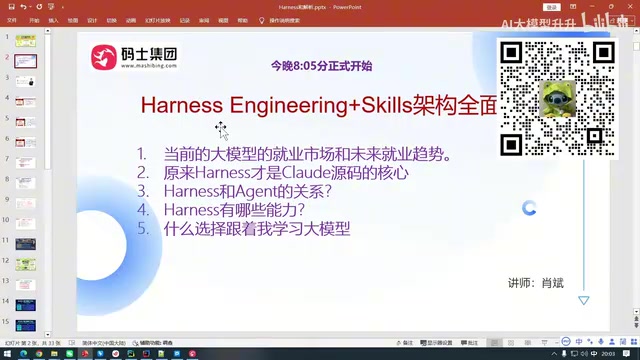
Some learners have reported a noticeable uptick in interview invitations after adding Harness Engineering project experience to their resumes — a direct testament to how much this knowledge can boost your competitiveness on the job market.
The Shared Underlying Architecture of Mainstream Agent Products
Why has Harness architecture become the industry-recognized standard? The key is that it already underpins the codebase of many leading agent products. Whether it's the widely-used Open Cloud and Cloud Code, or the recently popular Human Agent, these representative general-purpose agents all share a Harness Engineering design at their core.
This is precisely why hiring managers prioritize candidates who already understand Harness Engineering and have hands-on agent development experience. When a company needs to build a customized, proprietary agent, these are the engineers who naturally rise to the top of the candidate pool.
Putting Harness Architecture into Practice with the DeepAgents Framework
On the technical implementation side, the DeepAgents framework from the LangChain team is one of the most representative practical paths available today, and it enjoys strong recognition as an enterprise-grade technology choice.
Technical Background: LangChain and DeepAgents LangChain is one of the most influential open-source frameworks in the LLM application development space. Since its release in late 2022, it has rapidly become the de facto standard toolchain for building LLM applications, at one point surpassing 90,000 GitHub stars. LangChain's core value lies in its modular abstractions — Chain (chained calls), Agent (autonomous decision-making), and Memory (memory management) — which dramatically lower the barrier to building LLM-powered applications. DeepAgents is LangChain's deeper push into the Agent space, focused specifically on engineering stability for multi-step, long-horizon tasks. It represents LangChain's strategic evolution from a "toolkit" toward an "agent operating system."
Direct Endorsement from the Official Positioning
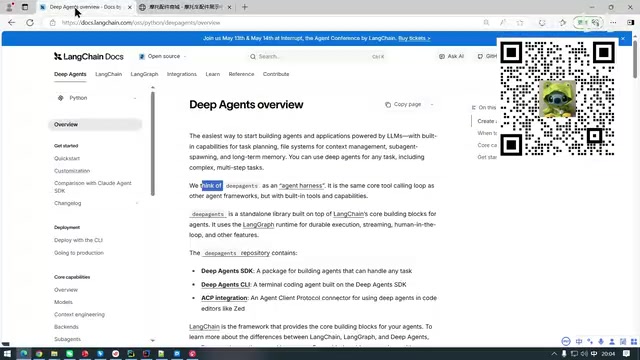
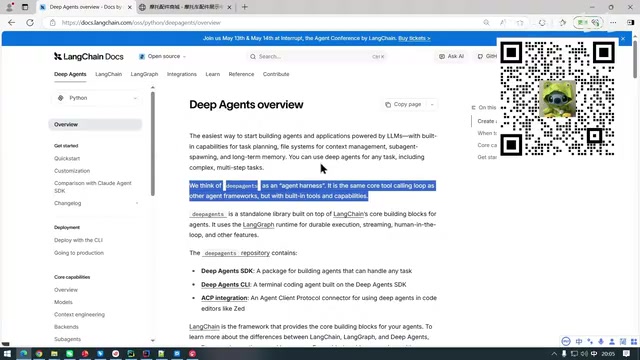
The DeepAgents website includes a clear statement: "We think of DeepAgents as an Agent Harness." This line was written by the LangChain team themselves on their homepage — confirming that Harness architecture is the core design philosophy behind DeepAgents, not a third-party interpretation.
DeepAgents Is Not the Only Implementation
It's important to note that DeepAgents is not the only way to implement Harness architecture. The official documentation also references a Harness implementation related to Anthropic, and provides a comparison between DeepAgents and the Claude Agents SDK — meaning the Claude ecosystem also has products that implement Harness architecture.
Claude Agents SDK and Multi-Ecosystem Harness Implementations Anthropic's Claude Agents SDK is the official implementation of Harness architecture within the Claude ecosystem, forming one of the two dominant technical approaches alongside DeepAgents. The Claude Agents SDK places greater emphasis on safety and interpretability — consistent with Anthropic's longstanding stance on AI safety — and offers fine-grained permission controls and behavioral auditing capabilities. The coexistence of both frameworks validates Harness Engineering as a universal architectural paradigm: it is not tied to any specific model or vendor, but rather an engineering methodology that can be reproduced across different LLM backends. For developers, understanding the core design principles of Harness is more valuable in the long run than mastering the API of any single framework.
In other words, Harness Engineering is a general-purpose architectural paradigm, not something locked to a specific framework. The reason DeepAgents is the recommended starting point is that, in real-world enterprise hiring and development contexts, the LangChain team currently commands the highest level of recognition and adoption.
Real-World Capability: Building Stable Agents for Long-Horizon Tasks
Another reason Harness architecture is so highly valued is its ability to support stable execution of long-horizon tasks. Traditional agents often struggle with complex, multi-step tasks that unfold over time — running into issues like context loss, execution instability, and chaotic state management.
The Technical Challenges of Long-Horizon Task Execution Stable execution of long-horizon tasks is one of the central engineering challenges in deploying AI agents in production. Mainstream LLMs universally face context window limitations (even GPT-4 Turbo's 128K token window runs into information compression and forgetting issues in very long tasks), and a failure at any single link in a tool-calling chain can cause the entire task to collapse. The traditional single-inference paradigm simply isn't up to the job. Harness architecture addresses context drift, execution interruptions, and concurrency conflicts through engineering mechanisms such as Persistent State management, Checkpointing, task decomposition, and sub-Agent orchestration — enabling agents to reliably complete complex tasks requiring dozens of steps, such as code review, data analysis pipelines, and automated operations.
Through systematic design of core components — including the Agent runtime environment, task scheduling, and state management — Harness Engineering provides an engineering pathway for building stable, reliable agents capable of handling long-horizon tasks. For developers looking to enter the LLM industry, understanding and practicing this architecture means advancing from "calling off-the-shelf tools" to "designing and customizing agent systems" — which is precisely the engineering capability that companies find most scarce today.
Final Thoughts
From job market competitiveness to real engineering value, Harness Engineering is becoming a defining dividing line in the AI agent development space. It is both the shared foundation of mainstream agent products and the design paradigm explicitly adopted by leading teams like LangChain. For anyone planning to enter the LLM development field, getting ahead of this architecture — whether for technical depth or career growth — is a core capability worth investing in early.
Note: This article is based on a single source from Bilibili. Some product names (such as Human Agent, Open Cloud, etc.) are transcribed from spoken content and should be verified against official documentation.
Key Takeaways
Related articles
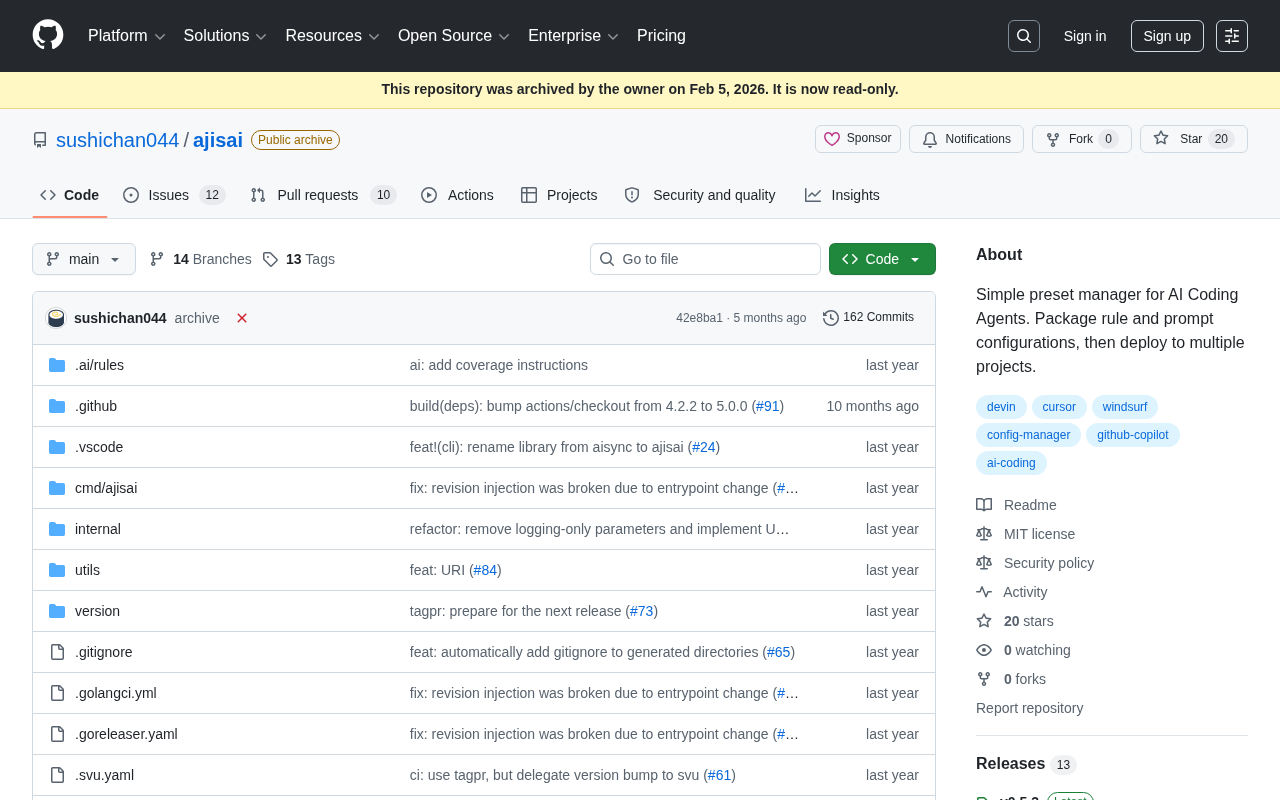
ajisai: A Preset Management Tool for Unifying Rules and Prompts Across AI Coding Assistants
ajisai is a Go-based preset manager for AI coding assistants like Cursor and Claude Code. Package rules and prompts once, deploy everywhere. Early-stage but promising.
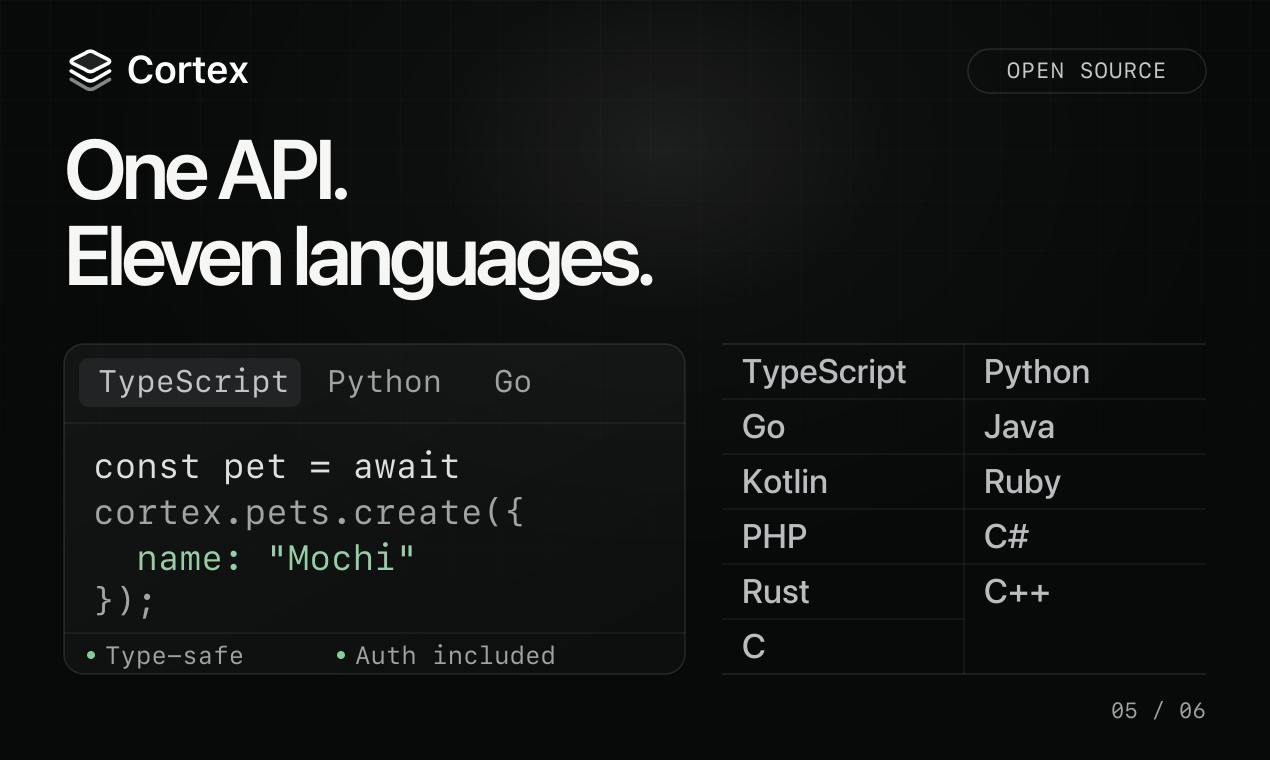
Cortex: Convert API Specs into Docs, SDKs, and MCP Servers in One Click
Cortex is an open-source tool that converts OpenAPI, GraphQL, gRPC and more into interactive docs, typed SDKs in 11 languages, and MCP servers for AI agents.
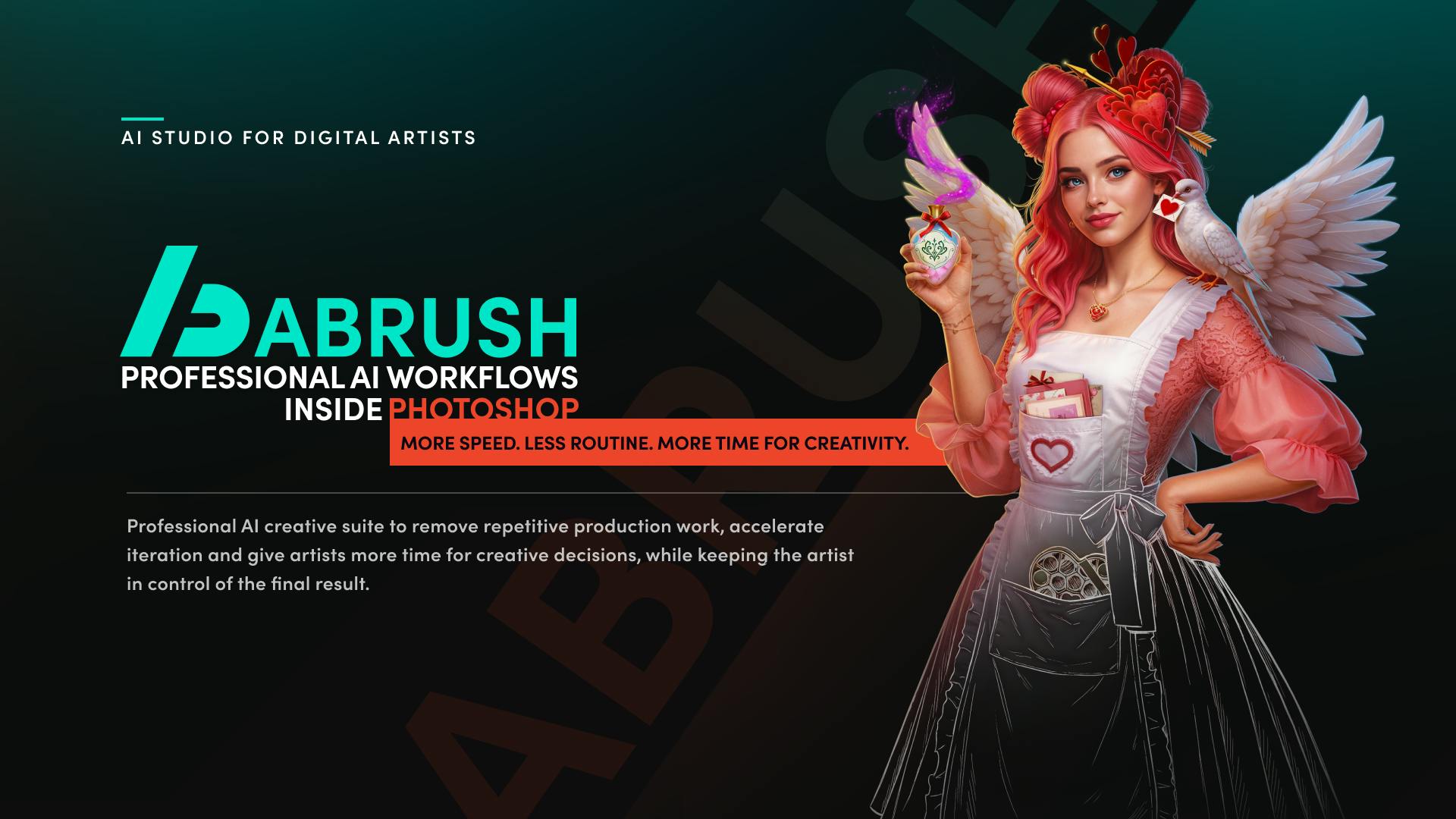
ABrush: An AI Studio Built for Digital Artists
ABrush is an AI studio for digital artists, ranked #4 on Product Hunt. It embeds leading AI models into existing workflows to remove repetitive tasks, speed up iteration, and keep artists in control.