Has the CSS Zen Garden Dream Finally Come True? Revisiting the Separation of Content and Style
CSS Zen Garden's separation ideal is now technically possible, but pragmatic component-based development has rewritten the playbook.
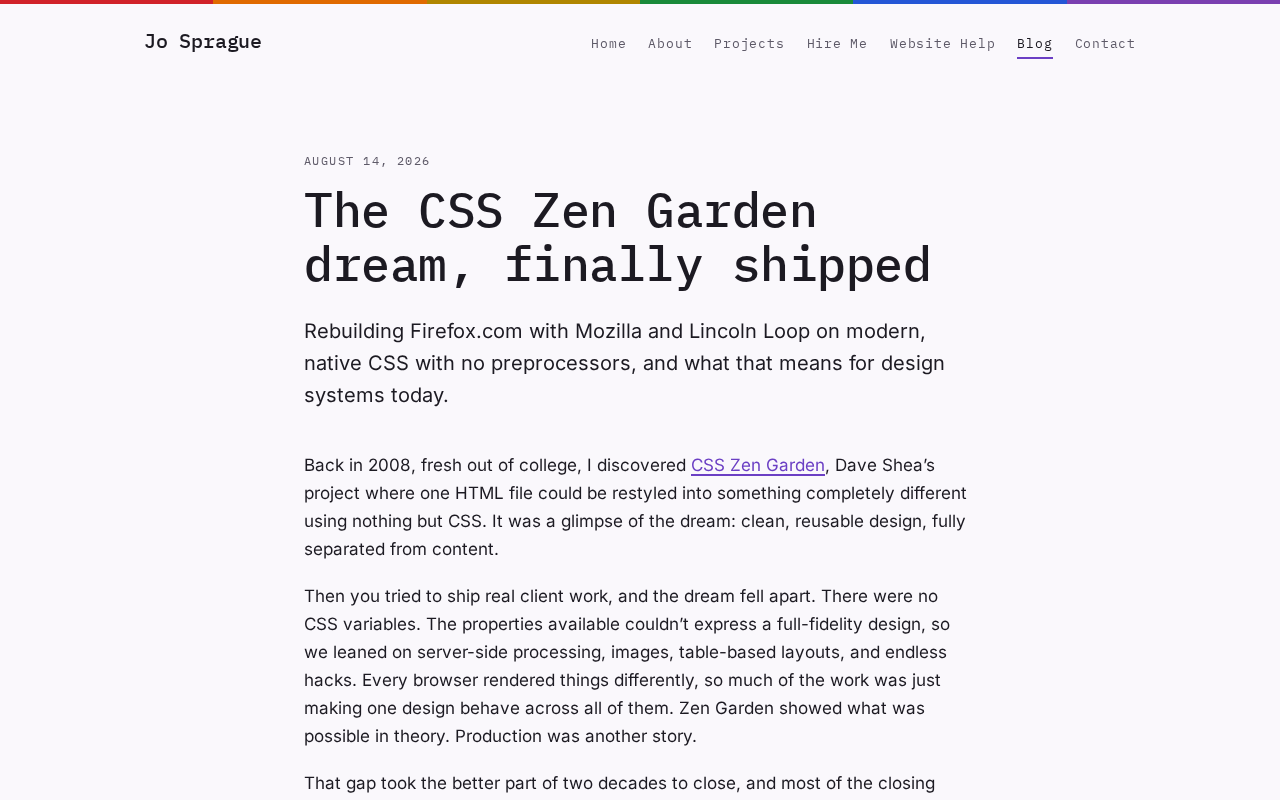
A Hacker News post titled "The CSS Zen Garden dream shipped" prompted a look back at the landmark 2003 project that proved content and presentation could be fully separated using a single HTML file with swappable CSS. Modern CSS features like Grid, custom properties, container queries, and design tokens have made that capability a reality. Yet the rise of React, Vue, CSS-in-JS, and Tailwind has pushed styles and markup back together in the name of developer efficiency — validating the ideal as achievable, but not as the industry's default path.
A Design Ideal That Endured for Years
A post on Hacker News titled "The CSS Zen Garden dream shipped" has brought an old topic back into focus. CSS Zen Garden is one of the most symbolically significant projects in Web design history — it used a single HTML document and demonstrated wildly different visual outcomes simply by swapping stylesheets, proving that a complete separation of content and presentation was not just theoretical, but achievable.
The phrasing of that post title is telling: it claims the "dream" has been "shipped" — in other words, the author believes the ideal championed by CSS Zen Garden has finally been realized in mainstream engineering practice. That said, it's worth noting the post has seen limited traction on Hacker News (4 upvotes, 2 comments), making it more of a niche conversation-starter than a viral discussion.
What CSS Zen Garden Actually Proved
To appreciate the weight of that post, we need to revisit what CSS Zen Garden was originally about. In an era when Web pages relied heavily on table-based layouts and inline styles were everywhere, its core argument was:
- Structure (HTML) should only describe the semantics of content
- Presentation (CSS) should handle all visual rendering
- Designers should be able to completely reshape a page's appearance using only CSS, without touching a single line of HTML
At the time, this was almost a utopian ideal. It demonstrated the value of semantic markup to the entire industry and provided a compelling proof of concept for the Web standards movement that followed.
CSS Zen Garden was created by Dave Shea in 2003. The site invited designers worldwide to submit different CSS stylesheets for the same HTML file, and at its peak it hosted hundreds of wildly different designs — ranging from minimalist to richly illustrated — all sharing identical HTML markup. The project was born in the twilight of the "browser wars," when incompatibilities between Internet Explorer and Netscape drove developers to distraction, and pages were commonly built with nested
<table>elements for layout and<font>tags for typography, leaving semantic structure as little more than an afterthought. CSS Zen Garden's historical significance goes beyond a technical demo — it was a direct rebuttal to the industry, using real, visible work to prove that abandoning mixed structure-and-style markup didn't mean sacrificing design expressiveness. On the contrary, it unlocked greater flexibility and maintainability.
What "Shipped" Actually Means
The phrase "dream shipped" implies that what was once a demonstration-layer concept has become the default practice in modern development. From a technical evolution standpoint, that argument has some merit:
Dramatically expanded styling capabilities. Modern CSS now has Grid, Flexbox, custom properties (CSS Variables), and container queries — making it possible to achieve complex layouts that once required scripting or structural hacks, using pure CSS alone.
The rise of design systems. Design tokens, theme switching, dark mode — these mechanisms are all engineering extensions of the "one structure, many presentations" philosophy, very much in the spirit of Zen Garden.
Semantic markup as common sense. HTML5's semantic elements and the push for accessibility have made "content here, style there" the default expectation rather than something that needs to be argued for.
Design Tokens are the practice of abstracting visual decisions — colors, spacing, font sizes, and so on — into platform-agnostic named variables, pioneered by large design systems like Salesforce Lightning Design System. The core idea is to decouple "brand decisions" from concrete implementations: a single
color-primarytoken can be output as a CSS custom property, an iOS Swift constant, or an Android XML resource, defined once and consumed everywhere. Container Queries, meanwhile, were completely unimaginable in the CSS Zen Garden era — components can now adapt their styles based on the width of their own container rather than the viewport, meaning the same component automatically adjusts when placed in different layout contexts. This further reinforces the separation principle: structure no longer needs to be aware of presentation. Together, these two technologies form a key part of the infrastructure behind modern "one structure, many presentations" engineering practice.
The Tension Between Ideal and Reality
It's worth asking whether this dream has truly been realized in full. The actual Web development ecosystem has, in many ways, taken a path that CSS Zen Garden may not have anticipated.
The rise of component-based frameworks (React, Vue, etc.) has led to structure and styles frequently being colocated in the same component file. CSS-in-JS and Tailwind have pushed styles and markup even closer together. In a sense, the industry — in its pursuit of maintainability and developer efficiency — has deliberately traded away some of that "pure separation" ideal.
So perhaps the more accurate reading of "dream shipped" is this: the capability that Zen Garden set out to prove is now fully within reach, but the mainstream choices in engineering practice have shifted for pragmatic reasons. The ideal has been validated as feasible — it just hasn't become the only answer.
CSS-in-JS solutions (like styled-components and Emotion) write styles directly inside JavaScript components, dynamically generating class names and injecting stylesheets at runtime. Tailwind CSS takes a different approach, using atomic utility classes (like
flex,pt-4,text-blue-500) to encode styling information directly in HTMLclassattributes. Both appear to contradict the Zen Garden "separation" ideal — but proponents argue that what they've really done is redefine the unit of "concern" from the file level to the component level. In a component-based architecture, keeping a component's HTML and CSS colocated actually reduces the cognitive overhead of cross-file tracking. This debate reflects how the very definition of "separation" has evolved with engineering scale and collaboration patterns: Zen Garden-era separation was page-scoped; component-era separation is feature-unit-scoped. Neither philosophy is simply right or wrong — they're different responses to different constraints.
What This Means for Developers
Regardless of how the original post makes its case, it serves as a useful prompt to revisit an important chapter in Web design thinking. For developers today, a few takeaways still hold:
- Semantic structure and separation of concerns remain foundational skills — even within tightly coupled frameworks, clear separation still pays dividends over the long run
- Modern CSS is far more expressive than many realize; many scenarios no longer need JavaScript as a fallback
- When technical ideals "ship," they rarely arrive as carbon copies of the original vision — they get reinterpreted under new constraints
Given the limited information in the original post, much of the analysis above draws on CSS Zen Garden's own background and the publicly documented evolution of Web technologies. If you're curious, it's worth heading over to the original Hacker News thread to follow any further discussion that emerges.
Related articles

tiun.: An All-in-One Auth and Payments System Built for AI Developers
tiun. topped Product Hunt by giving AI developers auth, payments, billing, customer data, and analytics in one system — installable with a single command.

Axari: Let Your AI Twin Take Over the Mundane Work of Security Operations
Axari introduces an AI twin for SecOps teams, autonomously handling alerts, compliance checks, and repetitive tasks directly within Slack and Microsoft Teams.
siift: Turning AI Startup Noise into Actionable Business Decisions
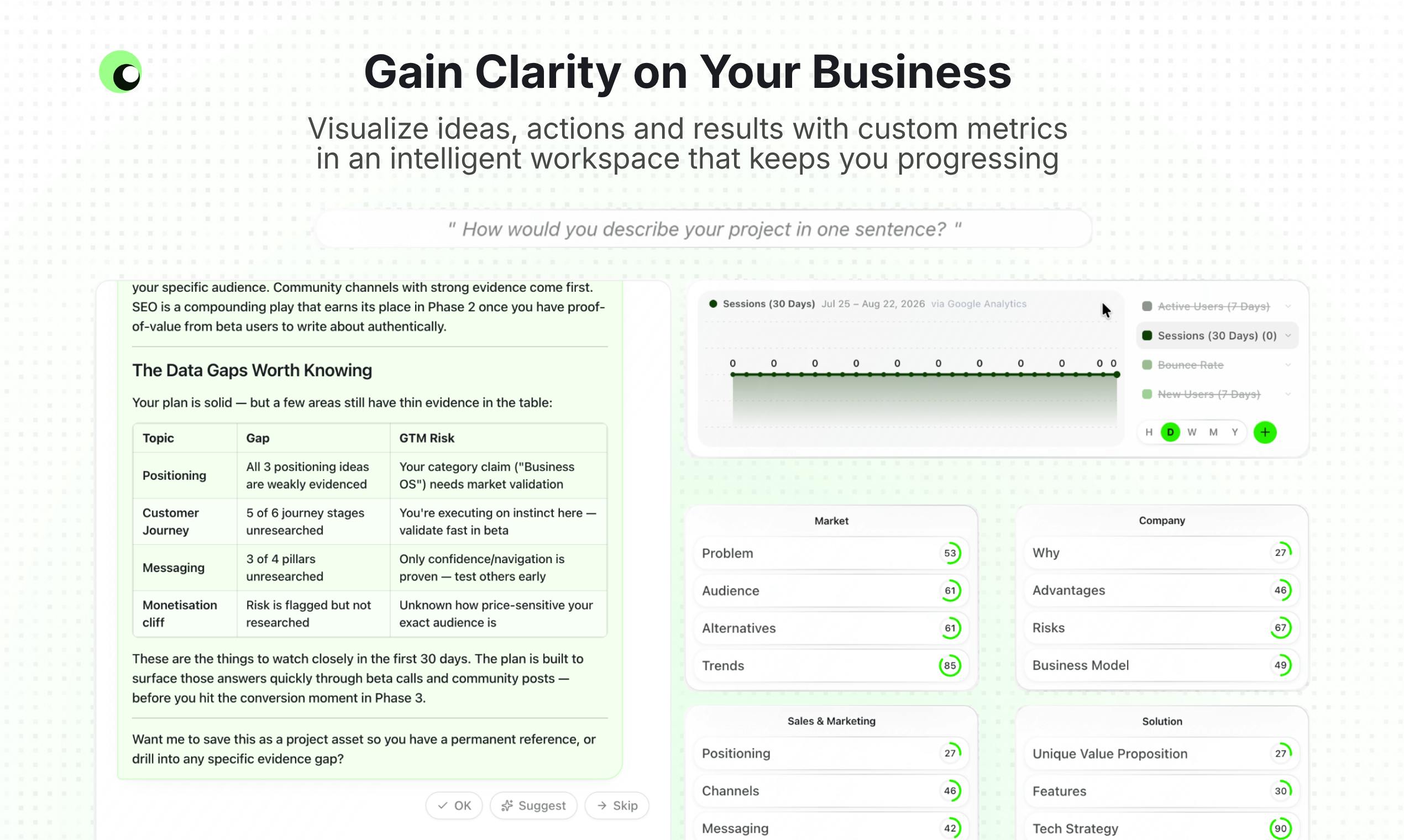
siift is an AI startup decision tool that turns scattered AI conversations and advice into a living business map — covering validation, GTM, and growth.