Hebbia Tests GPT-6 Astra: Three Capability Improvements in Financial Research Scenarios
Hebbia Tests GPT-6 Astra: Three Capabi…
Hebbia's pre-release evaluation shows GPT-6 Astra improves three core capabilities in financial research.
Hebbia's pre-release evaluation shows GPT-6 Astra improved source coverage, citation relevance, and presentation quality in financial research scenarios. Better coverage means broader information reach and fewer judgment biases from missing key documents; improved citation relevance better aligns conclusions with original sources, valuable for compliance review; and better presentation quality makes outputs closer to directly usable research material. However, the pre-release sample is limited and quantitative metrics were not disclosed, so conclusions should be treated as directional. If validated at larger scale, evaluation standards for financial AI tools will shift from "can it answer" to coverage, citation accuracy, and deliverable usability.
A New Variable for Financial Research AI: GPT-6 Astra Pre-release Evaluation
Financial research has long been regarded as one of the hardest scenarios for large models to deploy: vast document volumes, scattered data sources, and conclusions that must be traceable. According to pre-release evaluation results published by Hebbia, it tested GPT-6 Astra on financial research tasks and found that the model showed improvements in three areas: source coverage, citation relevance, and presentation quality. This result is noteworthy because it comes from evaluation in a real business scenario rather than general-purpose benchmarks.
Substantive Improvements in Three Capabilities
Source Coverage: From "Can Find" to "Finds Everything"
The reliability of financial research conclusions depends heavily on whether enough information sources are covered—earnings reports, regulatory filings, research reports, news, and earnings call transcripts are all indispensable. Hebbia's evaluation shows that GPT-6 Astra has made progress in source coverage, meaning the model can reach a broader information surface when answering research questions, reducing judgment bias caused by missing key documents. For investment research teams, this improvement in coverage directly affects the robustness of conclusions.
Source coverage measures whether a model can retrieve and use enough information sources of sufficient variety when answering questions. Common information sources in financial research include periodic reports such as 10-K/10-Q, current reports such as 8-K, regulatory filings, sell-side research, news, and earnings call transcripts. Insufficient coverage leads to conclusions based on partial information and produces confirmation bias. Evaluating source coverage typically requires building test sets that cover multiple document types and checking whether the model's output cites the key documents among them. Improved coverage means the model misses fewer important disclosures, thereby strengthening the robustness of research conclusions.
Citation Relevance: Making Every Conclusion Verifiable
Harder than "finding" is "citing correctly." Financial scenarios have near-strict requirements for citation quality: the cited passage must truly support the conclusion, rather than being semantically similar but off-topic. Hebbia's pre-release evaluation lists citation relevance as one of the improved areas, indicating that GPT-6 Astra performs better in aligning conclusions with original sources. This is especially critical for compliance review and internal verification processes.
Citation relevance is a key metric in the evaluation of retrieval-augmented generation (RAG) systems, measuring whether the cited passages provided by a model truly support its conclusions. Common evaluation methods include manually labeling relevance levels, calculating citation precision and recall, or using a large model as a judge for automatic scoring. In financial scenarios, irrelevant citations not only reduce research efficiency but may also create compliance risks, because regulators require research conclusions to be traceable to original disclosure documents. Therefore, improvements in citation relevance often have more business value than mere gains in factual accuracy.
Presentation Quality: The Last Mile of Research Output
Research results ultimately must be delivered to portfolio managers or clients. Presentation quality covers structural organization, clarity of expression, and formatting standards, directly affecting the efficiency of information transfer. Hebbia's evaluation also observed improvements in this dimension, meaning the model's generated output is closer to research material that can be used directly, rather than a semi-finished product requiring extensive manual polishing.
The Value and Boundaries of Pre-release Evaluation
It should be noted that these are evaluation results from the pre-release stage. As an AI platform oriented toward financial scenarios, Hebbia's evaluation is close to real workflows, giving it more reference value than general leaderboards; however, pre-release evaluation samples are limited, and the performance of the official model version still requires ongoing observation. In addition, Hebbia did not disclose specific quantitative metrics or test scale, so the current conclusions are better treated as directional judgments—the improvements in the three capabilities point to the same trend: the usability of large models in professional research scenarios is steadily increasing.
Pre-release evaluation refers to testing of a candidate version by partners or early-access users in real business scenarios before the model is officially released to the public. Unlike general benchmarks (such as MMLU and GSM8K), pre-release evaluation usually uses internal data and workflows, so it is closer to actual usage conditions, but it also faces limitations such as small sample sizes, cooperative interests between evaluators and model vendors, and difficulty reproducing results. For readers, understanding the boundaries of this evaluation form helps judge the reference weight of Hebbia's conclusions: it is better suited as an early signal of capability direction rather than a final verdict on performance.
Impact on the Financial AI Application Landscape
If these improvements are validated in larger-scale use, the impact will be multi-layered. In research workflows, analysts can delegate more mechanical information gathering and cross-checking to the model and focus on judgment and modeling; in the tool ecosystem, vertical platforms such as Hebbia will integrate more closely with frontier models, allowing model capability upgrades to reach end products faster; in the competitive dimension, evaluation standards will also shift from "can it answer" to "is coverage complete, are citations accurate, and can the deliverable be used directly."
Financial research has extremely low tolerance for inaccuracy, and any capability improvement must undergo repeated validation before it can translate into trust in production environments. GPT-6 Astra's performance in Hebbia's evaluation is a positive signal, but before it becomes the default tool for investment research teams, more independent evaluations and long-term practice are still needed.
Related articles

Zero-Code Replication of a $10,000 3D Website with Claude Code: A Six-Tool Breakdown
Bilibili creator Yomi used Claude Code plus five free tools to build a 3D product landing page quoted at $10,000 overseas—zero code. Breakdown of the six-tool division of labor, image-to-3D workflow, and the core collaboration method: "give AI a reference, not 'make it look better.'"
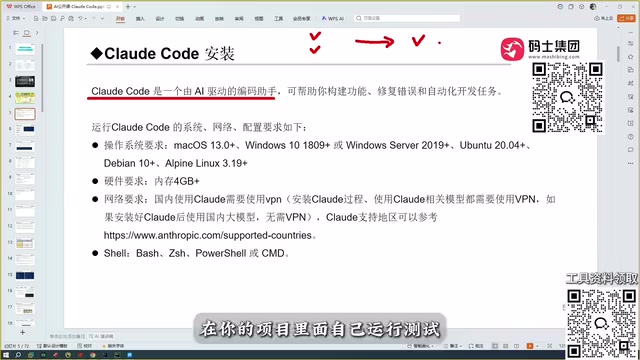
Claude Code in Practice: Install, Connect Models, Calculate Tokens, and Ship a Full-Stack Project with a Single Document
Based on a Bilibili public course demo, this covers Claude Code installation, model connection, token cost calculation, and the practical path of shipping a full-stack project with a single document, plus comparisons with Copilot, Cursor, Trae, and other coding assistants.
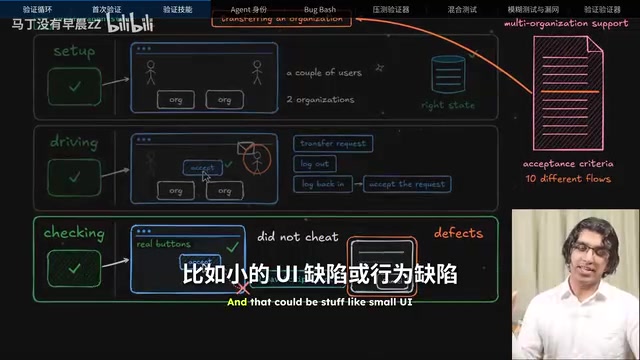
Who Accepts AI-Written Code? A 25-Minute Deep Dive into Verification Loops and the New Code Review Paradigm
After AI writes lots of code, how should Code Review verify it? This article breaks down the Claude Code team's verification loop framework: surface-level end-to-end verification, setup/drive/check three-stage skills, hybrid end-to-end testing and reliability checklists, and how to tighten the loop when issues slip through.