Help: How a Transparent Donation Platform Is Reshaping Public Trust in Philanthropy

Help builds accountable global philanthropy infrastructure through a verified nonprofit network.
Help is a global philanthropy platform launched on Product Hunt, positioned as public-interest infrastructure connecting donors, nonprofits, and businesses. Its core differentiation is targeted, transparent giving through a verified nonprofit partner network, making every donation traceable to specific projects and executing entities. The article argues Help represents the shift from emotion-driven to evidence-driven giving, while noting that global operations will face compliance, settlement, and cultural challenges.
The pain point of charitable giving is often not a lack of goodwill, but a breakdown of trust—donors don't know where their money goes, beneficiaries struggle to receive sustained support, and nonprofits grapple with the tension between fundraising efficiency and transparency. Help, a newly launched app on Product Hunt, attempts to stitch this rift together with technology.
A Public-Interest Infrastructure Connecting Three Parties
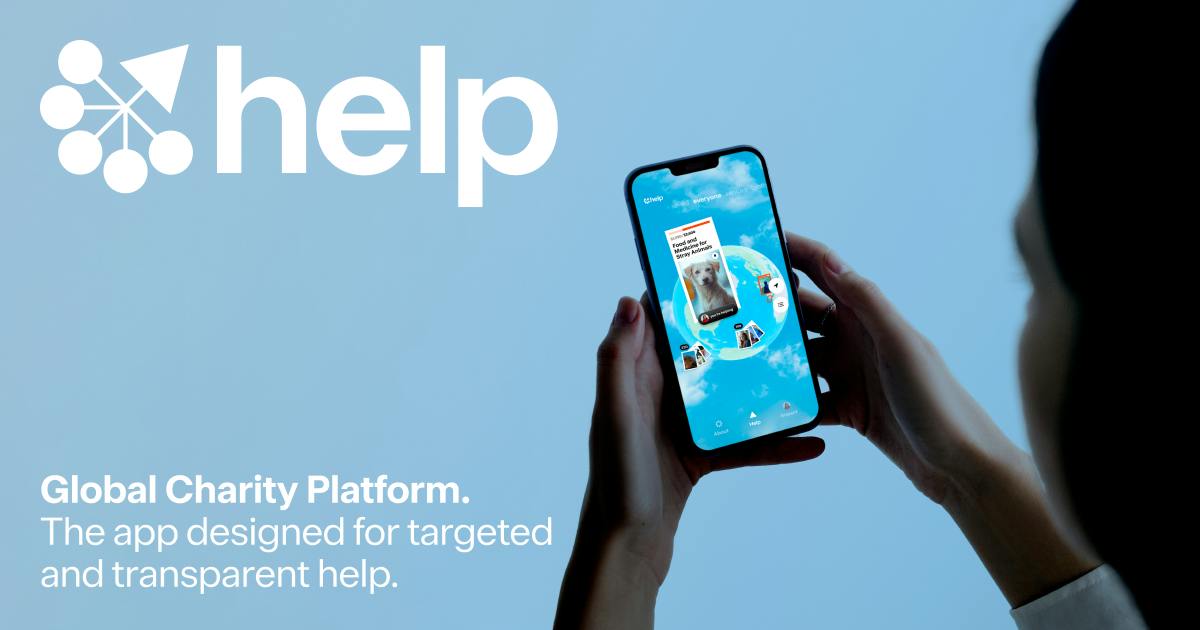
Help's positioning is clear: a global philanthropy platform connecting donors, nonprofits, and businesses. Rather than packaging itself as yet another donation button, it aims to become an infrastructure layer within the charitable chain. The platform is built around values of love, respect, compassion, technology, transparency, and security, with the goal of providing targeted, accountable donations supporting people, animals, and the planet.
The key word here is "accountable." In traditional giving, donors often have to rely on institutional self-discipline, whereas Help introduces a verified nonprofit partner network to lead fundraising campaigns. This means every fundraising project has a traceable executing entity behind it, and donors can understand where their contributions flow and what impact they support.
"Nonprofit partner verification" in the charitable sector typically involves several layers of review: legal entity status (whether the organization is legally registered as a charitable organization locally), financial transparency (annual reports, audit status, management fee ratios), project execution capability (past project records, beneficiary feedback), and governance structure (board composition, conflict-of-interest disclosure). By embedding this verification function into the platform, Help needs to build a reusable assessment framework and bear ongoing compliance monitoring costs. For cross-border donations, verification must also layer on anti-money laundering (AML) and Know Your Customer (KYC) requirements—an implicit threshold that global philanthropy platforms face. If the platform can productize and standardize these review processes, that itself could become its core moat.
How the Transparency Mechanism Works
Help's core differentiation lies in the words "targeted" and "transparent." Targeted means donations aren't scattered broadly but can be directed to specific projects, specific causes, and specific beneficiary groups. Transparency is reflected in the visualization of fund flows—although the original information doesn't disclose specific technical implementation details, the design of "verified nonprofit partners" suggests the platform is trying to add verifiable nodes to the trust chain.
This model responds to a real market need. The trust crisis in the charitable sector is long-standing; donors' concerns about "management fee black holes" and doubts about project execution effectiveness all suppress willingness to give. Help's approach transforms nonprofits from "objects of suspicion" into "verified partners," using the organizational network to endorse project credibility.
Product Positioning and Market Signals
On Product Hunt, Help received 33 upvotes, ranking 18th for the day in the Charity & Giving category. These numbers aren't spectacular, but considering that charity products have never been traffic darlings in tech communities, this level of attention indicates the product concept resonates with some people's genuine concerns.
Maria Rapoport appears among the maker team, with other member information withheld. Judging from the product description, the team has a solid understanding of how the charitable sector operates—they didn't try to replace nonprofits but positioned themselves as a connector and verification layer, which is a more pragmatic entry point in charity tech.
Reconstructing Trust in Charity Tech
The trend Help represents is worth watching: charitable giving is shifting from "emotion-driven" to "evidence-driven." A new generation of donors, especially younger groups, are no longer satisfied with moving stories—they want to see trackable impact data, verifiable executing organizations, and comparable project efficiency.
This trend raises the bar for charity tech products. Simply building a beautiful donation page is far from enough; platforms need to build real capabilities in verification mechanisms, fund tracking, and impact assessment. Help's "verified nonprofit partner" network is a starting point, but whether it can maintain verification standards at scale will determine the ceiling of this model.
Another dimension worth observing is globalization. Help positions itself as a global philanthropy platform, which means it needs to handle compliance issues across different jurisdictions, settlement in different currencies, and trust-building in different cultural contexts. These challenges are far more complex than product interface design, but they are also the necessary path to building genuine public-interest infrastructure.
From a broader perspective, Help's value proposition is in sync with the charitable sector's collective pursuit of transparency today. When technology can lower verification costs and increase the granularity of fund tracking, the trust foundation of charitable giving may gradually shift from "institutional reputation" to "verifiable evidence." The road is long, but the direction is clear.
"Evidence-based Giving" is a key shift in the charitable sector in recent years, drawing on the logic of evidence-based medicine: donation decisions should be based on verifiable outcome data rather than emotional narratives or institutional brands. This concept requires nonprofits to disclose specific project execution metrics, the granularity of fund flows, and impact assessment methodologies. Internationally, practices such as GuideStar's (now Candid) transparency seal and GiveWell's in-depth evaluations already exist, attempting to reduce donors' information search costs. The "verified partner network" Help proposes essentially takes on part of the verification function at the platform level, but the sustainability of this model depends on the rigor of verification standards and frequency of updates—once verification becomes a formality, it will instead create a new illusion of trust.
One-line Summary
Help builds accountable global philanthropy infrastructure through a verified nonprofit network.
Paragraph Summary
Help is a newly launched global philanthropy platform on Product Hunt, positioned as public-interest infrastructure connecting donors, nonprofits, and businesses—not just another donation button. Its core differentiation lies in "targeted" and "transparent": leading fundraising through a verified nonprofit partner network so every donation is traceable to specific projects and executing entities, addressing the long-standing trust crisis in the charitable sector. The product received 33 upvotes and ranked 18th on Product Hunt—modest numbers, but reflecting genuine interest in charity tech within the tech community. The article argues that Help represents the shift in charitable giving from emotion-driven to evidence-driven, with transparency and verifiability becoming core competitiveness; its global operations will face multiple challenges in compliance, settlement, and cultural context, and the ability to maintain verification standards at scale will determine the model's ceiling.
Related articles

Deleted Reddit Post Sparks Debate Over AI Content Moderation
A Reddit post removed with only a 'Removed by Reddit' notice highlights AI content moderation's transparency gaps, misjudgment risks, and appeal challenges for platforms and creators.

DSH + Ollama Local LLM Deployment in Practice: Free Chat with Da Fei Yu
Bilibili creator tests DSH + Ollama local LLM deployment end to end: Ollama install, Xunlei-accelerated downloads, ModelScope GGUF model import, DSH custom API address setup, and a comparison of Qwen 3.5 4B, 8B, Gemma, and other models on 8GB VRAM, with advice on choosing local deployment vs. API calls.

Tested: A $899 Mac Mini vs. a $200/Month AI Subscription
Real-world test of whether an M4 Mac mini can replace a $200 AI subscription: 16GB can't fit large models, and both speed and quality fall short—but privacy, no caps, and near-zero running costs make it an ideal host for an always-on agent. Includes buying advice per configuration and money-saving strategies.