High-Stakes Decisions and Children's Laughter: The Daily Contrast of an AI Founder

An AI entrepreneur shares the contrast of facing his children after high-stakes decision calls, resonating with tech workers.
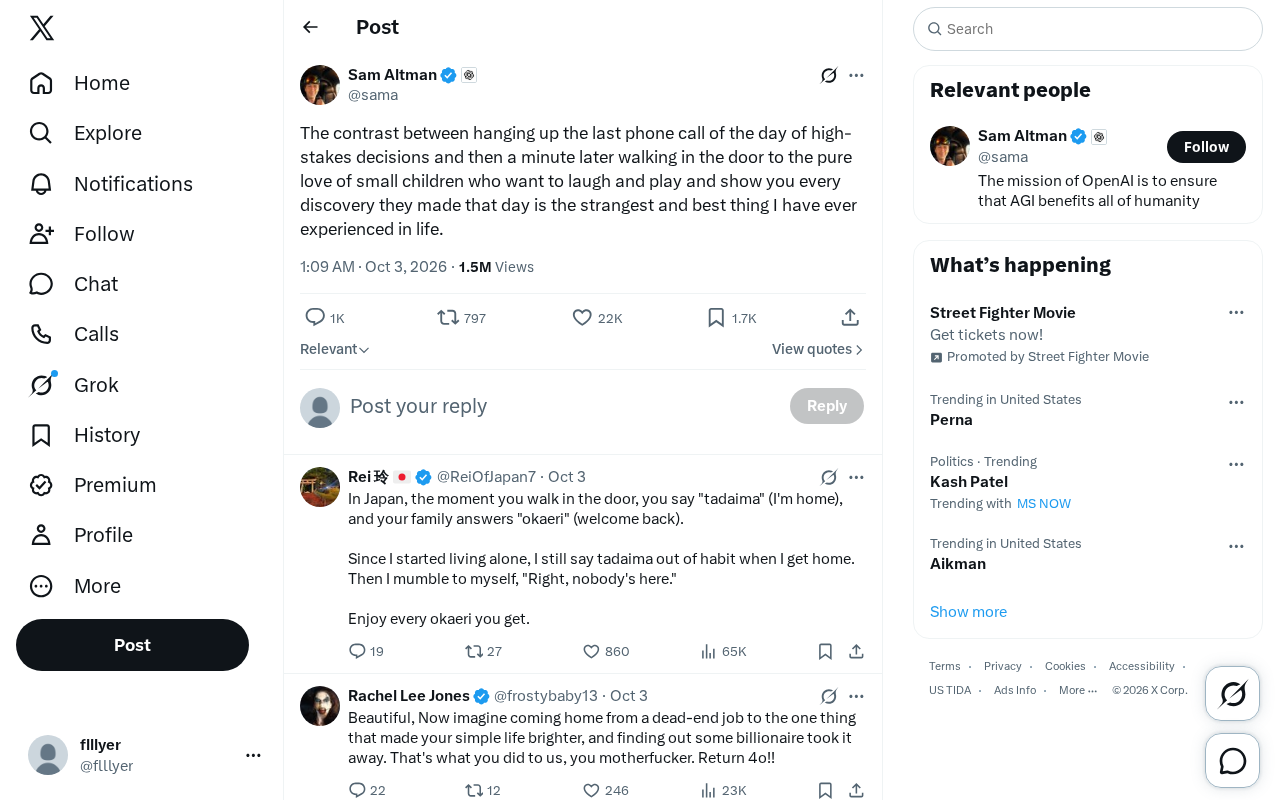
An AI entrepreneur shares: hanging up the last high-stakes decision call of the day, and one minute later facing a child's pure love, is the strangest and most beautiful thing of his life. This simple observation struck a chord with many tech workers. The AI industry has a fast decision pace and long impact cycles, and technology's "always-on" nature constantly erodes the boundary between work and family. The article argues that switching from "decision mode" to "being mode" is extremely difficult, but the stark contrast of scenes may actually serve as a psychological buffer, forcibly interrupting high-pressure thinking. For children, what truly matters is the parent "being present," not yet another optimized companionship task.
Identity Switch After a Phone Call
An entrepreneur working in AI recently shared a simple observation on social media that unexpectedly struck a chord with many tech workers. He wrote: "Hang up the last phone call of the day involving high-stakes decisions, and one minute later walk through the door at home, and you're greeted by a child's pure love—they want to laugh, to play, to show you every single thing they discovered that day. It's the strangest and most beautiful thing I've ever experienced."
This passage mentions no technical details, yet it precisely captures a typical rhythm of life for today's AI entrepreneurs: during the day, debating funding terms, product roadmaps, and compute costs in meeting rooms, with emotions stretched to the limit; in the evening, returning home to a completely different operating logic—a child's world doesn't care about KPIs, only about the joy of the present moment.
Why This Contrast Deserves Discussion
In the AI industry, "high-stakes decisions" are practically routine. Should the model be open-sourced? Should you accept this round's valuation? Should you cut a product line? Who on the team should stay and who should go? What these questions share is that the window for deciding is short, but the impact lasts long. Founders often need to place bets quickly with incomplete information.
Time with children, by contrast, offers the exact opposite experience. It doesn't ask you to solve problems—it only asks you to be present. This switch from "decision mode" to "being mode" looks simple, yet it's actually one of the hardest tasks many tech workers face all day.
What's interesting is that the reason this topic resonated on social media isn't because it offers any methodology, but because it honestly admits one thing: no matter how rational or skilled at model reasoning you are, you'll be completely reset the moment you open that door.
The "decision mode" and "being mode" mentioned here correspond to two different cognitive states in psychology. Decision mode typically relies on "executive function": working memory, inhibitory control, and cognitive flexibility. The brain needs to continuously evaluate options, predict consequences, and suppress impulses, keeping the prefrontal cortex under heavy load for extended periods. Being mode is closer to what "mindfulness" describes: not judging, not planning, not problem-solving, just perceiving the present moment. The difficulty of switching lies in the fact that executive function has inertia—after high-stakes decisions, the sympathetic nervous system remains aroused, and cortisol and norepinephrine don't drop just because a door closes. So that one minute from the meeting room to the child's room is essentially a dual downshift—physiological and cognitive—that requires deliberate attention shifting to complete.
The Real Tension Between Intense Work and Family
The core of this sharing is actually an age-old tension—career versus family—just placed in the context of AI startups, which are especially prone to being "always on."
Training large models won't pause because you're off work, investors' messages won't stop coming because it's the weekend, and competitors' release schedules won't adjust for your family time. Technology's "never stops" nature makes AI workers' sense of boundaries especially fragile.
That's precisely why the phrase "one minute later" carries such weight. It's not an idealized balance narrative, but a daily, almost absurd switch—one second you're weighing the allocation of tens of millions in resources, the next you're seriously examining a rock your child picked up.
From a psychological perspective, this stark contrast of scenes may actually serve as a protective mechanism. It forcibly interrupts sustained high-pressure thinking, pulling attention back to concrete, present experiences that can't be abstracted into metrics.
"Fragile boundaries" is often described in organizational behavior as role boundary blurring. When work can invade family time at any moment through phones, messages, and the cloud, individuals fall into "role overload": being demanded by multiple identities simultaneously, each requiring full commitment. What's unique about the AI industry is that technical systems themselves have an "always-on" physical nature—training tasks, inference services, and monitoring alerts won't stop just because a person clocks out. This technological rhythm in turn shapes people's psychological rhythm, making workers assume they shouldn't stop either. The "recovery experience" theory in psychology points out that psychological experiences genuinely conducive to recovery include: psychological detachment, relaxation, mastery, and control. Time with children is effective precisely because it provides both psychological detachment and relaxation, and is almost impossible to colonize by work logic.
A Few Insights for AI Workers
This sharing doesn't try to offer advice, but it inadvertently hints at a few things:
- Decision quality is tied to rest quality. People stuck in decision mode long-term often lack genuine "off" moments. Time with children naturally demands you switch off.
- The contrast itself is a resource. You don't have to see work and family as rivals competing for time. It's precisely this extreme difference that forms each other's psychological buffer.
- Don't treat "being present" as yet another task. What children want isn't scheduled high-quality companionship, but for you to truly show up in their world.
For those running at high intensity in the AI industry long-term, the hardest thing may not be making the right decision—but being able to fully return to life after making it.
"Being present" corresponds in psychology to the concept of "undivided attention," which differs from the over-methodologized phrase "high-quality companionship." Undivided attention emphasizes not activity design or length of time, but whether attention is truly invested in the other person. Research has found that children are highly sensitive to caregivers' attentional states: when adults are physically present but mentally absent, children seek attention through more behaviors, which ironically increases fatigue for both sides. Conversely, even just a few minutes of focused interaction can significantly boost a child's sense of security and emotional stability. For AI workers, this means you don't need to break family time into yet another to-do list, nor pursue "companionship efficiency." The truly scarce resource isn't time—it's attention not hijacked by work thinking.
Conclusion
What makes this passage moving is that it refuses to reduce work and family to the word "balance." It describes a more authentic state: two worlds pulling at you simultaneously, and you shuttling between them every day. For those making high-stakes decisions, the moment you open the door and hear your child's laughter may be the one part of the day that needs no optimizing at all.
Related articles

uGAP: An AI Platform Unifying 100+ African Geospatial Datasets
uGAP is an African geospatial AI platform by a University of Cape Town team, unifying 120+ African datasets with a Python SDK for discovery, processing, and model training, already used in cyclone flood mapping.

Cursor Can Now Control Your Computer: AI Agents Can Drive Desktop Apps for Testing
Cursor adds desktop control: AI agents can drive desktop apps like the iOS Simulator to test their own features. We analyze the impact on dev workflows, possible technical approaches, and reliability concerns.

Vibecoding a Custom Inference Engine: High Hopes, Harsh Reality
A Reddit developer shares the real experience of vibecoding a custom inference engine: running GGUF Q4 models in the browser with WebGL2 and GLSL, only to fall into tokenizer debugging hell. This article analyzes the engineering challenges of browser-side LLM inference and why cloning llama.cpp is the more rational choice.