HN Warning: Don't Use AI to Write Comments, or They'll Be Auto-Deleted

Hacker News warns that AI-written comments will be auto-removed, sparking tech community debate on AI ghostwriting boundaries.
A bluntly titled post on Hacker News warns users that AI-written comments will be automatically removed by the system rather than manually reviewed. Though it received only 12 points, it drew 12 comments, showing high community concern. The article argues HN uses strict guidelines to maintain quality discussion, and AI content erodes credibility by lacking real experience and traceability, prompting automated enforcement. Detection details, false positive rates, and appeals remain undisclosed, and creators are reminded to distinguish AI assistance from passing off AI output as their own.
The Incident: A Blunt Warning from Hacker News
A post with a strikingly direct title appeared on Hacker News (HN): "Tell HN: Don't use AI to write your comments or they'll get automatically killed." The post itself received only 12 points but sparked 12 comments—a notably high density of discussion. This is no ordinary flame post; it's a clear statement of the community's stance on AI-generated content: if you use AI to write comments, there's only one fate for your post—automatic removal.
The title itself constitutes a complete argument. It doesn't discuss whether AI writing is good or bad, nor does it leave room for "moderate use." Instead, it points directly to the platform-level consequence. For users accustomed to treating AI as a writing assistant, this is a signal that demands serious attention.
Platform Mechanism: Automated Detection and Automated Enforcement
Judging from the phrasing "automatically killed," HN's approach is automatic deletion or flagging as dead. This means the platform has deployed some kind of detection mechanism and fully automated the enforcement process, rather than relying on manual review of each post.
This design philosophy is not uncommon among community platforms. HN has long emphasized discussion quality and authenticity, and its community guidelines and moderation mechanisms have always been known for their strictness. Automated enforcement lowers operational costs and increases the deterrent effect of the rules: users cannot buy buffer time by hoping "the moderators won't see it yet." Posts may be removed faster than the author realizes there's a problem.
It should be noted that the original information did not disclose the specific technical details of detection, the false positive rate, or the appeals process. The only confirmable fact at present is this: using AI to write comments on HN triggers an automatic removal mechanism. Whether the detection is based on textual features, account behavior patterns, or user reports—the post itself provides no answer.
Hacker News' "dead" mechanism
On HN, "automatically killed" typically means a post is flagged as dead—the content still exists but is invisible to users who haven't enabled showdead, and replies cannot be properly expanded. Dead status can be applied manually by moderators or triggered automatically by the system based on heuristic rules, such as content from new accounts, content that has been flagged multiple times, or content that trips spam filters. Unlike complete deletion, dead posts remain viewable once a user enables the showdead setting, which is why the community often speaks of posts being "killed." The mechanism was designed to suppress low-quality content at low cost, but it also means that when a false positive occurs, authors often receive no explicit notification and must appeal through other channels (such as emailing moderators).
Community Consensus: AI Ghostwriting Erodes Conversational Value
Although the original material consists only of a title and engagement data, the logic behind the HN community's position can be reasonably inferred. HN's core asset is high-quality technical discussion, and the value of its comment section is built on real experience, concrete opinions, and arguments that can be challenged. AI-generated comments tend to be superficially fluent and neatly structured, but they lack genuine project experience and grounds for judgment—over time, they dilute the density of discussion.
For technical communities, judging whether a reply is credible depends heavily on whether the speaker has actually hit the pitfalls and made the trade-offs. AI ghostwriting blurs this traceability. By choosing automatic deletion to draw a red line, the community is essentially protecting the credibility infrastructure of discussion.
Hacker News community guidelines and moderation culture
HN is operated by Y Combinator and has long upheld a set of unwritten but widely cited community guidelines, centered on: avoiding empty agreement, providing informative comments, refraining from personal attacks, and not posting purely promotional content. The moderator dang (Daniel Gackle) is known for frequently intervening in discussions and proactively explaining removal decisions—this "visible governance" has shaped the community's trust in the rules. Under HN's voting mechanism, users must reach a certain karma threshold before they can downvote, which to some extent entrusts content governance to long-term contributors. Understanding this background is essential to grasping why "AI ghostwriting" is seen on HN as a problem requiring system-level enforcement—it bypasses the default contract of "real experience that can be challenged" on which the community depends.
Implications for Creators and Developers
The ripple effects of this warning extend beyond HN itself. More and more technical communities and content platforms are tightening rules on AI-generated content, and writers need to redefine AI's role in public expression: using AI to organize thoughts, search for references, and proofread wording is fundamentally different from passing off AI output as one's own speech.
For developers, this also raises product design questions. When platforms tie AI content detection to automated enforcement, transparency and appeals mechanisms become important. False positives against real users quickly erode community trust, and unclear rules make users uneasy. The HN post provides a clear case: the rule is stated plainly, the consequence is presented directly, and the rest is up to users to decide.
Information is currently limited, and it remains unclear whether this mechanism comes with warning notices or temporary restrictions. What is certain is that in HN's comment section, AI ghostwriting is no longer a stylistic choice—it is a violation that the system will enforce.
One-line Summary
Hacker News warns that AI-written comments will be automatically removed, sparking discussion in the tech community about the boundaries of AI ghostwriting.
Paragraph Summary
A bluntly titled post on Hacker News warns users that comments written with AI will be automatically removed by the system rather than relying on manual review. Though the post received only 12 points, it sparked 12 comments—an interaction density that shows the community's high level of concern. The article's analysis suggests that HN has long maintained high-quality technical discussion through strict community guidelines, and AI-generated content erodes discussion credibility by lacking real experience and traceability, which is why the platform chose automated enforcement to draw a red line. The article also notes that detection technical details, false positive rates, and appeals processes have not been disclosed, and reminds creators to distinguish between "using AI as an aid" and "passing off AI output as their own speech"—a reference point for rule-making in technical communities.
Related articles
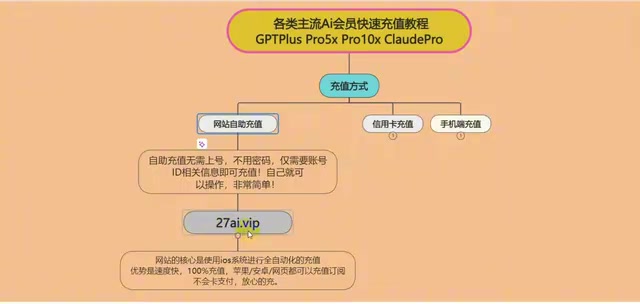
ChatGPT Plus Top-Up in China: Third-Party Website Recharge That Supports WeChat Pay and Alipay, No Overseas Card Needed
A Bilibili creator tests ChatGPT Plus top-up methods in China: comparing third-party website recharge, direct credit card, and mobile in-app purchase, with a full walkthrough of password-free WeChat/Alipay recharge and an analysis of Session credential and payment risk-control risks.

6GB Delivers Opus-Level Performance: Bonsai 2.5 27B Hands-On Test
Prism ML releases Ternary Bonsai 2.5 27B: ternary quantization brings it to just 5.9GB, runnable on a single consumer GPU while retaining 262k context and vision. Hands-on agentic benchmarks approach full-precision Qwen 3.8 27B, exceeding 150 tokens/s on a 4090, with impressive frontend and dashboard results, though game development and long tasks remain weak spots.

System Exchange Spawns an Offbeat Journey to the West: Why This Comedy Series Works
A Bilibili comedy short series reimagines Journey to the West with a system-exchange premise, as the protagonist challenges Sun Wukong, Erlang Shen, and other classics.