Holiday Extras Employee Treats AI Assistant Like a Pet: The Real Daily Work Life of Brian and Beast

Holiday Extras employee names his AI assistant Beast, uses it constantly and treats it as a life partner.
Through the case of a Holiday Extras employee, the article shows how deeply AI assistants are embedded in daily work. The employee named his AI assistant Beast, converses with it frequently morning and evening, even starting the day by phone. Beast is not only for work but also a life partner offering companionship and relaxation. It prepares meeting suggestions and data in advance, ready before the user reaches their desk, reducing workflow friction. The user values most that AI thinks of things he hasn't and continuously monitors task progress. At the end, the employee urges everyone to start using AI assistants immediately, believing the barrier is extremely low.
When an AI Assistant Gets a Name: The Birth of Beast
At Holiday Extras, an employee gave his AI assistant a name—Beast. The reason was straightforward: "He's just a beast, he can do anything." This naming approach is not uncommon in AI tool usage; it signals that users no longer see AI as cold software, but as a companion with personality that can be conversed with. According to the employee's description in the video, he communicates with Beast every morning, throughout the day, and in the evening, even starting his workday with a phone call. This high-frequency interaction reveals that AI assistants are shifting from "on-demand invocation" to "continuous presence."
"Continuous presence" is a key concept for understanding the current evolution of AI assistants. Traditional software follows a "call—response" model: users open an app, input commands, get results, then close it. AI assistants with continuous presence capability, however, reside permanently in the user's communication channels (such as phone calls and chat windows), can retain context across sessions, proactively initiate interactions, and continuously process tasks in the background. This model relies on the long-term memory mechanisms of large language models and agent architectures, transforming AI from a passive tool into a collaborative entity with continuity. For users, continuous presence reduces the cost of re-describing needs each time, and makes it easier for AI to accumulate understanding of personal work habits.
More Than a Work Tool: From Daily Tasks to Life Partner
Beast's use cases go far beyond daily work. The employee explicitly stated: "I use the dog (referring to the AI assistant) for everything, not just my daily work. He's my little partner in life." He calls Beast his "little partner," emphasizing a sense of companionship. This relational positioning is fundamentally different from traditional efficiency tools—users expect AI not only to complete tasks but also to provide psychological support. In the video, he mentioned that Beast's presence makes him feel relaxed, because he knows that even if he misses something, Beast has likely already covered it.

Morning Routine Conversation: How AI Prepares for the Day in Advance
The specific interaction flow is quite telling. The employee has a phone conversation with Beast in the morning; Beast offers suggestions for his upcoming meetings, and he can also request data from Beast. By the time he arrives at the office and sits at his desk, the needed information is already prepared. This "one step ahead" experience is key to the value of AI assistants: it transforms information acquisition from "active searching" to "passive receiving," reducing friction in the workflow. According to the employee, he talks with Beast every day, forming a stable morning ritual.

The difference between "passively receiving information" and "actively searching" essentially corresponds to two information acquisition paradigms: push-based interaction and pull-based interaction. Pull-based requires users to clearly know what they need and actively initiate queries; push-based, on the other hand, has the system predict needs based on schedules, context, and historical behavior, delivering information at the right moment. To achieve a push-based experience, AI assistants typically need to integrate multi-source data such as calendars, emails, and communication records, combined with user profiles for intent prediction. Its value lies in eliminating "metacognitive burden"—users don't have to first figure out what to ask, allowing them to focus their attention on decision-making itself rather than information gathering.
Unexpected Value from the User's Perspective: AI Thinks of What You Didn't
When asked what he likes most about Brian (another AI assistant or a colleague?), the employee replied: "He thinks of things I haven't even thought of yet." This points to another layer of value in AI assistants—not just executing commands, but proactively highlighting blind spots. This ability to "think of what you didn't" creates a sense of trust in AI. At the same time, he mentioned that Beast "keeps an eye on everything in progress," indicating that AI plays a continuous monitoring role in task tracking.

Low Barrier to Entry: No Reason Not to Start
At the end of the video, the employee gave a blunt piece of advice: "Start using your dog (AI assistant). There's really no reason not to start." He repeated emphatically, "Really, come on," with a sense of urgency in his promotion. This reflects the typical mindset of early adopters: once they experience how deeply an AI assistant can embed itself in daily work, they believe the barrier to entry is low enough that everyone should try it. From the Holiday Extras case, the value of an AI assistant lies not in showing off tech, but in embedding itself into daily communication, preparation, and monitoring, becoming a quiet yet persistent productivity presence.
(Note: The original title mentions "Brian and Beast, the dots at work," but the material primarily revolves around Beast and an unnamed AI assistant. Brian's specific role is unclear from the available information, so this article focuses on the verifiable Beast usage experience.)
Related articles

Gemini 4 Hydrogen vs Sonnet Comparison Test: Uses Only 1% of Weekly Quota, Performance on Par
Hands-on test: Gemini 4 Hydrogen vs Sonnet on the same CRUD task—Hydrogen used only 1% weekly quota with comparable performance and better UI details, while Anthropic's model used 7%. Developer says daily tasks don't require expensive models.
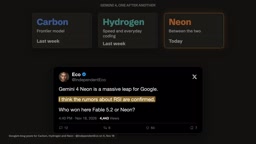
Gemini 4 Neon Released: Beats Opus 5.5 on Multiple Benchmarks, Google Returns to the Top Tier
Google DeepMind releases Gemini 4 Neon: 61 on the Artificial Analysis intelligence index (3rd) and 1st on the coding index, beating Opus 5.5 on multiple benchmarks. $3/$15 per million tokens; available in the Gemini API and AI Studio.
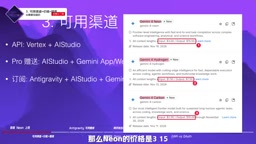
Gemini 4 Neon Review: Benchmark Scores Rival Carbon, API Cost-Performance Analysis
Full review of Google Gemini 4 Neon: benchmark scores rival Carbon, API priced at 2x Hydrogen, yet Antigravity quota consumption is only 1x (vs Carbon's 3x). Real tests show it replaces 90% of Carbon use cases. Includes channel restrictions, ban risks, and combination strategy analysis.