HomePod Mini 2 Launches: New Chip Is Ready, but Siri AI Misses Day-One

HomePod Mini 2 upgrades its chip to support Siri AI, but the AI features miss launch, leaving users waiting.
Apple released the HomePod Mini 2, with the key upgrade being a new processor theoretically ready for Siri AI — but Apple confirms these features won't work at launch, making it a "futures" device. The new "sound glow" feature syncs top LEDs with album art, a safe but intuitive update reinforcing its dual role as decor and audio device. The article argues Apple is settling into a "hardware first, software later" AI pattern, and for smart speakers, AI is the key to escaping obsolescence.
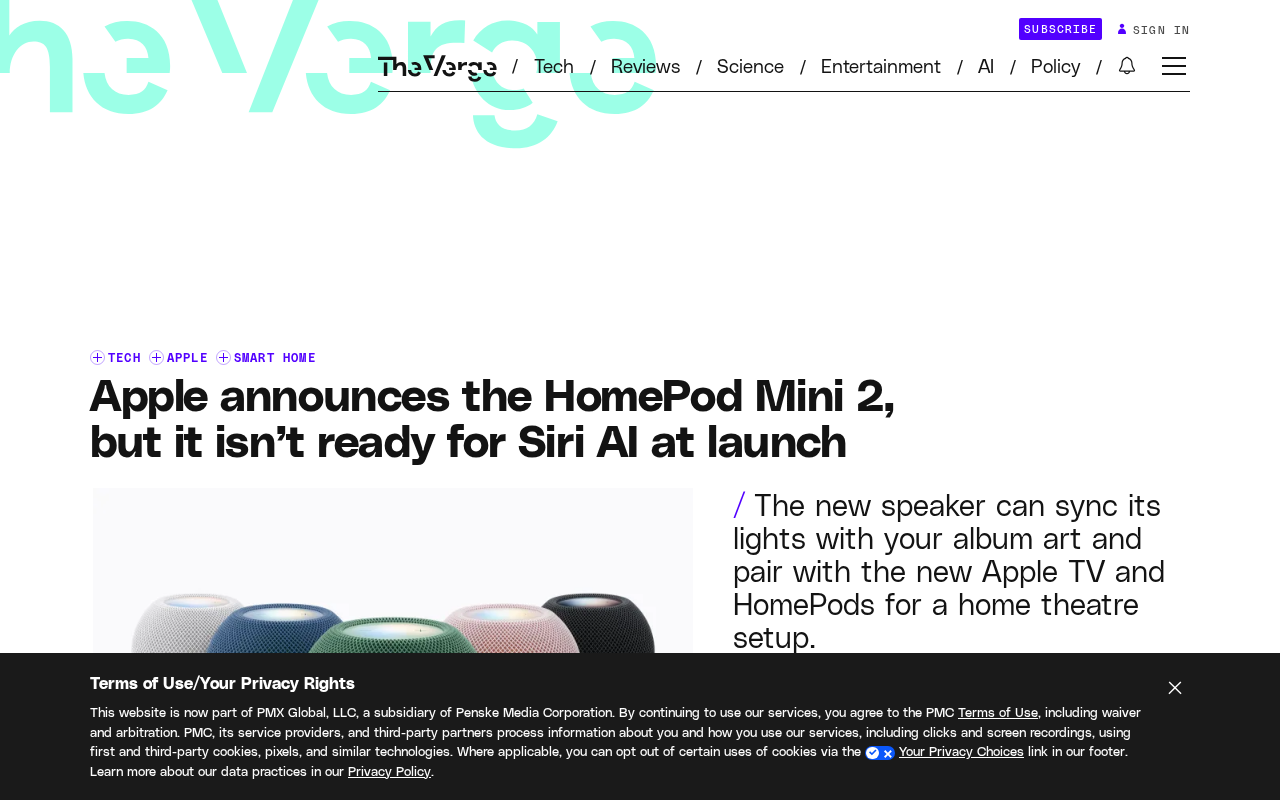
Apple has quietly refreshed its smart speaker lineup, and the HomePod Mini 2 is officially here. This long-overdue update swaps in a new chip that should, in theory, be capable of powering the next generation of Siri AI features. But there's one awkward catch: the AI capabilities that have been hyped so heavily won't actually be available on this device at launch.
Hardware First, Software Later
The core change in the HomePod Mini 2 is an internal chip upgrade. The new processor leaves headroom for more complex on-device AI computation, meaning Apple has already laid the hardware groundwork for Siri AI. But Apple has also confirmed that these AI features won't be available out of the box.
This approach reveals Apple's current dilemma: it's eager to get its hardware on the AI bandwagon, yet it can't seem to ship a polished software experience on time. What users are buying is essentially a "futures" device — performance headroom today, real value unlocked by future system updates. For users accustomed to Apple's seamless ecosystem experience, this kind of time gap isn't unfamiliar, but in today's white-hot AI competition, patience is wearing thin.
On-device AI refers to performing artificial intelligence inference and computation locally on a device, without uploading data to cloud servers. It relies on NPUs (Neural Processing Units) in dedicated chips to accelerate model computation, with advantages including low response latency, strong privacy protection, and offline usability. For smart speakers, on-device AI means voice wake-word detection, conversational understanding, and smart home command parsing can all happen locally in real time without round trips to the cloud. But on-device AI also introduces two constraints: the chip must continuously reserve compute headroom, and models need to be heavily compressed to fit limited memory and power budgets. This is precisely the key metric for judging a smart speaker's "AI ceiling."
Sound Glow: A Safe but Clever Update
Beyond the chip, the HomePod Mini 2 also brings a new feature called "sound glow": the LED lights on top of the device sync their colors with the album artwork of the currently playing song. This is a classic Apple-style small delight — it doesn't change core functionality, yet it gives the product a stronger presence on your desk.
From a product strategy standpoint, sound glow is the kind of feature that "looks great in a demo and is actually useful day to day." It reinforces the HomePod Mini's dual identity as both a home decoration and an audio device, and gives potential buyers a more tangible reason to upgrade than "performance improvements." After all, chip model numbers mean very little to average users, but lighting effects are something you can see and touch.
The "dust-collecting" dilemma of smart speakers is a long-standing industry pain point: users try them out enthusiastically at first, then shelve them due to clunky interactions, limited content, and poor command recognition, until they eventually become just clocks or decorations. Market research consistently shows that weekly active usage rates for smart speakers fall far below shipment growth, and actual conversion for voice shopping is negligible. Breaking this cycle is widely believed to depend on the leap in natural language understanding brought by generative AI — when devices can hold multi-turn, contextually coherent conversations and truly understand ambiguous commands, speakers may finally become the everyday gateway to home information and control. This is why "when will AI arrive" is especially critical for products like the HomePod.
"Waiting for AI" Is Becoming the Norm at Apple
The HomePod Mini 2's situation is hardly an isolated case. Apple's pace of AI feature delivery increasingly follows a "ship the hardware first, patch in the software later" pattern. This strategy has its logic: hardware development cycles are long, and you can't delay a launch just to wait for software. But the cost is that users can't actually experience the core selling point at the time of purchase.
For the smart speaker category specifically, AI is exactly the key to escaping its "dust-collecting" fate. If Siri AI can deliver more natural conversations and stronger smart home control, the HomePod Mini has a real shot at becoming a true home hub. Its absence at launch means the HomePod Mini 2 remains a "regular" smart speaker in its early days, with no qualitative leap over competing products.
Is It Worth Buying Now?
If you need a cheap entry point into Apple's ecosystem audio, the HomePod Mini 2's hardware upgrade and lighting effects are a modest bonus. But if what you're expecting is the intelligent experience leap that Siri AI promises, the rational choice is to wait — wait until the AI features actually roll out and judge based on real-world performance. Apple has already paved the road with hardware; now it's up to the software to keep up on schedule.
One-line Summary
HomePod Mini 2 upgrades its chip to support Siri AI, but the AI features miss launch, leaving users waiting.
Paragraph Summary
Apple has released the HomePod Mini 2, with the core upgrade being a new processor that's theoretically ready for Siri AI — but Apple confirms these AI features won't be available at launch, making it a "futures" device for buyers. Beyond the chip, the new "sound glow" feature syncs the top LED lights with album artwork, a safe yet intuitive small update that reinforces the product's dual role as home decor and audio device. The article notes Apple is settling into a "hardware first, software later" AI delivery pattern — hardware cycles are too long to wait for software, but the cost is that users can't experience the core selling point at purchase. For the smart speaker category, AI capability is the key to escaping obsolescence, and its absence at launch leaves the HomePod Mini 2 as just an ordinary speaker in the short term. Buying advice: consider it for a cheap ecosystem entry point, but if you're after an AI leap, wait until the features roll out before deciding.
Related articles

5 Practical Ways Real Estate Agents Can Use AI to Boost Efficiency (2026 Edition)
How can real estate agents use AI to boost efficiency? Based on a YouTube walkthrough, this breaks down five methods — ChatGPT for listing descriptions, Canva for marketing materials, forms for open house leads, Zapier for automated follow-up, and seller meeting prep — and flags risk boundaries like fair housing laws, photo authenticity, and price verification.

Grok Bot vs ChatGPT Agent: Which AI Agent Is More Powerful?
How does Grok Bot differ from ChatGPT Agent? This comparison examines how they work: Grok Bot has a cloud computer and runs persistently inside tools to execute multi-step tasks automatically; ChatGPT Agent operates web pages in a browser and is more mature at general tasks. Includes selection advice.

Walmart Agent Gateway: AI Shops for You Automatically—Why Is Amazon Going the Opposite Way?
Walmart's Agent Gateway lets ChatGPT, Gemini and other AI assistants access its product catalog to search, compare and add to cart, with spending limits and per-purchase approval. Amazon blocks external AI agents—two retail giants, opposite paths. Currently US-only, India may follow.