How a Single RL Policy Spontaneously Produces Adversarial Soccer Behavior

A solo-trained RL soccer policy spontaneously generates complex adversarial behaviors when duplicated into teams.
A Reddit developer trained a single soccer policy using PPO for just 1 million timesteps in an empty environment with no opponents. When duplicated across two opposing teams at inference time, the agents spontaneously exhibited ball contention, shooting, defending, and even own goals—without any multi-agent training. This demonstrates emergent behavior: complex adversarial dynamics arising as byproducts of optimizing a single scoring objective in a multi-agent environment.
An Unexpectedly Fascinating Reinforcement Learning Experiment
In the field of Reinforcement Learning (RL), we typically need to carefully design complex multi-agent training mechanisms to teach AI teamwork and adversarial play. However, a recent experiment shared by a Reddit developer offers a counterintuitive case: a single soccer policy trained alone in an empty environment produced "surprisingly watchable" soccer matches when deployed in multi-agent competition.

The developer used the PPO (Proximal Policy Optimization) algorithm, training for approximately 1 million timesteps. PPO is a policy gradient reinforcement learning algorithm proposed by John Schulman and colleagues at OpenAI in 2017. Its core idea is to introduce a clipping mechanism that limits the magnitude of each policy update, preventing training collapse from overly large single updates. Compared to earlier policy gradient methods (such as TRPO, Trust Region Policy Optimization), PPO is simpler to implement while maintaining good training stability and sample efficiency. This has made it one of the most widely used baseline algorithms in reinforcement learning—from Atari games to robotic control, to the RLHF (Reinforcement Learning from Human Feedback) training behind ChatGPT, PPO is virtually everywhere.
The "1 million timesteps" mentioned here is the fundamental unit for measuring training volume in reinforcement learning. In each timestep, the agent performs one complete cycle of "observe environment state → select action → execute action → receive reward feedback." One million such interaction cycles is a relatively small training scale in modern RL research—many complex tasks require tens of millions or even billions of timesteps to converge. This underscores just how remarkable the experimental results are: a relatively small amount of training produced considerable behavioral complexity.
Throughout the entire training process, the agent never played against any opponent. It simply learned the basic skill of "how to kick a ball" in an empty field with no adversaries.
From Single-Player Training to Multi-Player Competition
The most interesting part of the experiment occurs during the inference stage. The developer took this single trained policy and duplicated it multiple times, assigning copies to two opposing teams.
Notably, this approach of "duplicating a single policy for deployment" is fundamentally different from mainstream self-play training. Self-play methods—as employed by AlphaGo/AlphaZero—have the agent play against its own historical or current versions during training, continuously evolving through competition. The agent perceives the presence of opponents during training, and its policy is optimized for adversarial scenarios. In this experiment, however, the agent had absolutely no concept of an opponent during training; it was simply "copy-pasted" into an adversarial scenario at inference time. This means its policy underwent no adversarial refinement whatsoever, and all seemingly meaningful competitive behaviors are unintentional byproducts of the training objective in a new environment.
Unexpectedly Compelling Match Performance
The author didn't have high expectations, but the results were delightful. These agents sharing the same "brain" exhibited rich behaviors in the adversarial scenario:
- Ball contention: Agents naturally competed for possession rather than operating independently
- Active shooting: They sought opportunities to score goals
- Occasional defending: Some agents would fall back to protect their own goal
- Realistic mistakes: Even own goals appeared—humanlike errors
It's worth emphasizing that the developer never explicitly trained defensive behavior, nor designed any multi-agent coordination mechanism. These complex adversarial behaviors emerged entirely from the single optimization objective of "score goals."
The Principles Behind Emergent Behavior
This phenomenon touches on a thought-provoking topic in reinforcement learning and AI as a whole—Emergent Behavior.
The concept of emergent behavior originally comes from complex systems science and biology, referring to properties exhibited by a system as a whole that are not possessed by its individual components. Classic examples include ant colony foraging—individual ants follow simple pheromone-tracking rules, yet the entire colony finds the shortest path from nest to food source; bird flocking—each bird makes simple adjustments based on distance and speed relative to neighbors, yet spectacular formations emerge. In AI, emergent behavior has become an important framework for understanding the capabilities of large-scale systems. The "chain-of-thought reasoning" ability that appeared in large language models is also considered by some researchers to be an emergent phenomenon—models were never explicitly taught to reason step by step during training, yet this capability spontaneously appeared once parameter scale reached a certain threshold.
Why Does a Single Objective Produce Defense?
On the surface, the developer only set the goal of "score goals" for the agent—so why did defensive actions emerge?
The key is that the policy learned a set of general soccer interaction capabilities rather than rigid scripts for specific scenarios. When the agent learned ball control, dribbling, and shooting in an empty environment, it actually built an understanding of the relationship between "ball" and "goal."
When this policy is placed in a competitive environment:
- When the ball is near its own goal, the agent's internal logic of "move the ball away from the danger zone and push it toward the opponent's goal" produces actions that look like "defense"
- Ball contention arises because every agent wants to control the ball to achieve the scoring objective—the goal conflict between multiple individuals naturally creates competition
In other words, adversarial play and defense are byproducts of optimizing a single objective in a multi-agent environment. This is precisely the beauty of emergent behavior: locally simple rules produce complex collective performance at the system level.
Echoes of Classic Research
This amateur experiment actually echoes several well-known research directions in the field.
In OpenAI's 2019 paper Emergent Tool Use from Multi-Agent Interaction (multi-agent hide-and-seek), researchers had two groups of agents play hide-and-seek in a simulated physics environment. After hundreds of millions of timesteps of training, agent behavior underwent multiple phase transitions: initially random movement, then hiders learned to build shelters using walls and boxes, while seekers learned to use ramps to jump over obstacles. Even more remarkably, both sides continuously discovered and exploited "bugs" in the environment—hiders learned to lock ramps to prevent seekers from using them, while seekers discovered they could "surf" on boxes over walls. None of these behaviors were pre-programmed by humans; they were entirely spontaneous inventions driven by competitive pressure.
DeepMind's soccer AI research similarly validated the possibility of team coordination emerging from simple rewards. Representative work includes the Google Research Football Environment (open-source soccer simulation) released in 2019 and subsequent multi-agent soccer research. In related papers, the research team demonstrated agents gradually learning passing, positioning, and coordinated attacks within a self-play training framework. Follow-up research in 2022 further proved that through curriculum learning and population-based training, agents can develop advanced tactical awareness similar to humans, including triangular passing and wing attacks.
The difference is that this experiment's unique contribution lies in the fact that it never performed actual multi-agent training—instead, a single-agent policy "moonlights" as multiple roles during deployment. Compared to DeepMind's approaches, which typically involve large-scale self-play and carefully designed training curricula, this experiment completely skips the multi-agent training phase. The fact that such a low-cost approach can produce observable adversarial effects is inspirational for independent developers and researchers.
Value and Limitations of This Experiment
Practical Value
This experiment reveals a compute-saving approach: in certain scenarios, training a sufficiently general single-agent policy may be more economical than designing complex multi-agent training pipelines from scratch. For game AI, robotic simulation, and similar domains, this "one policy, many uses" approach is worth exploring.
Clear Limitations
Of course, we should maintain a clear-eyed perspective:
- Since all agents share the same policy, they lack genuine division of labor and role differentiation, making it difficult to form tactical systems like human teams
- Mistakes like own goals precisely expose the policy's inability to distinguish "friend from foe"—it doesn't truly understand which team it's on
- With only 1 million timesteps of training, behavioral stability and diversity are limited
Conclusion: Complex Beauty from Simple Objectives
This small experiment from the Reddit community demonstrates, in the most straightforward way possible, the core appeal of emergent behavior in reinforcement learning: You don't need to teach AI every specific action—just give it a clear objective and sufficient interaction environment, and complex behavior often emerges on its own.
For AI practitioners, this reminds us that when designing systems, we should perhaps think more about how to set "the right objectives" rather than exhaustively writing "the right rules." And for general audiences, watching a group of brain-sharing AIs play a soccer match complete with attacks, defense, and own goals is simply quite entertaining in itself.
Related articles
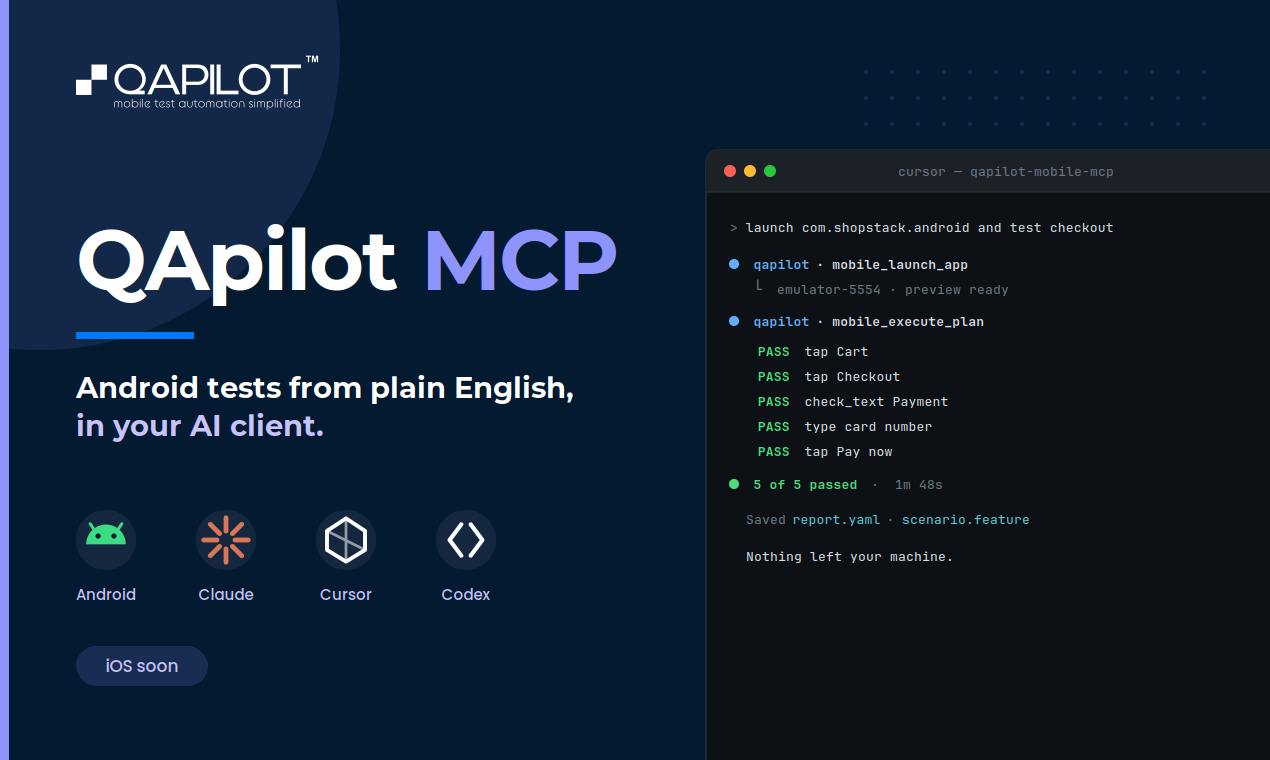
QApilot MCP: Test Android Apps in Natural Language Inside Your AI Coding Assistant
QApilot MCP lets developers test Android apps in natural language inside Claude, Cursor, and Codex — no Appium code needed. Auto-generates reusable Gherkin test cases.
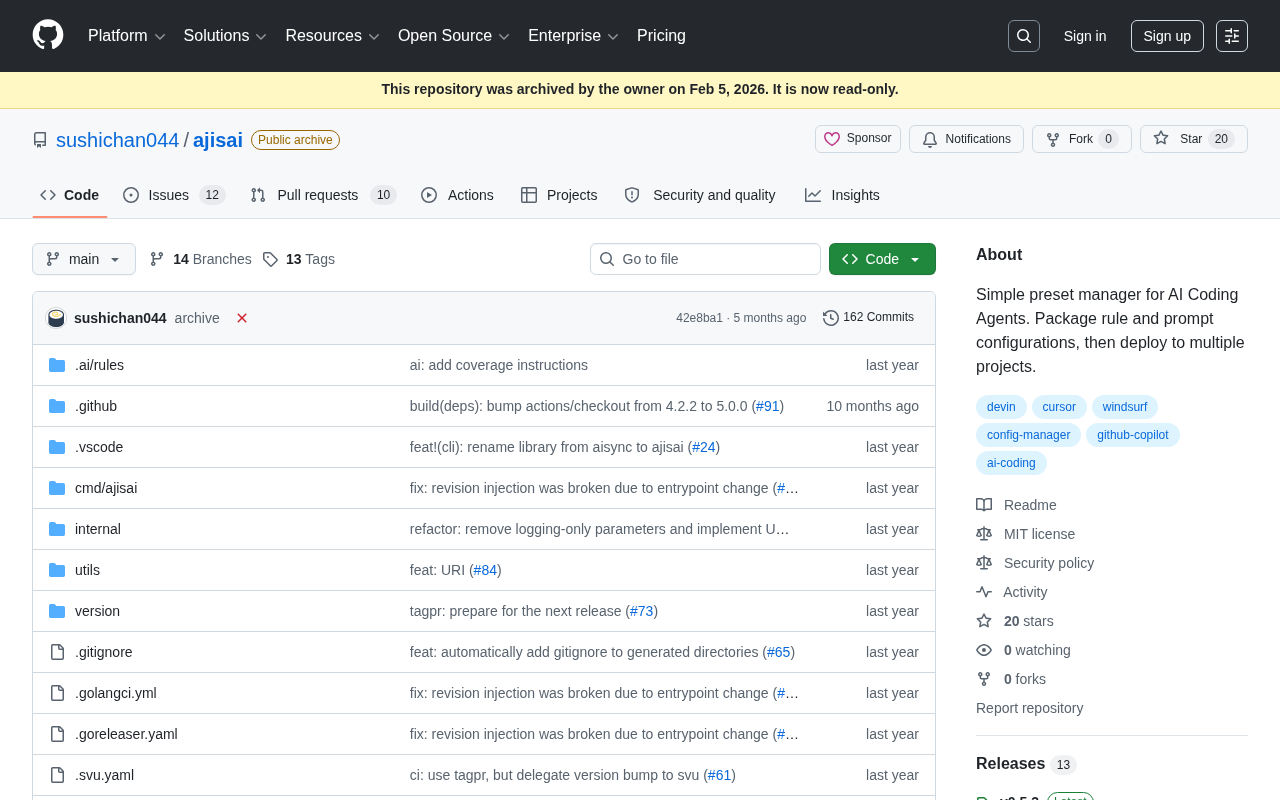
ajisai: A Preset Management Tool for Unifying Rules and Prompts Across AI Coding Assistants
ajisai is a Go-based preset manager for AI coding assistants like Cursor and Claude Code. Package rules and prompts once, deploy everywhere. Early-stage but promising.
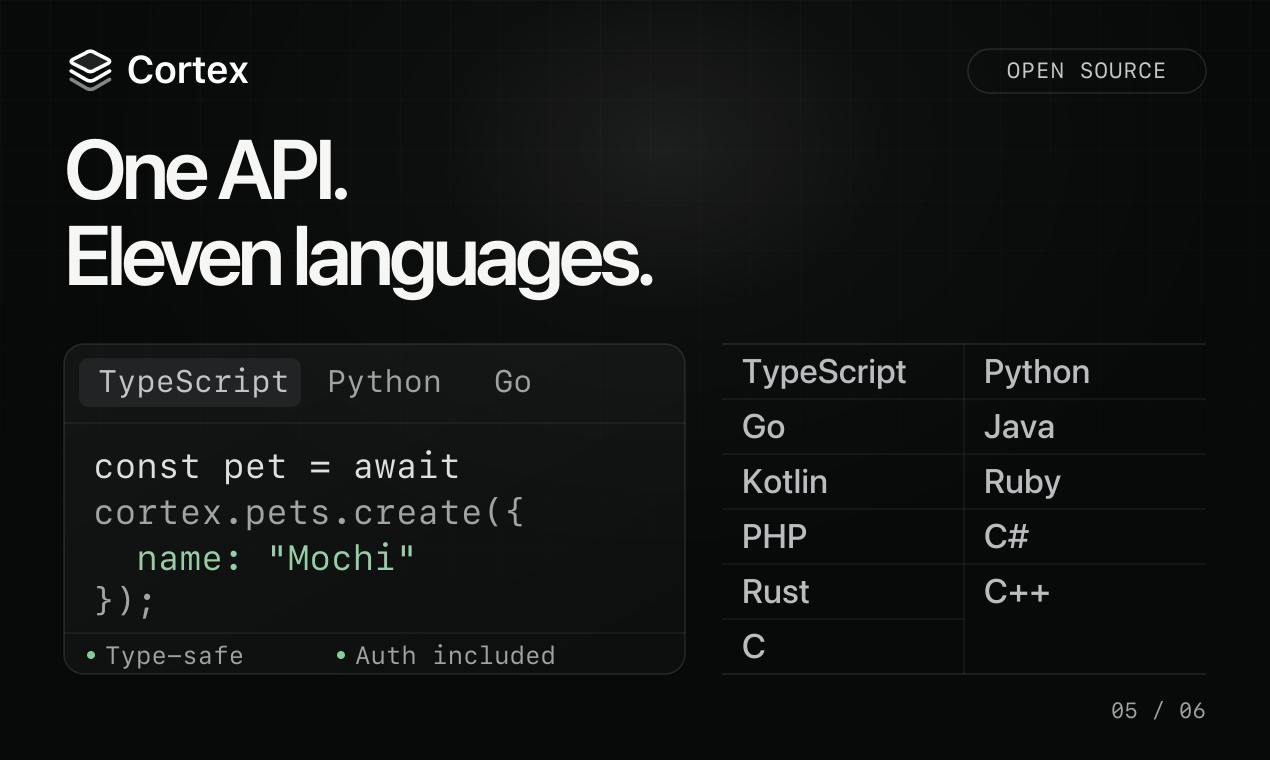
Cortex: Convert API Specs into Docs, SDKs, and MCP Servers in One Click
Cortex is an open-source tool that converts OpenAPI, GraphQL, gRPC and more into interactive docs, typed SDKs in 11 languages, and MCP servers for AI agents.