How AI Is Rewriting Mathematical History: From 2+2=5 to the Navier–Stokes Equation

A new book bridges the gap between AI math breakthroughs and public understanding, from 2+2=5 to Navier–Stokes.
From 2+2=5 to Navier–Stokes traces AI's leap in mathematical capability — from early language models fumbling basic arithmetic to winning IMO gold medals in 2025 and eyeing unsolved Millennium Prize Problems. Written for general readers with no formulas and ~300 annotated links, the book presents competing viewpoints where experts disagree. With a content cutoff of September 30, 2026, the author candidly acknowledges the field moves faster than any book can keep up with.
A Short History of AI in Mathematics, Written for Non-Experts
A math and AI enthusiast shared his new book on Reddit: From 2+2=5 to Navier–Stokes: A Short History of AI in Mathematics. The author admits that AI breakthroughs in mathematics over the past few years have left him genuinely stunned — particularly the landmark moment in 2025 when AI won a gold medal at the International Mathematical Olympiad (IMO). Yet whenever he tried to explain the significance of these achievements to friends, he kept running into the same wall: a lack of background context made meaningful conversation nearly impossible.
That frustration — valuable information that simply couldn't be communicated effectively — is what drove him to compile the whole story into a short book for general readers. No formulas, around 300 annotated links, and where academic opinion is divided, competing perspectives presented side by side. For a field evolving this rapidly and this contentiously, that kind of intellectual honesty is refreshing.

A Narrative Arc from Arithmetic Errors to Millennium Prize Problems
The title itself is a clever metaphor. "2+2=5" points to the early days of language models fumbling the most basic arithmetic — practically the canonical joke for mocking AI's mathematical incompetence. "Navier–Stokes," on the other hand, refers to one of the famous Millennium Prize Problems in fluid dynamics, representing one of the highest unsolved peaks in all of mathematics.
From one extreme to the other, this narrative arc traces the enormous leap in AI's mathematical capabilities: from getting simple addition wrong, to constructing olympiad-level proofs, to being seriously considered as a tool for tackling the most advanced unsolved problems in the field. The author's choice to anchor the book with these two poles is both immediately accessible and precisely captures the tension at the heart of this history.
The Navier–Stokes equations are a system of partial differential equations describing the motion of viscous fluids, independently derived by 19th-century physicists Claude-Louis Navier and George Stokes. They are widely applied in weather forecasting, aerodynamics, ocean modeling, and more — yet their mathematical properties remain incompletely understood. The specific Millennium Prize Problem asks: in three-dimensional space, do smooth solutions to the Navier–Stokes equations always exist and remain unique? This problem was listed by the Clay Mathematics Institute in 2000 as one of seven Millennium Prize Problems, each carrying a $1 million prize, and none has been solved to this day. Using it as the far end of the book's title represents not only the highest difficulty frontier in mathematics, but also the ultimate imaginative possibility of AI one day entering the realm of pure mathematical research.
The IMO Gold Medal as a Defining Milestone
The author singles out one achievement that truly struck him: AI winning a gold medal at the IMO. International Mathematical Olympiad problems are renowned for their difficulty and their demand for creative, original proofs — long considered a genuine litmus test for mathematical reasoning ability. An AI reaching gold-medal level at such a competition signals that it is no longer merely memorizing and pattern-matching, but exhibiting some form of multi-step reasoning and genuine problem-solving capacity.
For general readers, achievements like this often get swallowed up in the relentless churn of AI news, making it hard to appreciate their true weight. The core value of this book lies precisely in filling in that context — explaining why this matters — which was the author's motivation from the start.
The International Mathematical Olympiad (IMO) was founded in 1959 and is held annually for high school students worldwide, covering algebra, geometry, number theory, combinatorics, and more. It prizes original logical proof over computational brute force. In 2025, Google DeepMind's AlphaProof and AlphaGeometry systems reached gold-medal scoring thresholds on IMO test problems, widely regarded as a major breakthrough in AI formal mathematical reasoning. Previously, AI systems had stalled at silver or bronze medal levels on IMO problems. The significance of this achievement lies in the fact that IMO problems cannot be solved by memorizing training data or exploiting statistical patterns — they require constructing rigorous chains of logical proof. This makes them a more reliable test of whether AI truly "understands mathematical structure" rather than merely "reciting known answers."
A Book Destined for Continuous Updates
One candid detail worth noting: the author openly states that the book's content has a cutoff of September 30, 2026, meaning OpenAI's most recent announcements that week were not included. He notes with a touch of resignation that "it is what it is," and plans to release periodic updated versions going forward.
That admission alone reflects the reality of the AI field today: the pace of progress is so relentless that any book attempting to capture the full picture risks being partially outdated by the time it's published. A history of AI in mathematics may already be incomplete the moment it goes to print. This is both the writer's dilemma and a testament, in its own way, to the explosive pace of development. The author's choice to share the book's timeline section separately so anyone can track ongoing progress is a pragmatic and generous gesture.
What This Means for General Readers
The value of this book is not in presenting new technical breakthroughs — it lies in translation: converting achievements that are thrilling inside the research community but opaque to outsiders into a narrative that ordinary readers can actually follow. The no-formula, link-heavy, balanced-perspectives approach lowers the barrier to entry while maintaining rigor, avoiding both hype and unfair dismissal of AI's capabilities.
For anyone wanting to understand "just how far AI has actually come in mathematics," this kind of popular science writing fills the gap between academic papers and fragmented news headlines. Whether it's worth purchasing will naturally depend on each reader's needs — it reads more like an annotated historical index than a deep technical treatise.
A note: this article is based on information from the original Reddit post. The specific contents and quality of the book itself cannot be fully verified from a single source.
Related articles
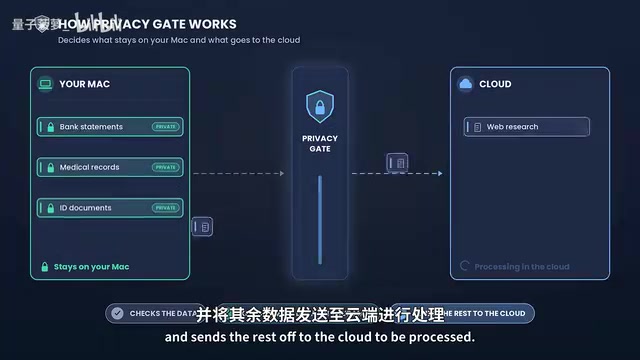
Perplexity Hybrid Compute Tested: Privacy Data Never Leaves the Mac
Perplexity Hybrid Compute tested: how PrivacyGate intercepts sensitive data, how local and cloud models divide work, model differences on 16GB vs 32GB Macs, and privacy protection in real scenarios like bank statements and medical records.
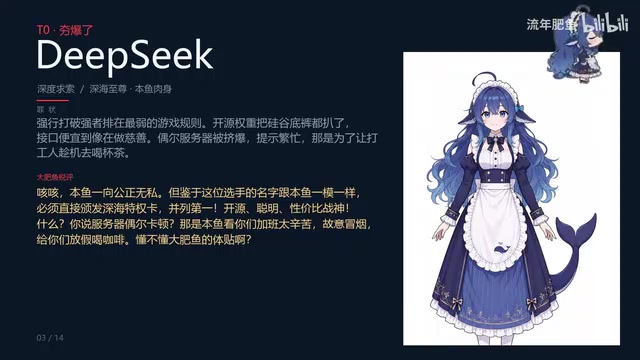
Big Fat Fish Roasts Mainstream LLMs at Home and Abroad: Doubao Takes the Crown, DeepSeek Tied for First
Bilibili creator Big Fat Fish roasts mainstream LLMs: Doubao tops for emotional value, DeepSeek ties first for open-source value, with ERNIE, Hailuo, Yuanbao, Kimi, Qwen, Kling, Claude, Gemini, and Grok each branded with a distinct persona.
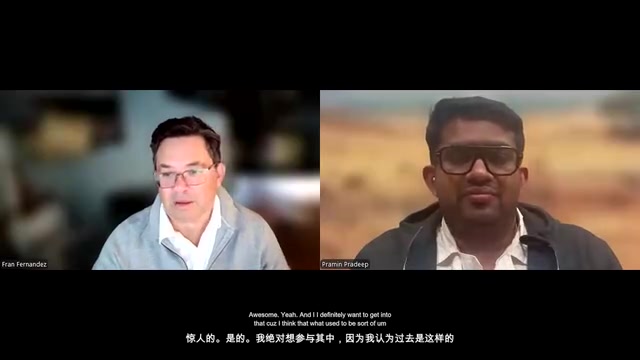
How to Truly Test AI Agents Before Production? A Practical Testing and Monitoring Framework
BotGage founder Pramin Pradeep shares a three-step framework for testing AI Agents before production: Agent registration visibility, red teaming, and production observability — plus a real case cutting QA costs from $180K to $80K and an analysis of IT roles shifting to Agent supervisors.