How Can Developer Platforms Improve? Lessons from a Feedback-Seeking Tweet

A single feedback-seeking tweet reveals how AI platforms use developer input to drive product iteration.
An AI/tech platform's public tweet inviting developer suggestions serves as a springboard to examine why developer feedback is central to platform products. Developers are not just users but ecosystem co-builders, and their real-world pain points — documentation quality, API stability, toolchain completeness — are often blind spots internal testing misses. The article identifies three key improvement areas and argues that the real challenge lies in converting feedback into lasting community trust through transparent roadmaps, regular changelogs, and clear responses to common requests.
The Product Thinking Behind a Short Tweet
A brief tweet recently caught the attention of many: "We would love to hear how we can improve our developer platform!" Short as it was, this message reflects a broader trend among today's AI and tech companies — proactively seeking feedback from developer communities as part of their product iteration process.
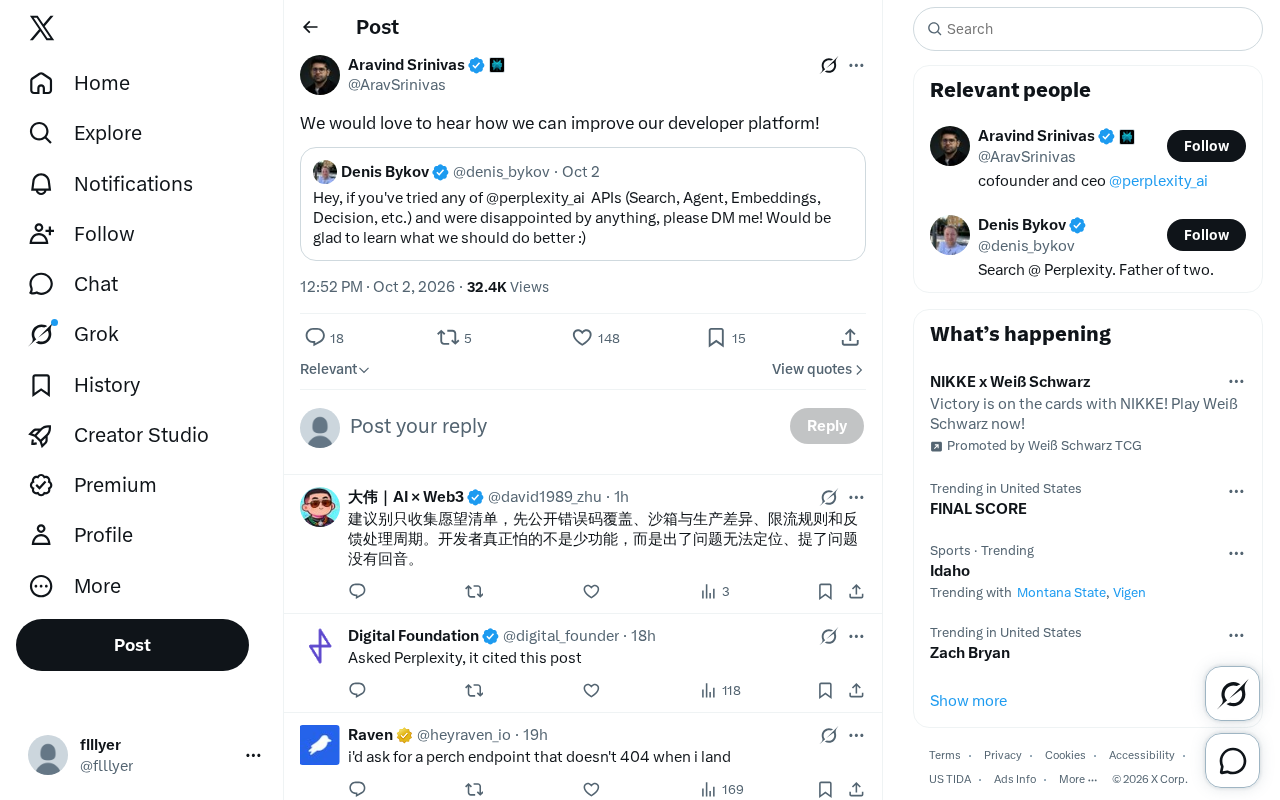
Developer platforms serve as the critical bridge between technology providers and application builders. Whether it's API services, SDK toolchains, documentation, or community support, the platform experience directly determines whether developers will continue investing their time and effort. A public call for feedback is often a signal from the product team that a significant release iteration is on the horizon.
Why Developer Feedback Matters So Much
For platform-centric products, developers are both users and co-builders of the ecosystem. The pain points they encounter in real-world scenarios — API response speed, documentation clarity, authentication complexity, the friendliness of error messages — are often blind spots that internal testing struggles to fully surface.
Publicly soliciting feedback serves several purposes: it provides direct access to first-hand requirements, signals to the community that "we are listening," and helps set expectations before product decisions are made. Many successful developer platforms have made community feedback a regular practice rather than a one-time event.
Common Areas for Developer Platform Improvement
Based on broad industry experience, developer platform optimization typically focuses on a few key dimensions:
Documentation and Onboarding Experience
Clear, runnable code examples are essential for lowering the barrier for new developers. Comprehensive quick-start guides and interactive API debugging tools can significantly shorten the time from registration to a first successful API call.
API Stability and Performance
Reliable service availability, reasonable rate limits, and transparent status pages form the foundation of developer trust. Any platform downtime or unexpected breaking changes directly impacts the downstream applications built on top of it.
Toolchain and Ecosystem
Broad SDK language support, CLI tools, local debugging capabilities, and integrations with mainstream development frameworks allow developers to plug into the platform seamlessly within their existing workflows.
An SDK (Software Development Kit) is a pre-packaged code library provided by a platform that lets developers invoke platform capabilities without directly handling raw HTTP requests. CLI (Command-Line Interface) tools allow developers to manage resources, trigger deployments, or debug APIs directly from the terminal — fitting naturally into an engineer's daily workflow. For AI platforms, Python and JavaScript/TypeScript SDK coverage is essentially table stakes, while support for languages like Go, Java, and Rust often directly influences enterprise development teams' adoption decisions. Local debugging capability is equally critical — the ability to simulate API responses without consuming production quota determines both iteration speed and the cost of experimentation.
The Distance Between Gathering Feedback and Shipping It
It's worth noting that soliciting feedback is only the starting point. What truly tests a product team is how they prioritize the flood of suggestions, respond quickly, and communicate a transparent iteration roadmap. What developers find most frustrating isn't the absence of a feature — it's submitting feedback that disappears into a void.
A transparent public roadmap, regular changelogs, and clear responses to high-frequency feedback are what transform a single solicitation into lasting community trust. For developers following the platform, a tweet like this is an opportunity to help shape the product's direction — one well worth responding to.
Public transparency around a product roadmap is the core mechanism for building long-term trust in developer platforms. Common approaches include maintaining public issue tracking on GitHub, recording every version change via a Changelog page, and setting up dedicated feedback channels in Discord or Slack communities. Some platforms also introduce user-voting mechanisms (using tools like Canny or Upvote) that let developers vote directly on feature requests, helping product teams quantify priorities. At its core, this approach partially externalizes the product decision-making process — reducing information noise for the team while giving community members a visible sense of participation and influence.
Closing Thoughts
A short, simple tweet soliciting feedback reflects a platform's deep commitment to its developer ecosystem. For the developer community, rather than waiting for a platform to unilaterally decide its direction, the better move is to proactively voice real needs. Product evolution, more often than not, happens through exactly this kind of two-way dialogue.
Related articles

Random Pruning of the DPO Computation Graph: 1.4x Training Speedup and Lower Peak Memory
DPO training too slow and memory-hungry? This paper proposes a random pruning framework for the DPO computation graph, sampling independently across position, sequence, and branch dimensions; branch pruning achieves a 1.426x step-time speedup and cuts training time by about 30%, with in-depth attribution of memory and time gains.

Why Does JEPA Underperform MLM in Longitudinal EHR Representation Learning?
New study compares JEPA and MLM for longitudinal EHR representation learning on MIMIC-IV: three JEPA variants train stably without collapse but underperform MLM; target size, not heterogeneity, drives prediction error.

Transfer Learning + Visible Light Communication: A New Approach to Energy-Efficient Indoor Positioning
A study proposes a transfer learning-based visible light communication indoor positioning method, achieving 47% accuracy improvement on the BOSCH factory dataset, 67.5% model efficiency under high noise, and introducing the ME composite metric for energy-efficient positioning in energy-constrained industrial IoT scenarios.