How Can Prompts Unlock AI Creativity? A Case Worth Watching Repeatedly

Prompts and models jointly determine AI creativity; creators should design prompts like directors.
Starting from a tweet, this article explores how prompt design and model capability jointly shape the creativity of AI-generated content. The author notes that LLMs default to mediocre outputs, and prompts act as guiding lines through a high-dimensional output space, sparking creative expression through specific role-setting, style anchors, and structural expectations. It also emphasizes that model capability sets the ceiling of creativity—prompts determine direction, and only their synergy produces stunning results. The article reminds creators to treat prompts as part of the creative work itself and to beware of survivorship bias in social media cases.
A thought sparked by a tweet: when prompts are clever enough, a model's creativity can manifest in unexpected ways.
Recently I came across a brief share on Twitter. The author admitted to having watched a piece of AI-generated content "several times over, especially the ending," and marveled that "the prompt and the creativity the model displayed were astonishing." The tweet didn't reveal the specific task or model name, but this seemingly casual remark happens to touch on a core proposition in today's AI applications: the chemistry between prompt design and model capability often determines output quality more than simply stacking parameters.
Why Prompts Can Amplify Creativity
Large language models are essentially probability-driven text generators. Their output space is extraordinarily vast, but in their default state they tend to slide toward "safe and mediocre" expressions. The role of a prompt is to draw a guiding line through this high-dimensional space—it doesn't change the model's knowledge base, but it profoundly influences the way the model draws on that knowledge.
The tweet's description of "watching the ending repeatedly" is worth pondering. Endings are often where narrative threads converge, emotions peak, or logic reverses—and they're also where generative coherence is most tested. The fact that the content made viewers want to rewatch the ending suggests the prompt likely gave the model sufficiently specific constraints on structure, rhythm, or style while still leaving room for improvisation. This balance of "constraint and freedom" is precisely the hardest part of prompt engineering to get right.
Probability-driven text generators refers to how large language models, at each generation step, compute a probability distribution over the vocabulary based on the preceding context, then sample the next word from it. This means the same prompt run multiple times may yield different results, and the output space is extraordinarily vast. In the default state, models tend to choose high-probability, low-risk expressions, making them appear "safe and mediocre." Prompts act like a bias adjustment on this probability distribution: by providing context, roles, or examples, they raise the probability of certain expression paths while lowering others, steering the model toward more creative outputs. Understanding this explains why subtle changes in wording can produce drastically different generations.
From "Instruction" to "Director": The Layers of Prompts
Most people's understanding of prompts is still stuck at issuing instructions: write a piece of copy, translate a sentence, summarize an article. But prompts that truly spark creativity are closer to a director coaching an actor—they set the scene, the emotional tone, the narrative perspective, and even specify "what not to do."
Based on publicly shared prompt practices, highly creative outputs typically share several characteristics: sufficiently specific role-setting (rather than a vague "you are an expert"), clear examples or style anchors, explicit expectations for output structure, and permission for the model to make local innovations within the framework. The tweet's author didn't elaborate on details, but the judgment that "creativity lives in the prompt" implies that the prompt itself already carries a considerable share of creative decision-making.
Style anchors refers to providing one or more sample texts in a prompt for the model to imitate in terms of tone, sentence structure, rhythm, or organization. It gives the model a concrete reference point, which is more effective than abstract descriptions like "write it more vividly." An anchor can be an opening line, a passage of dialogue, a short poem, or even an incomplete paragraph. Practice shows that when anchors are highly consistent with the target output in genre and emotion, the model's grasp of style improves significantly. At the same time, anchors implicitly convey boundaries of "what not to do," helping the model maintain consistency during imitation and avoid style drift.
Model Capability Is the Ceiling of Creativity
No matter how ingenious a prompt is, it cannot make a model output capabilities it doesn't possess. The tweet also acknowledged the contribution of "the model," which is important—prompts determine direction, while the model determines the ceiling. Advances in current mainstream models in long-text coherence, multi-turn context retention, and style imitation have made complex prompts feasible to implement.
In other words, the flourishing of prompt engineering is, to some extent, an inevitable consequence of model capability overflow. When models can't even execute basic instructions reliably, discussing "creative prompts" is meaningless; only when models are reliable enough do the subtle differences in prompts become clearly amplified.
Long-text coherence refers to a model's ability to maintain consistency in characters, plot, logic, and tone when generating lengthy content. Early models tended to produce repetition, contradictions, or topic drift after a few hundred words, while current mainstream models can maintain narrative threads across thousands of words through expanded context windows and improved attention mechanisms. This capability is the prerequisite for complex prompts to work: if a model can't remember the characters and style established earlier, even the most refined prompt will fail mid-generation. Advances in long-text coherence allow "director-style" prompts to plan longer creative arcs rather than just generating scattered fragments.
Implications for Content Creators
The value of this tweet isn't in showcasing a specific technique, but in reminding creators: treat prompts as part of the creative work, not as operational steps. Repeatedly refining a single prompt, observing how model outputs differ across wordings, and building your own "prompt intuition"—these unglamorous efforts often pay off more than chasing new tools.
At the same time, stay clear-headed: the astonishing cases on social media suffer from survivorship bias, and the many failed attempts are never shown. Treating stunning examples as directional references rather than standard answers is the way to avoid falling into the anxiety of "why can't my prompt achieve the same effect."
Summary
A tweet of just two sentences reflects the entire tension of prompts and models co-creating. Creativity isn't unilaterally given by the model, nor conjured out of thin air by the prompt—it's born on the carefully designed guiding line between the two. For ordinary users, next time you write a prompt, it's worth asking one more question: am I issuing instructions, or am I directing?
Related articles
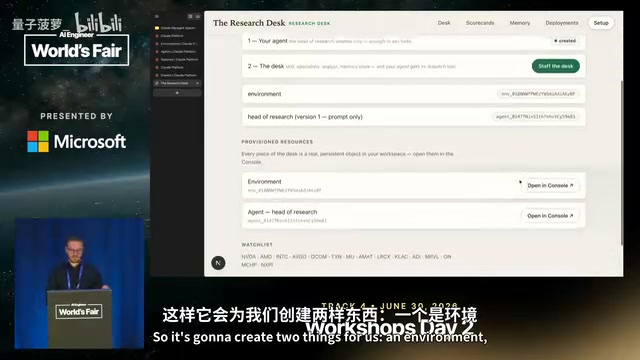
Claude Managed Agents in Practice: Self-Correction + Long-Term Memory
Based on an Anthropic live workshop, this article explains how Claude Managed Agents build research agents with self-correction and long-term memory, covering multi-agent collaboration, Outcomes self-supervision, Vaults credential security, and custom orchestration.
LangChain Agent Event Streaming Explained: A Practical Guide
A deep dive into LangChain 1.3's Event Streaming feature, covering the six event types—Raw, Messages, Tool Calls, Values, Custom, and Interleave—and key practical tips for Agent developers.
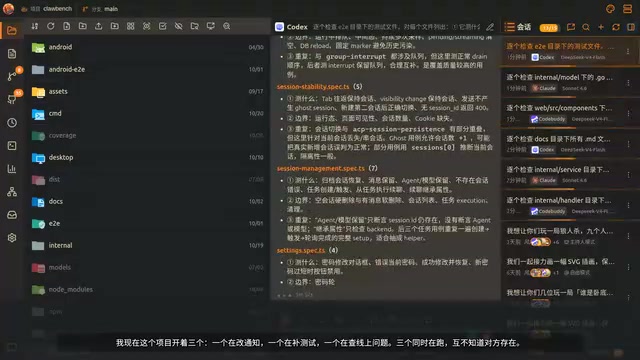
ClawBench Multi-threaded Parallel Development: Three Layers That Keep AI from Stepping on Each Other
How does ClawBench enable parallel development? Bilibili creator Long Ze demonstrates six simultaneous AI sessions, cross-project switching, and Worktree branch isolation across three layers, plus how server-side execution lets phones run AI tasks.