How Clojure Reshapes Your Programming Mindset
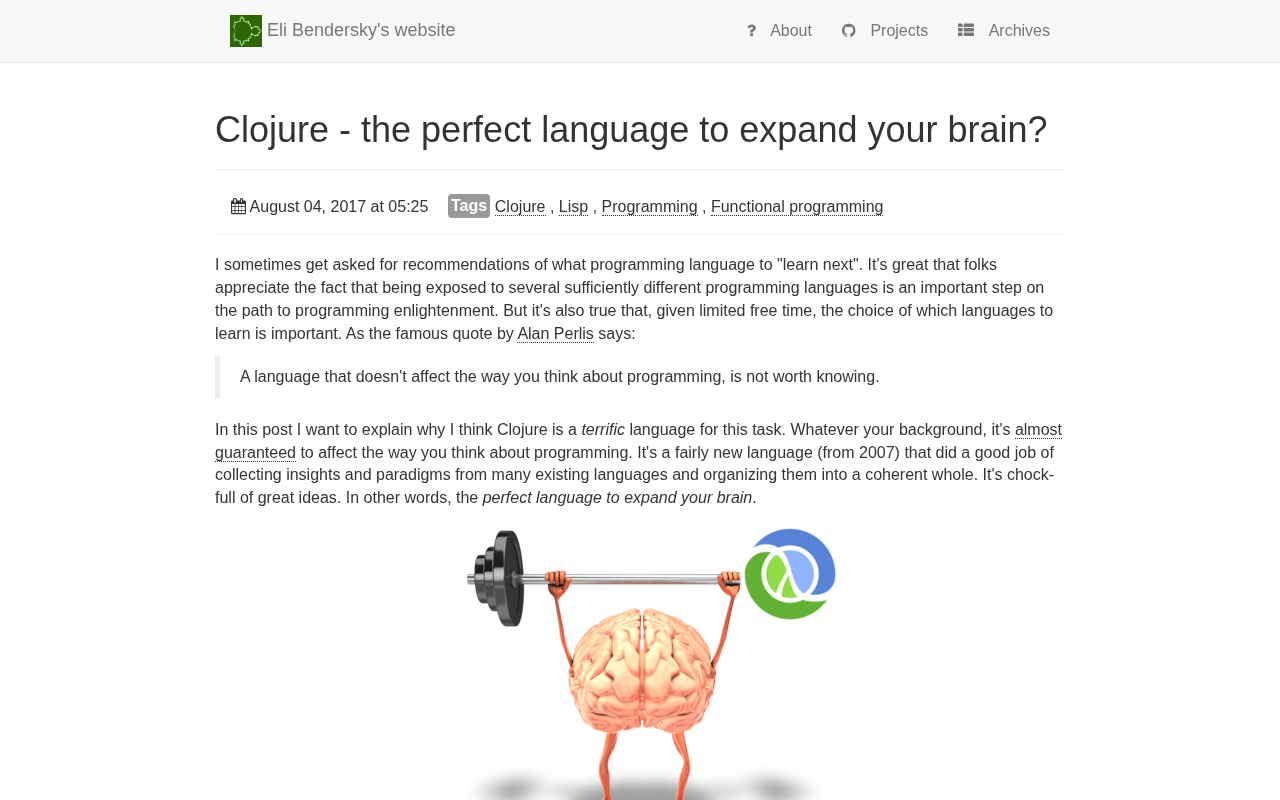
Clojure reshapes developers' programming mindset through immutability, function composition, and REPL culture.
This article explores how Clojure, a Lisp dialect running on the JVM, influences programming thinking. It covers immutability, functional composition, REPL-driven development, and pragmatism with the host platform, noting that Clojure pushes developers from "modifying state" to "transforming data," replaces class inheritance with small function pipelines, and provides instant feedback through interactive development. Clojure's symbiosis with the Java/JavaScript ecosystems reflects pragmatic trade-offs. The conclusion: a language is a thinking framework—even without adopting it as a primary language, understanding Clojure's design philosophy helps developers re-examine their programming habits.
Why Is a Niche Language Worth Paying Attention To?
In an era where programming languages keep proliferating, Clojure remains a special presence. It was born on the JVM yet carries Lisp's DNA; it emphasizes immutability and functional programming yet interoperates seamlessly with the Java ecosystem. A discussion on Hacker News once noted: Clojure will change the way you think about programming. That statement is no exaggeration—many developers, after using Clojure, unconsciously examine problems from a functional perspective even after returning to other languages.
This article does not aim to teach Clojure syntax, but rather to explore: how exactly does a language influence thinking, and what transferable insights does Clojure's design philosophy offer?
Lisp DNA: Clojure is a dialect of Lisp, inheriting Lisp's most core characteristic—homoiconicity (code as data), meaning the program code itself can be represented using the language's basic data structures (such as lists). This gives Clojure a powerful macro system, allowing developers to extend the language itself with minimal syntactic overhead. Lisp was born in 1958 and is the second-oldest high-level programming language after Fortran; its "everything is an expression" design philosophy has deeply influenced numerous subsequent languages. Clojure was created by Rich Hickey in 2007, aiming to combine Lisp's expressiveness with the JVM's mature ecosystem—so it is not a simple Lisp port, but a dialect redesigned for modern concurrency and practical needs.
Immutability: From "Modification" to "Transformation"
Clojure makes immutable data structures the default choice. This sounds like a technical detail, but it fundamentally changes the way you model the world.
In imperative programming, we are accustomed to "in-place modification": adding or removing elements from a list, updating fields of an object. In Clojure, once data is created it never changes; all "modifications" are essentially producing new values. This constraint forces you to think about how data flows through the dimension of time, rather than fixating on the memory state at a particular moment.
According to views in the Hacker News discussion, the direct benefit of this shift in thinking is: code is easier to reason about, and the mental burden in concurrent scenarios is significantly reduced. When you no longer worry about shared state being accidentally tampered with, program behavior becomes more predictable.
Immutable data structures: In Clojure, core data structures such as lists, vectors, maps, and sets are all persistent and immutable. So-called "modification" actually returns a new version that shares most of its structure, thanks to structural sharing, which makes the cost of copying far lower than deep copying. This design naturally supports safe concurrency: multiple threads can read the same data structure simultaneously without locks. In contrast, mutable state in imperative languages requires synchronization mechanisms to avoid race conditions. Immutability also simplifies debugging and testing, because once a value is created it cannot be accidentally changed.
Functional Thinking: Composition Over Inheritance
Clojure encourages building systems with small, composable functions. Unlike the hierarchical relationships of "inheritance" in object orientation, functional composition emphasizes pipeline-style data flow.
A typical Clojure program is often a chain of functions: data flows in from one end, undergoes step-by-step transformations, and flows out the other end. This style makes developers focus more on "what to do" rather than "how to do it." Even if you later return to Java or Python, this composition-first mindset will incline you toward writing smaller, more focused functions rather than massive class hierarchies.
REPL-Driven Development Rhythm
The Clojure community places enormous value on the REPL (interactive interpreter). The development process is not "write a big chunk of code and then run it," but rather a continuous dialogue with a running system.
This way of working changes debugging and exploration habits: you can verify ideas instantly and gradually build up program state. According to the Hacker News discussion, this feedback loop is especially effective for learning new libraries and troubleshooting problems. It transforms programming from an "edit-compile-run" cycle into an exploratory process closer to scientific experimentation.
REPL (Read-Eval-Print Loop): An interactive programming environment. In Clojure, the REPL is typically connected to a running program (even a production environment), allowing developers to execute expressions one by one and see results immediately without restarting the entire application. This workflow encourages incremental development and rapid experimentation, and is especially suited to exploratory programming and debugging complex state. Compared with the traditional "edit-compile-run" cycle, the REPL shortens the feedback loop and enables developers to understand code behavior more intuitively. The Clojure community has also developed practices such as repl-driven development, treating the REPL as the primary development interface.
Pragmatism in Symbiosis with the Host Platform
Clojure does not try to rebuild everything. It runs on the JVM and can directly call Java libraries; later, through ClojureScript, it can also compile to JavaScript. This pragmatic design lets it retain Lisp's expressiveness while gaining support from mature ecosystems.
The impact on thinking is: you learn to strike a balance between "purity" and "practicality." You can handle core logic in a functional way while calling the host platform's imperative APIs when necessary. This awareness of boundaries is something many users of purely functional languages tend to overlook.
How Language Shapes Thinking in Reverse
Returning to the original question: does Clojure really change the way you think about programming? Judging from the Hacker News discussion, the answer is yes—but the way it changes varies from person to person.
For developers accustomed to imperative programming, Clojure's immutability and function composition bring cognitive shock; for those already familiar with functional programming, Clojure's pragmatic design and REPL culture offer a new working rhythm. A language is not just a tool—it is a thinking framework: the language you use quietly defines your default path for solving problems.
Even if you ultimately do not adopt Clojure as your primary language, spending time understanding its design philosophy is still a re-examination of your own programming thinking.
One-line Summary
Clojure shapes developers' programming mindset in reverse through immutability, function composition, and REPL culture.
Paragraph Summary
This article explores how Clojure, a Lisp dialect running on the JVM, influences programming thinking. It unfolds from four aspects: immutability, functional composition, REPL-driven development, and pragmatism with the host platform, pointing out that Clojure forces developers to shift from "modifying state" to "transforming data," replace class inheritance with small function pipelines, and gain instant feedback through interactive development. At the same time, Clojure's design of coexisting with the Java/JavaScript ecosystems reflects pragmatic trade-offs. The ultimate conclusion is: a language is a thinking framework—even if you do not adopt it as your primary language, understanding Clojure's design philosophy can help developers re-examine their own programming habits.
Related articles

AI Teams Up with Mathematicians to Attack the Riemann Hypothesis: 17 Million Lines of Code Tear Open a 167-Year Gap
In November 2026, Anthropic mathematicians and Claude claimed to have discovered a proof of the Riemann Hypothesis, publishing 17 million lines of Lean formalized code that passed machine verification. This article analyzes the event's impact on mathematics and cryptography, and the deeper questions raised by the separation of discovery and understanding.

AI Claims Formal Proof of the Riemann Hypothesis — But Machine Verification Isn't a Mathematical Proof
In Nov 2026, Anthropic's Levent Alpöğe released a Riemann Hypothesis proof of 175,000 code files that passed machine formal verification. But machine verification isn't a mathematical proof: the kernel can't confirm the proposition is the Riemann Hypothesis humans understand, and there's no human-readable paper. This article breaks down how ζ function zeros determine prime-count deviation, and the core of the controversy.

Anthropic Raises Over $80 Billion in IPO, DeepSeek Secures $100 Billion in Funding: AI Weekly Roundup
This week in AI: Anthropic's Nasdaq IPO raises $93.5B in the largest ever, DeepSeek closes ~100B yuan round, AI claims formal Riemann proof, MiniMax breaks crypto candidates in seconds.