How Do Users Really Feel About Generative AI? 17,000 App Store Reviews Reveal a Trust Crisis
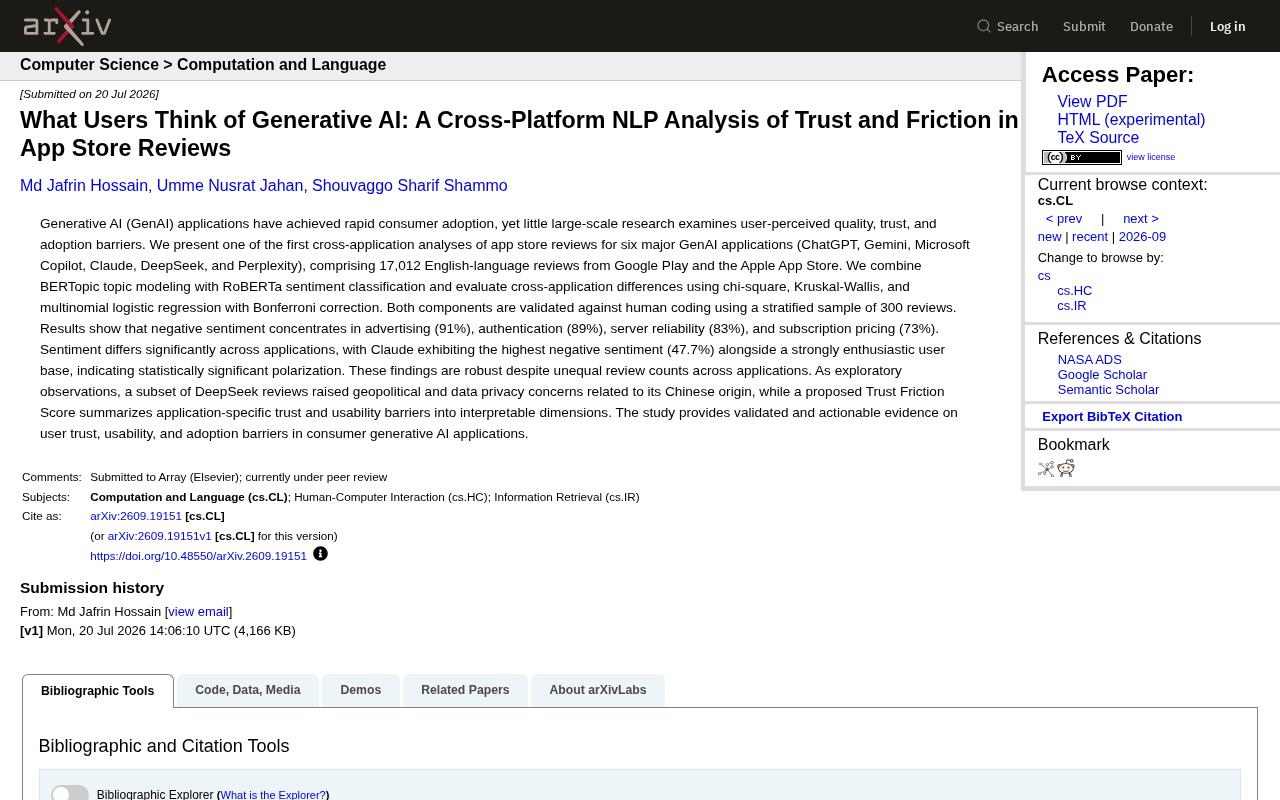
17,012 reviews show GenAI user frustration targets ads, auth, and reliability — not model intelligence.
This large-scale review analysis of six major GenAI apps — ChatGPT, Gemini, Copilot, Claude, DeepSeek, and Perplexity — combines BERTopic topic modeling and RoBERTa sentiment classification to map real user experiences. The core finding: negative sentiment concentrates on ads (91% negative), authentication (89%), server reliability (83%), and subscription pricing (73%), not AI capability. Claude shows statistically significant polarization, with the highest negative rate (47.7%) alongside passionate loyal users. DeepSeek raises exploratory geopolitical and privacy concerns tied to its Chinese origins. The study also introduces a Trust Friction Score framework to quantify user barriers into actionable, comparable dimensions.
Generative AI apps have taken the consumer market by storm — but are users actually satisfied? A large-scale cross-platform study offers the most systematic answer yet. Researchers analyzed 17,012 English-language reviews from Google Play and the Apple App Store, covering six mainstream GenAI apps: ChatGPT, Gemini, Microsoft Copilot, Claude, DeepSeek, and Perplexity. Using natural language processing methods, they mapped the real landscape of user trust and friction.
Methodology: NLP + Human Validation
This wasn't a simple sentiment tally — the researchers built a reproducible analytical pipeline. The team combined BERTopic topic modeling with RoBERTa sentiment classification: BERTopic automatically extracts discussion themes from large volumes of reviews, while RoBERTa determines the sentiment polarity of each review.
To guard against algorithmic bias, the researchers used stratified sampling to select 300 reviews for manual coding and validation, ensuring that topic identification and sentiment classification aligned with human judgment. This "machine scale + human verification" approach makes the findings more credible than purely algorithm-driven analyses.
On the statistical side, the team employed chi-square tests, Kruskal-Wallis tests, and multinomial logistic regression with Bonferroni correction to verify that differences across apps were statistically significant — meaning the inter-app differences described aren't coincidental, but hold up under rigorous scrutiny.
BERTopic is a topic modeling method based on Transformer embeddings. Compared to traditional LDA (Latent Dirichlet Allocation), it better captures discussions that are semantically similar but worded differently, and can automatically determine the number of topics without manual presets. RoBERTa (Robustly Optimized BERT Pretraining Approach) is a language model optimized by Facebook AI on top of BERT, which excels at downstream tasks like sentiment classification — particularly for colloquial, informal user review text. Together, BERTopic answers "what are users talking about" while RoBERTa answers "how do users feel about it," creating a dual-dimensional analysis of topics and sentiment. Bonferroni correction is a standard technique in multiple comparisons: when testing many hypotheses simultaneously, the probability of a false positive inflates artificially. Bonferroni correction tightens the significance threshold proportionally to the number of tests, keeping overall error rates in check and making cross-app comparisons more conservative and reliable.
Where Does Negative Sentiment Concentrate?
The study's most direct finding: user dissatisfaction clusters sharply around a few specific areas — and model capability is not among them.
- Ads (91% negative): The most concentrated source of negative sentiment. Users have extremely low tolerance for in-app advertising.
- Authentication (89% negative): Poor experiences with login and account verification processes are a frequently cited frustration.
- Server reliability (83% negative): Lag, downtime, and failed responses severely impact the experience.
- Subscription pricing (73% negative): Paywalls and subscription models generate significant complaints.
What's striking is that nearly all of these pain points relate to engineering execution and monetization strategy — not AI intelligence. In other words, users broadly accept the capabilities of GenAI; the real friction occurs at the edges of experience and trust. This is a clear signal for product teams: no matter how powerful the model, users will still churn if login flows are cumbersome, servers go down frequently, or ads are excessive.
Claude's Polarization: Highest Negativity and Most Passionate Fans
Cross-app comparisons reveal an interesting pattern. Sentiment differences between apps are statistically significant, with Claude showing the highest proportion of negative sentiment (47.7%) — while simultaneously attracting a notably enthusiastic base of loyal users.
This love-it-or-hate-it dynamic is explicitly identified statistically as polarization. It suggests Claude may excel in certain areas, earning strong advocacy from core users, while disappointing a significant portion of users in others (such as availability, restrictions, or pricing). This kind of polarization reflects product positioning and user demographics more meaningfully than a simple average score.
The researchers also emphasize that these findings are robust despite uneven review counts across apps — the conclusions aren't artifacts of sample size imbalances.
DeepSeek: Geopolitical and Privacy Concerns
As an exploratory observation, researchers noted that some DeepSeek reviews raised geopolitical and data privacy concerns related to its Chinese origins.
This is a finding with real-world implications. It shows that users' trust assessments of GenAI apps now extend beyond functionality into questions of data sovereignty, privacy policy, and the country of origin of the app's developer. For AI products operating across borders, "trust" is no longer purely a technical issue — it also involves users' perceptions of and concerns about the entities behind the product. The researchers carefully label this an exploratory observation, cautioning that the sample basis for this finding is relatively limited.
User concerns about data ownership and privacy in AI apps reflect a broader "data sovereignty" debate. Different countries have varying legal frameworks governing data storage, cross-border transfers, and government access — the EU's GDPR, the US CLOUD Act, and China's Data Security Law and Personal Information Protection Law contain potentially conflicting provisions on extraterritorial jurisdiction. Ordinary users may not be familiar with these regulatory details, but their intuitive concern about "who can see my data" is enough to produce identifiable discourse patterns in reviews. This phenomenon isn't unique to DeepSeek — TikTok's regulatory battles across multiple countries and Telegram's compliance controversies in Europe follow the same logic. For AI products, transparent privacy policies and verifiable data handling commitments are shifting from nice-to-haves to basic entry requirements.
Trust Friction Score: Quantifying Trust
The study introduces a concept called the "Trust Friction Score," which attempts to consolidate trust and usability barriers across apps into interpretable, comparable dimensions.
The value of this metric lies in transforming the qualitative complaints scattered across thousands of reviews into a structured, quantifiable framework. Product teams can use it to identify which dimensions have trust gaps and prioritize improvements accordingly. Compared to a generic "user satisfaction" score, this multi-dimensional friction profile is far more actionable.
Trust Friction as a concept comes from the intersection of user experience and behavioral economics, referring to the psychological resistance users experience when facing uncertainty, obstacles, or negative expectations while using a product. In the context of AI products, trust friction includes not only technical failures (such as outages or incorrect answers), but also concerns arising from business design (such as opaque data usage or unreasonable paywalls) and friction in identity and security flows (such as cumbersome account verification). Quantifying it as a comparable score draws on the concept of a "friction audit" in product experience — systematically identifying every point in the user journey that might cause churn or erode trust, and assigning weights to each. For AI applications, this framework's value lies in decomposing the abstract notion of "user trust" into attributable, trackable concrete dimensions, giving product improvements clear prioritization criteria.
Implications for the Industry
This study is among the first to conduct cross-product review analysis for consumer-facing GenAI applications, filling a clear research gap: few large-scale studies had previously examined user-perceived quality, trust, and adoption barriers in this space.
The core takeaway is clear and practical — what determines whether users stay or leave is often not the model's raw capability, but the experience engineering and monetization design surrounding it. Excessive ads, cumbersome authentication, unstable service, and aggressive pricing are four friction points that virtually every GenAI product must address. Trust is increasingly becoming a core competitive variable in the AI product landscape — one that can no longer be ignored.
Related articles
Three Stages of AI LLM Testing: A Practical Guide from Core Concepts to API Calls
A learning path for testers covering LLM fundamentals, prompt engineering, OpenAI SDK calls, API Key vs Token differences, streaming output, RAG, and Agent systems.
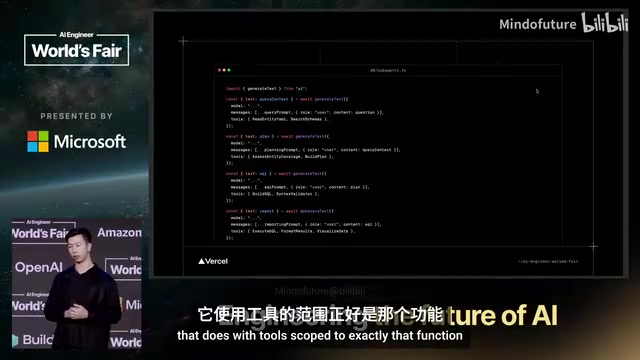
Vercel's Chief of Software Looks Back: The Evolution of Agent Building — From Multi-Agent Chains to File System Agents
Vercel's Chief of Software Andrew recaps the agent-building journey at AI Engineer: from giant prompts to multi-agent chains, monolithic memory, file system agents, and the open-source EVE framework.
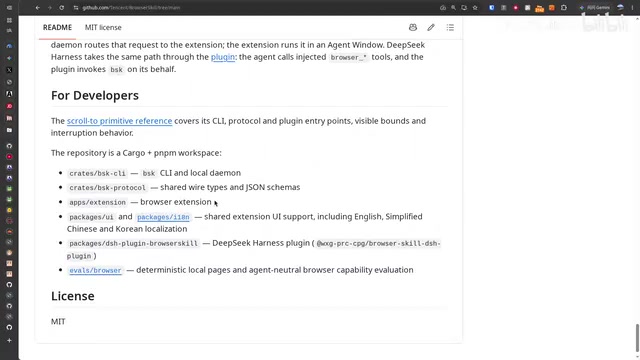
Tencent's Open-Source BSK in Action: Letting AI Take Over Your Already-Logged-In Browser
Tencent's open-source BSK (Browser Skill Kit) lets AI take over your real, logged-in Chrome via WebSocket. We break down the architecture, setup, and three key pitfalls from real-world testing.