How Far Away Are Home AI Robots? Technical Bottlenecks and Timeline Predictions
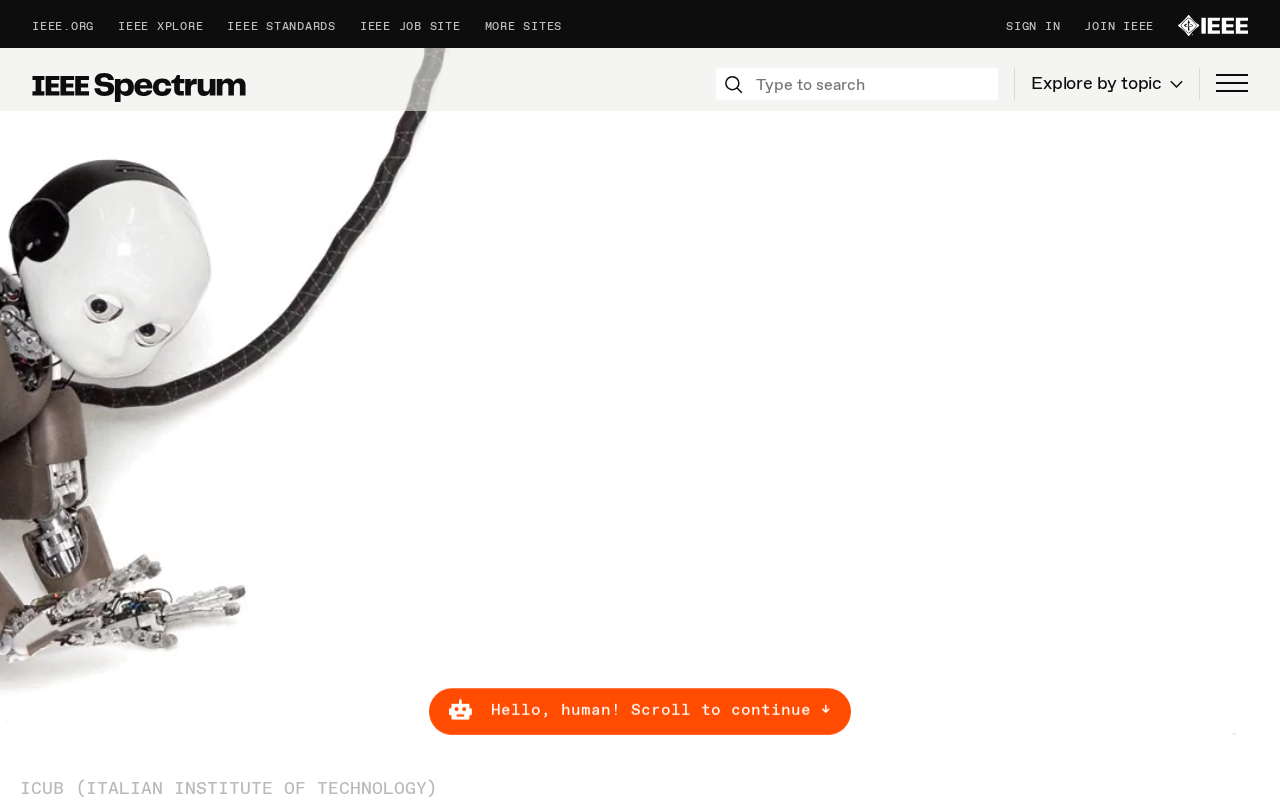
Home AI robots face three key barriers — perception, general intelligence, and cost — making incremental specialized devices a more realistic path than humanoids.
The prospect of home AI robots is a perennial topic in the tech community, but a vast gap remains between vision and reality. The core bottlenecks fall into three areas: dexterous manipulation in unstructured home environments, the challenge of reliably combining LLM reasoning with physical action (Embodied AI), and high costs driven by safety requirements. Industry timelines vary widely — optimists point to booming humanoid robotics investment, while skeptics cite self-driving's long road to reliability. A more realistic path may be building a distributed home robot system through smarter, coordinated specialized devices rather than waiting for a general-purpose robot. Dexterous manipulation reliability and hardware cost are the two key metrics to watch.
The Vision vs. Reality of Home AI Robots
The question of when AI robots will enter ordinary homes is a recurring topic in the tech community. A recent Hacker News thread titled "AI Robots – When will they be in our homes" reignited the debate. Despite modest engagement, the question cuts to the heart of a core tension in robotics, artificial intelligence, and domestic applications — just how far are we from truly practical home robots?
Looking at current technological progress, home robots are hardly a sci-fi concept. Robotic vacuums, smart speakers, and similar devices have already made their way into many households. But there remains a massive technical gap between these products and the kind of general-purpose robot people imagine — one that can do chores, provide companionship, and make autonomous decisions.
Where Are the Technical Bottlenecks?
The challenges to deploying home robots fall into several key areas.
The Complexity of Perception and Manipulation
Home environments are highly unstructured — toys scattered on the floor, furniture that gets rearranged, constantly shifting lighting conditions. All of this places extreme demands on a robot's ability to perceive its surroundings. Unlike a factory robotic arm operating in a precisely defined space, a home robot must perform fine motor tasks like grasping and carrying objects in chaotic, unpredictable settings. This category of "dexterous manipulation" remains one of the central unsolved problems in robotics research.
The Absence of General Intelligence
A truly useful home robot needs to understand natural language instructions, reason through task steps, and adapt to new environments. Recent advances in large language models have brought new hope to the robot "brain" problem, and Embodied AI has become a major research focus in recent years. But reliably combining the reasoning capabilities of language models with physical action execution in the real world is still in its early stages.
A closer look at Embodied AI: The core claim of Embodied AI is that true intelligence must emerge through the continuous interaction of a body with the physical world — not through training on text or image data alone. This idea has roots in cognitive science, which holds that perception, action, and cognition are inseparable. In practice, Embodied AI researchers typically have robots learn manipulation strategies through extensive trial and error in simulated or real environments, then integrate large language models (LLMs) for high-level task planning — for example, breaking down "make me a cup of tea" into a sequence of concrete physical actions. The main challenge today is the "Sim-to-Real Gap": strategies trained in simulation often fail to transfer directly to real physical environments, while collecting high-quality training data in the real world is prohibitively expensive. Organizations like OpenAI, Google DeepMind, and Figure AI are working to overcome this barrier through teleoperation data collection, Vision-Language-Action (VLA) models, and related approaches.
Cost and Safety
Even if the technology matures, a robot capable of operating safely in a home environment will carry significant hardware costs, maintenance costs, and safety redundancy requirements — all of which substantially drive up the price. In a household setting that includes elderly people, children, and pets, the required safety tolerance is extremely high, which further complicates productization.
Different Predictions for the Timeline
There is no industry consensus on when home robots will actually arrive.
Optimists argue that the wave of capital flowing into Embodied AI and humanoid robotics could yield prototypes capable of specific tasks — like tidying up objects or light cleaning — within a few years, with gradual commercialization to follow. Several major tech companies have already poured enormous resources into humanoid robotics and have demonstrated basic capabilities like walking and grasping.
Skeptics point out that the journey from lab demo to a reliable, affordable, and scalable consumer product typically requires a long and grueling engineering process. The self-driving car industry's "last mile" problem serves as a cautionary tale — the demo videos were stunning, but achieving the reliability required for mass adoption took far longer than anyone expected.
The Path from Single-Function to General-Purpose Assistant
A more realistic evolution may not be a leap straight to a general-purpose robot, but a gradual expansion from single-function devices.
Robotic vacuums, dishwashers, and smart kitchen appliances are, in essence, all "specialized robots." As AI capabilities improve, these devices will become smarter and better coordinated, potentially forming a "distributed home robot system" made up of multiple specialized devices — rather than a single all-capable humanoid.
The advantage of this incremental path is that each step has clear commercial value and technical feasibility, without requiring a complete breakthrough in general intelligence.
The distributed home robot system in practice: This concept already has precedents in industry. The Matter protocol, Home Assistant, and other smart home standards are building a unified communication foundation for devices from different brands with different functions. When specialized devices can share environmental sensing data and make coordinated decisions, their collective capabilities may approximate some of what a general-purpose robot could do. For example, a robotic vacuum's map data could be reused by a smart lock and lighting system; a camera's visual input could help a robotic arm locate target objects. This "software-defined system integration" approach sidesteps the mechanical reliability and energy consumption bottlenecks of a monolithic humanoid robot, and better fits consumers' habit of buying devices incrementally. The core challenges here lie in cross-device data standardization and privacy-by-design.
Key Signals to Watch
To gauge when home robots will truly arrive, a few key indicators are worth tracking: whether the reliability of dexterous manipulation improves significantly, whether robot hardware costs fall substantially, and whether any products emerge that can operate stably in real home environments over extended periods.
When all of these conditions are met simultaneously, home AI robots may finally move from tech demonstrations to everyday households. For now, this remains a proposition that is "in progress" rather than "achieved."
Note: This article builds on a Hacker News community discussion. The thread itself saw limited engagement (5 points, 2 comments). The technical assessments presented here reflect the editor's extended interpretation based on current industry conditions.
Related articles
Building an Operating System from Scratch with Claude: How EMBER Ran on a Real Laptop
A developer built EMBER, a DOS-like OS, from scratch using Claude in just days. It runs Doom, emulates Sound Blaster audio, supports touchscreens, and boots on real hardware.
Homelab Compromised: A Nextcloud RCE Incident and Lessons for Home Server Security
A homelab user's Nextcloud instance was breached via CVE-2025-66208. The attacker lurked 16 hours while the official patch advisory was misleading. Key lessons for home server security.
DeepSeek V4.1 Flash Tops AA's New Benchmark, Surpassing Astra and Sparking Controversy
DeepSeek V4.1 Flash tops Artificial Analysis's new private benchmark in Intelligence Index v4.3, surpassing Astra — but two index changes in three days spark community debate.